


Tile Roofing · South Florida
Durable, Beautiful Tile Roofing Built for South Florida
From clay to concrete, ASP Superhome installs tile roofing designed to stand up to heat, humidity, salt air, and coastal wind. Get clear costs, styles, and a straightforward path to your new roof.
By ASP Superhome · Published September 12, 2026
Tile Roofing in South Florida: Costs, Styles & Installation Guide
Tile roofing is one of the strongest, longest-lasting roof choices for South Florida homes. It stands up to heat, humidity, salt air, and hurricane-season winds better than many other options. This guide covers everything a homeowner needs before deciding: styles, real cost drivers, local building code, installation, lifespan, and when to repair versus replace.
If you live in Miami, Fort Lauderdale, West Palm Beach, Kendall, Naples, Fort Myers, or Boca Raton, tile roofing in South Florida deserves a serious look. Below, we break down each part so you can compare with confidence.
Not sure what your next step is?
Talk it through with our team — the first consultation is free, confidential, and carries no obligation.
Why Tile Roofing Makes Sense for South Florida Homes
Tile handles our climate well because it resists heat, moisture, and wind better than most lightweight materials. That matters here, where summer sun, salt air, and storm season push roofs hard year-round.
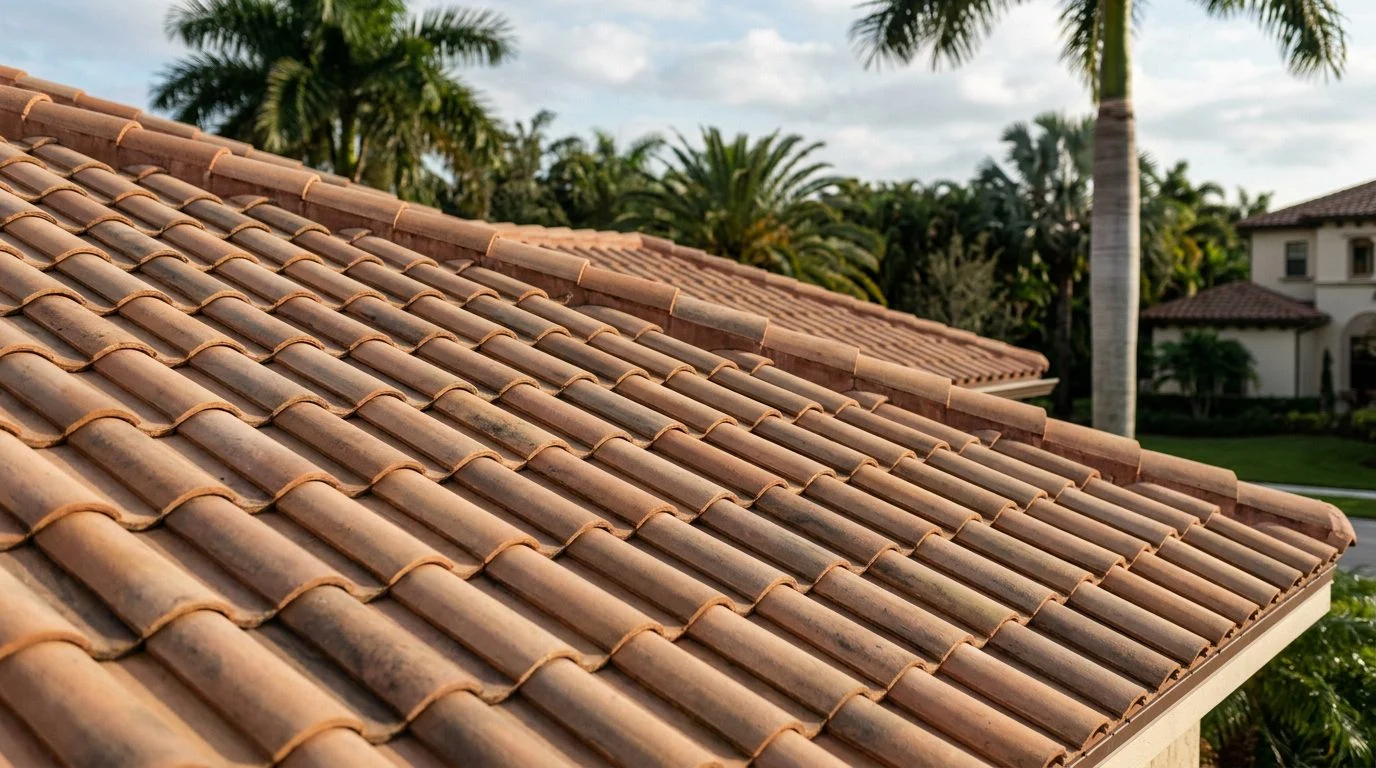
Tile also fits the look of many local homes. Barrel and S-tile profiles suit the Mediterranean, Spanish, and coastal styles common across Miami, Naples, and Boca Raton. A tile roof can raise curb appeal while doing real protective work.
This pillar guide walks through styles, costs, installation, code, lifespan, and maintenance. For deeper detail, we link to focused guides in the ASP Superhome tile roofing cluster along the way. As a complete home solutions provider, we also connect tile roofing to your home’s other needs, like solar panels and impact windows.
Tile Roofing Styles and Materials
The two main tile materials are concrete and clay, and each brings a different mix of cost, weight, and lifespan. Choosing between them is the first big decision most homeowners face.
Concrete Tile
Concrete tile is durable, affordable relative to clay, and comes in many colors and profiles. It’s heavy, so your roof structure must support it, but it holds up well against wind and sun. Many South Florida homes use concrete tile for its balance of value and strength. Learn more in our guide to concrete tile roofing in Naples and Fort Myers.
Clay Tile
Clay tile offers a classic, premium look and often lasts even longer than concrete. It resists fading and holds color well in strong sun. Clay usually costs more up front, but many owners choose it for its timeless appeal. See our page on clay tile roofing in Boca Raton and Kendall.
Profile Shapes
Tile comes in a few common shapes. Barrel and S-tile create the rounded, wave-like look tied to Spanish design. Flat or low-profile tile gives a cleaner, modern line. Interlocking tiles fit together tightly for better wind performance. For a side-by-side look, read our concrete vs. clay tile roof comparison.
What Tile Roofing Costs in South Florida
Tile roof cost in South Florida depends mostly on material, roof size, pitch, and how complex the job is. There’s no single price, because every roof is different. Still, understanding the drivers helps you compare quotes fairly.
Clay generally costs more than concrete. A steep or cut-up roof takes more labor than a simple one. A tear-off of the old roof adds cost compared with new construction. Underlayment quality, flashing, and hard-to-reach areas all move the number too.
Local rules also affect the total. Permits, inspections, and code-compliant products are part of any legitimate tile roof project in South Florida. Skipping them isn’t an option, and they protect your investment.
Look at cost over time, not just the sticker. Tile lasts longer than many roof types, which spreads the expense across decades. For a fuller breakdown, see our tile roof cost page.
Florida Building Code, Wind Ratings, and Insurance
Tile roofs in South Florida must meet the Florida Building Code, and coastal counties face even stricter rules. Getting this right isn’t optional. It’s how your roof stays safe and legal.
The Florida Building Code is adopted and maintained under the Florida Building Commission, and its authority traces to state law published through Florida Statutes — Online Sunshine. The code sets how roofing products must perform against wind.
Miami-Dade and Broward counties sit in the High-Velocity Hurricane Zone (HVHZ), where product-approval and wind rules are tighter. Approved products carry a Notice of Acceptance, and you can verify them through the Florida Building Code Product Approval system. Wind design in Florida follows the code, which references the ASCE 7 wind-load standard.
A code-compliant tile roof can also matter for homeowners insurance. Insurers often care about wind resistance and proper installation. We cover this in our tile roof and homeowners insurance guide and our building code and wind rating page.
The Tile Roof Installation Process
Installing a tile roof follows a clear sequence, from inspection to final cleanup. Knowing the steps helps you understand the timeline and what each part protects.
First comes inspection. We assess the existing roof and the deck beneath it. Rotten or damaged decking must be repaired before anything else goes down.
Next is tear-off and underlayment. Old roofing comes off, the deck gets repaired, and a new waterproof underlayment is installed. This layer is the real barrier against leaks. Then tiles are set and fastened, with careful flashing at valleys, plus ridge and hip details that keep water and wind out.
Permits and inspections happen throughout, not just at the end. After passing inspection, the crew cleans up the site. Timelines vary with roof size, weather, and complexity. Learn more in our pages on tile roof installation in Miami, tile roof replacement in Fort Lauderdale, and the installation timeline.
Have questions about what happened?
Ask our team directly. The first conversation is free, confidential, and there is no obligation to continue.
How Long a Tile Roof Lasts in South Florida
A well-installed tile roof can last for decades in South Florida, often outliving the underlayment beneath it. The tiles themselves are tough, but the whole system depends on more than the tile.
Clay often lasts longer than concrete, though both can serve for many years in our climate. The underlayment usually wears out before the tiles do. When that happens, tiles can be lifted, the underlayment replaced, and the same tiles reset. This is a key reason tile roofs offer long-term value.
Some things shorten a roof’s life. Walking on tiles can crack them. Storms can slip or break tiles and expose the layers below. Neglected maintenance lets small problems grow. Read more in our guides on how long a tile roof lasts in Florida, underlayment replacement, and why tiles crack or break.
Repair, Re-Lay, or Full Replacement: Choosing Your Path
The right path depends on the condition of your tiles and your underlayment. Sometimes a repair is enough. Other times, a full replacement is the smarter move.
When Repair Is Enough
Repair often works when the damage is small and local. A few cracked or slipped tiles, a single leak, or minor flashing issues can usually be fixed. If the underlayment is still in good shape, you may not need to do more. Our tile roof repair in West Palm Beach page explains common repairs.
When Re-Laying Makes Sense
Re-laying means lifting your existing tiles, replacing the worn underlayment, and setting the same tiles back down. This is an option when the tiles are still strong but the layer beneath has aged out. It can cost less than buying all-new tile. See our re-lay versus replacement page.
When Full Replacement Is the Practical Choice
Full replacement is best when many tiles are broken, the deck is damaged, or the roof is simply old. Widespread leaks and repeated repairs also point toward replacing everything. To spot the warning signs, read our page on signs your tile roof needs repair or replacement. For broader options, see our roof replacement and roof repair pages.
Energy Efficiency, Solar, and Maintenance
Tile roofs can help manage heat and lower cooling loads in South Florida’s climate. Their shape and thermal mass allow air to move and slow heat transfer into your home.
Reflective roofing can reduce roof surface temperatures and cut cooling costs. The U.S. Department of Energy explains how roof reflectivity affects energy use, and the ENERGY STAR program certifies reflective roof products for hot climates. We cover this in our tile roof energy efficiency page.
Solar and tile can work together with the right approach. Mounting panels on tile takes care to avoid cracking and to keep the roof watertight. Learn more on our solar panels on a tile roof page. Finally, routine care protects your investment. Clearing debris, checking flashing, and catching slipped tiles early all help. See our tile roof maintenance guide.
Tile Roofing Service Across South Florida
ASP Superhome installs, replaces, and repairs tile roofs across South Florida. We serve Miami, Fort Lauderdale, West Palm Beach, Kendall, Naples, Fort Myers, and Boca Raton.
As a complete home solutions provider, we look at the whole house, not just the roof. That means we can pair tile roofing with solar panels, impact windows, and impact doors when it makes sense for your home. If you’re also comparing roof types, our metal roofing page offers another option to consider.
Want to know where you stand?
Tell us what happened and our team will walk you through the options available to you, at no cost.
Frequently Asked Questions
Is tile roofing a good choice for South Florida’s climate?
Yes. Tile resists heat, humidity, salt air, and strong winds, which makes it well suited to South Florida’s demanding climate.
What is the difference between concrete and clay tile roofs?
Concrete tile costs less and comes in many colors, while clay tile costs more, resists fading, and often lasts even longer.
How much does a tile roof cost in South Florida?
Cost depends on material, roof size, pitch, tear-off, and complexity, so prices vary. A free estimate gives you a number for your specific roof.
How long does a tile roof last in Florida?
A well-installed tile roof can last for decades, though the underlayment usually wears out first and may need replacing sooner.
Do tile roofs meet Florida Building Code and HVHZ requirements?
Yes, when installed with approved products and proper methods. Miami-Dade and Broward sit in the High-Velocity Hurricane Zone with stricter rules.
Can you install solar panels on a tile roof?
Yes. Panels can be mounted on tile with careful methods that avoid cracking tiles and keep the roof watertight.
When should a tile roof be repaired instead of replaced?
Repair works for small, local damage when the underlayment is still sound. Widespread damage or an aging roof usually calls for replacement.
Deciding on Your Tile Roof? Here’s the Next Step
Maybe you’re weighing concrete against clay, or you’re not sure whether a repair, a re-lay, or a full replacement is right for your home. Perhaps you’re comparing costs across a few options before you commit. Homeowners across Miami, Fort Lauderdale, West Palm Beach, Naples, and beyond reach out at exactly this stage.
You don’t have to sort it out alone. Contact ASP Superhome for a free, no-obligation estimate built around your roof, your city, and your goals.
Why Homeowners Choose Tile Roofing
Built for the Climate
Tile resists heat, humidity, salt air, and strong winds, making it a smart fit for South Florida homes.
Long Service Life
Both concrete and clay tile are known for lasting decades when properly installed and maintained.
Timeless Curb Appeal
Tile comes in a wide range of colors and profiles to complement Mediterranean, Spanish, and modern homes alike.
Whole-Home Focus
ASP Superhome combines roofing with impact windows, doors, and solar for a complete home solution.
Not Sure Whether to Repair or Replace?
Some tile roofs only need targeted repairs, while others are better served by a full replacement. Let ASP Superhome inspect your roof and walk you through the options before you decide.
Concrete vs. Clay Tile
Concrete Tile
Costs less and comes in many colors and profiles. A versatile choice for homeowners who want the tile look at a friendlier price.
Clay Tile
Costs more but resists fading and is prized for its rich, lasting color and classic Mediterranean character.
Choosing the Right Fit
The best tile depends on your home's structure, style, and budget. Our team helps you weigh each factor for your project.
Tile Roofing Services We Provide
Roof Replacement
Full tile roof replacement when your existing roof has reached the end of its service life.
Roof Repair
Targeted repairs for cracked, slipped, or damaged tiles and underlayment issues.
New Tile Installation
Fresh installation of concrete or clay tile matched to your home's design and needs.
Ready to Talk Tile Roofing? Serving Miami, Fort Lauderdale, West Palm Beach, Kendall, Naples, Fort Myers, and Boca Raton.
Related practice areas
- Metal Roofing in South Florida: Types, Costs & Benefits
- Kitchen Remodeling in South Florida: Costs, Designs & Timelines


