


Tile Roofing | South Florida
Tile Roof Underlayment: Your Florida Secondary Water Barrier
Tile sheds most rain, but the layer beneath it does much of the work when wind-driven rain arrives. Learn how underlayment protects your home and what to check on your roof.
By Jonathan Rodriguez · Published November 1, 2026
Tile Roof Underlayment: Florida Secondary Water Barrier Guide
Under a tile roof in Florida sits the underlayment, and its most important job is the secondary water barrier. Tile sheds most rain, but wind-driven rain can still push past it. When that happens, the barrier is what keeps water out of the home. This guide explains how tile roof underlayment and the secondary water barrier work, what Florida’s building code requires, and which installation details decide whether the system performs. It is written for homeowners in Miami, Fort Lauderdale, West Palm Beach, Boca Raton, and other South Florida areas, and for buyers reviewing a tile roof. Florida’s rules here are more specific than many people expect.
If your tile roof is nearing the end of its life, or a stain has appeared on a ceiling below it, our team can talk through your options with you. Talk it through with our team — the first consultation is free, confidential, and carries no obligation.
What Sits Under a Tile Roof in Florida
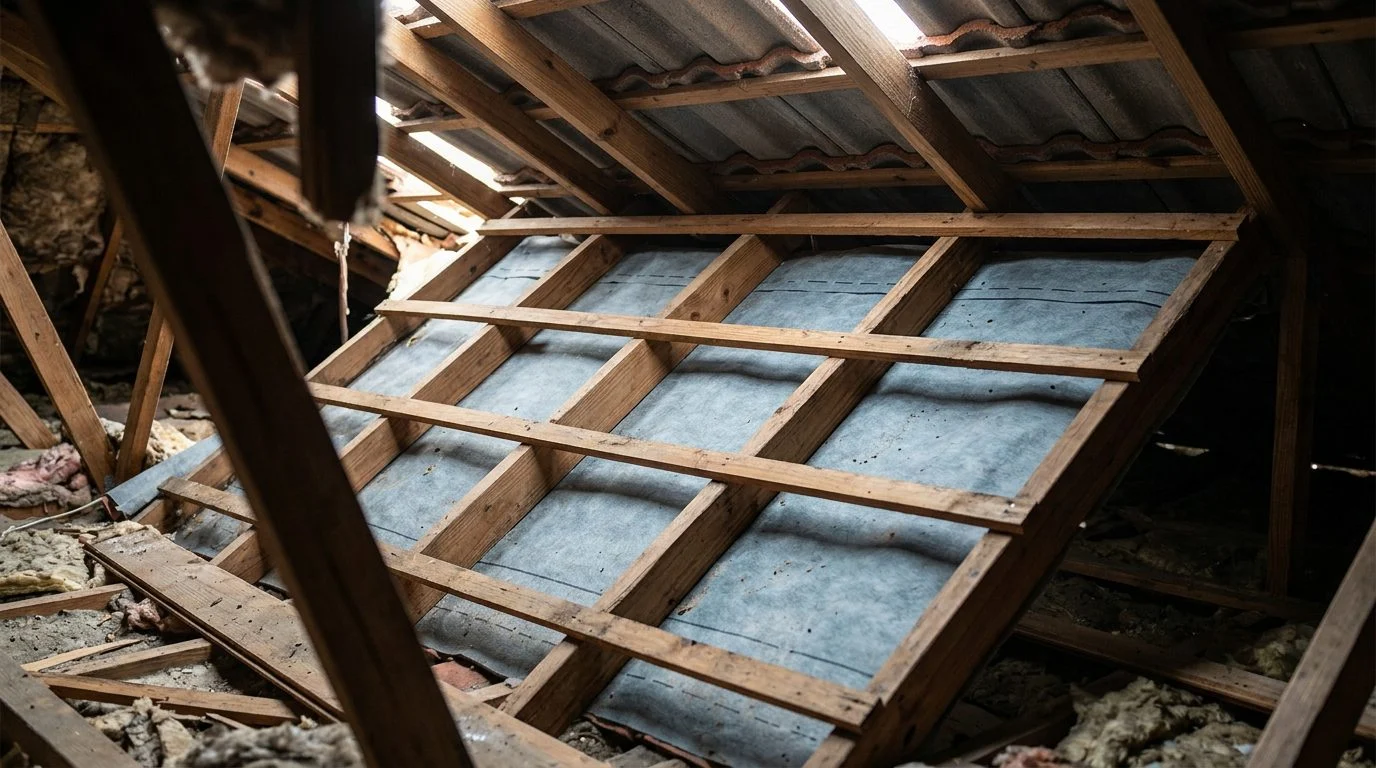
Under the tile is the underlayment, a water-resistant layer laid across the roof deck. Tile is built to shed water, but it is not the only line of defense. Tiles can crack, slip, or lift in strong wind, and rain can get underneath them.
The secondary water barrier is the part of the underlayment designed to catch that water. Think of the tile as the first layer of protection and the barrier as the one beneath it. The barrier matters most when the tile fails.
The roof deck, also called the sheathing, is the layer of boards or panels fastened to the roof framing. The underlayment is fastened or bonded to the deck. A clean, dry, solid deck gives the system something to hold. Soft or damaged decking weakens both the fasteners and the seal.
What the Florida Building Code Requires for a Secondary Water Barrier
Under the 2026 Florida residential code, the protective layer beneath roof tiles must overlap hips and ridges by at least 6 inches, except at ventilation openings (Florida Building Commission summary of changes, 2026 residential code). Source: Florida Building Commission analysis That document describes what changed. It is not the code text itself.
The Building edition has the same lap change at section 1518.2, as shown in the Building code analysis. It also adds section 1518.8.8. That section requires the uplift resistance of tile underlayment to meet the component and cladding loads of ASCE 7.
Products have their own rules. Florida law says roofing products that require approval under s. 553.77 must be approved by one of the methods set out in subsection (5) of Fla. Stat. § 553.842 before their use in construction in this state. Under Fla. Stat. § 553.842, a product may not be advertised, sold, offered, provided, distributed, or marketed as hurricane, windstorm, or impact protection from wind-borne debris from a hurricane or windstorm unless it has been approved under this section or s. 553.8425. Under Fla. Stat. § 553.842, the Florida Building Commission must adopt rules to develop and implement a statewide product evaluation and approval system that operates in coordination with the Florida Building Code. Source: Florida Building Commission analysis The HVHZ test protocol analysis covers this change.
The exact requirement depends on the facts of your roof, including its slope and design wind speed.
Underlayment Materials: Felt, Synthetic and Self-Adhered
Three underlayment materials are common on tile roofs: traditional felt, synthetic underlayment, and self-adhered membrane.
Felt is the older option. It is an asphalt-saturated sheet. Heat and moisture can wear it down over time, and it is heavier to handle than synthetic.
Synthetic underlayment is made from plastic-based materials. It is lighter than felt and resists tearing better. Installers often use it because it holds up well during the work before the tile goes on.
Self-adhered membrane, often called peel-and-stick, has an adhesive face that bonds to the deck. It also seals around nail heads. Many homeowners who hear about it ask whether it is the better choice. The answer depends on the roof and the product’s approval. The product name tells you little. The label, the approval, and the installation method tell you much more.
Full Peel-and-Stick Versus Two-Layer Synthetic Systems
A full peel-and-stick system uses one self-adhered membrane across the whole deck as the secondary barrier. A two-layer synthetic system uses a synthetic underlayment with a second layer that serves as the barrier. Both can work when installed to the product’s approval.
In a full peel-and-stick system, the membrane bonds across the deck. The seams are continuous, so there are fewer joints to close. The crew must set the membrane before the tile goes on. The adhesive needs a suitable surface and temperature, and the crew must follow the product instructions. Valleys and penetrations need careful sealing.
In a two-layer system, the synthetic layer goes down first and the barrier layer follows. The two layers must overlap correctly so water runs down and over them. Valleys and penetrations usually need extra flashing. The installation sequence matters, because a layer laid out of order can leave a gap.
Compare the two on three points: the installation sequence, heat exposure during the work, and how each handles penetrations and valleys. Ask your roofer to show how the chosen system meets its product approval.
Seam Tape and Deck Preparation With Synthetic Underlayment
Seams and laps in synthetic underlayment are a common weak point, so seam tape and careful overlap close them. Seams are the joints where one sheet meets the next. Water can travel through an open seam, so every joint needs a proper seal. Seam tape covers these joints, and it must be applied to a clean surface as the product directs.
The deck must be clean, dry, smooth, and sound before anything goes on. Dirt, debris, or standing moisture can stop the layer from bonding or sealing. Damaged or delaminated sheathing is a serious concern. Delamination means the layers of the panel separate. Fasteners cannot hold well in soft or split boards, so the seal around them can fail too.
The Miami-Dade County hurricane mitigation guidance covers roof-sheathing attachment. It also explains when a secondary water barrier is required during some reroofing projects. Check that guidance against your project’s permit.
Not sure what your next step is?
Talk it through with our team — the first consultation is free, confidential, and carries no obligation.
Installation Details That Affect Performance
Lap direction, overlap, fastener placement, and flashing decide whether the barrier works as designed. Each detail matters, and a weak point in one area can undo a good product.
Lay the underlayment so water runs down and over the layers below. Hips and ridges need a protective-layer overlap of at least 6 inches under the 2026 Florida residential code, except at ventilation openings (Florida Building Commission summary of changes, 2026 residential code). Source: Residential code analysis
Fastener type, spacing, and placement matter as well. Overdriven fasteners can tear or crush the underlayment. Underdriven fasteners may not hold. Misplaced fasteners leave holes that the seal must cover.
Source: Florida Building Commission analysis Flashing is where many leaks start, so it deserves close attention.
The crew’s skill matters as much as the material. A good product installed poorly can leak. A sound method done right depends on the people doing the work.
Choosing an Underlayment Method for a Roof Replacement or Repair
A full replacement redoes the underlayment across the roof. A repair redoes only the opened area. Both must meet the code for the work being done.
Work on a roof usually needs a permit first. Under Fla. Stat. § 553.79, unless otherwise provided by law, a permit from the appropriate enforcing agency is required before work on a building in Florida begins.
The National Roofing Contractors Association notes that clay and concrete tile is durable. It also notes that when you replace another roof covering with tile, the structural load capacity must be verified.
Choose between a repair and a replacement by looking at four things. These are the roof’s age and condition, the deck’s condition, the tile profile and weight, and the permit requirements. The Tile Roofing Industry Alliance storm repair guidance covers repair versus replacement and inspecting the underlayment after storm damage.
If your roof already has self-adhered underlayment, the 9th Edition added section 706.7.3.2. It addresses which underlayment types are permitted over existing self-adhering underlayment when clay or concrete tile is replaced.
What Buyers and Homeowners Should Ask About a Tile Roof’s Underlayment
Ask for permit records, product approvals, and a written description of what was installed under the tile. These three documents show what was approved, what the product is, and how it went on the deck.
Permit records show the approved scope of work and the inspections tied to it. Product approvals show that the material was approved for use. The contractor’s installation description should cover the laps, fasteners, seam tape, and flashing. Buyers can ask the seller for these records during a purchase.
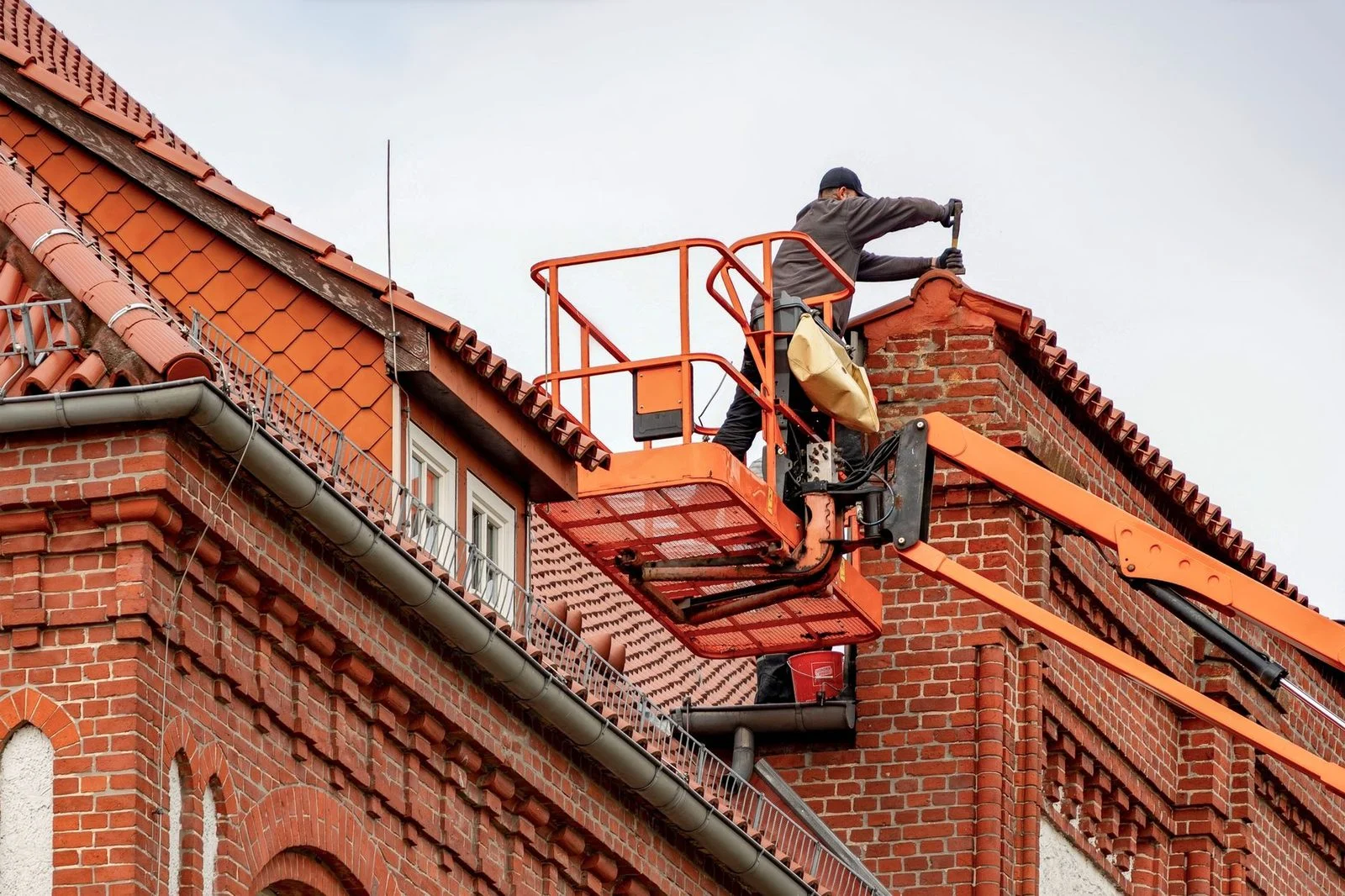
A ceiling stain below a tile roof can point to water getting past the tile and the barrier. A stain alone does not show where the water came from. Shifted or missing tiles can also point to a problem with the layer beneath, so a hands-on look is needed.
During a purchase, read any inspection note about underlayment, flashing, or sheathing closely. Ask the inspector to explain each note in plain terms.
Do I need a permit to replace tile roof underlayment in Florida?
Florida law generally requires a permit before repair or alteration work starts on a building. Check with the enforcing agency for your project.
Does Florida require underlayment under tile roofs?
The Florida Building Code sets underlayment rules for tile roofs, and the secondary water barrier is part of that system. Under Fla. Stat. § 553.73, the edition of the Florida Building Code in effect on the date of application for any permit authorized by the code governs the permitted work for the life of the permit and any extension granted to the permit.
Can I install a new tile roof over existing self-adhered underlayment?
The 2026 Florida existing building provisions add a new rule on which types of roof layers may be installed over an existing self-adhering layer when a clay or concrete tile roof is replaced (Florida Building Commission summary of changes, 2026 existing building provisions). Source: Florida Building Commission analysis Our team can check which options fit your roof.
Talk to Our Team About Your Tile Roof
If your tile roof is nearing the end of its life, or a stain has appeared on a ceiling below it, the layer under the tile may be part of the picture. Our first consultation is free, confidential, and comes with no obligation to continue. Contact ASP Superhome through our contact page to talk through your roof and your options.
Why the secondary water barrier matters
A second line of protection
Tiles are not watertight on their own. Underlayment sits beneath them and helps keep water out if it gets past the tile.
Part of a complete roof system
Underlayment works together with the tile, battens, and flashing. Each layer affects how well the others perform.
Easier to address before problems start
Checking underlayment during planning or a repair can help you spot issues that the tile alone would hide.
Permits and code questions up front
Permit requirements vary by municipality and project scope. Raise these questions early so your project is planned with them in mind.
Don't overlook what's under the tile
Tiles can look intact while the underlayment beneath them is worn, torn, or missing. Ask for a roof inspection that includes the underlayment before you decide on repairs or replacement. Our free first consultation is confidential and comes with no obligation to continue.
Common questions about tile roof underlayment
Do I need a permit?
Permit requirements depend on your municipality and the scope of work. Confirm with your local building department, and ask our team how permits fit into your project.
Does Florida require underlayment under tile?
Florida building rules address underlayment for tile roofs. The specifics depend on your roof's design, so bring your roof details to your consultation.
Can underlayment be replaced without replacing the tile?
It depends on the roof's condition, access, and tile type. A roof inspection is the most reliable way to learn what your roof needs.
What does the free consultation include?
Our free first consultation is confidential and carries no obligation to continue. It is a good time to ask about your roof, your timeline, and your options.


