


Tile Roofing · South Florida
Find the Source of a Tile Roof Valley Leak Before It Spreads
Valleys channel a lot of water, so a small leak there can show up far from where it started. Learn what to look for, then book a free estimate with ASP Superhome.
By Jonathan Rodriguez · Published November 1, 2026
A tile roof valley flashing leak in Florida usually starts where two roof planes or a wall meets the roof. The water often shows up inside, well away from the spot where it got in. To find the real entry point, look at where the stain sits, when it appears, and what the attic shows. This guide walks through each step for South Florida tile roofs in Miami, Fort Lauderdale, West Palm Beach, and nearby areas.
What a Roof Valley Is and Why It Carries So Much Water
A roof valley is the inside corner where two roof slopes meet. It channels rainwater from both slopes down toward the eave.
That concentrated flow is why valleys need extra attention. Water from a large area of roof is pushed into one narrow line.
South Florida storms make this worse. Heavy rain often arrives with strong wind. That wind can push water sideways under tile edges and into joints that stay dry in gentler weather.
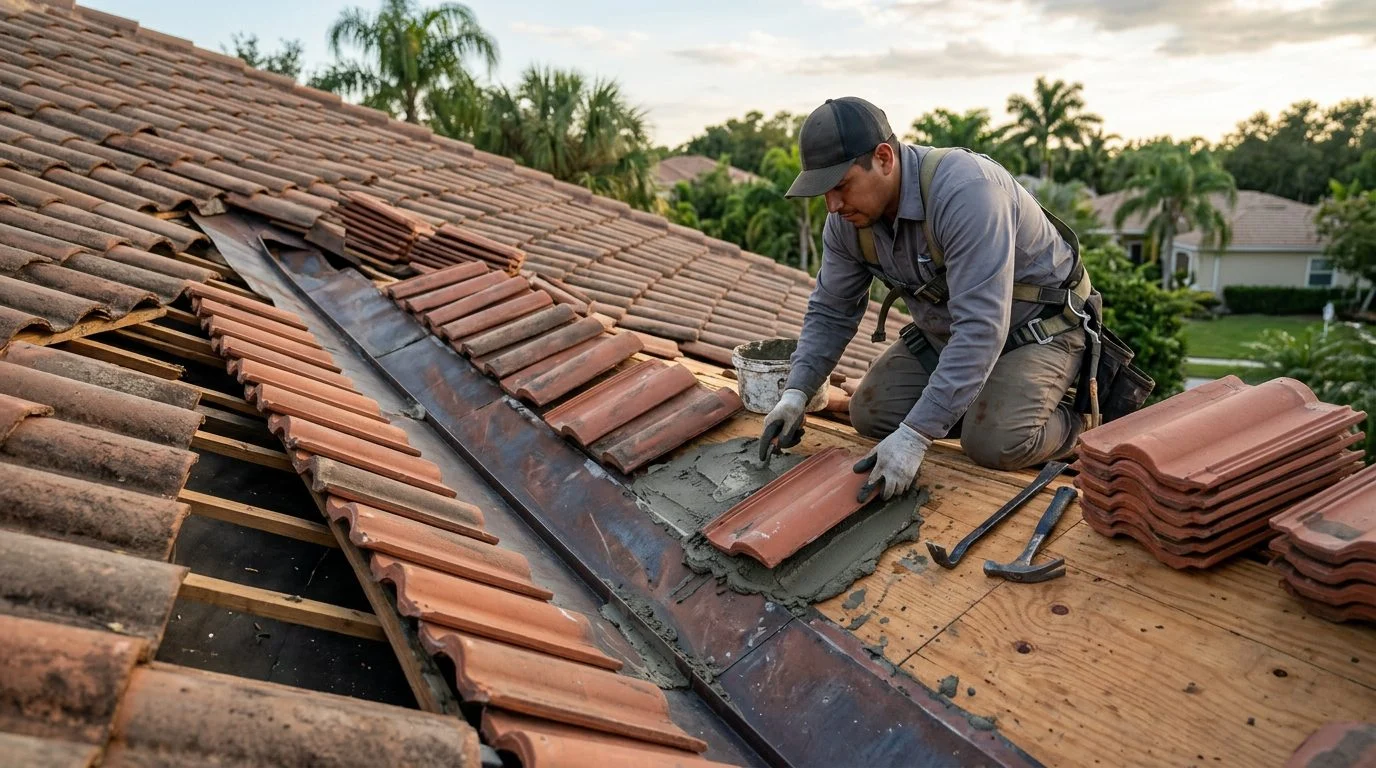
On a tile roof, the valley is protected by layers that work together. The underlayment sits beneath the tiles. Metal or other flashing forms the channel. The tiles are cut or set around the edges. If one layer fails, water can still get through.
For the full picture of how these roofs are built and maintained, see our tile roofing guide for South Florida.
If a drip or stain near your valley, chimney, or wall has you worried about the roof above it, our team can help you find where the water is getting in. Talk it through with our team — the first consultation is free, confidential, and carries no obligation.

How Flashing Works at Valleys, Chimneys, and Walls
Flashing is a barrier that directs water away from every joint where the roof meets a wall, chimney, pipe, or another roof plane.
Valley flashing lines the inside angle. Step flashing runs in short pieces up a wall, with each piece woven between the tile courses. Counter flashing tucks into the chimney and laps over the step flashing below it. Boot flashing wraps around a pipe or vent.
Flashing sits beneath the tiles and above the underlayment. That placement is why a failure can stay hidden until water reaches the ceiling.
The building code has changed in recent years. The 2026 tile flashing changes are discussed in this analysis of code changes.
Not every valley is built the same way. Some are formed differently from a standard metal channel. That is why the material and layout should be checked during an inspection.
Common Causes of Valley and Flashing Leaks on Tile Roofs
Most valley and flashing leaks come from tiles, underlayment, or metal that have shifted, worn out, or pulled away from a joint.
- Cracked, lifted, or displaced tiles let wind-driven rain reach the underlayment.
- Corroded, cracked, or loose metal flashing lets water through at its joints.
- Sealant that has dried out or pulled away from a joint opens a path for water.
- Underlayment that has aged, torn, or was not lapped correctly at valleys and walls can leak.
- Storm wind can lift tiles and flashing with no obvious damage on the surface.
Underlayment matters more than many owners expect.
Tile itself holds up well.
Florida’s sun and heat also work on sealants and fasteners over time. Repeated expansion and contraction can loosen seals a little at a time.
Signs That Point to a Valley Leak Versus a Flashing Leak
A valley leak usually shows as a drip or stain along the line of the roof’s inside angle. A flashing leak usually shows beside a chimney or along a wall.
Valley stains often run in a line that follows the valley’s angle. The stain may cross a ceiling diagonally or run down a wall corner.
Chimney and wall flashing stains often sit right beside the chimney or along the wall where the roof meets it.
Wind direction is a useful clue. Water that enters only during wind-driven rain, not straight-down rain, can point to lifted tiles or flashing on the exposed side.
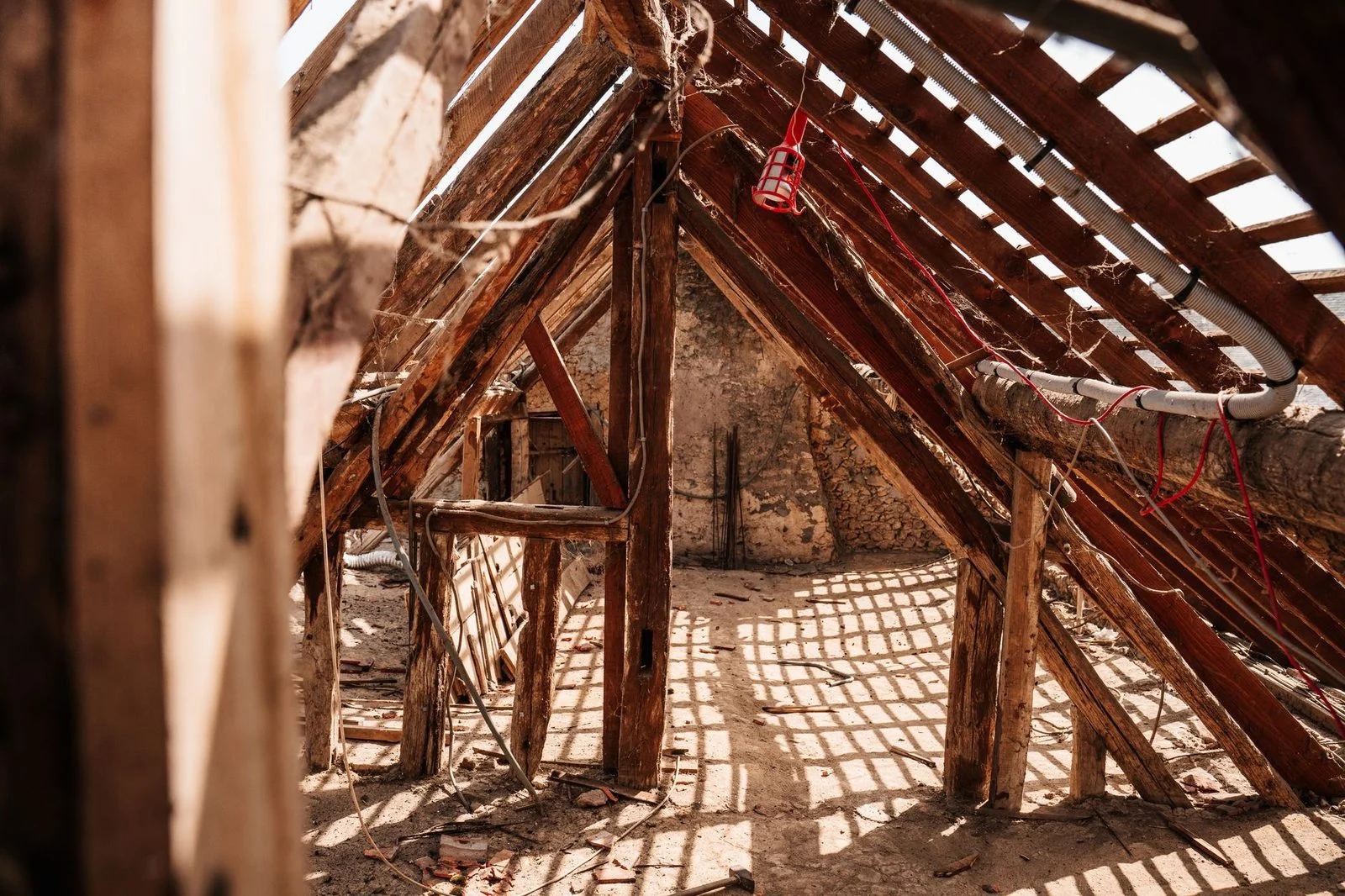
Check the attic next. Look for dark staining on the underside of the roof deck, wet insulation, rusted nail heads, or daylight showing through at the valley line.
Multiple stains in different rooms can mean water is traveling along rafters. The true entry point may sit higher on the roof than the visible drip. Don’t assume the stain marks the entry point.
How to Trace the Water Path Before Calling for Repairs
Trace the water by starting at the stain and moving upslope through the attic. Do this during or just after rain, when the wet areas are easiest to see.
Bring a flashlight. Follow wet wood, insulation, and framing toward the highest wet spot. That spot is often the most useful clue, because water runs downhill from its entry point.
Mark the wet area on the roof deck with tape or a marker. Take dated photos. A clear record helps whoever inspects the roof start in the right place.
A controlled water test can isolate a valley or wall section. Work from the lowest area of the roof upward. Pour water slowly, so each section is tested on its own. Keep a second person in the attic to watch for drips.
Stay off wet tile. Wet tile is slippery, and cracked tile can break under weight. A water test works best with one person on the roof and one in the attic, not with anyone walking the tiles.
Expect the leak to appear well away from its entry point. Water can travel along a valley, under a tile course, or along a rafter before it drips.
Repair or Replacement: What Shapes the Decision
A small valley or flashing fix is a repair. Replacing the underlayment and flashing across the whole valley is a larger job.
Localized repairs can include resetting tiles, replacing one flashing section, or re-sealing a joint. These fit when the underlayment is sound and the leak traces to one spot.
Several factors shape scope and cost. Check the age of the underlayment, how many tiles are damaged, whether the metal is corroded, and whether water has reached the decking or insulation.
Whether a roof calls for repair or full replacement depends on its age, its condition, and the extent of the damage. The 2026 recovering versus replacement changes allow the upper roof covering to be removed when recovering. That applies only when the existing or repaired substrate is adequate for the new covering.
A roof with recurring leaks at the same valley or wall may need the full section addressed, not another patch.
Repair costs vary with roof size, access, tile type, and the extent of damage. An on-site inspection gives the most accurate price for your roof.
Not sure what your next step is?
Talk it through with our team — the first consultation is free, confidential, and carries no obligation.
Preventing Valley and Flashing Leaks on Tile Roofs in South Florida
Regular checks after storms catch most small valley and flashing problems early. A quick look now can prevent a stain on the ceiling later.
Look at valley tiles, flashing edges, and sealant from the ground with binoculars, or from a safe spot. Note any gaps, lifted tiles, or sealant that has pulled away.
Clear debris from valleys and gutters. Leaves and grit can dam water and force it back under the tiles.
Florida’s sun, heat, and storm season put sealants and metal joints under steady stress. Watch those joints most closely after heavy weather.
Drip edge is part of the system too.
Homes in Miami, Fort Lauderdale, West Palm Beach, and nearby areas share these storm and sun conditions.
Talk to ASP Superhome About Your Valley or Flashing Leak
If you see a stain, drip, or wet spot near a valley, chimney, or wall, the first job is finding the entry point. Repair choices come after that.
You don’t have to sort out the attic trace, the wind clues, and the code questions alone. Our team can look at the valley, flashing, and underlayment with you and identify the water path.
Our initial consultation is free, confidential, and carries no obligation to continue. You can reach us through our contact page.
For the wider overview of tile roof service in South Florida, see the tile roofing guide.
Frequently Asked Questions
What usually causes a tile roof valley leak in Florida?
Lifted or cracked tiles, damaged flashing, and worn underlayment are the usual causes. Sealant that has pulled away from a joint can also let water in.
Can a valley leak show up far from where water enters?
Yes. Water can travel along rafters or under tile courses, so the stain may sit well below the entry point.
Does every tile roof valley use metal flashing?
No. Some valleys are formed differently, so the layout should be checked during an inspection.
Does a flashing leak always mean the whole roof needs replacing?
No. A localized flashing repair can fit a sound roof. Recurring leaks at the same spot may need the full section addressed.
Safety first
Tile is brittle and can crack or slide under foot. Avoid walking on a tile roof to inspect the valley yourself. Check for stains and drips from inside the home, and let a professional do the roof work.
Common signs of a valley leak
Stains on ceilings or walls
A brown or yellow stain near a corner or hip line can point to water moving down a valley, even if the stain sits well away from the roof's lowest point.
Dripping or dampness after rain
Water that appears only during heavy storms, or drips along a wall or ceiling joint, often means flashing or underlayment has failed under the tiles.
Cracked or displaced tiles
Tiles that have shifted, cracked, or lifted along the valley let water reach the layers underneath. Wind-driven rain makes this worse during South Florida storm season.
Pulled-away sealant
Sealant at a flashing joint can shrink, crack, or separate over time with sun and heat. Gaps there give water a direct path into the roof structure.
How we help you find the source
Start with a clear diagnosis
We look at the valley flashing, tile courses, underlayment, and sealant to identify where water is getting in, not just where it shows up inside.
Repairs built for Florida weather
Our tile and roof repair work is planned around heat, heavy rain, and wind, the conditions that wear valleys down across South Florida.
A written estimate
You receive a clear quote that explains what needs repair, what can wait, and what a full roof replacement would involve.
A free, confidential first consultation
Your first consultation is free, confidential, and comes with no obligation to continue.


