


Tile Roofs | South Florida
Storm Blew Tiles Off Your Roof? Start Here.
Stay safe, document the damage, and limit water getting inside. Here is what to do first, whether you're in Miami, Fort Lauderdale, West Palm Beach, Kendall, Boca Raton, Naples, or Fort Myers.
Your First Consultation
Free
Initial consultation
Confidential
Your information stays private
No Obligation
No commitment to continue
By Jonathan Rodriguez · Published October 30, 2026
If roof tiles blew off in a Florida storm, your first job is safety. Stay off the roof, photograph the damage, and limit water getting inside until someone can inspect it.
Missing tiles can look like a small problem. But the layers under them are now open to rain. Here is what to do, in order, whether you live in Miami, Fort Lauderdale, West Palm Beach, Kendall, Boca Raton, Naples, or Fort Myers.
Stay Off the Roof and Keep Everyone Safe
Stay off the roof until the wind has died down and the tiles are dry. Wet tile is slick, and cracked or loose tiles can slip under your feet.
Use ground-level views instead. Stand back and use binoculars or your phone’s zoom to spot gaps, shifted rows, and bare areas.
Walk the yard carefully. Broken tile fragments can cut hands and feet. Keep children and pets inside or well away from the debris.
If a tile, gutter, or piece of trim hangs loose, don’t pull it down. Stay clear of the area beneath any roof edge that looks ready to drop more material.
Treat any downed power line as live. Keep your distance and keep others away from it.
If tiles came off your roof and you're not sure a few repairs will be enough, our team can talk it through with you. Our free first consultation is confidential and carries no obligation to continue. Talk it through with our team — the first consultation is free, confidential, and carries no obligation.

Document the Damage Before Anything Is Moved
Photograph everything before you clean up, move tiles, or make repairs. Clear, dated photos are the easiest proof to keep.
Take several shots of the roof from different angles. Add close-ups of bare spots and the tiles on the ground. Next, photograph the exterior walls, gutters, screens, and fencing near the house, since storm damage often shows up in more than one place.
Then go inside. Photograph ceilings, wall corners, and light fixtures for stains, drips, or bulging drywall.
Write down the storm date and the day you first noticed the loss. Florida law sets a clock on property insurance claims. Under Fla. Stat. § 627.70132, a claim is barred unless notice reaches the insurer under the policy terms within 1 year after the date of loss. A supplemental claim for more damage from the same peril has an 18-month limit. For hurricane claims, the date of loss is the date the hurricane made landfall. For tornadoes, windstorms, severe rain, or other weather-related events, it is the date the event is verified by the National Oceanic and Atmospheric Administration.
Limit Water Entry Until a Repair Is Made
Protecting the inside of your home right away keeps damage from spreading. Move furniture, electronics, rugs, and valuables away from any ceiling that shows staining or drips.
Place buckets under active drips, and empty them often so they don’t overflow. If you can safely reach the exposed area from the attic or the ground, a temporary covering can reduce further water entry until repairs are scheduled. Secure the covering so wind can’t lift it. Never climb onto the roof to install it.
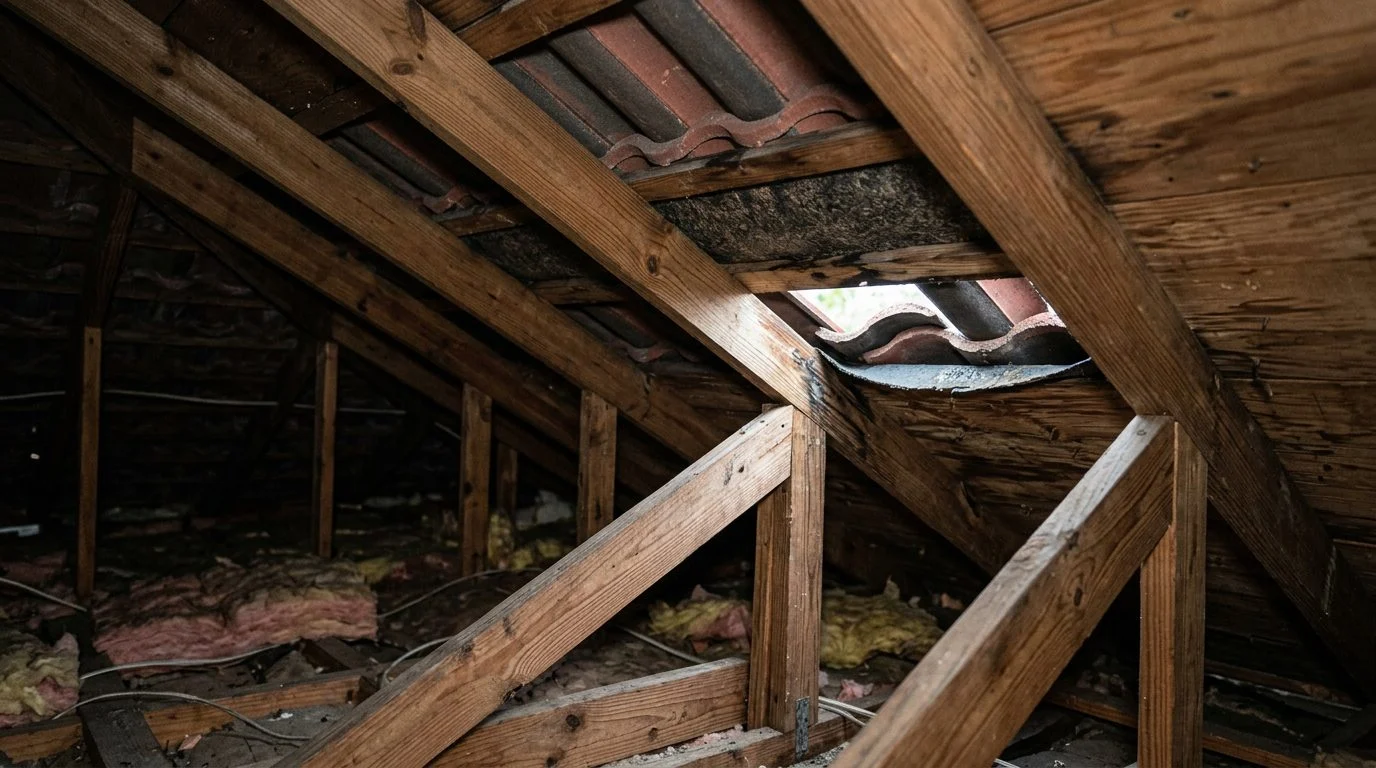
Check the attic after every rain. Look for wet insulation, dark or soft wood, and water trails along the rafters. Water often travels along the framing, so a wet spot can appear well away from the gap. Photograph what you find and note the date.
Why a Few Missing Tiles Can Mean More Roof Damage
Tiles shield the underlayment beneath them. Underlayment is the water-resistant layer under the tile. When a tile is gone, rain and wind-driven water can reach that layer.
Florida law addresses secondary water barriers for roofs. Under Fla. Stat. § 553.844, the criteria may include roof shape, slope, and the makeup of all roof-system elements. They may not be limited to one method or material.
Damage often shows up beside the gap. Neighboring tiles may be chipped, battens may be cracked, and ridge or hip caps may be displaced. Water can also run along the roof deck and appear away from the opening, so a ceiling stain may not sit directly under the missing tile.
Replacing a few tiles and repairing a broader damaged section are different jobs. The difference comes down to the condition of the underlayment, the roof deck, and the fasteners. An inspection is the only way to confirm those.
When to Call for an Inspection and Repair Estimate
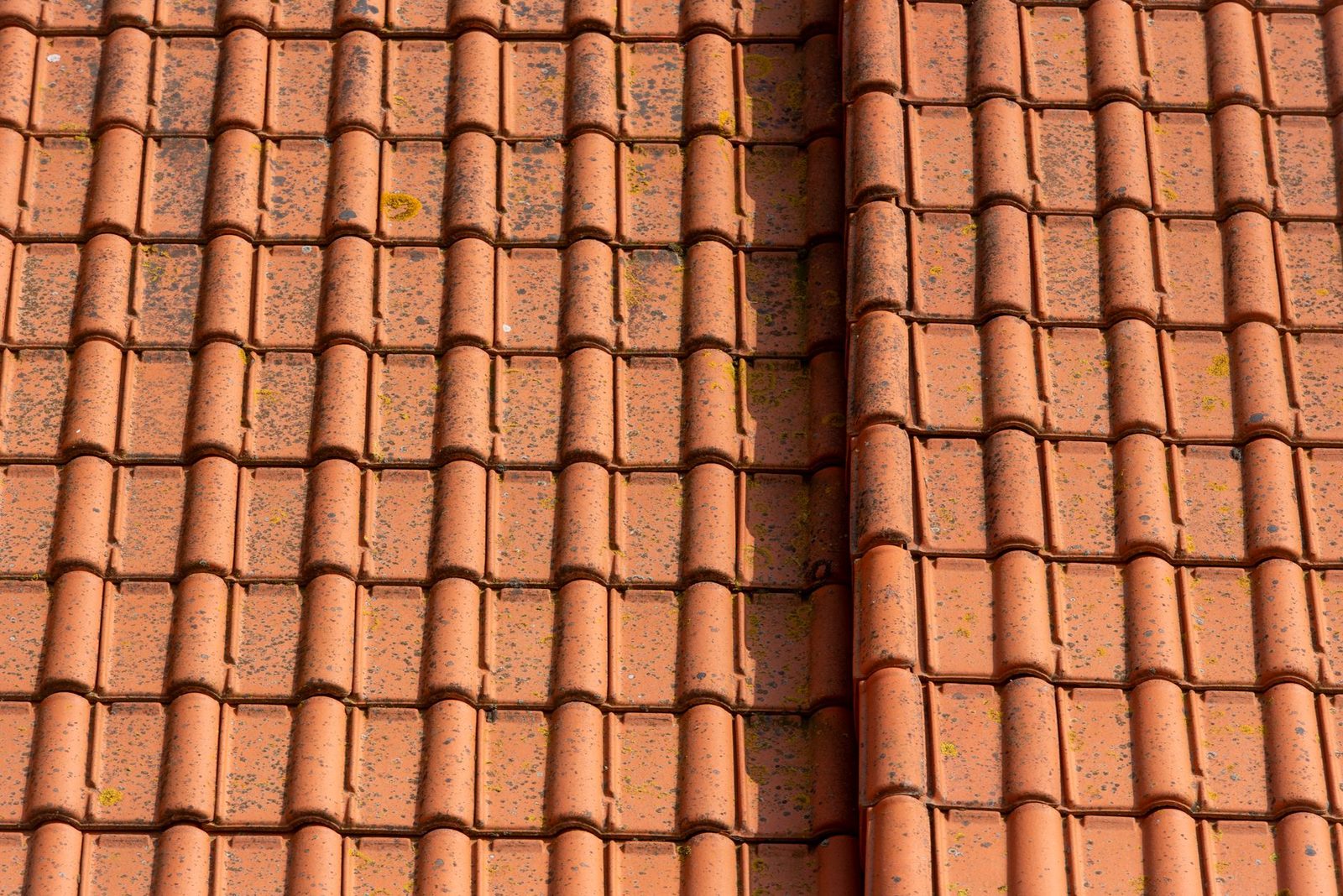
Call for an inspection soon after the storm. Call sooner if you see exposed underlayment, water inside the home, or many loose tiles. Waiting gives water more time to work on the structure below.
Ask for a written scope. It should list which tiles will be replaced, which fasteners and underlayment will be checked, and how the roof will be protected until the work is done.
Under Fla. Stat. § 489.147, a residential roof replacement or repair contract must include a bold notice of at least 14 points on the signature page, stating that if the proposed work is related to an insurance claim, the owner should contact the insurance company to verify coverage, including claims, deductibles, and policy terms, before signing.
Fla. Stat. § 627.7011 requires that, before a home insurance policy is issued, the carrier must present each of the coverages it lists, including a policy or endorsement that adjusts dwelling losses on the basis of replacement cost rather than actual cash value. The first is a policy or endorsement adjusting a repaired or replaced loss on the basis of replacement costs to the dwelling, not exceeding policy limits, rather than actual cash value, but without the costs of meeting applicable laws and ordinances. The second is a replacement-cost policy or endorsement that also includes those law-and-ordinance costs. Those added costs may be limited to 25 percent or 50 percent of the dwelling limit, as selected by the policyholder. That coverage applies only to repairs of the damaged portion of the structure unless the total damage to the structure exceeds 50 percent of the replacement cost of the structure. The insurer is not required to make these offers when issuing or renewing a policy that already contains the second option with law-and-ordinance coverage limited to 25 percent of the dwelling limit, except that it must still offer law-and-ordinance coverage limited to 50 percent of the dwelling limit. The insurer then pays any remaining amounts necessary to perform those repairs as work is performed and expenses are incurred. If a roof deductible applies, the insurer may limit the roof payment to the actual cash value of the loss to the roof until it receives reasonable proof you paid that deductible.
Keep receipts, photos, and inspection notes together in one place.
Quick Answers
Should I climb up to check tiles after a storm? No. Wait until the wind eases and the tiles are dry, then check from the ground.
If tiles blew off your roof and you’re weighing a few repairs against more work, book a free estimate with our team. Our free first consultation is confidential and carries no obligation to continue.
Your First Steps After a Storm
1. Stay Off the Roof
Wait until the wind has died down and the tiles are dry. Wet tile is slippery, and cracked or loose tiles can break underfoot. Inspect from the ground and let a professional handle anything above.
2. Photograph Everything
Take clear photos and videos of missing, cracked, or displaced tiles, damaged flashing, and any debris in the yard. Include the exterior walls, gutters, and any damaged windows or doors.
3. Limit Water Intrusion
Move furniture and valuables away from ceilings and walls with leaks. Place buckets or towels under drips and cover openings with a tarp only if you can do so safely from the ground.
4. Check Inside the Home
Look for water stains on ceilings, damp insulation, or dripping light fixtures. Note where water is entering, since layers under the tiles may now be exposed to rain.
Safety Comes First
Do not climb onto a tile roof in wet or windy conditions, and never approach downed power lines or sagging electrical wiring. Keep children and pets away from the damaged area.
Why Homeowners Start With a Free Consultation
Talk Through the Damage
Describe what you're seeing, share your photos, and get a clear picture of what needs attention.
Protect Your Home
Addressing open roof layers and water entry early helps reduce further damage to the interior of your home.
Organized Documentation
Keep your photos, notes, and written estimates together so you can review your options at your own pace.
No Pressure
The initial consultation is confidential and comes with no obligation to continue.


