


Tile Roofing | South Florida Homes
Flat Tile or Barrel Tile? Choose the Roof That Fits Your Home
Compare weight, style, and installation for South Florida homes, then book a free consultation with ASP Superhome to see which tile suits your roof.
Your First Consultation
Free
Initial consultation
Confidential
Your details stay private
No obligation
Decide later, if you choose
By Jonathan Rodriguez · Published November 1, 2026
Which type of roof is better, flat tile or barrel tile? Neither one wins in every case. The right choice depends on your roof structure, your home’s style, and how the tile is installed. This guide compares the two for South Florida homes so you know what to check first.
The short answer: neither profile wins in every case
Flat tile and barrel tile each suit different homes. The better fit depends on the roof framing, the architecture, and the installation details. Most people ask this question when a roof is failing, being replaced, or planned for a new build. Those specifics should guide the choice more than the profile name does. For background on the material, see our tile roofing guide for South Florida. The Tile Roofing Industry Alliance states that clay and concrete tile roofs are long-lasting, durable, and resistant to weather damage, including Florida hurricane conditions.
If a tile roof decision landed on you suddenly, you don't have to sort out the options alone, and ASP Superhome can talk it through with you. Talk it through with our team — the first consultation is free, confidential, and carries no obligation.

What flat tile and barrel tile look like and how they are laid
Flat tile has a low, smooth face that lies close to the roof deck. It gives a clean, modern line. Barrel tile has a curved profile. Its shadows and highlights create strong texture, which many people link to Spanish and Mediterranean homes.
Both types are laid in overlapping courses, so each tile covers the joint below it. The profile decides how much texture shows from the street. A flat profile reads smooth. A barrel profile reads bold.
The profile is not tied to one material. Miami-Dade County Product Control approves a flat-profile, interlocking concrete tile system under TAS 112 for specified Florida applications, as shown in NOA 25072201. Florida-approved metal panels can also be made in a barrel-tile profile, according to NOA 21020205. If you like the barrel look, clay and concrete are not your only options.
Weight and structure: what the roof framing must carry
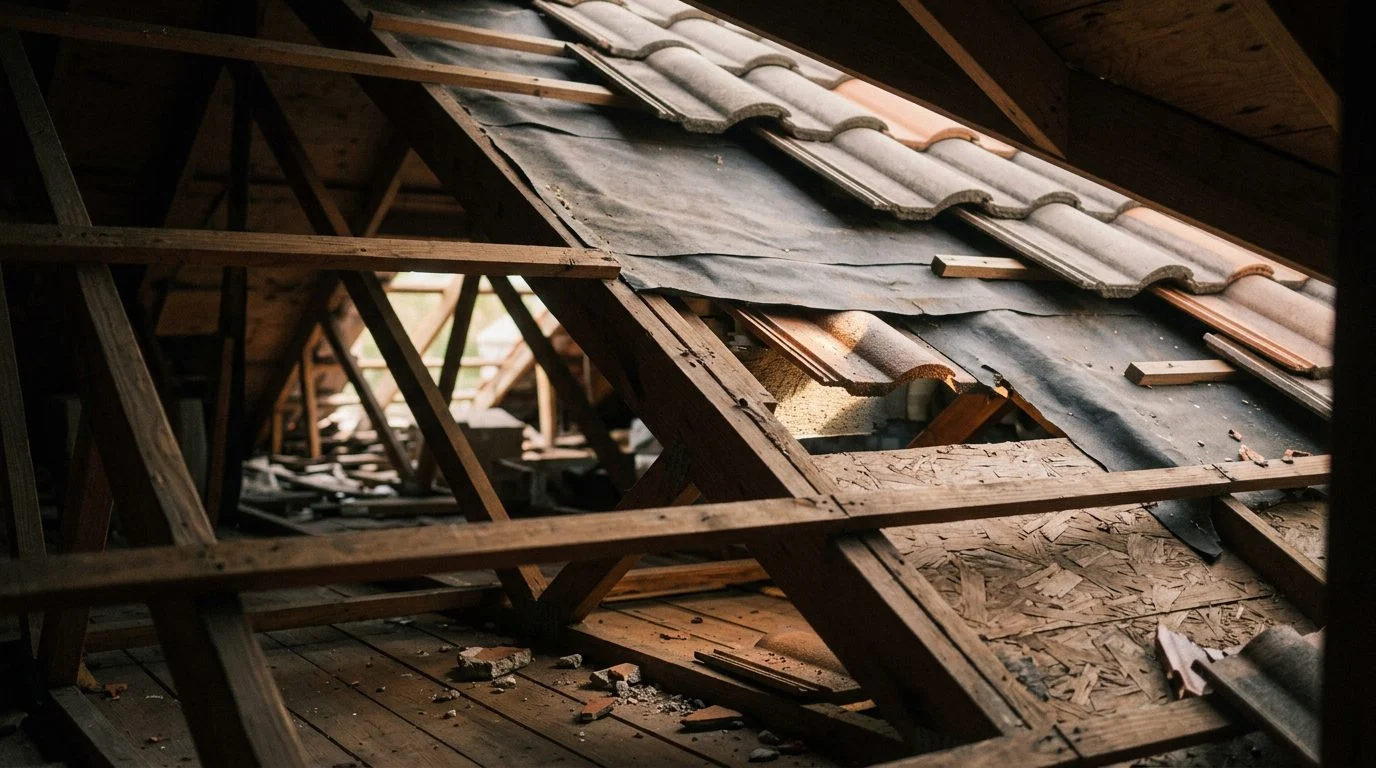
Tile is heavier than shingle or metal, so the framing needs a check before any tile goes on. The framing must carry the tile’s own weight, called dead load, plus wind and other loads. The Florida Building Commission’s 2026 analysis of section 1606.1 says the code was revised to clarify that all buildings must be designed to resist dead loads.
Load calculations follow design standards such as ASCE 7-22. That standard covers dead, live, rain, wind, and snow loads, and how they combine.
Ask for the weight of the specific tile you are considering, then compare it with what your framing can support. Palm Beach County’s wall design pressure chart sets wind design pressures and roof zones for tile attachments. Weight is a separate check, so cover both.
Water shedding, wind performance, and installation quality
Both profiles shed water when they are properly lapped, flashed, and fastened. Installation quality matters more than the profile itself.
Barrel tile’s curve and the channels it forms move water off the roof well. Flat tile’s tight interlock gives an even surface. Both depend on underlayment, flashing, and the correct attachment method.
Underlayment now carries a specific requirement. The 2026 analysis of section 1518.8.8 says a new section requires tile underlayment uplift resistance to meet the component and cladding loads of ASCE 7.
Under Fla. Stat. § 553.8425, for local product approval, products or systems of construction must demonstrate compliance with the structural windload requirements of the Florida Building Code through one of the methods the section lists, such as a certification mark or a statewide product approval. So confirm the exact product and its approval for your project.
For single-family homes, Fla. Stat. § 553.844 requires a roof replacement to include certain wind-resistance techniques. It also says roof-to-wall connections on a roof replacement apply only to homes in the wind-borne debris region with an insured value (or, if uninsured, a just valuation) of $300,000 or more, and are not required unless evaluation and installation of connections at gable ends or all corners can be completed for 15 percent of the cost of roof replacement.
Appearance, architecture, and how each fits different homes
Barrel tile suits Spanish-style, Mediterranean, and Mission-influenced homes where curved texture is part of the design. Flat tile suits contemporary, transitional, and low-profile homes that call for a smooth roof line.
Roof pitch, home size, and the rooflines around the house also change how a profile looks once installed. Look at nearby homes to see what fits the street.
Color, finish, and manufacturer change the look as much as the profile does. Ask for samples and view them on your own home in daylight.

Choosing between them for your home, and the next step
Start with five questions:
- What architectural style is the home?
- What can the existing roof structure carry?
- How much wind exposure does the home face?
- Is the roof being repaired or fully replaced?
- What look do you want the finished roof to have?
If you are making this call after storm damage, after an inspector flagged the roof, or for a parent or a rental property you manage, the timing can feel rushed. Florida law makes it unlawful to construct, alter, modify, repair, or demolish a building in this state without first getting a permit, unless the law provides otherwise, under Fla. Stat. § 553.79. Plan for that step early.
For more detail, read our guides on roof shape and hurricane-force winds, tile roof overlay versus tear-off, and tile roof replacement permits in Palm Beach County.
If you are weighing tile roof replacement or roof repair for your home, the ASP Superhome team can talk it through with you. Your first consultation is free, confidential, and carries no obligation to continue. You can reach out through our contact page.
Common questions
Which type of roof is better, flat tile or barrel tile?
Neither wins in every case. Roof structure, home style, and installation decide the better fit.
Is barrel tile heavier than flat tile?
Weight depends on the specific tile and the roof framing. Compare the tile’s weight with your framing before you choose.
Do tile roofs need special underlayment in Florida?
Tile underlayment performance depends on the specific roof system and local requirements, so our team can review your roof during your free initial consultation, which is confidential and carries no obligation to continue.
Can metal look like barrel tile?
Yes. Florida-approved metal panels can be made in a barrel-tile profile.
What Shapes the Right Choice
Roof structure
The framing and decking must be evaluated before any tile is selected. Tile weight has to work with the existing structure.
Home style
Flat tile suits clean, modern lines, while barrel tile complements Mediterranean and Spanish-inspired architecture.
Installation details
Underlayment, fastening, and flashing affect how a tile roof performs in South Florida's humidity, sun, and storms.
Your priorities
Budget, appearance, and long-term maintenance all influence which tile profile fits your goals.
Check Your Framing First
Do not assume a tile profile will work on your roof. Tile weight varies by product, and the roof framing must be evaluated before you commit to a specific tile.
Questions to Ask Before You Decide
Does my roof framing support this tile?
Ask for a structural review that compares the tile's weight with your existing framing and decking.
Does this tile match my home's style?
Look at your home's architecture, neighborhood character, and the look you want from the roofline.
How will it be installed?
Confirm the underlayment, fasteners, and flashing plan, since installation quality shapes how the roof holds up.
What will maintenance involve?
Discuss inspection schedules and repair access so you know what ongoing care your tile roof will need.


