


Roof Repair | South Florida
Know What Your Roof Repair Should Cost Before You Sign Anything
A clear, line-by-line way to read a South Florida roof repair estimate, from roofing squares and materials to access, hidden damage, and permits.
Start With a Free First Consultation
Free
First consultation
Confidential
Your details stay private
No obligation
No commitment to continue
By Jonathan Rodriguez · Published October 26, 2026
To calculate roof repair cost, start with the area that needs work. Then add the materials, labor, access, hidden damage, and permits the repair requires. Each input moves the total, and each one should have its own line on a clear estimate.
This guide walks through that process for tile and metal roofs in South Florida. It covers homes in Miami, Fort Lauderdale, West Palm Beach, Boca Raton, Kendall, Naples, and Fort Myers. Many readers work through this for a parent, a tenant, or a property they manage. You may be looking at a leak after a storm or one cracked tile, and you need a clear way to think about the cost.
What a Roof Repair Cost Calculator Actually Measures
A roof repair cost comes from five main inputs: the repaired area, the roof material, the pitch and access, labor, and hidden damage. Permits and mobilization add separate lines on top of those.
To answer a common question, how do you estimate the cost of a roof? Start with the affected area. Then add materials, labor, and overhead. Overhead covers the cost of running the job, such as equipment and job management.
Most roofing estimates price work by the roofing square. One roofing square equals 100 square feet of roof surface. Pricing by squares lets a contractor compare a small patch with a full roof on the same scale.
A repair estimate and a replacement estimate use the same inputs. The difference is how much of the roof the work covers. A repair covers one section. A replacement covers the whole roof system.
For more context on how tile systems are built and maintained, read our tile roofing guide for South Florida.
If a leak or a cracked tile has you unsure what comes next, our team can look at your roof with you and talk through the numbers. Talk it through with our team — the first consultation is free, confidential, and carries no obligation.
Step 1: Measure the Area That Needs Repair
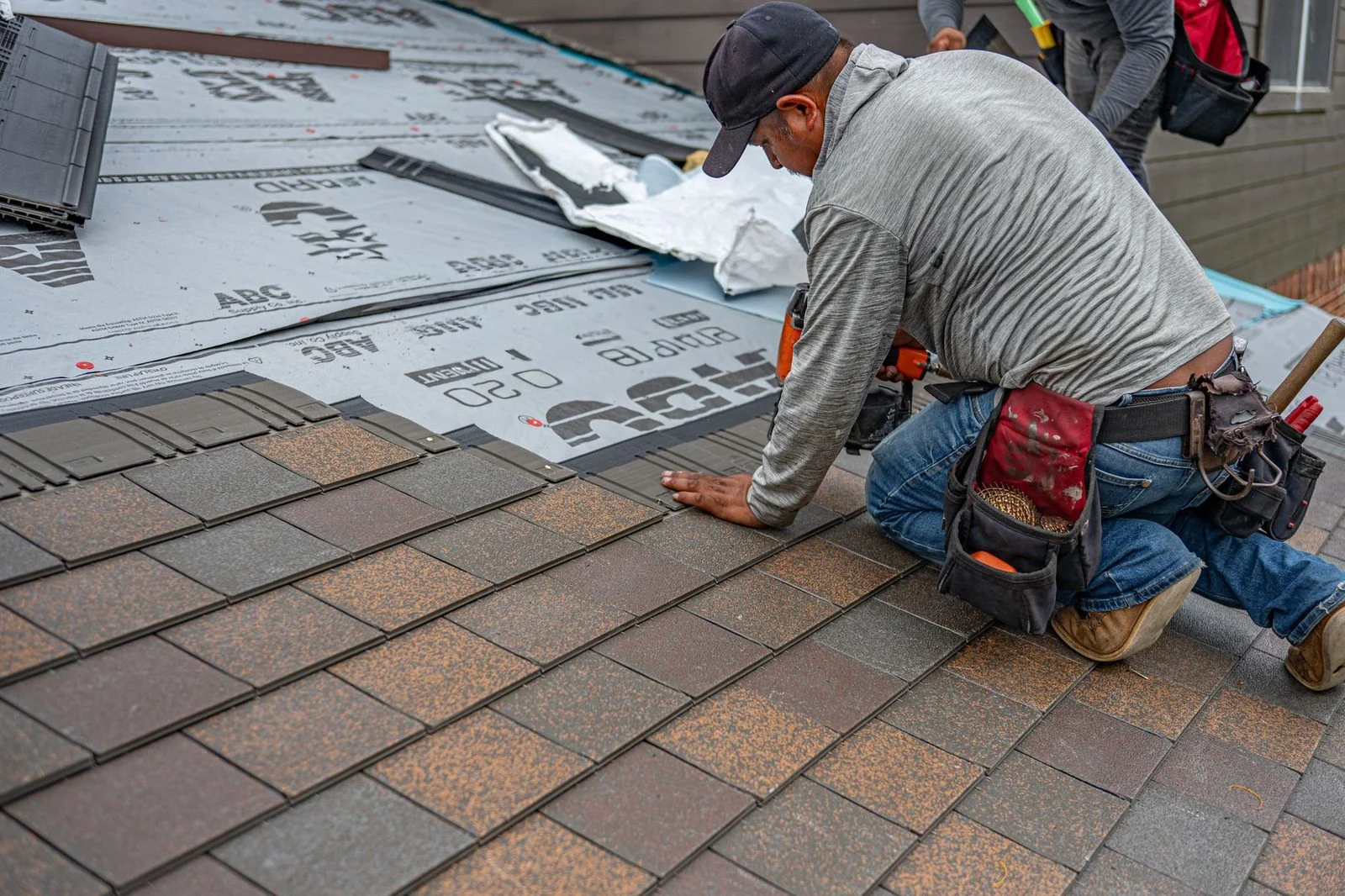
Measure only the damaged section, then convert that area into roofing squares.
A few cracked tiles cost very differently from a single leaking section or a full-roof problem. Be clear about which one you have before you add any numbers. A stain on the ceiling does not show the full path of the water.
Water can travel along the roof structure before it drips inside. The damaged area may be larger than the stain. Look at the whole roof plane around the stain before you draw the boundary.
Pitch matters too. A steeper roof has more surface than its footprint, and crews spend more time working on it. Measure the actual roof surface, not just the length and width of the house.
To sketch the area, draw the roof plane as a simple shape. Measure its length and width in feet. Multiply them to get square feet, then divide by 100 to get roofing squares. A 12-foot by 8-foot patch equals 96 square feet, or about 0.96 squares. Many estimates round up to whole units of material.
Step 2: Price the Materials for Your Roof Type
Material cost depends on whether the roof is tile or metal, and on how easily new parts match the old ones.
On a tile roof, the list usually includes replacement tiles, underlayment, and flashing. Matching is the hard part. New tiles must match the profile and color of the existing roof, and a close match is not always easy to find. Plan for that uncertainty before you finalize the number.
On a metal roof, the list covers panels or sections, fasteners, sealants, trim, and flashing at penetrations and roof edges. A metal repair can look small, but each seam and penetration adds parts to the list.
Even a small repair can carry a minimum material charge. A crew still needs a set of parts, fasteners, and sealant for a short job. Ask whether your estimate lists that base charge as its own line.
Underlayment and flashing often get replaced during a repair, even when the visible damage is small. They sit under the surface, where water moves. If they are worn, the new tile or metal sits on a weak layer.
Step 3: Add Labor, Access, and Tear-Off Costs
Labor is priced in crew hours for the repair area, including removal of damaged material and installation of new material.
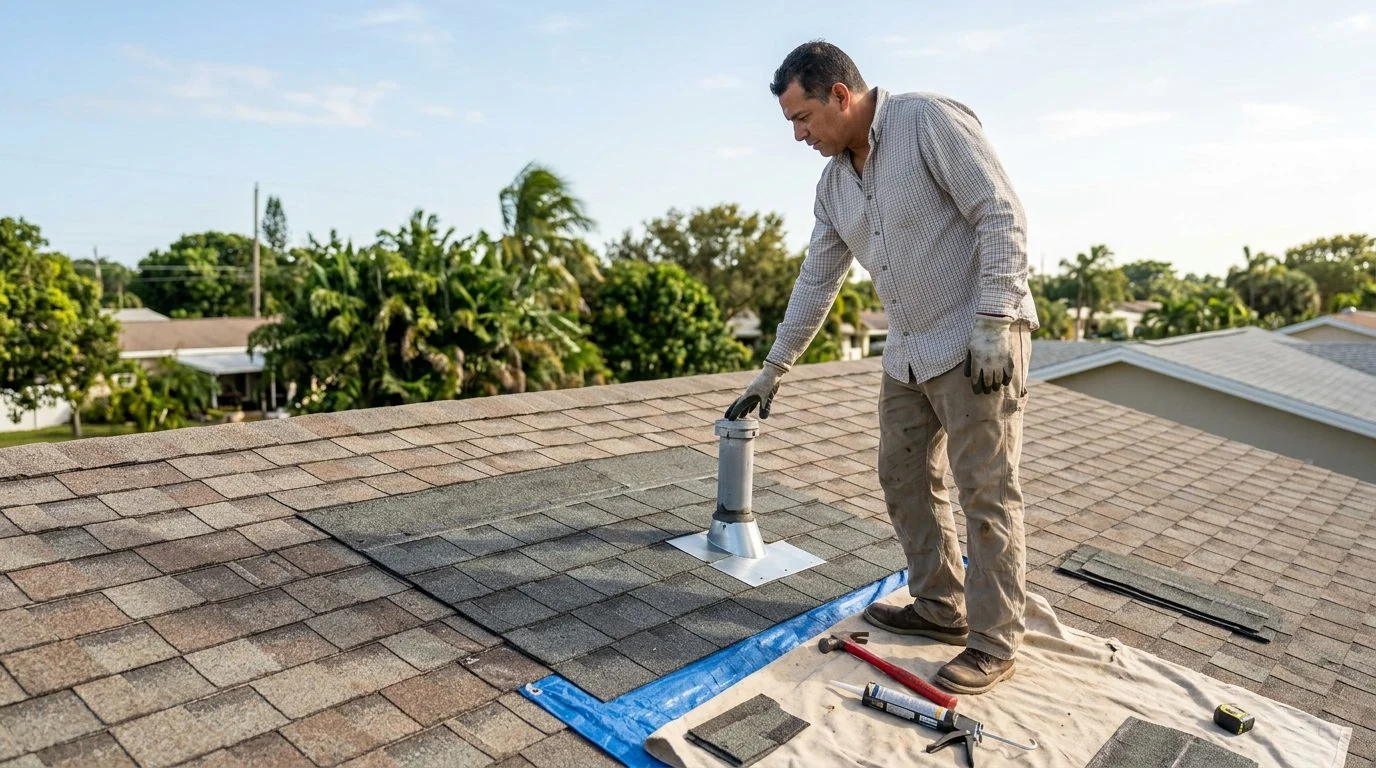
Access changes the hours. A steep pitch, a multi-story building, or a tight lot slows the work. Crews need safe ladders, staging, and fall protection on steep roofs. Each of these adds time, and time adds cost.
Tile work is often slower than metal work. Tiles must be lifted, moved, and reset carefully so neighboring tiles are not cracked. Metal sections usually involve fewer individual pieces to lift and reset.
Debris removal is its own line item. Broken tile and old metal must be hauled away. Disposal often carries a separate charge, so list it apart from labor.
Tear-off means removing old material to reach the problem. Tear-off labor and disposal should appear on the estimate before you approve the work.
Step 4: Account for Hidden Damage Behind the Surface
Hidden damage is the reason a repair estimate needs a contingency line.
Water that enters a roof often damages more than the visible tile or panel. It can soak the underlayment, the sheathing (decking) below it, and the insulation nearby. You may not see any of this until old material is removed.
Rotted or soft decking is usually replaced in the affected area. That adds sheet material and labor to the estimate. A small leak can reveal a larger wet area once the crew opens the roof.
Interior damage is a separate cost. Ceiling stains, wet drywall, and mold near a leak may need restoration after the roof is fixed. Those costs belong on their own lines, not inside the roof number.
A contingency is a planned allowance for damage that only the removed material can confirm. Keep it in the calculation. If the extra work is not needed, the allowance simply goes unused.
Step 5: Include Permits, Inspections, and Mobilization
Florida law generally requires a permit before a building is repaired, so permit and inspection lines belong in your estimate.
Under Fla. Stat. § 553.79, it is unlawful to repair a building without first getting a permit from the enforcing agency, unless another law provides otherwise. Permit fees must be reasonable fees the enforcing agency adopts.
Permit rules vary by city and county. The City of Miami requires permits for residential and commercial roof repair or replacement.
Miami-Dade County’s roofing permit page covers required forms, checklists, contractor e-permitting, and certain hurricane-mitigation documentation.
Inspection fees are their own cost. Under § 553.79, inspection fees may not be based on the total cost of a project. They also may not exceed the actual inspection costs the local agency incurs. Keep the inspection line separate from materials and labor.
Mobilization covers setting up equipment, ladders, and crew transport. It applies even to small jobs. List it as its own line so you can see what the setup costs.
Not sure what your next step is?
Talk it through with our team — the first consultation is free, confidential, and carries no obligation.
When a Repair Becomes a Replacement Decision
Many people hear a 25 percent rule of thumb when they compare a repair with a new roof.
Roof age matters.
Insurance can change the math. The Florida Office of Insurance Regulation explains that coverage depends on the policy form and on covered or excluded perils.
Repeated repairs, the condition of the decking, and roof age can change the decision. That is true even when one repair quote looks modest.
A Worked Calculation Checklist and Your Next Step
Add each line item to reach a working total, then confirm it with an inspection of the roof.
Use this checklist to organize your numbers before an inspection:
- Repaired area in roofing squares
- Roof material (tile or metal) and matching notes
- Pitch and access notes
- Labor hours for removal and reinstallation
- Hidden-damage contingency
- Debris removal and disposal
- Permit, inspection, and mobilization lines
- Insurance notes, including the deductible and any claim estimate
Florida rules also shape what you should see in writing.
The Florida Department of Financial Services also publishes FAQs on roof-repair contractor rules, including repair-contract requirements.
If you’re working through this after a storm, a missing tile, or a rental property that needs attention, the numbers can feel like a lot at once. How to calculate roof repair cost gets simpler once the roof has been seen. The total is only as accurate as the inspection behind it.
Frequently Asked Questions
How do you estimate the cost of a roof?
Start with the affected area in roofing squares. Then add materials, labor, and overhead, with access, hidden damage, permits, and mobilization as separate lines.
Do I need a permit to repair my roof in Florida?
Florida law generally makes it unlawful to repair a building without a permit, unless another law provides otherwise. Permit rules vary by city and county.
What is the 25% rule for roofing?
Does insurance cover roof repair after a storm?
Coverage depends on the policy form and on covered or excluded perils. A roof deductible can also affect how the roof payment is made.
If a leak after a storm, a missing tile, or a rental property has you working through this, you don’t have to sort out the numbers alone. Our team offers a free first consultation, which is confidential and carries no obligation to continue. Your estimate can then rest on an actual look at the roof. Request your consultation.
What a Complete Roof Repair Estimate Includes
Affected area in roofing squares
Repair work is measured in roofing squares, one square covering 100 square feet, so the cost starts with the area that needs attention.
Materials
Underlayment, flashing, fasteners, and the roofing product itself should appear as separate, itemized lines.
Labor and overhead
Crew time and project overhead are shown clearly so you can see how each part of the price is built.
Access, hidden damage, and permits
Steep pitches, tricky access, damage found under the surface, permits, and mobilization are listed as their own lines, not buried in a single total.
Ask for a Line-Item Breakdown
A single lump-sum number makes it hard to compare or question the price. Ask for each cost category to be listed separately, including any allowance for hidden damage, so you know exactly what you are paying for.
Factors That Move Roof Repair Costs in South Florida
Roofing material
Metal roofing and tile roofing each involve different materials, fasteners, and labor, so the same square footage can price very differently.
Size and layout
Roof size, the number of roofing squares, and the number of separate repair areas all shape the scope of work.
Access and pitch
Steep or complex roofs, limited access, and the need for extra equipment add time and labor to the estimate.
Hidden and storm-related damage
Decking, underlayment, or flashing damage often shows up only once the old material is opened, which is why a contingency line matters.


