


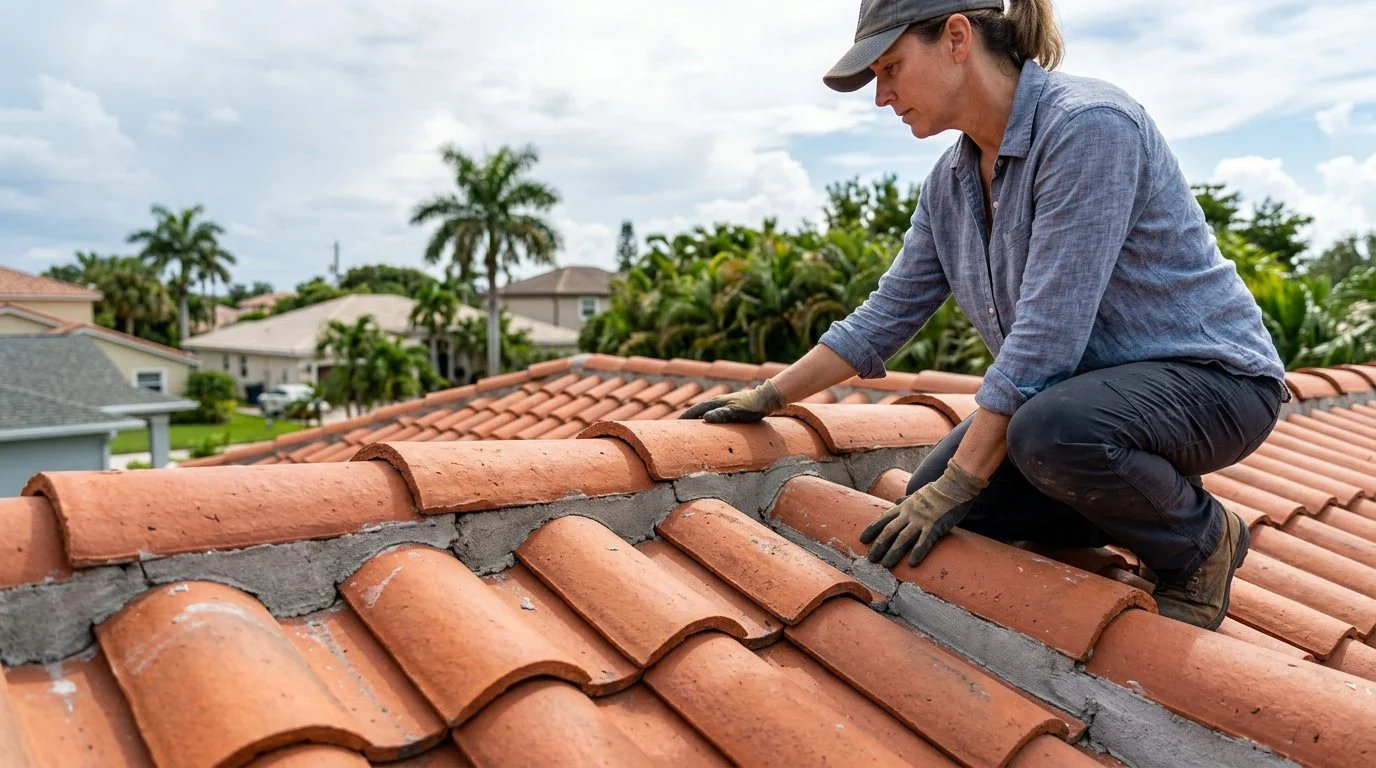
Roofing Guide | South Florida
Concrete or Clay? How to Tell Your South Florida Tile Roof
Concrete and clay tiles can look nearly identical from the street. Here are the clues that tell them apart, and how to check safely.
By Jonathan Rodriguez · Published November 1, 2026
If you’re wondering how to tell concrete vs clay tile roof materials apart, start with a broken tile. Clay is the same color all the way through. Concrete usually has a colored surface layer over a gray or lighter core. Color and profile add clues, but a broken tile gives the clearest answer.
Why the Tile Material Matters Before Any Repair or Claim Paperwork
Knowing your tile type comes before repair work or insurance paperwork. Roofers and claim forms often describe a tile roof by its material, so a wrong guess can cause problems later.
Concrete and clay tiles can look alike from the street. Both come in red, brown, and gray. Both can be made in similar shapes. That’s why a closer look helps.
This page explains how to tell concrete vs clay tile roof types apart, step by step. It starts with the simplest check and moves to clues that need a closer look.
Miami-Dade County product approvals show how concrete tile systems are identified. You can see one example in the Miami-Dade concrete tile approval.
If you're holding a cracked tile and can't tell whether it's concrete or clay before a repair or insurance form goes in, we can help you sort it out. Reach out to talk it through. Talk it through with our team — the first consultation is free, confidential, and carries no obligation.
Check a Broken or Chipped Tile First
The cross-section of a broken tile gives the clearest answer. Look at the edge where the tile snapped or chipped.
Clay tile is fired from natural clay. Its color usually runs through the whole piece, from the surface to the core. A chip shows roughly the same shade as the face.
Concrete tile is cast from a cement mix. It usually has a colored surface coating over a gray or lighter core. When you chip it, the inside often looks paler or grayer than the outer face.
Only inspect tiles that are already loose or broken. Don’t pry up sound tiles. Stay off the roof. Use binoculars from the ground or a window instead. A broken tile you find on the ground is often the easiest sample to check.
Compare Color, Finish, and Surface Texture
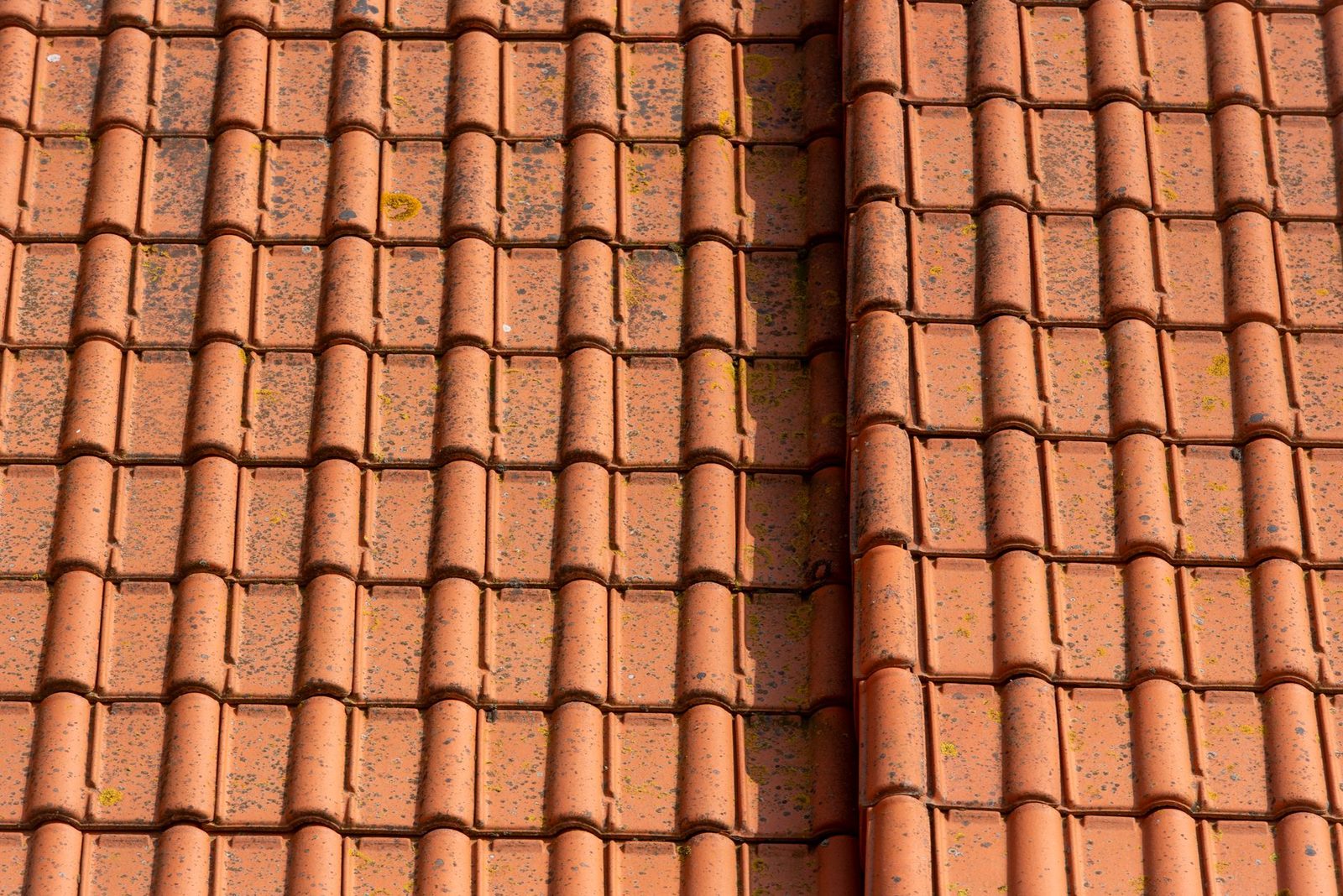
Color and finish give a hint, but they can’t settle it alone. Clay tiles often vary a little in shade across the roof. That natural variation is a common sign of clay.
Concrete tiles often look more even in color. Their surface is usually smoother and more consistent from tile to tile. Many concrete tiles are made to copy the look of clay, though. A uniform look isn’t proof on its own.
Both materials come in many colors and profiles. A reddish roof could be either one. Treat color as one clue, and pair it with the cross-section check.
Look at Shape, Profile, and How the Tiles Sit
Shape and profile help you match replacement tiles to the roof you already have. The common shapes include S-profile, flat, and barrel. Both concrete and clay come in these shapes.
Concrete tiles are molded, so they tend to be even in size and edge shape. Clay tiles may show slight irregularities in size and edge. Those small differences can help you spot the material when you compare several tiles side by side.
Measure a whole tile’s length and width, and note how it locks with its neighbors. A replacement tile with the wrong dimensions or profile may not fit or seal correctly.
Florida’s code also matters here. The drip edge must be installed under the FRSA/TRI Florida High Wind Concrete and Clay Roof Tile Installation Manual. See the 2026 Florida Building Code residential analysis.
How the Answer Affects Repairs and Long-Term Upkeep
Knowing the material helps you pick compatible replacement tiles and plan routine upkeep. It doesn’t decide repair versus replacement by itself. The condition of the whole roof does.
The Tile Roofing Industry Alliance describes clay and concrete tile roofs as long-lasting, durable, low-maintenance, and resistant to weather damage, including Florida hurricane conditions. See its durability and longevity guidance.
After a storm, the same alliance says a damaged tile roof should be evaluated. The options may include repair, replacement, or harvest-and-repair, which means reusing sound tiles from the roof. The underlayment should be inspected too. Read the post-storm repair guidance.
For upkeep planning, see the tile roofing guide.
Get Your Tile Identified by Our Team
If you can’t name your roof tile, ASP Superhome can help you identify it before repair work or insurance paperwork moves forward. Picture the usual case: a cracked tile in your hand, a repair quote on the table, and a form asking what roof you have.
The first consultation is free, confidential, and carries no obligation to continue. You can contact ASP Superhome to start.
For local context, see the Miami tile roofing page and the Fort Lauderdale tile roofing page.
Frequently Asked Questions
Can you tell concrete from clay tile without climbing on the roof?
Often, yes. A broken tile seen from the ground can show its cross-section. Stay off the roof while you look.
Do concrete and clay tiles look the same?
They can look alike from the street. The cross-section of a broken tile is the clearest way to tell them apart.
Is a matching color enough for a tile repair?
No. Color alone isn’t enough. Confirm the material, profile, and dimensions before choosing a replacement.
Stay Off the Roof
Tile roofs are fragile and can be slippery. Identify your tile type from the ground, or let our team take a look for you. Never walk on a tile roof to inspect it.
Four Clues That Tell Concrete From Clay
Check the Cut Edge
A broken tile shows its cross-section. Clay tiles are fired through and look uniform in color. Concrete tiles often show a gray, sandy core with a surface coating.
Compare the Weight
Concrete tiles are typically heavier than clay. Weight is hard to judge by eye, so treat it as a supporting clue rather than proof on its own.
Look at the Profile
Both types come in barrel (S-shaped) and flat profiles. Manufacturers vary, so profile alone rarely settles the question.
Note the Finish
Clay usually has a glazed or natural terracotta finish that runs through the body. Concrete typically has a painted or colored coating that can fade or chip over time.
Not Sure What Your Roof Is Made Of? Ask Us.
Related practice areas
- Tile Roof Re-Bedding Mortar Cost in South Florida


