


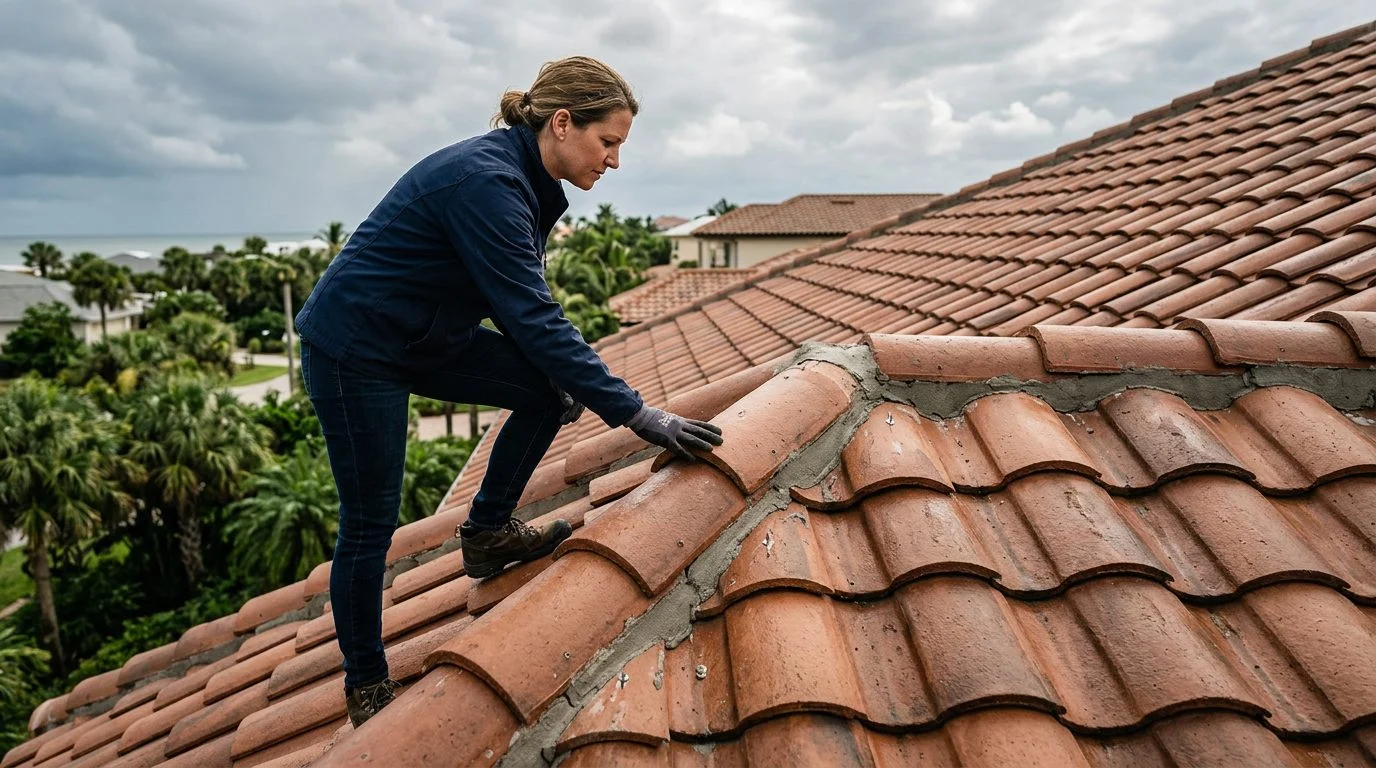
Tile Roofing | South Florida
Is a Tile Roof Fire Resistant? What Class A Really Means for Your Home
Learn how Class A fire ratings apply to tile roofs, why the full roof system matters, and what to ask before you choose materials for your South Florida home.
By Jonathan Rodriguez · Published October 29, 2026
The Short Answer: Tile Roofs Can Carry a Class A Fire Rating
Yes, a tile roof can be fire resistant. Concrete and clay tile can carry a Class A fire rating, but only when the roof is installed as the tested system it was rated with.
That condition matters. The rating does not belong to the tile alone. It belongs to the full assembly: the tile, the underlayment beneath it, the roof deck, and the fastening that holds everything in place. If one part changes, the roof may no longer match what was tested.
Class A is the highest fire classification for roof coverings. Roof coverings are graded in classes, and Class A sits at the top. A Class A rating tells you how a covering performed in a standard fire test. It does not mean that no roof can ever burn under any condition.
Many homeowners in Miami, Fort Lauderdale, West Palm Beach, Kendall, Naples, Fort Myers, and Boca Raton ask this question while comparing roof materials. The answer starts with the rating. Then it moves to installation, insurance, and Florida rules.
If you're deciding between a tile roof replacement and a storm repair, our team can review your roof's current assembly with you during a free first consultation. Talk it through with our team — the first consultation is free, confidential, and carries no obligation.
What Class A Means and How It Is Tested
A Class A rating comes from a recognized fire test, not from a marketing claim. UL Solutions fire-resistance information describes recognized fire-resistance testing methods and listed assemblies.
Fire tests look at how a roof covering behaves under flame and burning material. They check how flame moves across the surface. They also check how the covering holds up when burning debris lands on it. The result places the covering in a class.
Here is the practical point. The test result describes a specific tested assembly. It does not describe every roof that looks similar. Two tile roofs can look the same from the street and still differ in underlayment or fastening. Only one of them may match the tested system.
Florida rules back up this idea. A test report must identify which products it covers. Ask your contractor which products any test documentation covers and how it relates to the Code that applies to your project. An evaluation report must include a complete product description and the technical data that supports its compliance statement.
Ask for that paperwork before you commit to a roof system. The documents show what was tested, and they are the most reliable check you have.
Why Concrete and Clay Tile Earn Class A
Concrete and clay tile are mineral products that do not burn. That is the main reason they can earn a Class A rating. Fire does not feed on the tile the way it can feed on wood.
Mineral does not mean maintenance-free, though. The Tile Roofing Industry Alliance durability guidance describes clay and concrete tile roofs as long-lasting, durable, and low-maintenance. It also says they resist weather-related damage, including Florida hurricane conditions. Durability helps a roof perform over many years. It is not a fire test, though.
Tile is also heavy. The NRCA roofing materials guidance notes that clay and concrete tile are durable and used in Florida. It also says the structural load capacity must be verified when replacing another roof covering with tile. That structural check comes before any fire question. A roof frame that cannot carry the weight needs attention first.
Two things work together here. The tile resists flame, and the installed system must keep it that way. Materials alone do not finish the job. The next section covers what the installation must do.
What the Installer Must Do to Keep the Rating
The installer must build the roof the way the rated system was tested. That means the same underlayment, deck preparation, fastening method, and tile profile. Swapping in a cheaper or easier product can change the result.
Ridge, hip, and edge pieces are part of the system too. Gaps at these points can weaken the assembly. Unprotected penetrations, such as vents and pipes, need the same care. Each one should be sealed and installed as specified.
Repairs need the same discipline. When a cracked tile is replaced, the new piece should match the existing tile and work with the underlayment below it. A mismatched repair can leave the roof different from the original rated design, even if it looks fine.
The Tile Roofing Industry Alliance installation guides cover proper tile-roof installation practices, industry standards, and code requirements. Florida’s building code also governs the repair and alteration of buildings, as set out in Fla. Stat. § 553.73. That means repair work falls under the same code framework as new construction.
Before work begins, ask your installer to name the rated assembly in writing. A written list gives you a clear standard to check the finished job against. It also gives you a record if questions come up later.
How Tile Compares With Other Class A Roofing Options
Tile is not the only roof type that can reach Class A. Some metal roofing and some synthetic products can also carry Class A ratings when installed as tested systems. The rating is one factor among several.
Each material has its own trade-offs. Tile is heavy, so the structure must be checked before any switch to tile. Metal is lighter and comes in many profiles. Synthetic products can mimic the look of tile or slate, but they differ in weight, finish, and how they are installed. Each one needs its own tested assembly.
Maintenance also differs. Tile roofs need periodic checks for cracked or shifted pieces. Metal roofs need attention to seams, fasteners, and coatings. Each system has its own care routine.
For many South Florida homes, the right fit depends on the roof’s structure, the look you want, and how you plan to maintain it. A fire rating should not decide the whole roof by itself. Our team can explain how the full installed system for your roof works together, from materials to installation.
When the Fire Rating Matters for Florida Homeowners
The rating matters most during insurance questions, storm repairs, and replacement planning. Each one has its own Florida rules, and the rules are worth knowing before you sign a contract.
Read your policy and ask your insurer what it covers for code upgrades.
Wind mitigation matters too. The Florida Department of Financial Services hurricane loss mitigation guide explains wind-mitigation inspections, documentation, roof-related features, and insurance discounts for qualifying hurricane-resistant construction.
Timing matters after a storm. A supplemental claim is barred unless notice is given within 18 months. Report roof damage promptly.
Under Fla. Stat. § 553.844(3)(b), a roof replacement on a site-built, single-family residential structure must incorporate the roof-to-wall connection techniques specified in subparagraph (2)(b)3. This applies when the structure is in the wind-borne debris region and has an insured value of $300,000 or more. If the building is uninsured or documentation of insured value is not presented, it applies when the structure’s just valuation for ad valorem taxation is $300,000 or more. Under Fla. Stat. § 553.844, roof-to-wall connections shall not be required where the work at gable ends or all corners cannot be completed for 15 percent of the cost of reroofing. Fla. Stat. § 553.844 reads: “For houses that have both hip and gable roof ends, the priority shall be to retrofit the gable end roof-to-wall connections unless the width of the hip is more than 1.5 times greater than the width of the gable end.” Ask your contractor how the plan handles those requirements. Ask your contractor how the plan handles those requirements.
Not sure what your next step is?
Talk it through with our team — the first consultation is free, confidential, and carries no obligation.
Frequently Asked Questions About Tile Roof Fire Ratings
Is a tile roof fire resistant?
Yes. Concrete and clay tile can carry a Class A fire rating when installed as the tested system.
Are ceramic tiles fire rated?
Clay tile, which is ceramic-based, is commonly rated Class A when installed to the tested assembly. The rating applies to the complete roof, not the tile alone.
Does underlayment affect a roof’s fire rating?
Yes. Underlayment is part of the rated assembly, so the specified product matters.
Does a tile roof repair keep its Class A rating?
It can, if the repair uses compatible materials and follows the rated installation details. Ask for the assembly in writing before repairs begin.
Is every tile roof Class A?
No. The rating applies to the tested and installed system, so the roof’s documentation is the reliable check.

Talk Through Your Tile Roof Options With Our Team
If you are weighing a tile roof replacement or a storm repair, you may be unsure whether the new roof will keep a Class A system. Our team can review your roof’s current assembly with you and walk through repair or replacement options. Our first consultation is free, confidential, and comes with no obligation to continue. Contact our team to get started.
What to Check on Your Tile Roof
Look for a Class A rating
Class A is the highest fire classification for roof coverings. Ask whether the tile system you are considering has been tested to earn it.
Confirm the complete assembly
The rating covers the full roof assembly, including underlayment and fastening, not the tile alone. Ask for the tested system details.
Plan for installation details
Proper installation matters as much as the material. Flashing, sealing, and fastening should follow the tested configuration.
Consider your whole roof plan
Tile, metal, and repair options each suit different homes. Reviewing them together helps you weigh fire performance with cost and long-term maintenance.
Key Reminder
A Class A fire rating applies to the complete roof system as it was tested and installed. Changing the underlayment, fasteners, or tile type can change that rating, so confirm the details before work begins.
Roofing Services We Offer
Tile Roofing
Durable tile roof options designed for South Florida's heat, humidity, and storms.
Metal Roofing
Lightweight metal systems that pair well with Florida weather conditions.
Roof Replacement
Full replacement planned around your home's structure, materials, and budget.
Roof Repair
Prompt repairs to address leaks, damaged tiles, and wear before they spread.
Start With a Free First Consultation. It Is Confidential and Comes With No Obligation to Continue.
Related practice areas
- Tile Roofing in South Florida: Costs, Styles & Installation Guide
- What Happens If a Tile Roof Is Damaged in a Storm? Steps to Take Before the Estimate
- Hurricane-Proof Patio Doors: Impact Options in South Florida


