


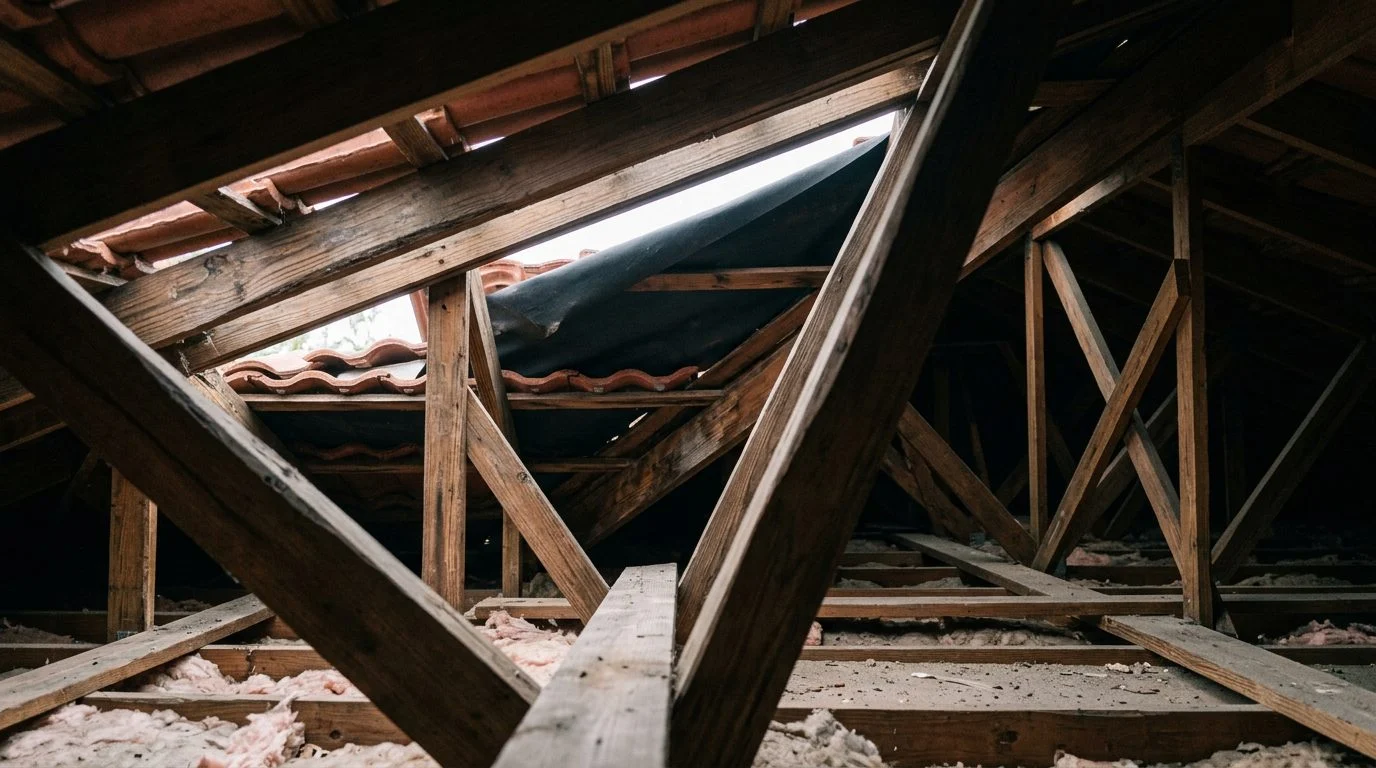
Tile Roofing | South Florida
Storm Hit Your Tile Roof? Here's What to Do Next
Cracked tiles and damaged flashing often hide from the ground. Learn the practical steps to protect your home, document the damage, and get a clear picture of what needs repair.
By Jonathan Rodriguez · Published October 28, 2026
Quick Answers: What to Do First After a Storm Damages a Tile Roof
Document the damage with dated photos, protect the inside of your home from water, and get a professional inspection before you approve any repair. Those three steps come first, in that order, when you’re asking what to do after storm damages tile roof florida.
A tile roof can look fine from the ground and still be damaged. Cracked or slipped tiles can stay in place and hide their damage. Water can travel under the tile to the underlayment and deck before a stain shows up indoors. A quick look from the yard isn’t enough.
Storm wind often hits one side of a house harder than the other. Check every roof plane, not just the side facing the street.
This guide covers what to look for, how to document it, what a tarp can and can’t do, what an inspection report should contain, and how to take the next step. For the wider picture, read our tile roofing in South Florida guide.
If cracked or slipped tiles appeared after your storm, you don't have to plan the next steps alone, and our team can walk through them with you. Talk it through with our team — the first consultation is free, confidential, and carries no obligation.
Identifying Signs of Tile Roof Storm Damage
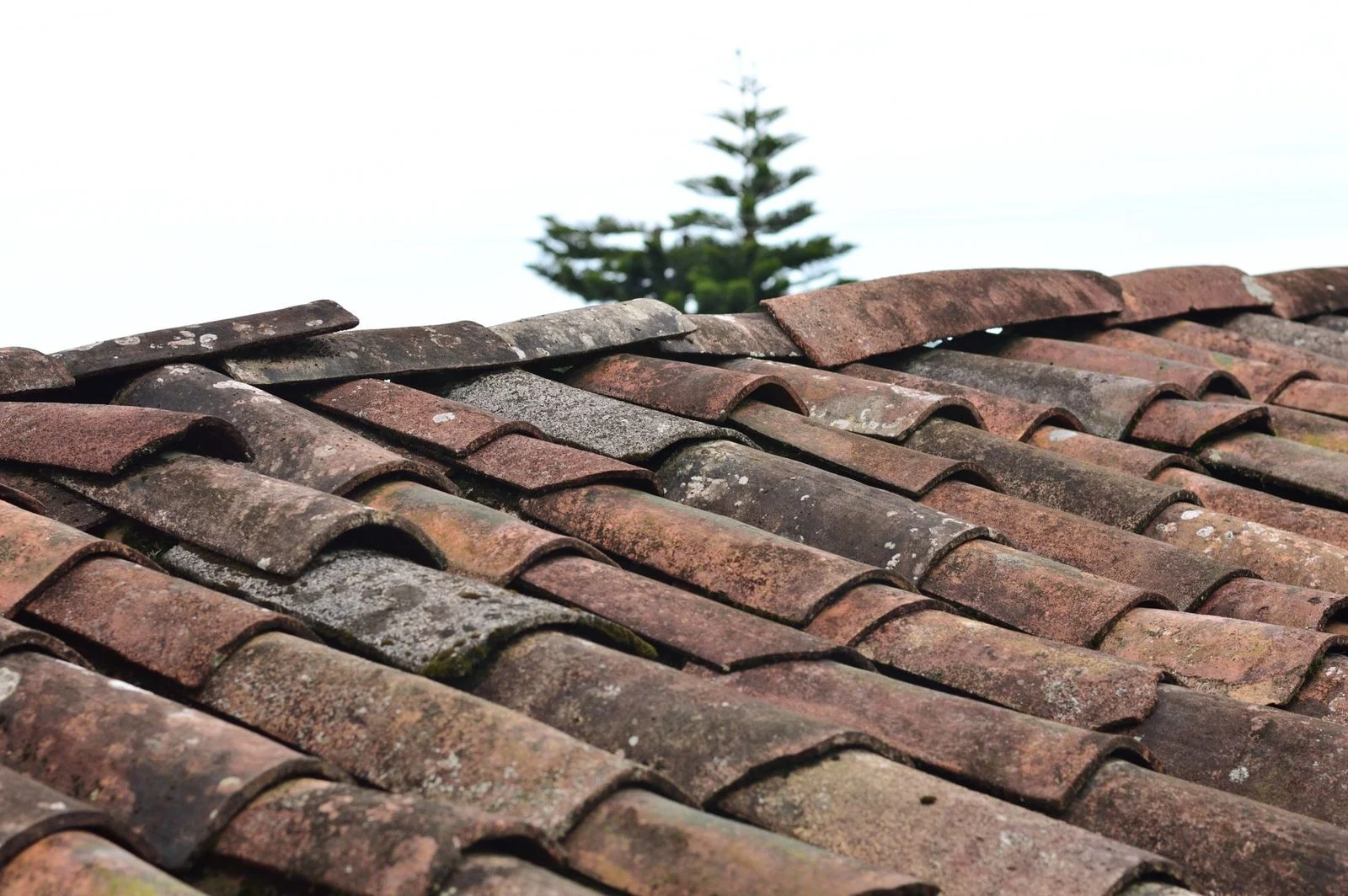
The clearest signs are cracked, broken, or slipped tiles, plus damage at ridges, edges, and flashing. Many of these signs are easy to miss unless you look from several angles.
Check the roof for these signs:
- Cracked, chipped, or broken tiles, including fractures or missing pieces from debris or hail.
- Slipped tiles that sit out of line with the rows beside them, leave gaps, or expose the underlayment.
- Damaged ridge caps, hip tiles, and eave or rake edges. These loosen first and often show movement.
- Flashing and sealant problems around chimneys, vents, skylights, and valleys, where water finds weak spots first.
Interior signs can point back to the roof. Watch for water stains on ceilings or walls, dripping after rain, damp attic insulation, or a musty smell. Broken tile pieces in the gutters are another clue. Note exactly where each stain sits, because it usually traces to the roof area directly above it.
Documenting Storm Damage: Photos, Dates, and Records
Photograph the roof, the yard, and the inside of your home before anyone cleans up or moves a tile. Those photos show what the storm did, and they form the base of any insurance claim.
Start with wide shots of each roof plane from the ground. Then take close-ups of each cracked or slipped tile, each flashing area, and each interior stain. Keep a simple written log with the storm date, the rooms affected, where water entered, what you saw in the attic, and any leak after each rain. Save receipts for tarps, buckets, and emergency work.
Timing matters too. Under Fla. Stat. § 627.70132, a claim or reopened claim (but not a supplemental claim) for property loss is barred unless notice reaches your insurer within 1 year after the date of loss, following the policy’s terms; that time limit is tolled during a deployment to a combat zone or combat support posting that materially affects a named insured servicemember’s ability to file. A supplemental claim for added damage from the same peril has an 18-month window. For hurricanes, the date of loss is the landfall date; for tornadoes, windstorms, severe rain, or other weather-related events, it is the date NOAA verifies the event.
Protecting the Interior and Understanding Temporary Tarping Limits
A tarp is temporary protection. It doesn’t repair cracked tiles, restore flashing, or return the roof to its old condition. Use it to slow water entry until a full inspection happens.
Start indoors. Move furniture, rugs, electronics, and valuables away from stains and drips. Set buckets under active leaks and empty them before they overflow. Cover exposed floors with plastic sheeting and towels to limit how far water spreads.
Know the limits of a tarp. Wind can lift, loosen, or tear it, so check it after each storm and each heavy rain. Safety comes first. Don’t walk on a wet or damaged tile roof. Broken tiles are slippery and can give way under your weight.
Think of temporary protection as a stopgap. It buys time for the next step, which is a written inspection.
Can a Homeowner Repair a Tile Roof Themselves?
Most homeowners shouldn’t repair a storm-damaged tile roof on their own. Tile roofs are steep, heavy, and fragile, and wet conditions after a storm make them more dangerous.
A single visible crack isn’t always the whole problem. Water may have moved under nearby courses to the underlayment or deck. Swapping one tile can leave the real leak in place.
Repair methods also depend on the tile profile, the underlayment, and how each tile interlocks with its neighbors. Matching and securing tiles correctly takes specific knowledge. The National Roofing Contractors Association notes that clay and concrete tile is durable and used in Florida, and that structural load capacity must be verified when tile replaces another roof covering (NRCA roofing materials).
Altering damage before it’s documented can make the storm’s effect harder to show later. For background on how tile types differ in handling and repair, see our clay vs. concrete tile guide.
What a Roof Inspection Report Should Include
A useful inspection report is written, mapped, and photographed. A verbal opinion alone gives you little to review later with your insurer or your household.
Expect a roof map that marks each damaged area by roof plane, slope, and section. Each damage type should have photos: cracked, broken, slipped, or missing tiles; damaged ridge and edge pieces; and flashing or sealant problems.
The report should also cover the underlayment and deck where accessible, plus any moisture or staining in the attic. It should tie each interior leak to a specific roof location. The Tile Roofing Industry Alliance publishes installation guides covering proper tile-roof installation practices, industry standards, and code requirements, which give a useful reference for what sound work looks like.
Finally, the report should list recommended next steps, such as temporary protection, targeted repair, or further evaluation, with the reasons for each.
Not sure what your next step is?
Talk it through with our team — the first consultation is free, confidential, and carries no obligation.
What Affects the Cost and Scope of Tile Roof Repair
Repair cost depends on the facts: how many tiles are damaged, the condition of the underlayment and deck, where any leak sits, and how hard the roof is to reach. No single number fits every roof.
A small, localized leak can be handled differently than widespread displacement across several roof planes. After a storm, damaged tile roofing may need different types of work, such as repair or replacement, and an inspection can help determine which approach fits the damage. The share of roof area affected helps shape that decision. The decision comes after the inspection findings are written down.
Insurance affects the numbers too. Under Fla. Stat. § 627.7011, code-upgrade costs may be limited to 25 or 50 percent of the dwelling limit, as the policyholder selects; such coverage applies only to repairs of the damaged portion of the structure unless the total damage to the structure exceeds 50 percent of the replacement cost of the structure. The same statute lets an insurer, on a replacement-cost dwelling loss where a roof deductible is applied, limit the roof payment to actual cash value until it receives reasonable proof that you paid the roof deductible. Florida homeowners coverage turns on the policy form, so start with your policy wording (Florida Office of Insurance Regulation).
Contracts matter as well. Under Fla. Stat. § 489.147, a contractor may not give an insured a repair agreement for repairs undertaken pursuant to a property insurance claim without a good faith estimate of the itemized and detailed cost of services and materials.
Frequently Asked Questions About Storm-Damaged Tile Roofs
Here are short answers to common questions about what to do after storm damages tile roof florida.
Can a tile roof leak after a storm even if it looks fine from the ground?
Yes. Cracked or slipped tiles and damaged flashing may not show from the yard, so an inspection is the right check.
Is a tarp enough to fix a storm-damaged tile roof?
No. A tarp is temporary protection that slows water entry, but it doesn’t repair cracked tiles or flashing.
Should I photograph the damage before cleanup?
Yes. Dated photos taken before cleanup show the condition as the storm left it.
Can I repair my own tile roof in Florida?
Roof work carries fall and structural risks. A professional inspection can clarify what the damage needs.
What are the downsides of clay tile roofing after storm damage?
Tile type affects how damage is assessed and repaired. Our clay vs. concrete tile guide explains the differences.
Next Step: Book a Free First Consultation After Tile Roof Storm Damage
A free first consultation makes sense once you have photos and a list of leaks or damaged areas. Bring your log and photos, and the conversation starts with facts you already have.
If you see cracked tiles, a leak that started after the storm, or a tarp still on the roof with no inspection yet, you’re at the point where the next decision matters most. Our first consultation is free, confidential, and carries no obligation to continue.
You’d share your photos and leak details. Our team then helps plan the inspection and the written report that follows. We help homeowners in Miami, Fort Lauderdale, West Palm Beach, Kendall, Naples, Fort Myers, and Boca Raton.
Contact our team to set up your free first consultation.
Your First Steps After the Storm
1. Put safety first
Stay off a damaged roof. Loose tiles, wet surfaces, and sagging areas can be dangerous, so keep your distance and watch for hazards inside the home.
2. Document the damage
Take photos and video of the roof, gutters, and any water stains or ceiling damage inside. Keep notes on when you first noticed problems.
3. Limit further water entry
Move belongings away from leaks and place buckets under drips. Temporary covering can slow water intrusion while repairs are arranged.
4. Schedule a professional inspection
A close inspection checks tiles, underlayment, and flashing for hidden damage that could lead to leaks later.
Warning: A Tarp Is Not a Repair
A tarp can slow water entry, but it does not fix cracked or slipped tiles or damaged flashing. Treat it as temporary protection only and have the roof inspected promptly.
Why Homeowners Start with ASP Superhome
One Team for Your Whole Home
ASP Superhome handles tile roofing alongside roof repair, roof replacement, and solar, so your project stays coordinated.
Clear Options
Our team explains repair and replacement options in plain language so you can decide with confidence.
Built for South Florida
We focus on the storms, heat, and wind that test roofs across Miami, Fort Lauderdale, West Palm Beach, Boca Raton, Naples, and Fort Myers.
Free First Consultation
Your initial consultation is free, confidential, and comes with no obligation to continue.


