


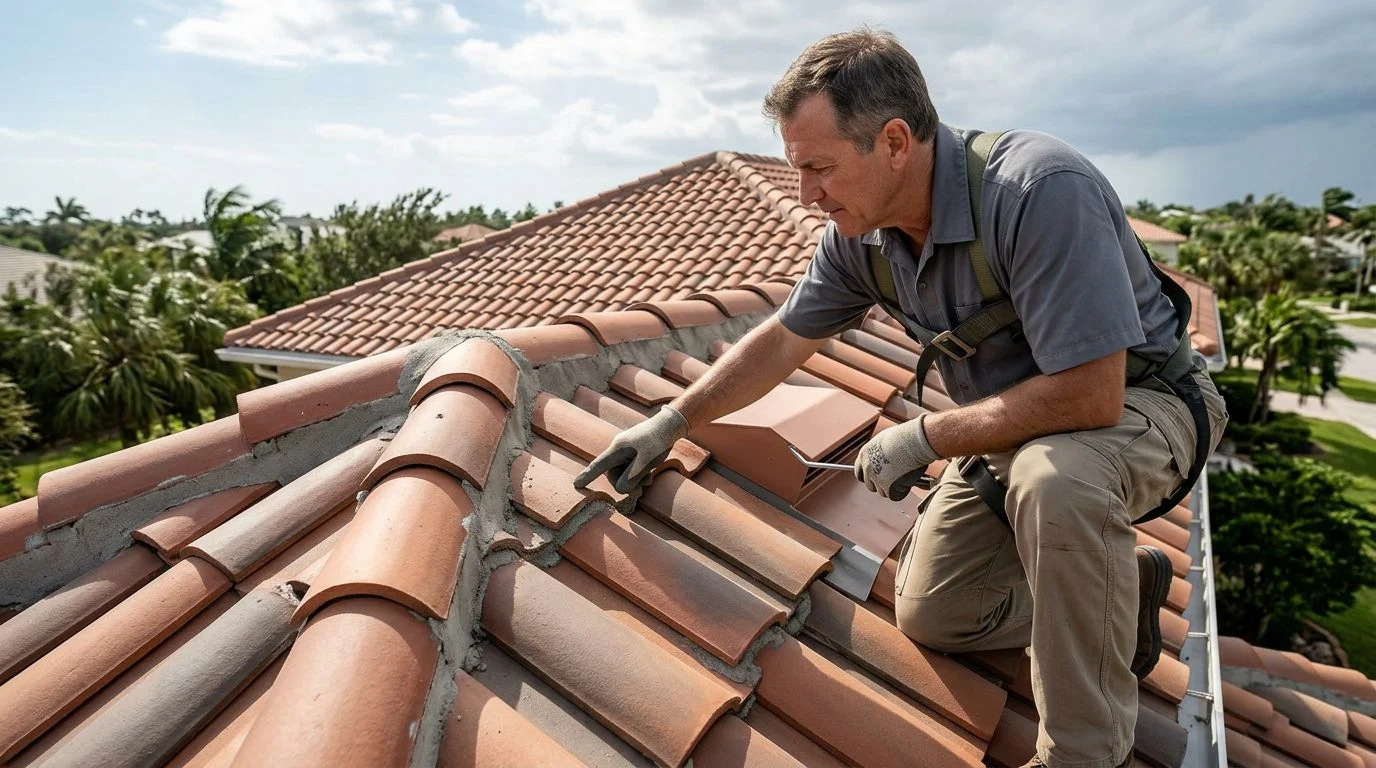
Tile Roofing | South Florida Homeowners
Are Tile Roofs Fire Resistant? What South Florida Homeowners Should Know
Clay and concrete tile are generally treated as fire-resistant roof coverings. Here is how the full roof system affects fire performance, and how to plan your next roofing decision.
By Jonathan Rodriguez · Published November 2, 2026
Are tile roofs fire resistant in Florida? In general, yes. Clay and concrete tile are widely treated as fire-resistant roof coverings. But the tile is only one part of the answer. The full roof system, including underlayment, flashing, deck, and edges, shapes how the roof performs in a fire.
This guide explains what a fire classification measures, how Florida’s building code treats roof layers, and where fire protection can break down. It also covers how storm damage affects that protection.
What a Roof Fire Rating Actually Measures
A roof fire classification describes how a roof covering performs when fire reaches it from outside the home. The 2026 Florida Building Code analysis changed the term from “fire rating” to “fire classification.”
Testing looks at specific fire behaviors. These tests include flame spread, which is how fire moves across a surface. They also include intermittent flaming and burning brands, which are flaming debris that lands on the roof.
A classification belongs to a tested assembly. It does not automatically cover every installation of the same material. The 2026 Florida Building Code changes are documented in the code-change analysis.
If cracked or missing tiles after a storm have you wondering whether your roof still protects your home, our team is glad to talk it through with you. Talk it through with our team — the first consultation is free, confidential, and carries no obligation.
Are Clay and Concrete Tile Fire Resistant?
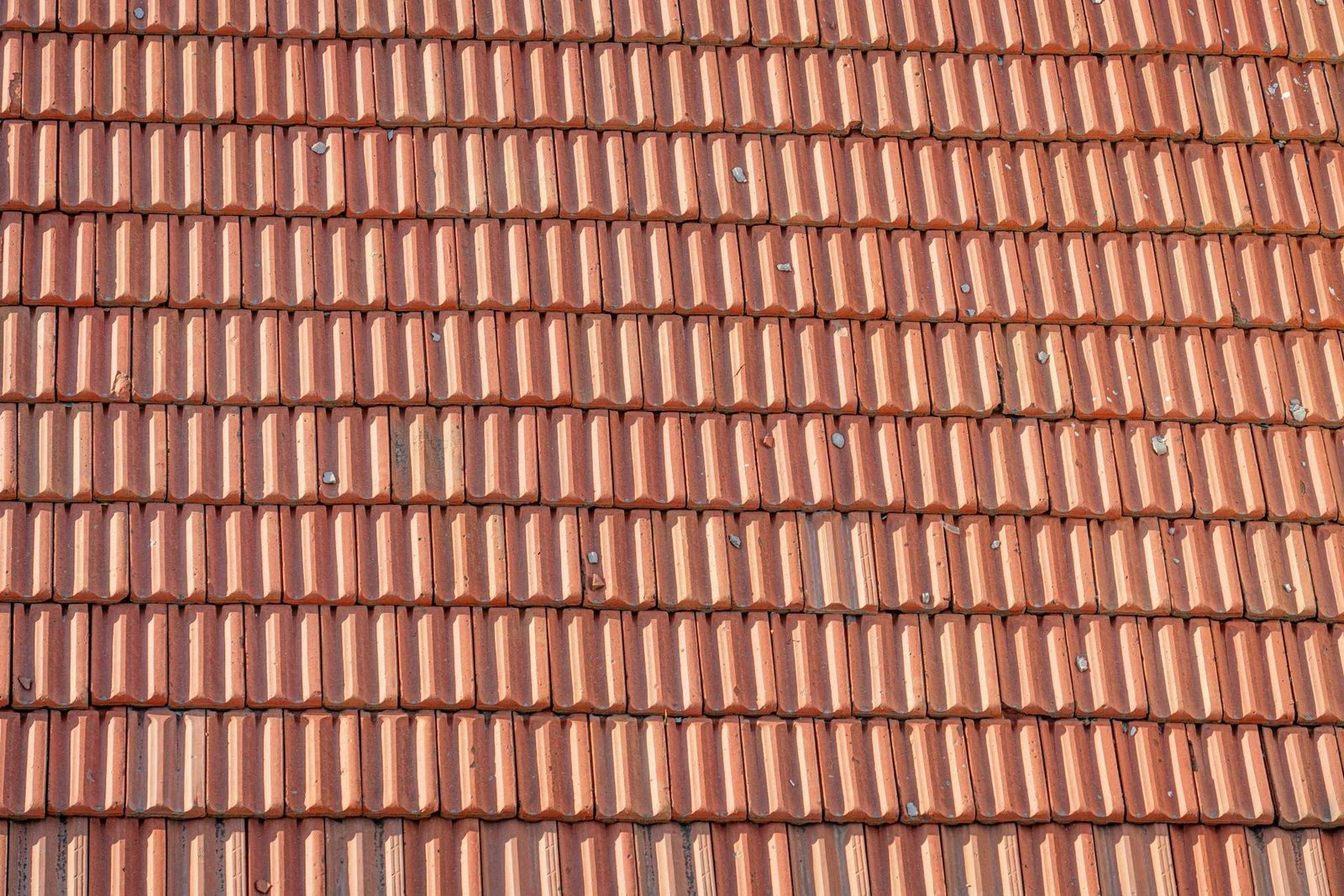
Clay and concrete tile are generally treated as fire-resistant roof coverings. Both are made from mineral materials, not wood. Florida’s fire-resistive construction guidance recommends terra-cotta and concrete tile roofing for wildfire resistance. The same guidance identifies wood shake and wood shingle roofs as especially hazardous.
Tile alone doesn’t settle the question. The layers under the tile, and how the roof is flashed and secured, affect overall performance.
Clay and concrete look similar from the street, but they differ in weight, cost, and appearance. Our tile roofing guide compares them in full. Choosing between them is a separate decision from fire performance, though both sit within the same code framework.
How the Florida Building Code Treats Roof Assemblies
The Florida Building Code treats a roof as a layered system. Each layer has its own requirements, including the covering, underlayment, flashing, and deck. Recent code changes show this clearly.
The 2026 code added section 1518.8.8. The 2026 Florida Building Code changes cover this new requirement.
Flashing rules also changed for clarity. Florida code-change analysis. The residential code changes list the R905.3.8 revision.
When you get a roof quote, ask for documentation covering the exact roof system proposed. That paperwork shows what the classification applies to.
Where Fire Resistance Can Be Undermined
Tile protection weakens when the system beneath it is damaged. Broken, cracked, or missing tiles expose the layers below. Cracked underlayment and worn flashing can let water and debris reach the deck.
Embers can also find openings. Open eaves, gaps under displaced tiles, and unprotected vents give embers a path toward the attic. A tile roof with these gaps may not perform the way its tested assembly was designed to perform.
A roof inspection after a storm looks for these problems. Scattered tile damage and flashing problems often call for roof repair. Widespread or deck-level damage may point toward roof replacement. The right path depends on what the inspection finds.
How Tile Compares With Metal and Synthetic Roofing
Tile and metal are both common choices in South Florida. Florida’s wildfire preparedness guidance lists tile, Class A asphalt/fiberglass, sheet metal, and concrete as safer roof materials than wood shingles or shakes.
Metal roofing has its own classification and installation details. Its fire performance should be confirmed on the specific system, just as it is for tile. You can read more in our metal roofing guide.
Synthetic products that look like tile vary by manufacturer. Look at each product’s fire classification rather than assuming it matches clay or concrete.
The Tile Roofing Industry Alliance states that clay and concrete tile roofs are long-lasting, durable, and low-maintenance.
Common Questions About Tile Roofs and Fire Safety in Florida
Are tile roofs fire resistant in Florida?
Clay and concrete tile are generally treated as fire-resistant roof coverings. The whole roof system still shapes overall fire performance.
Does a fire classification cover the whole roof?
It applies to a tested assembly. The tile, underlayment, flashing, and deck all matter.
Is a clay tile roof fire resistant?
Clay tile is generally treated as fire-resistant. Installation and the layers beneath it also matter.
Repair or replacement follows Florida rules too. Florida Statutes section 553.844 provides that if an existing roofing system was built, repaired, or replaced under the 2007 or a later code, and 25 percent or more of it is being repaired, replaced, or recovered, only that portion must meet the code in effect.
Cost varies with the project. The main drivers include the tile type, roof pitch, underlayment, and whether the old roof must be removed.
Not sure what your next step is?
Talk it through with our team — the first consultation is free, confidential, and carries no obligation.
Talk Through Your Tile Roof Questions With Our Team
If you’ve seen cracked or missing tile after a storm, or you’re choosing between tile and metal, our team can help you sort out the next steps. We serve homeowners in Miami, Fort Lauderdale, West Palm Beach, Kendall, Naples, Fort Myers, and Boca Raton. You can review local options on our Miami tile roofing page, Fort Lauderdale tile roofing page, or West Palm Beach tile roofing page.
Our first consultation is free, confidential, and comes with no obligation to continue. To start that conversation about your roof, reach out through our contact page.
What Shapes a Tile Roof's Fire Performance
The tile itself
Clay and concrete tile are generally treated as fire-resistant roof coverings, which is why they are a common choice in South Florida.
The underlayment
The layers beneath the tile contribute to how the roof performs as a complete assembly, not just on its surface.
Flashing and edges
Metal flashing around vents, valleys, chimneys, and roof edges helps keep the system sealed and properly installed.
The roof deck
The decking under the tile is part of the assembly and should be inspected during any roof replacement or repair.
Don't Assume the Tile Alone Covers the Whole Roof
A fire classification applies to a tested assembly. Asking whether a roof is tile is only the first question. Ask how the full system was built and what components were used.
Common Questions Homeowners Ask
Is a tile roof a good fit for Florida homes?
Tile is widely used across South Florida. Its durability and fire-resistant reputation make it a practical option for many homes, depending on the structure and design.
Can tile be part of a roof replacement?
Yes. Tile can be installed during a full roof replacement, and the underlayment, flashing, and deck can be addressed at the same time.
Does tile work with other upgrades?
Tile roofing can be planned alongside impact windows, impact doors, solar panels, and solar battery backup for a more complete home upgrade.
Where do I start?
Begin with a roof inspection and a clear review of your current materials, structure, and goals. Our team can walk you through the options.


