


Roof Repair | South Florida
Can You Repair a Roof Without Replacing It?
Many South Florida roof problems can be fixed without a full replacement. Learn which repairs make sense, when replacement is the better path, and how to decide.
By Jonathan Rodriguez · Published November 1, 2026
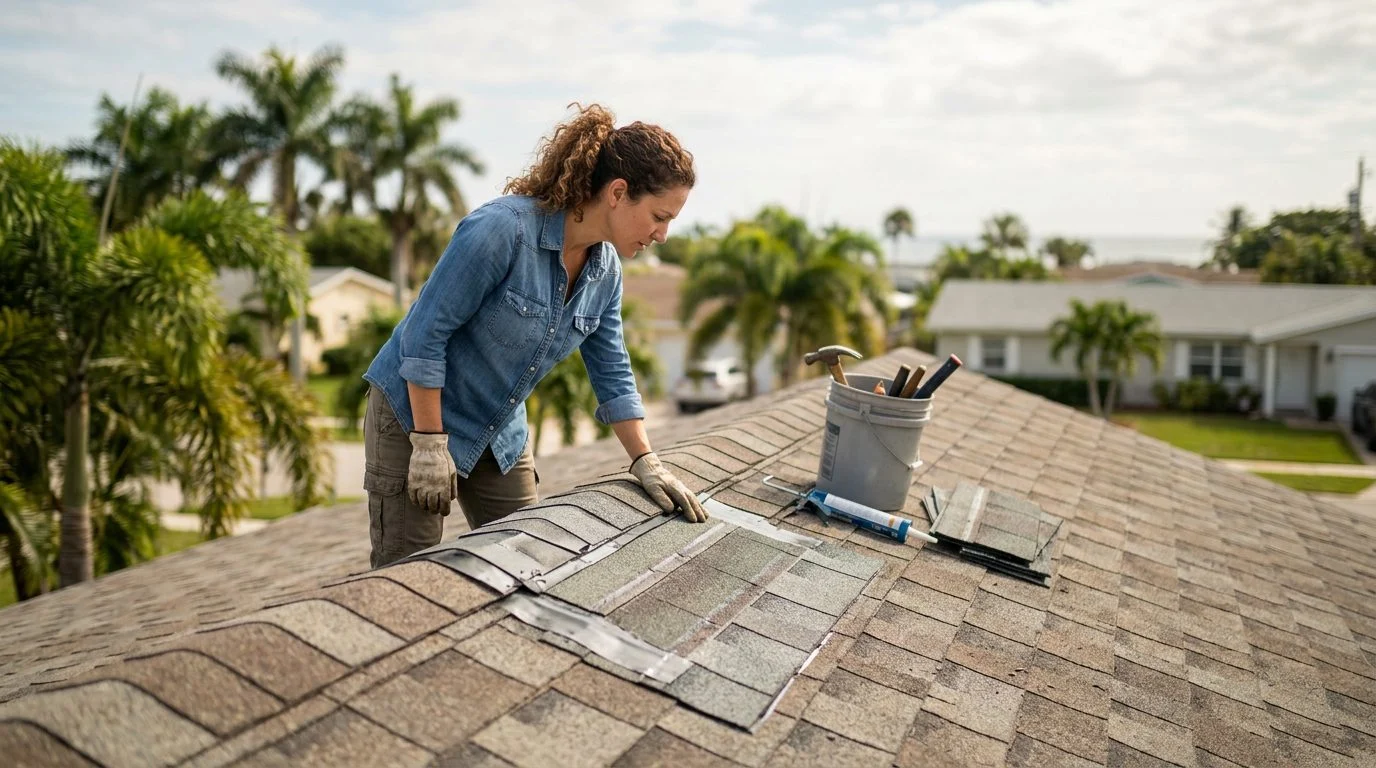
Yes, many roof problems can be repaired without replacing the whole roof. A repair fixes one spot, such as a cracked tile, worn flashing, or a leaking vent boot, while the rest of the roof stays in place. If you are asking whether you can repair a roof without replacing it, start here.
Whether a repair is the right call turns on three things: the roof’s age, how far the damage reaches, and what caused it. In South Florida, summer storms and wind-driven rain can push water under tiles and around flashing. This guide explains how to tell the difference and what to do first if water is getting in.
What a partial roof repair actually means
A partial roof repair fixes a specific area or part, and the rest of the roof stays as it is. Replacement removes the roof covering across all or most of the roof and installs new material.
Common repair targets include a few tiles, a piece of flashing, a vent boot, or a small section of underlayment. A repair works on a point of failure. Replacement treats the roof as a whole system that has reached the end of its useful life.
Tile and metal raise the question in different ways. Clay and concrete tile are durable and used in Florida, according to the National Roofing Contractors Association. Metal roofs usually need spot work on panels, seams, or fasteners instead of tile swaps.
If water is getting in and you are not sure a repair is enough, our team can look at your roof with you and talk through your options. Talk it through with our team — the first consultation is free, confidential, and carries no obligation.
Signs a roof can be repaired instead of replaced
A roof is usually a good repair candidate when the damage is contained and the structure below is sound. Look for these signs:
- Damage limited to a few spots, such as several cracked or slipped tiles after a storm.
- Decking and underlayment that are sound wherever they have been inspected, with no widespread soft spots.
- Flashing around a chimney, skylight, vent, or wall as the clear source, which can be resealed or replaced.
- A relatively young roof for its material that has been maintained.
- One identifiable entry point, instead of leaks that appear in many rooms.
When several of these signs are missing, a repair may only treat the symptoms. Widespread damage usually calls for a broader look.
Common repairs that do not require a full replacement
Most spot repairs target one failed component, and the fix stays local. Common examples include:
- Replacing cracked, broken, or displaced tiles and resecuring the tiles around them.
- Resealing or replacing flashing at roof penetrations and wall intersections.
- Replacing worn pipe boots and vent seals, which often leak around their edges.
- Making spot repairs to damaged metal panels, seams, or fasteners on metal roofing.
- Patching small, localized underlayment or decking damage once the cause is found.
Permits are part of repair work too.
Florida’s building code also sets rules that touch repair work. See the Florida Building Commission analysis.
Roof leaks: what to do first and when a leak points to a bigger problem
If water is getting in, limit the damage first, then find where it enters. Start with these steps:
- Place containers under drips, and move furniture, rugs, and valuables out of the way.
- Photograph water stains, wet ceilings, and damaged items. Those photos help keep a clear record.
- Check the attic or ceiling space above the stain. Water often travels along rafters or decking before it drops, so the entry point is rarely directly under the stain.
A leak that shows up at one spot after a specific storm can often be traced and repaired locally. Look for a displaced tile, a lifted flashing edge, or a cracked vent boot near that area.
Other signs point to a wider problem. Multiple leaks in different areas, sagging ceilings, mold, or soft decking suggest deterioration that a spot repair may not resolve.
Fixing the source matters more than covering the stain. A fresh coat of paint on a water mark hides the damage but leaves the entry point open.
Benefits and downsides of partial roof repair
A partial repair usually costs less up front than a full replacement, but it does not renew the rest of the roof. The trade-offs are clear once you list them.
The benefits are practical. A targeted repair can stop an urgent leak quickly while you plan a larger project. Total cost tracks the extent of the damage, so a small, isolated problem costs less to address than a roof-wide one.
The downsides are worth weighing. A new patch may not match the color, profile, or aging of the surrounding roof, and that can show from the street. Older tile can be hard to match, so the age and condition of the existing tiles matter.
Repeated patching can also mean paying for several small repairs over time instead of addressing the underlying condition. A repair does not extend the life of the rest of the roof, which keeps aging on its own schedule.
How to weigh repair against replacement
Compare three things: the roof’s age, the spread of the damage, and whether the cause is still active. Those factors shape most repair-or-replace decisions.
- Age and material: Tile and metal have different service lives and maintenance needs. The same spot repair can make sense on one and not the other.
- Spread: A few isolated spots point toward repair. Damage that keeps appearing across the roof points toward a larger project.
- Cause: Wind uplift or long-term water exposure that is still present will keep damaging repairs. Wind-driven rain is a common cause in South Florida.
- Structure: Decking and underlayment below the surface often decide whether a repair holds.
When tile is part of a larger project, the code matters too. See the Florida Building Commission’s tile uplift analysis.
Florida homeowners can also submit an official mitigation inspection form to an insurance agent to seek hurricane-wind mitigation premium discounts. The Florida Office of Insurance Regulation explains that process.
Frequently asked questions
Can you repair a roof without replacing it?
Yes. Many problems, such as cracked tiles, flashing, and vent seals, can be fixed without a full replacement.
Do I need a permit to repair a roof in Miami?
Our team can walk you through the local requirements for your roof project before work begins.
Can a roof leak be fixed without replacing the whole roof?
It can be, when the leak traces back to one entry point. Multiple leaks or soft decking can change that answer.
Not sure what your next step is?
Talk it through with our team — the first consultation is free, confidential, and carries no obligation.
Talk with our team about your roof
If you are dealing with a leak or storm damage you did not expect, you may be asking these questions for a household, a rental, or a relative’s home. You do not have to sort out the repair question alone.
Our team can look at the tiles, flashing, and any signs of leaking. Then we can talk through whether a repair or a larger project fits your situation. Your first consultation is free, confidential, and carries no obligation to continue.
You can request a consultation through our contact page. For the full range of tile roofing work we offer in South Florida, see our tile roofing guide.
Common Problems Often Fixed Without Replacement
Cracked or Damaged Tiles
Individual cracked or slipped tiles on tile roofing can often be replaced without disturbing the rest of the roof.
Flashing and Seals
Worn flashing around chimneys, skylights, and vents is a frequent leak source and is often repaired on its own.
Vent Boots and Penetrations
Cracked pipe boots and loose vent seals can usually be resealed or replaced in a single visit.
Localized Leaks
A leak traced to one area can often be fixed at the source once the damage is properly identified.
Don't Wait on a Leak
Water that gets into the roof deck can spread damage to insulation, ceilings, and framing. Small problems are easier and less costly to address early.
Why Start With a Free Consultation
Clear Assessment
Our team looks at the roof's condition and explains what is repairable, what is not, and why.
Honest Options
We lay out repair and replacement choices so you can weigh cost, lifespan, and long-term value.
Local Requirements
We can walk you through the local requirements that may apply to your roof project before work begins.
Confidential and No Obligation
Your first consultation is free, confidential, and carries no obligation to continue.


