


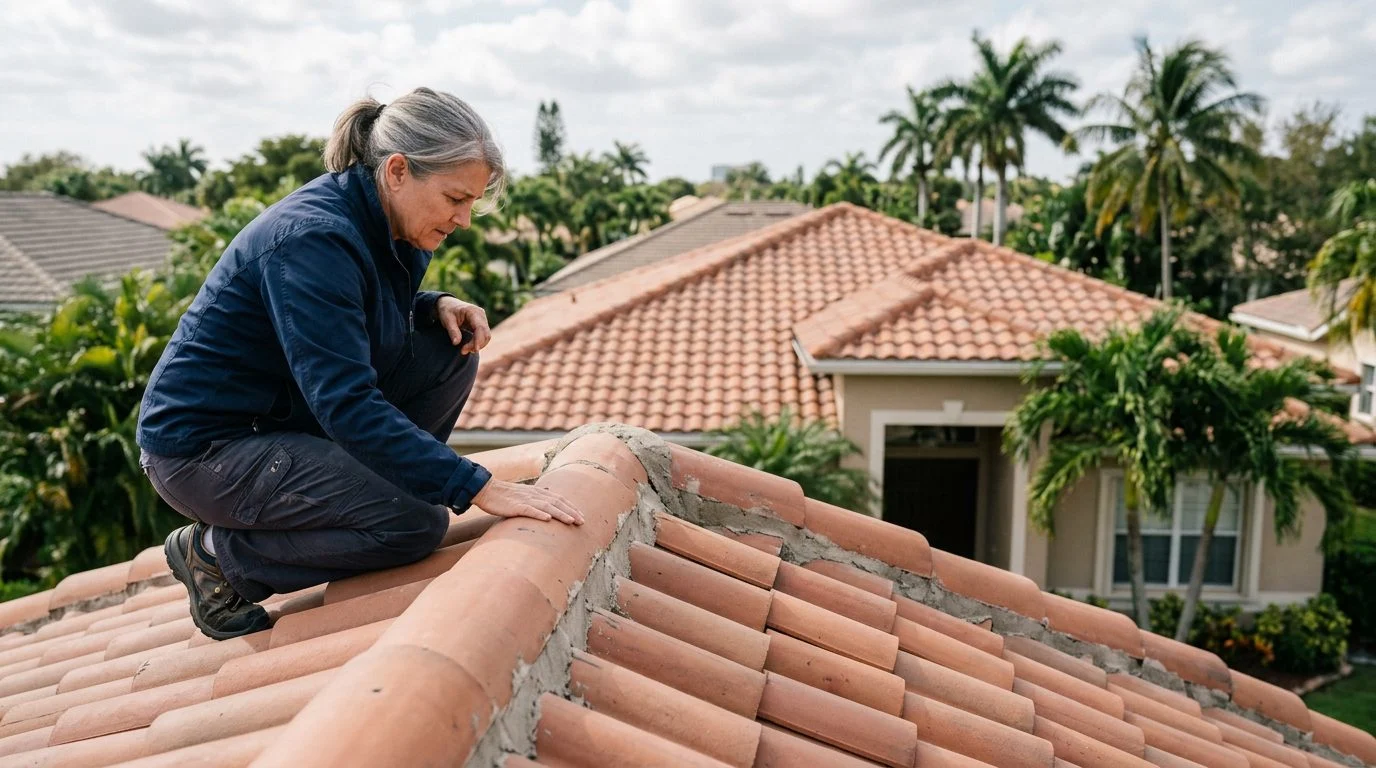
Tile Roof Repair in Fort Lauderdale
Stop Tile Roof Leaks Before They Spread
ASP Superhome helps Fort Lauderdale homeowners repair cracked, loose, and damaged tile roofs. Start with a free first consultation: confidential, with no obligation to continue.
By Jonathan Rodriguez · Published October 21, 2026
Tile roof repair fixes the specific spots where water gets in. It replaces broken tiles, reseals flashing, and closes leak points without tearing off the whole roof. If you need tile roof repair in Fort Lauderdale, this page explains what the work covers, how the process runs, and when replacement makes more sense. ASP Superhome serves homeowners in Fort Lauderdale and across Broward County.
What Tile Roof Repair Covers and Who It Is For
Tile roof repair is a targeted fix to one part of a tile roof system. Crews replace cracked or slipped tiles, reseal flashing, and correct the points where water enters. The rest of the roof stays in place.
This work fits homeowners in Fort Lauderdale and Broward County who see a ceiling stain, drips after rain, or tiles that look damaged after a storm. It also fits owners who notice a leak but can’t yet tell where it starts.
Tile roofs are heavy, layered systems. Water often travels under the tiles before it shows up inside. That’s why a sound repair works on the underlayment and flashing, not only the tiles you can see.
Want to compare tile with other roofing options? Read our South Florida tile roofing guide first, then tell us what you see on your roof.
Not sure what your next step is?
Talk it through with our team — the first consultation is free, confidential, and carries no obligation.

Common Leak Sources on Broward Tile Roofs
Most tile roof leaks start at valleys, flashing, roof penetrations, or loose tiles near the ridge. Each one gives water a path past the first layer of defense.
- Valleys. Where two roof planes meet, water concentrates. Cracked tiles, displaced valley metal, or debris packed in the valley can push water under the tiles.
- Flashing. Metal pieces around chimneys, walls, and skylights seal the joints. Sealant that dries out, cracks, or lifts lets water in.
- Roof penetrations. Plumbing vent pipes, exhaust fans, and solar mounts all pierce the roof. Worn pipe boots and loose fasteners are common entry points.
- Slipped or broken tiles. Wind-driven rain and debris can crack or shift tiles. Exposed underlayment then takes on the water.
- Ridge and hip caps. Loose caps let water slip behind the first row of tiles.
Watch for water stains on ceilings, dripping after rain, damp attic insulation, or a musty smell in upper rooms. These signs often mean water has been moving for a while. Note where the stain sits inside, because that detail helps locate the entry point.
What a Tile Roof Repair Includes
A tile roof repair covers the parts of the roof that work together to keep water out. The scope depends on the damage found. A complete repair typically includes:
- Replacing cracked, broken, or slipped tiles, matched as closely as possible to the existing profile and color.
- Repairing or replacing valley flashing and resealing areas where water collects.
- Replacing pipe boots and sealing penetrations with proper flashing, not sealant alone.
- Re-bedding or securing ridge and hip caps.
- Spot repair of underlayment where it is exposed or damaged.
- Checking nearby fasteners and tile clips in the repaired area.
- A written description of the work, so you know which areas were addressed.
Ask for this written scope before work begins. You can then match it against what the crew found on your roof.
How the Repair Process Works
A tile roof repair in Fort Lauderdale starts with a conversation and ends with a final check. Each step gives you a clear picture before the next one begins.
- First contact. Describe the leak, where it shows inside, and any recent storms. Your free first consultation is confidential and has no obligation to continue.
- On-site inspection. The roof is checked to find the actual water entry point. That point can sit well uphill from the ceiling stain.
- Findings and photos. Damaged areas are documented, so you can see what was found before any work starts.
- Written quote. You receive the repair scope and price, so you can compare the work line by line.
- Scheduling and repair. Work is scheduled around your availability. The timeline depends on the facts, including how many areas are affected and tile availability.
- Final check. Repaired areas are reviewed before the job is closed out.
Permit rules vary by city. Permit requirements for roofing work can vary by municipality, and our team can review what may apply to your project. Ask about permit needs for your address when you receive the quote.
For storm planning, our tile roof inspection guide covers what to check before the season starts.
Why Work With ASP Superhome
ASP Superhome offers tile and metal roofing, roof repair, and roof replacement. It also handles solar panels, solar battery backup, impact windows, impact doors, and kitchen remodeling. If a repair leads to larger home work, the same team can plan it with you.
- Tile and metal options. If replacement becomes the better path, you can compare both roof types.
- Service area. The team serves Fort Lauderdale and Broward County, along with Miami, Kendall, West Palm Beach, Boca Raton, Naples, and Fort Myers.
- Plain findings. Our team explains what was found in plain terms and gives a written quote, so the decision stays with you.
Storm damage and insurance can overlap. The Florida Office of Insurance Regulation explains wind-mitigation inspections and related premium discounts in its wind-mitigation resources.
If you’re weighing solar on a tile roof, read about solar panels on tile roofs. The roof underneath may need repair first.
Repair or Replacement: How to Decide
Repair fits when damage stays in a few areas and the structure underneath is sound. Replacement becomes worth discussing when leaks spread across the roof.
- Repair usually fits when damage is limited to one valley, a flashing section, a penetration, or a group of tiles.
- Replacement is worth discussing when leaks appear in many areas, underlayment is widely worn, or the roof is near the end of its service life.
- Ask for a side-by-side comparison in writing, with cost and scope for each option.
Florida building rules also matter. The Florida Building Commission’s staff analysis on tile roof repair and reuse covers how repairs, undamaged components, and existing tiles are treated under building-code requirements. For a roof replacement on a site-built, single-family home, Fla. Stat. § 553.844 calls for specific wind-resistance techniques, including secondary water barriers.
If your inspection points toward a full replacement, read our tile roof replacement guide for Boca Raton.
Not sure what your next step is?
Talk it through with our team — the first consultation is free, confidential, and carries no obligation.
Frequently Asked Questions About Tile Roof Repair
Can you repair a single cracked tile?
Yes. A single tile can be replaced when the tiles around it are sound and a workable match exists.
Will the repair match my existing roof?
Replacement tiles are chosen to match the existing profile and color as closely as possible. Older roofs can vary in exact match.
Why is the leak far from the damaged tile?
Water travels along the underlayment and rafters before it shows on a ceiling. The entry point can sit well uphill from the stain.
Should I repair leaks before hurricane season?
Addressing leaks early lowers the chance that wind-driven rain enters through a weakened area.
How do I start a tile roof repair in Fort Lauderdale?
Start by describing the leak and where it shows inside. The process section above covers each step that follows.
If water is marking your ceiling right now, note where it appears and request your quote from ASP Superhome. You’ll get a written scope for the repair.
Why Homeowners Start with a Free Consultation
Clear Assessment
We look at the condition of the tiles, underlayment, and flashing so you understand what needs attention.
Written Quote
Request a quote that explains the scope of the tile roof repair before you decide on any work.
Confidential Conversation
Your first consultation is confidential and comes with no obligation to continue.
Straight Answers
Ask about single-tile replacement, color matching, or whether a full roof replacement makes more sense.
Don't Wait on a Leak
Water that enters through a damaged tile can soak the decking, insulation, and ceilings below. If you see stains, dripping, or tiles that have shifted or cracked, schedule an inspection promptly.
Common Tile Roof Repairs
Single Tile Replacement
Cracked or broken tiles can often be replaced individually when the surrounding tiles are sound and a workable match is available.
Loose or Displaced Tiles
Tiles moved by wind or foot traffic are re-secured to help keep water out and protect the roof structure.
Flashing and Seal Repairs
Leaks often start where tiles meet vents, chimneys, valleys, or walls. Repairing these transitions can stop water entry at the source.
Repair or Replace Decision
When damage is widespread, we review whether targeted repairs or a full roof replacement is the better path for your home.
Get a Clear Picture of Your Tile Roof
Related practice areas
- Tile Roof Repair Miami | ASP Superhome


