


Tile Roofing · Kendall, FL
Tile Roof Repair in Kendall: Catch Problems Before They Spread
Cracked tiles, slipped tiles, and small leaks can turn into costly damage fast. Learn the warning signs and how our repair process works, then book a free estimate for your home.
By Jonathan Rodriguez · Published October 27, 2026
Tile roof repair in Kendall fixes specific damage, such as broken tiles or a leak at one spot, while the rest of the roof stays in place. Most repairs begin with an in-person inspection that traces where water is getting in. If you’re searching for tile roof repair in Kendall because of a stain or a cracked tile, this guide explains the warning signs, the repair process, and how to decide between repair and replacement.
What Tile Roof Repair Covers and Who It Is For
Tile roof repair is targeted work on a tile roof with a specific problem. The rest of the roof stays in service.
Repair suits localized problems. Examples include a few broken or slipped tiles, a leak around one vent, or lifted flashing at a single point. Replacement is different. It means removing the roof covering and installing a new one across the roof.
Repair is also the right starting point for people who did not expect the problem. Many readers are handling a leak for a spouse, a parent, or a tenant. If that’s you, you don’t need to know the roof yet. You need to know what to look for and what happens next.
Kendall roofs face South Florida sun, humid air, and wind-driven rain. Storms can crack tiles or lift them out of line. Water can slip under a displaced tile and reach the home below. Tile roofs are durable, but they still need attention when a piece breaks or shifts. Small problems are often easier to address when they’re caught early.
If a leak, cracked tiles, or storm damage has you dealing with a roof you didn't plan for, we can look at it in person and explain what we find. Talk it through with our team — the first consultation is free, confidential, and carries no obligation.

Common Signs You Need Tile Roof Repair in Kendall
Leaks and tile problems are the most common signs of trouble. Watch for these, especially after heavy rain or wind.
- Water stains on ceilings, walls, or around light fixtures, especially after rain. A stain shows where water ended up, not always where it entered.
- Cracked, chipped, or slipped tiles. A tile that sits out of line may let water under it.
- Missing tiles or exposed underlayment after windy weather.
- Damaged flashing around vents, chimneys, skylights, and pipes. Flashing is the metal or sealed material that keeps water out where the roof is broken by something.
- Sagging areas or soft spots. These can signal structural concerns, so they need prompt inspection.
- Storm or wind damage after a named storm or strong wind event.
Note when you see each sign. Dates and weather help the inspector connect the damage to the storm or rain that caused it. Some signs are easy to miss from the ground, which is why an inspection matters. Sagging areas and water inside the home are reasons to act sooner rather than later.
Barrel, Clay, and Redland-Style Tile: How Repairs Differ
The tile profile shapes how a repair is made. Each replacement piece has to fit the rows around it.
Barrel tile has an S-shaped profile. Each piece overlaps and interlocks with its neighbors. Lifting one tile can affect the tiles beside it.
Clay and concrete tile are different materials. Clay tile is made from fired clay. Concrete tile is a molded cement mix. Both need careful handling, because brittle pieces can crack the tiles around them.
Redland-style tile is a two-piece barrel tile. Its pieces are identified by their profile and how they interlock. Matching the profile matters. A mismatched piece may not sit flat or shed water the same way as the rest of the roof.
When an exact color or profile match is limited, the inspector should identify the closest option and explain the difference. Ask how any reused tile will be handled. For background on the Florida Building Commission’s work, see the Florida Building Commission staff analysis.
How a Tile Roof Repair Works, Step by Step
A typical tile roof repair follows four steps: inspection, written explanation, targeted repair work, and a final check.
- Inspection. The inspector checks the tile surface, flashing, and roof penetrations. Where safe access allows, the inspector also looks at the underlayment. Inside the home, the inspector checks for signs of water intrusion.
- Written explanation. You receive a clear description of the damage, with photos where helpful. This shows you the scope before you decide anything.
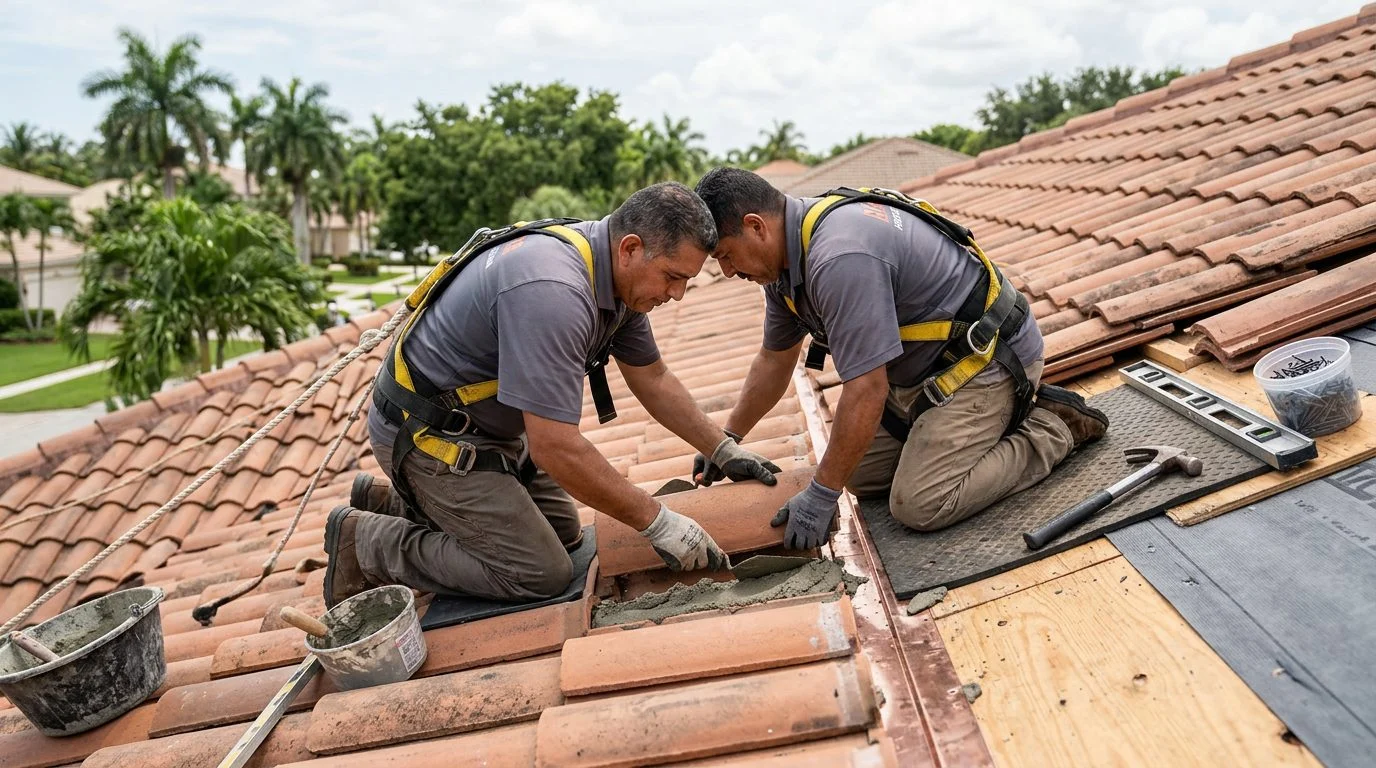
- Targeted repair work. The crew replaces broken tiles, resets displaced pieces, and reseals or replaces flashing at the problem spots.
- Cleanup and final check. The crew removes debris, checks that the repaired areas shed water, and walks you through the work.
Permits matter too. Permit requirements can differ by location, so our team can confirm what applies to your property during your free initial consultation, which is confidential and carries no obligation to continue. The Miami-Dade County roofing permits page covers required forms, checklists, contractor e-permitting, and certain hurricane-mitigation documentation.
Many single-area repairs are scheduled soon after the estimate. Larger jobs take longer. Permit review and weather can change the schedule.
Repair or Replacement: How to Think About the Decision
Repair usually fits limited damage on a roof whose underlying structure is sound. Replacement comes up when damage is widespread or keeps coming back.
- Repair often fits when damage is limited to a few areas and the roof structure is sound.
- Replacement is more likely to be discussed when tiles fail across the roof, leaks return after repairs, or structural concerns appear.
A leak repair should fix the cause, not just the stain. An estimate should name the source of water intrusion. Stains often appear below the spot where water first enters, so the estimate should show the path.
Some Florida rules can affect the decision. When a roof is replaced on a site-built single-family home, Florida law requires certain wind-resistance techniques (Fla. Stat. § 553.844). Homeowners can also use an official mitigation inspection form, submitted to an insurance agent, to seek hurricane-wind mitigation discounts (Florida Office of Insurance Regulation).
The right choice depends on the facts of the specific roof, and an in-person inspection establishes those facts.
Serving Kendall Homeowners
For tile roof repair Kendall homeowners need, ASP Superhome offers complete home solutions across South Florida. Tile roofing is one of its core services, covering tile roof repair and roof replacement.
The company also works on impact windows, impact doors, metal roofing, solar panels, solar battery backup, and kitchen remodeling. Storm protection often covers the roof, windows, and doors together, so one plan can address several parts of the home.
ASP Superhome serves Kendall and other South Florida communities, including Miami, Fort Lauderdale, West Palm Beach, Naples, Fort Myers, and Boca Raton.
The first step is a free first consultation that is confidential and carries no obligation to continue. At the estimate, you should receive a written explanation of the damage, the repair scope, and any options. You decide what to do next. Our team can also explain how a repair fits into the rest of the home’s storm protection.
Not sure what your next step is?
Talk it through with our team — the first consultation is free, confidential, and carries no obligation.

Frequently Asked Questions About Tile Roof Repair in Kendall
Can one broken tile be replaced without replacing the whole roof?
Often yes, when the tile profile can be matched and the surrounding tiles are sound.
How do I know if a leak comes from the tile or the flashing?
An inspection traces the path of the water. Leaks often start away from the visible stain.
Should I wait for a leak to get worse?
No. Early inspection can help limit water damage inside the home.
What should I do before the inspection?
Note where you see stains or damage, and take dated photos from the ground if it is safe.
If you’re handling a tile roof leak or storm damage you didn’t plan for, you don’t have to sort it out from a photo alone. Request a free estimate and get the roof looked at in person.
Signs your tile roof needs repair
Cracked or broken tiles
Tiles that are chipped, cracked, or split leave the underlayment exposed to rain and sun.
Slipped or missing tiles
Gaps in the roof surface let water reach the layers beneath and can be hard to notice from the ground.
Stains or moisture indoors
Water marks on ceilings or walls, or a musty smell in the attic, often point to a leak that starts elsewhere on the roof.
Damaged flashing
Metal flashing around vents, chimneys, and valleys can loosen or corrode, opening a path for water.
Don't wait on an active leak
Water that reaches the attic or ceiling can spread quickly. If you see dripping or new stains, contact us so the source can be traced before more damage develops.
How our tile roof repair process works
1. Free first consultation
Start with a confidential, no-obligation consultation where we listen to what you are seeing and answer your questions.
2. Thorough inspection
We trace the path of the water and check the tiles, underlayment, and flashing to find the true source of the problem.
3. Clear repair plan
We explain the repair options, including whether individual tiles can be replaced with a matching profile, so you can decide with full information.
4. Careful completion
Our team completes the repair and checks the work so your roof is sealed and ready for the next storm season.


