


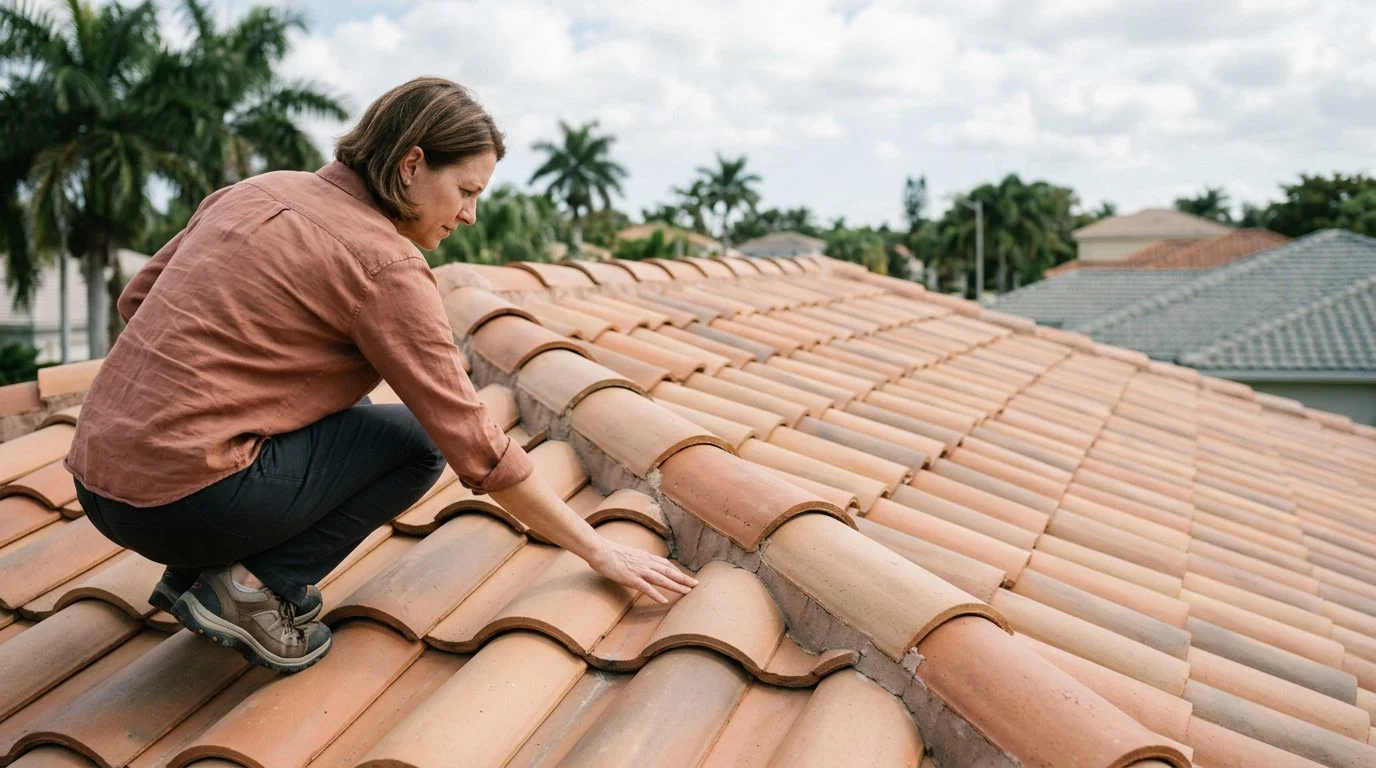
Tile Roofing | South Florida
Tile Roof Repair or Replacement, Planned Around Your Home
Cracked tiles, leaks, or an aging roof? ASP Superhome helps South Florida homeowners weigh repair against replacement. Start with a free first consultation: confidential, with no obligation to continue.
By Jonathan Rodriguez · Published October 21, 2026
Here’s the short answer: repair is usually enough when tile damage stays in a few spots. Replacement becomes the better path when damage spreads, affects the structure, or keeps coming back. Tile roofs are common on South Florida homes, but a few cracked tiles don’t always mean the whole roof is finished. This guide shows you what to check.
Start With a Simple Decision Rule
Repair fits when damage is limited and the layers beneath the tiles are sound. Replacement becomes the question when damage is widespread, affects the structure, or returns after repairs.
So how do I know if my tile roof needs replacing? Start with the extent and location of the damage, not any single broken tile. One cracked tile over a garage door is a different problem from cracks across every slope.
Think of this rule as a checklist, not a verdict. Count where the damage sits, how many slopes it touches, and whether the same spots leak again. Those answers guide the decision more than the tiles you can see from the yard.
Here’s the catch. You can’t confirm the underlayment or roof deck from the ground. Underlayment is the water-resistant layer under the tiles. The deck is the solid base the tiles sit on. A look from the driveway starts the conversation, but it doesn’t end it.
If cracked or slipping tiles have you unsure whether to repair or replace, our team offers a free first consultation, with no obligation to continue. Talk it through with our team — the first consultation is free, confidential, and carries no obligation.

Signs of Tile Roof Damage to Look For
The clearest signs are cracked, chipped, or slipped tiles, especially after a storm or strong wind. Check for these first:
- Cracked, chipped, or broken tiles, often after wind-driven storms
- Tiles that have slipped or shifted, exposing the layer beneath
- Loose or missing ridge and hip caps along peaks and edges
- Tile fragments in gutters, near downspouts, or on the ground at the foundation
Check inside, too. Water stains on ceilings or walls, or daylight visible from the attic, mean water is getting past the tiles. Stains can show up away from the broken spot, because water travels along the roof’s layers before it drops. Slipped tiles also deserve attention before any leak appears. A tile that has moved can leave the underlayment open to wind and rain.
When a Tile Roof Repair Is Usually Enough
Repair is usually enough when a few tiles are broken or slipped in one area, and the underlayment and deck show no water damage beyond that spot.
A typical tile roof repair removes the damaged tiles, replaces them with matching units, and reseals and secures the area as needed. The rest of the roof stays in place, which keeps the job small.
Matching is where many repairs go wrong. Identify your tile by its profile (the shape), color, material, and any stamped markings on the back. A close match keeps the roof looking uniform and lying flat.
Florida law also makes roof repair a permit issue. Under Fla. Stat. § 553.79, it is unlawful for any person to repair a building in Florida without first obtaining a permit from the enforcing agency, unless otherwise provided by law. Separately, Fla. Stat. § 553.79 sets a dollar threshold below which some small jobs on single-family property may proceed without a building permit. That threshold has limits. It does not cover electrical, plumbing, structural, mechanical, or gas work on property containing a single-family dwelling, and a construction project may not be divided into more than one project to evade the requirements of that paragraph. The exemption applies only after the owner or contractor submits a written request to the local enforcement agency, together with a copy of the contract or other documentation demonstrating the nature and the value of the work to be performed. The statute also states that the local government has no legal duty to the owner or contractor for exempted work, so this provision does not mean a tile roof repair automatically qualifies. Plan for that step before work starts. Plan for that step before work starts.
When Replacement Is the Better Path
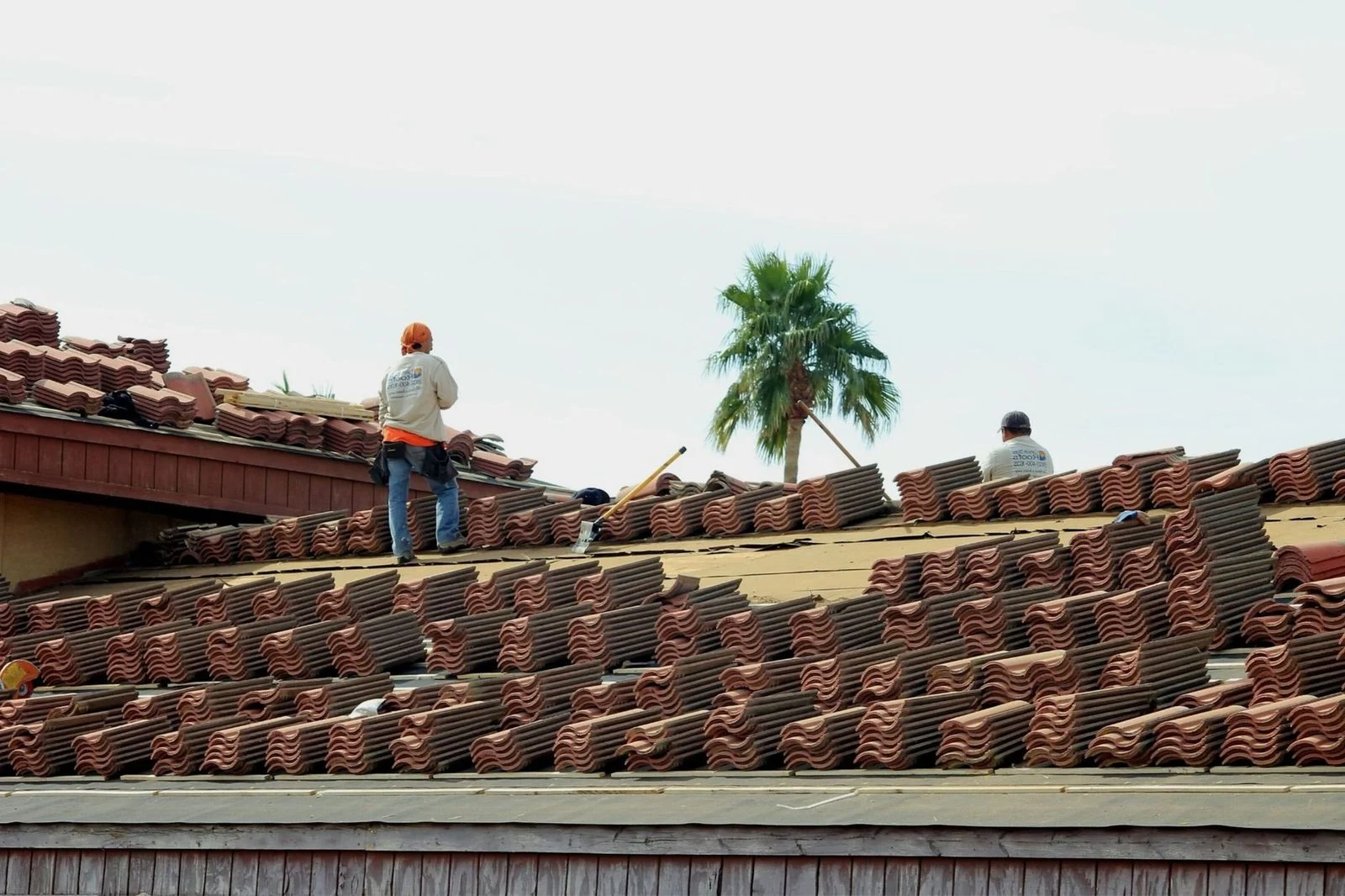
Replacement is the better path when damage is widespread, affects the structure, or keeps returning after repairs. Weigh these signs:
- Widespread cracking or breakage across several slopes
- Sagging roof lines, which call for a professional assessment
- Recurring leaks in the same areas despite earlier repairs
- Underlayment or deck damage found during inspection, which changes the scope of the job
- Repairs that would touch a large share of the roof, making full replacement the more practical choice
A dip in a roof line can point to a problem in the structure below the tiles. Only an on-site inspection can judge it.
If you do replace the roof, Florida law adds requirements. Under Fla. Stat. § 553.844, a roof replacement on a site-built, single-family home must incorporate specified windstorm mitigation techniques. Those requirements shape the scope of the work.
How Roof Age, Tile Type, and Florida Conditions Factor In
Roof age alone doesn’t answer the question. An older roof in good condition may need only repairs. A younger roof with widespread damage may need replacement.
How long a tile roof lasts depends on the tile material, installation quality, maintenance history, and exposure to sun, wind-driven rain, and salt air. South Florida homes face all four at once.
Tile type matters, too. The National Roofing Contractors Association says clay and concrete tile roofing is durable and used in Florida. It also says that when another roof covering is replaced with tile, the building’s structural load capacity must be verified. Tile is heavy, so switching to it is a structural question, not only a cosmetic one.
A Miami-Dade County Product Control approval for one flat-profile concrete tile system shows how tile products are tested under TAS 112 and approved for specified Florida Building Code uses. Approvals cover specified applications, so check that a replacement product fits your specific job.
What Affects Cost and Insurance, and Your Next Step
Cost depends on the facts of your roof, not on a single number. The main drivers are:
- Extent of damage and number of slopes involved
- Tile availability and how closely replacements match
- Condition of the underlayment and deck
- Roof access and any structural work
If storm damage is behind the problem, insurance timing matters. A supplemental claim has an 18-month limit under the same section.
Under Fla. Stat. § 627.7011, a replacement-cost homeowner’s policy may cover the extra costs of meeting building laws and ordinances. Those costs can be limited to 25 or 50 percent of the dwelling limit, as the policyholder selects. The coverage applies only to repairs of the damaged portion unless total damage exceeds 50 percent of the structure’s replacement cost.
How do I know if my tile roof needs replacing?
Replacement is worth weighing when damage is widespread, affects the structure, or keeps returning after repairs. A limited problem with sound underlayment and deck usually points to repair.
Do I need a permit to repair a tile roof in Florida?
Yes. Unless otherwise provided by law, a permit from the enforcing agency is required before a building is repaired.
If you’re looking at cracked or slipping tiles and can’t tell whether repair or replacement fits, our team offers a free first consultation. It’s confidential and comes with no obligation to continue. It gives you a professional look at your specific roof.
Why Homeowners Start the Conversation with Us
A clear look at your options
We help you compare a targeted tile repair with a full roof replacement, so the decision rests on what your roof actually needs.
Confidential first consultation
Your first consultation is free, confidential, and comes with no obligation to continue.
Straight answers
Our team explains the condition of your roof, the likely scope of work, and the questions to ask before you commit to anything.
Support for the whole home
ASP Superhome also handles impact windows, impact doors, metal roofing, solar panels, and kitchen remodeling, so one trusted team can help with related projects.
Before you start work
Roof work in South Florida often requires a permit from the local enforcing agency. Ask about permit requirements before any tile is removed or replaced, and make sure the scope of work is documented in writing.
Common Signs Your Tile Roof Needs Attention
Cracked or slipped tiles
Broken or displaced tiles can expose underlayment and let water reach the roof deck. Isolated damage often points toward targeted repair.
Leaks or water stains
Water on ceilings or walls signals that water is getting past the roof. Finding the source early can prevent damage inside the home.
Damage that keeps coming back
When problems return after repeated fixes, or damage is spread across large sections, replacement is worth weighing.


