


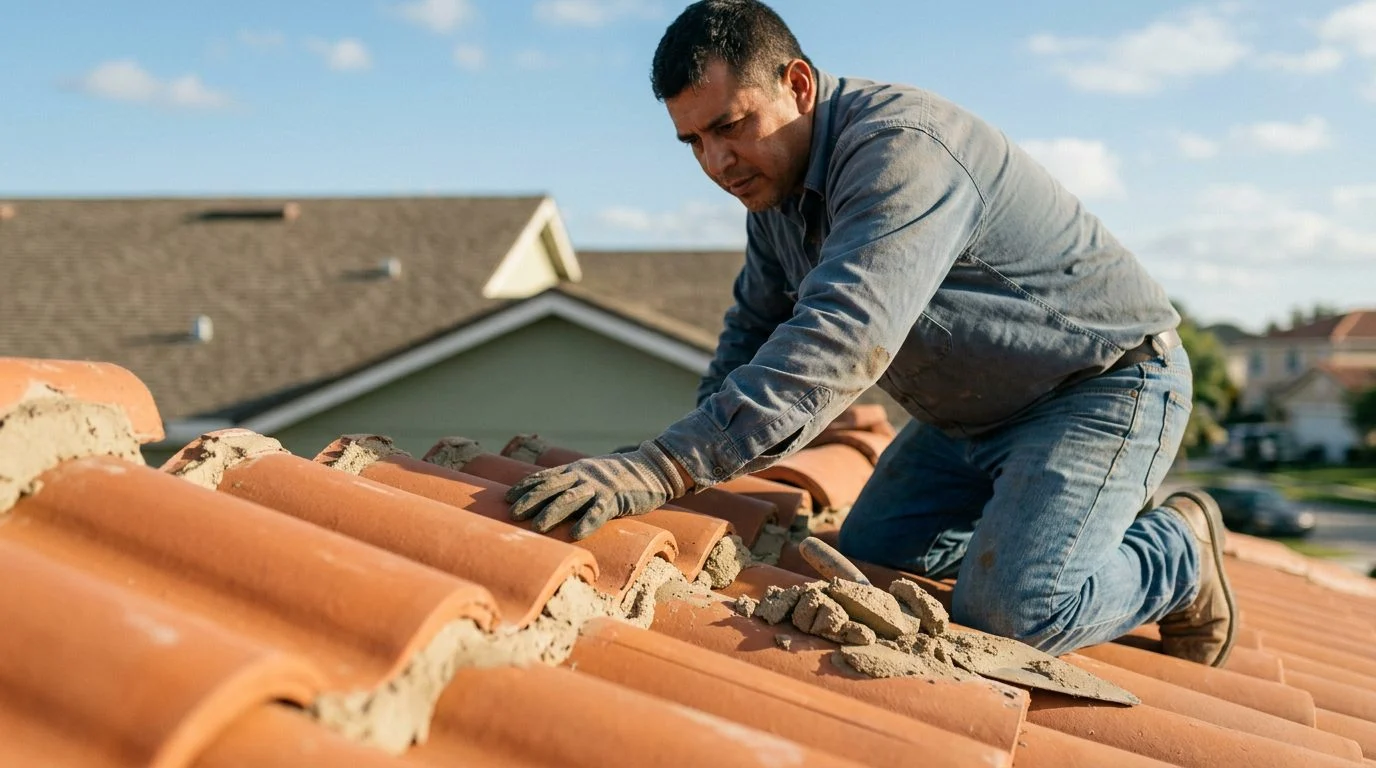
Tile Roof Repair · South Florida
Tiles Blew Off Your Roof? Here's What to Do Next
Stay safe, document the damage, and get a clear plan for repair or replacement from ASP Superhome, serving Miami, Fort Lauderdale, West Palm Beach, Kendall, Naples, Fort Myers, and Boca Raton.
By Jonathan Rodriguez · Published November 1, 2026
When roof tiles blow off in a storm, your first job is to keep everyone safe. Next, record the damage before anything changes, protect the inside from water, and report the claim on time. This guide walks through those steps in order for South Florida homeowners with tile roofs.
Storms here often bring wind-driven rain. A missing tile can turn into a ceiling leak within hours, so the order you act in matters.
Start With Safety: What to Check From the Ground
Stay off the roof until the storm has passed and the tiles are secure. Broken tile edges and wet, slick surfaces cause falls and cuts. Loose tiles can also slide again without warning.
Before you walk up to the house, look around the yard. Watch for downed power lines, fallen branches, and damaged gutters. Keep well back from any downed line and assume it is live.
From ground level, scan the roofline for missing, cracked, or shifted tiles. Note which side of the house took the most wind, since that side often shows the worst damage. Keep children and pets away from the walls under the roof edge, where tiles can still fall.
If broken tiles and a new ceiling stain have you choosing between repair and replacement, our team offers a free first consultation that is confidential and comes with no obligation to continue. Talk it through with our team — the first consultation is free, confidential, and carries no obligation.
Document the Damage Before Anything Is Moved or Repaired
Take photos before anyone climbs up, moves debris, or covers the roof. Photos taken before repairs begin are the strongest record of what the storm did.
Start with wide pictures of each roof plane. Then take close-ups of cracked, displaced, or missing tiles, with the date and time visible. Set a ruler or coin beside broken pieces to show their size.
Record a slow video walkaround of the outside. Include gutters, fascia, and any tiles on the ground. Inside, photograph ceiling stains, wet drywall, bulging paint, and dripping spots. Mark where water enters with tape or a pencil line, and write down the date of each mark. Keep the broken tile pieces until your insurer has seen them.
Protect the Inside of the Home From Water
Move furniture, electronics, rugs, and boxes away from active leak points. Set buckets under drips, and cover the floor with towels or plastic sheeting.
A temporary cover on the roof can slow water, but only install one if you can do it safely. Treat it as a short-term step. A tarp is not a permanent repair.
Check ceilings and walls again after each new rain. Note whether water is spreading. Wet drywall and insulation can grow mold, so dry out soaked areas as soon as you safely can. Keep receipts for buckets, sheeting, cleanup supplies, and any emergency materials. These records support your claim file.
How Storm-Damaged Tile Roofs Typically Look
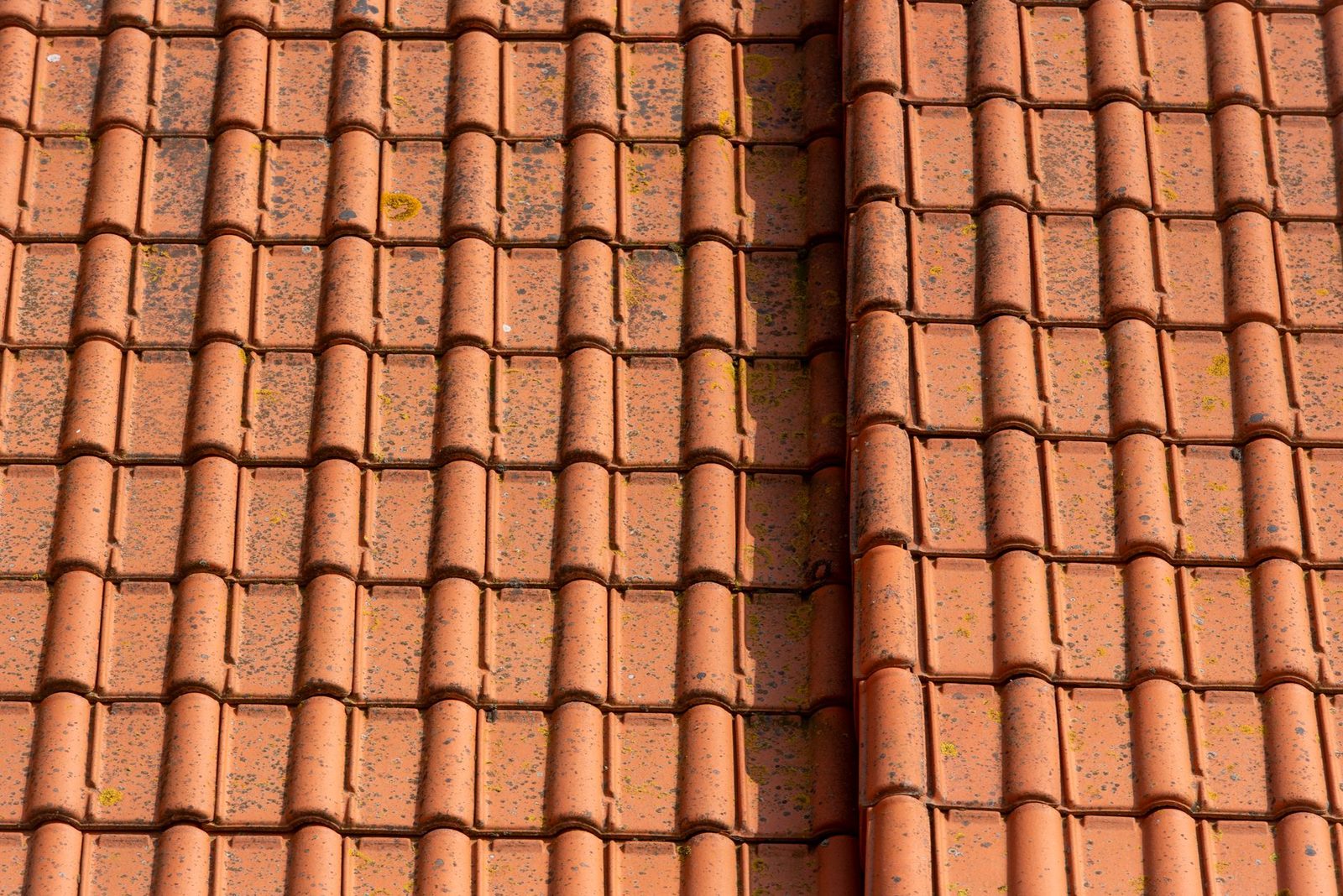
Storm damage on a tile roof usually shows up as shifted, cracked, or missing tiles. You can spot many of these signs from the ground.
Shifted tiles slide out of line and leave gaps. Those gaps can expose the layer beneath. Cracked or chipped tiles are common along edges, ridges, and where tiles overlap.
Missing tiles can expose the underlayment, the water-resistant layer under the tiles. Once that layer is exposed, the next rain is more likely to leak through. Debris in gutters, around downspouts, or on walkways often shows where tiles came off.
Florida’s code also looks closely at the underlayment. The Florida Building Commission analysis of 2026 Building changes says a new section requires tile underlayment uplift resistance to meet ASCE 7 component and cladding loads.
Report the Storm Damage to Your Insurer and Keep Records
Report the storm to your insurer promptly. Florida law sets firm notice deadlines. Under Fla. Stat. § 627.70132, a claim is generally barred unless notice reaches the insurer within 1 year after the date of loss, following the policy terms.
A supplemental claim for additional damage has an 18-month limit. For hurricanes, the date of loss is the date the hurricane made landfall. For tornadoes, windstorms, severe rain, and other weather-related events, the date of loss is the date the event is verified by the National Oceanic and Atmospheric Administration.
Write down the claim number, the date of each call, and the name of each person you speak with. Keep copies of every email and letter.
The Florida Office of Insurance Regulation states that coverage depends on the policy form and on covered or excluded perils. It also states that storm-related property damage may be covered.
Get the Damage Assessed and Decide on Repair Scope
A spot repair fixes a few tiles. Wider damage may call for replacing a larger section or the full roof. Ask for an inspection that checks the tiles, the underlayment, the flashing, and the areas around vents and other openings.
Your insurer may also limit the roof payment. Under Fla. Stat. § 627.7011, if a roof deductible applies, the insurer may limit its roof payment to actual cash value until it gets reasonable proof you paid the deductible.
Before you sign anything, compare the written scope against your photos and notes. Florida law also requires a good faith, itemized estimate before a repair agreement tied to an insurance claim. Under Fla. Stat. § 489.147, providing that agreement without one is a prohibited practice.
Not sure what your next step is?
Talk it through with our team — the first consultation is free, confidential, and carries no obligation.
Prevent Further Damage in the Weeks After the Storm
Check the roof and ceilings after every heavy rain until repairs are finished. Small leaks can grow once the underlayment stays wet.
Trim tree limbs that rubbed or struck the roof during the storm. Clear gutters and downspouts so water drains away from the roof edge and foundation.
Report new cracks, stains, or loose tiles right away. Don’t wait for a larger leak.
Be careful with rushed contracts. If you sign a roof repair or replacement contract after a Governor’s state of emergency, and your home is in the declared area, Florida law lets you cancel. Fla. Stat. § 489.147 lets a residential property owner cancel a contract to repair or replace a roof without penalty or obligation within 10 days after the contract is signed or by the official start date, whichever comes first, when the contract was entered into within 180 days of events that are the subject of a state of emergency declared by the Governor and the property is located in the area that declaration covers.

Talk Through Your Tile Roof Damage With Our Team
Tiles that are off or shifted, water entering the home, and a decision between repair and replacement can feel like a lot at once. You don’t have to sort it out alone.
Our team can inspect your tile roof and describe what we observe. We can also walk through spot repair versus replacement with you, including how the work would be matched to your existing tiles.
Frequently Asked Questions
How long do I have to report storm damage in Florida?
Florida law generally requires notice to your insurer within 1 year after the date of loss, following your policy terms. Supplemental claims have an 18-month limit.
Can I replace only the damaged tiles?
Often a spot repair covers a few tiles. Wider damage may need a larger section.
Does insurance cover wind damage to roof tiles?
For questions about how your own policy terms apply to storm damage, contact your insurer directly.
If broken tiles and a new ceiling stain have you choosing between repair and replacement, we can help you weigh your options. To start, reach out to our team for a first consultation. You are responsible for any insurance deductible.
Four Steps to Take After Tiles Blow Off
1. Keep Everyone Safe
Stay off the roof and keep clear of loose tiles, debris, and sagging areas. Shifting winds and wet surfaces can cause further damage or injury.
2. Document the Damage
Take clear photos and video of missing and cracked tiles, the roof surface, gutters, and any water inside the home. Note the date and the storm conditions.
3. Limit Further Water Entry
If it is safe to do so, cover exposed areas and move valuables away from ceilings and walls where water is coming in. Temporary measures are not a substitute for a full repair.
4. Schedule a Roof Inspection
A professional look at the roof helps determine whether a spot repair or a larger section of tile roofing is needed, and what should be done first.
Important: Don't Climb the Roof Alone
Tiles that have come loose can slip underfoot, and roofs weakened by wind may not hold your weight. Leave inspection and repair to trained crews.
How ASP Superhome Can Help
Start with a Free Consultation
Our first consultation is free, confidential, and comes with no obligation to continue.
Clear Repair Options
We explain whether your roof needs a spot repair, a section replacement, or a full tile roof replacement, along with what each option involves.
Built for South Florida Storms
Our team focuses on tile roofing, metal roofing, and roof repair designed to stand up to the region's wind and rain.
Responsive Scheduling
Tell us what happened and we will help you plan the next steps, from inspection through completed work.


