


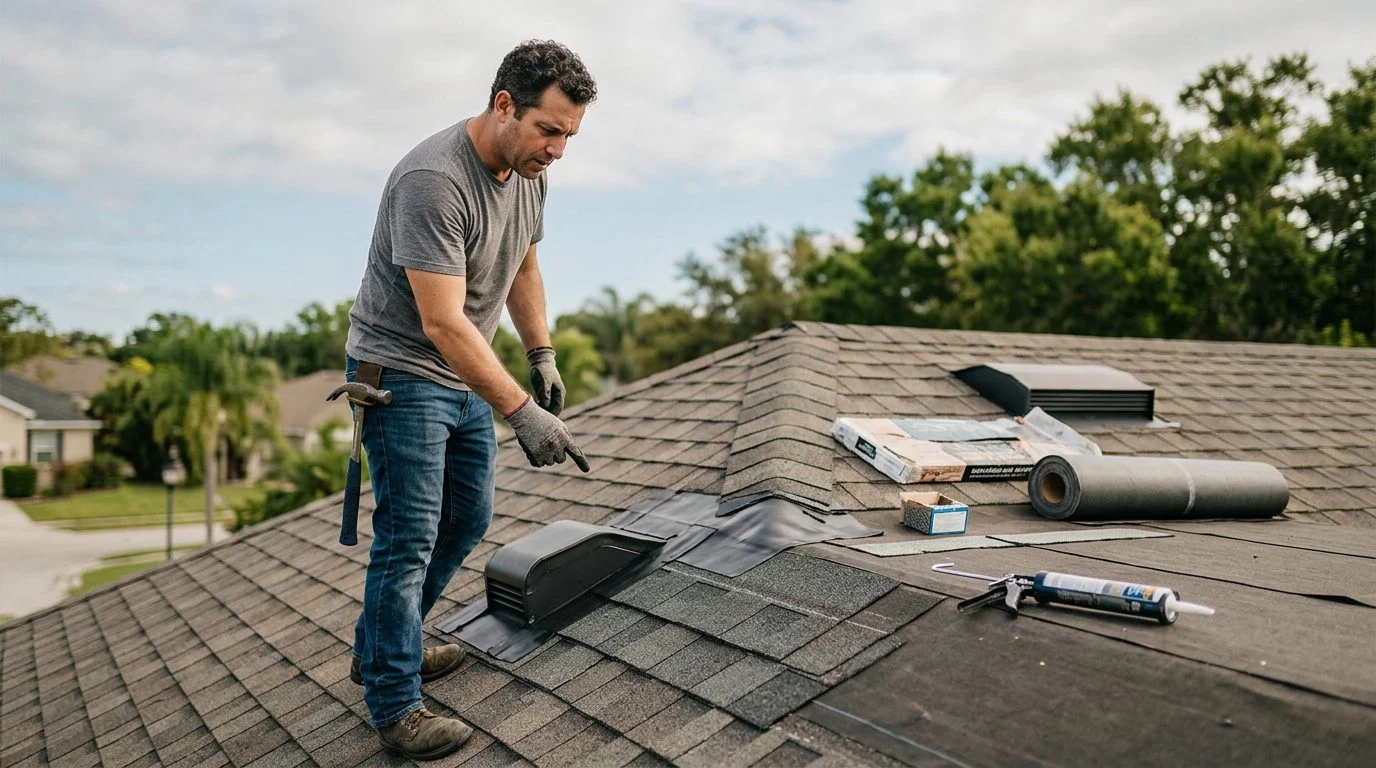
Storm Damage Guide | South Florida
Storm Damage on Your Roof? Here's What to Do Next
A calm, step-by-step guide to staying safe, documenting the damage, protecting your home, and getting your roof back in shape across Miami, Fort Lauderdale, West Palm Beach, Naples, and beyond.
By Jonathan Rodriguez · Published October 25, 2026
After a storm damages your roof, start with safety. Then document the damage, check your policy, and report the claim to your insurer within the deadlines Florida law sets. Repairs come after those steps, not before.
This guide walks through that order for homeowners in South Florida, from Miami and Fort Lauderdale to West Palm Beach, Naples, and Fort Myers. If you’re handling this for a parent, a tenant, or a property you manage, the same steps apply.
Start With Safety Before You Inspect Anything
The first answer to “what to do after a storm damages your roof?” is simple: stay safe. Don’t climb onto the roof. Storm-weakened tiles, loose metal, and soft spots can give way under your weight.
Keep children and pets away from the area under damaged sections. Broken tile and sharp metal can cut skin and shoes, and they can fall from the edge of the roof.
If you see downed power lines or smell gas, leave the property. Call the utility or emergency number from a safe spot before you do anything else.
Once the area is safe, look at the roof from the ground. Binoculars and a zoomed-in phone camera work well. You can often see missing tiles and bent metal without going up.
If a storm left your roof damaged and you're not sure what comes next, our team is ready to talk it through with you. Talk it through with our team — the first consultation is free, confidential, and carries no obligation.
How to Tell If Your Roof Has Storm Damage
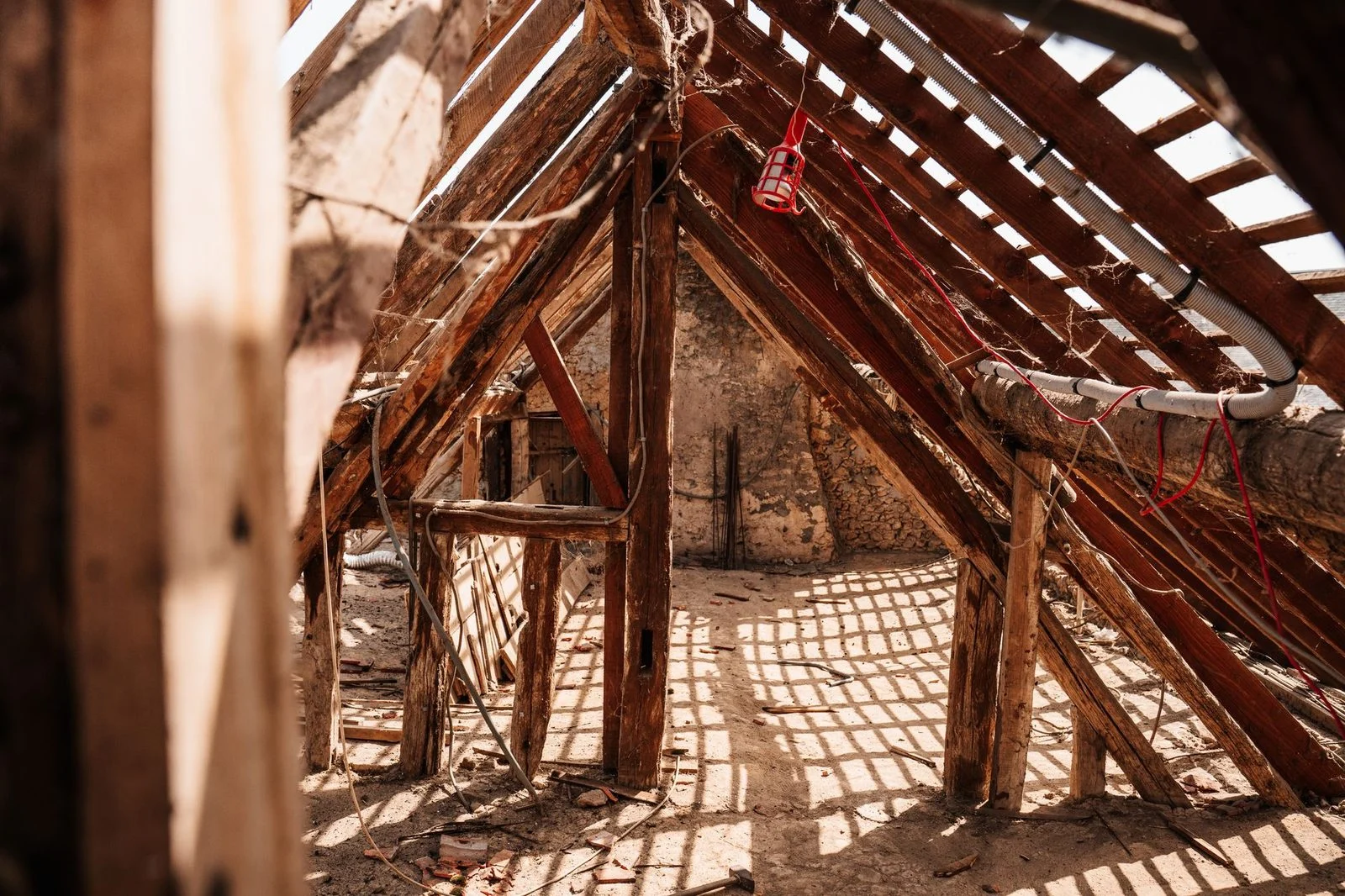
Signs of storm damage include missing, cracked, slipped, or displaced tiles. Tiles piled in the yard or on walkways are a strong sign of wind damage.
Check metal panels and other roof surfaces for dents or dings. These can point to hail impact, even when the roof still looks mostly whole.
Next, look at the flashing. Flashing is the metal strip around chimneys, vents, skylights, and valleys. Bent, lifted, or missing flashing lets water in at the seams.
Check the sealant too. Cracked or dried sealant around vents and roof edges can leak even when the tiles look fine.
Inside, look for water stains on ceilings, peeling paint, and damp spots on walls. In the attic, look for wet insulation or daylight coming through the roof boards. Any of these signs means you should document the problem and report it, even if the damage looks small.
Why Quick Action Matters
Acting fast limits the harm. Any opening in the roof lets rain reach the underlayment, the roof deck, the insulation, and the ceilings below. A small opening can become a much larger interior problem after a few heavy rains.
Water inside or outside the home is a signal. It means the roof is no longer shedding water the way it should. Don’t wait for a stain to spread before you act.
Leaks at flashing and sealant are hard to spot from the ground. They often show up as a stain days later, on a different wall or ceiling than the damage itself.
Temporary protection, such as a tarp, helps keep water out while permanent repairs are arranged.
Document the Damage Before Anything Is Repaired
Document the damage before anyone moves a tile or pulls off a panel. Your photos and notes are the foundation of your insurance claim.
Take wide photos of the whole roof and home from several sides. Then take close-up photos of each damaged area. Place a common object, like a coin or a ruler, in the frame for scale.
Walk the property and record a short video from the ground. Film interior ceilings, walls, and floors wherever you see water.
Write down the date and rough time of the storm. Note when you first saw each problem. Keep broken tiles and pieces of flashing in a dry spot, and save receipts for emergency measures like tarps.
Check Your Policy: Coverage, ACV vs. RCV, and Your Deductible
Your homeowners policy decides what it covers. Read it to see how it treats windstorm and hurricane damage to the roof. The Florida Office of Insurance Regulation says coverage depends on the policy form and on covered or excluded perils.
Know how your policy pays. Actual cash value (ACV) factors in depreciation, so age and wear reduce the payment. Replacement cost value (RCV) generally pays to replace the damaged part with like kind and quality, subject to your policy terms.
Florida law requires insurers to offer replacement cost coverage for the dwelling. Under Fla. Stat. § 627.7011, code-upgrade costs can be limited to 25 or 50 percent of the dwelling limit; unless you refuse it in writing, your policy is deemed to include the 25 percent limit.
Understand your deductible. It’s the amount you pay before coverage applies. Some storms trigger a separate hurricane deductible. The Florida hurricane deductible guidance explains how that deductible applies to covered hurricane losses.
The amount of any claim depends on the facts of your damage and your policy terms. Don’t assume a number until your insurer confirms it in writing.
Reporting Your Claim to Your Insurance Company
Report the damage to your insurer as soon as you can. Florida law sets firm limits on when a claim can be reported.
Under Fla. Stat. § 627.70132, a claim or reopened claim (but not a supplemental claim) under a property insurance policy for loss or damage caused by any peril is barred unless notice is given to the insurer in accordance with the policy’s terms within 1 year after the date of loss; this time limit is tolled during any term of deployment to a combat zone or combat support posting that materially affects a named insured servicemember’s ability to file. A supplemental claim for added damage from the same peril is barred unless notice is given to the insurer in accordance with the policy terms within 18 months after the date of loss; this time limit is tolled during any term of deployment to a combat zone or combat support posting that materially affects the ability of a named insured who is a servicemember to file.
For hurricanes, the date of loss is the date the storm makes landfall. The same statute sets this rule.
When you call, ask for a claim number. Write down the date and the name of each person you speak with. Keep a copy of every email and letter.
Describe what you saw in plain terms. Say which tiles are missing, where water shows inside, and when you noticed it. If you don’t know the cause or the roof’s age, say so. Don’t guess.
If the insurer schedules an inspection, be present if you can. Point out each area you documented, and keep copies of everything you share.
Not sure what your next step is?
Talk it through with our team — the first consultation is free, confidential, and carries no obligation.
Get a Professional Inspection and Temporary Protection
A professional inspection finds damage that’s hard to see from the ground. Common examples include cracked tiles under overhangs, damaged underlayment, and failed flashing.
Temporary protection keeps water out of openings while permanent repairs are arranged. Installing it safely matters more than installing it fast. Have it done by people who can work on a damaged roof safely.
Ask for a written description of the damage and the recommended repairs. You can compare it with what the insurer’s inspector finds.
Florida’s contractor rules protect you during this stage. Under Fla. Stat. § 489.147, a contractor may not give you a repair agreement for repairs undertaken pursuant to a property insurance claim without a good faith estimate of itemized costs. The actual cost can still differ as the insurer adjusts the claim.
The same statute bars a contractor from offering you a rebate, gift, gift card, cash, coupon, waiver of your deductible, or any other thing of value in exchange for letting them inspect your roof or for making an insurance claim for roof damage.
What Happens After Your Roof Damage Claim Is Approved
Once a claim is approved, the agreed scope usually sets which repairs are covered. The scope is the list of damaged parts and the work needed to fix them.
Compare ACV and RCV before work starts. If your policy pays on an ACV basis, the payment can be lower than an RCV payment, because depreciation is subtracted.
Read any written estimate closely. Check the tile replacement, underlayment, flashing, and sealant lines. Confirm the materials and work match the damage you documented.
Know your cancellation window. Under Fla. Stat. § 489.147, if a roof contract was signed within 180 days of a governor’s state of emergency declaration covering your property, you can cancel without penalty within 10 days after signing or the official start date, whichever comes first.
Keep your claim file in one place. Store your photos, inspection reports, estimates, invoices, and letters together. A tidy file makes every later question easier to answer.
Talk With Our Team About Your Roof’s Next Steps
If you’re working through storm damage right now, you don’t have to sort out every step alone. Maybe a few tiles are in the yard. Maybe a new ceiling stain appeared after the last storm.
Our team can look at the condition of your roof and talk through repair or replacement options for tile, underlayment, and flashing. We also handle metal roofing, impact windows, and impact doors when storms have exposed openings.
Start with a free first consultation. It’s confidential and comes with no obligation to continue. When you’re ready, reach out through our contact page to request a quote or to book a free first consultation, which is confidential and comes with no obligation to continue.
Frequently Asked Questions
How do I know if my roof has storm damage?
Look for missing or cracked tiles, bent flashing, and damaged sealant. Check the ceilings and attic for water stains or wet insulation.
What should I do first after a storm damages my roof?
Keep yourself and others safe first, especially away from the roof edge and downed power lines. Then document the damage with photos and notes.
How long do I have to report storm damage in Florida?
Under Florida law, a claim is generally barred unless notice is given within 1 year after the date of loss, following your policy’s terms. Supplemental claims have an 18-month limit.
What is the difference between ACV and RCV?
ACV subtracts depreciation from the payment. RCV generally pays to replace the damage with like kind and quality, subject to your policy terms.
Can I cancel a roof contract after a storm?
Possibly. If the contract was signed within 180 days of a state of emergency covering your property, you may cancel within 10 days after signing or the official start date, whichever comes first.
Your Storm Damage Checklist
1. Keep everyone safe
Stay off a damaged roof, keep away from the edge, and stay clear of downed power lines and standing water. Your safety comes before any repair.
2. Document the damage
Take clear photos and video of missing or cracked tiles, dented or torn metal panels, bent flashing, and any water stains inside the home. Note the date and the areas affected.
3. Limit further damage
Move valuables away from leaks, place buckets under active drips, and clear debris from gutters and drains where it is safe to do so.
4. Get a professional look
A thorough inspection shows what needs repair and what needs full roof replacement. Our team can walk through your roof and explain your options clearly.
Warning: Don't Climb onto a Damaged Roof
Wet, cracked, or lifted roofing can be extremely slippery and unstable. If you see sagging, exposed decking, or anything touching power lines, stay inside and keep your distance until the area is safe.
How ASP Superhome Can Help
Roof Repair and Replacement
From a few damaged tiles to a full roof replacement, we handle roofing work in South Florida with a focus on lasting protection.
Metal and Tile Roofing
Choose the roofing style that suits your home, whether that is durable metal or classic tile.
Impact Windows and Doors
Upgrading to impact-rated windows and doors can help protect openings from future storms.
Free First Consultation
Our free first consultation is confidential and comes with no obligation to continue. Tell us what you're seeing and we'll outline next steps.
Storm damage? Start with a free estimate today.
Related practice areas
- Tile Roofing in South Florida: Costs, Styles & Installation Guide
- Flat Concrete Tile Roof Replacement in South Florida
- Barrel Tile Roof Repair After Hurricane Damage
- Tile Roof Underlayment Replacement in Florida


