


Tile Roofing | South Florida
Protect Your Home Under the Tiles
Tile roof underlayment replacement from ASP Superhome, backed by a free, confidential first consultation with no obligation to continue.
Start With a Free Consultation
Free
First consultation
Confidential
Your information stays private
No obligation
Decide whether to continue
By Jonathan Rodriguez · Published October 25, 2026
Tile roof underlayment replacement Florida homeowners often need means removing the water-resistant layer under the tiles and installing a new one. Underlayment is the backup barrier. It keeps water out when wind pushes rain past a tile. This guide covers the warning signs, common materials, the replacement steps, and the Florida rules that apply. If you’re looking into this for a family member, a tenant, or a property you manage, this is a good place to start.
What Tile Roof Underlayment Is and Why It Matters in Florida
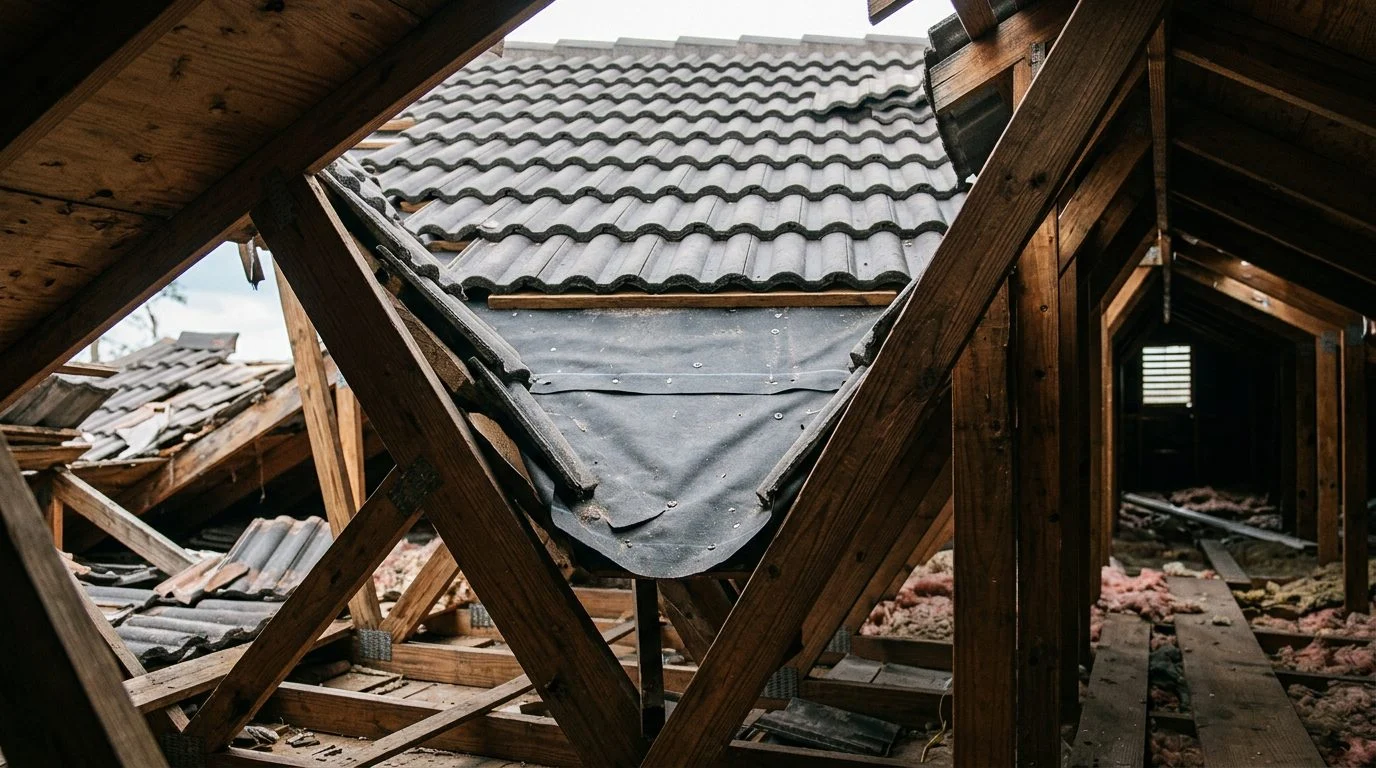
Tile roof underlayment is the water-resistant layer between the roof deck and the tiles. Tiles shed most rain. The underlayment catches what gets through, especially when wind drives water up under the tile edges.
Think of a tile roof in layers:
- Deck: the solid base, usually wood or concrete, fixed to the framing.
- Underlayment: the water barrier on top of the deck.
- Battens: strips that hold the tiles in place.
- Tiles: the visible layer that sheds most water.
South Florida adds stress. Heat, intense sun, and heavy wind-driven rain all work on this layer. Once tiles are installed, you can’t see the underlayment. Most owners learn its condition only after a leak or during a re-roof.
If water is showing up on a ceiling or an inspector raised a concern you didn't expect, you don't have to sort it out alone. Our team can talk it through with you. Talk it through with our team — the first consultation is free, confidential, and carries no obligation.

Signs a Tile Roof Underlayment May Need Replacement
Water stains on a ceiling or wall, especially after a storm, are the most common sign. Watch for these warning signs:
- Stains or bubbling paint on ceilings and walls after wind-driven rain.
- Damp insulation, a musty smell, or soft spots in attic decking or rafters.
- Leaks that return after individual tiles are repaired. This points to a problem below the tiles.
- Missing or broken tiles after a storm, leaving the underlayment open to sun and rain.
- Cracked or brittle underlayment seen during tile removal or inspection.
Roof age and repair history matter too. Insurers look at roof age closely. Write down when the roof was installed and each past repair. Those details help you ask better questions.
Underlayment Types Used on Florida Tile Roofs
Most tile roofs use a synthetic or felt underlayment, with self-adhered membranes in key spots. The right mix depends on the roof itself, not on a single product.
- Felt underlayment: the traditional choice. It’s heavier and can tear more easily during installation. It’s less common on new jobs, though older roofs may still have it.
- Synthetic underlayment: lighter, tear-resistant, and easier to handle on a large roof.
- Self-adhered (peel-and-stick) membranes: a sticky waterproof layer that seals around fasteners. Installers often use it at valleys, eaves, and penetrations like vents and chimneys.
Tile is durable and common across Florida. Before work starts, ask which product and fastening method is specified.
What a Tile Roof Underlayment Replacement Includes
A full replacement removes the tiles, repairs the deck, installs new underlayment, and reinstalls the tiles. A complete scope covers five parts:
- Careful tile removal: sound tiles are reused, and broken ones are replaced.
- Deck inspection: the crew checks for rot, delamination, and loose fasteners. Repairs happen before new underlayment goes down.
- New underlayment: installed with proper overlaps and seams so water runs toward the eaves.
- Metal and flashing work: drip edge, valley metal, and flashing at walls, chimneys, and penetrations are replaced or sealed.
- Tile reinstallation: tiles and battens go back to manufacturer and code requirements.
Partial work can also be an option.
How the Replacement Process Works, Step by Step
Most projects follow six steps, from first conversation to final review.
- Initial consultation: a confidential talk about symptoms, roof age, and past repairs.
- Inspection: the team checks tiles, underlayment, deck, and attic, with photos and written findings.
- Written estimate: the estimate separates underlayment work from tile, deck, and flashing repairs.
- Permits: under Fla. Stat. § 553.79, unless otherwise provided by law, it is unlawful to repair a building without first obtaining a permit. The City of Miami roofing permit guidance describes the city’s roofing permit information.
- Phased work: tiles come off, the deck is repaired, and new underlayment goes on, often in sections to limit weather exposure.
- Final review: the team walks you through what was replaced and what was found, plus checks to do after the next heavy rain.
If the work ties to a storm insurance claim, timing matters. Under Fla. Stat. § 627.70132, a claim or reopened claim is barred unless notice is given to the insurer in accordance with the policy terms within 1 year of the date of loss, and a supplemental claim is barred unless notice is given within 18 months after the date of loss. These time limits are tolled during any term of deployment to a combat zone or combat support posting that materially affects a servicemember named insured’s ability to file. For hurricanes, the date of loss is the landfall date. The length of the job depends on roof size, pitch, deck condition, and weather. The written estimate lays out the expected schedule.
Why Choose ASP Superhome for Tile Roof Work in South Florida
ASP Superhome handles tile roofing, roof repair, and roof replacement. We also handle impact windows, impact doors, metal roofing, solar panels, and solar battery backup. Homeowners in Miami, Fort Lauderdale, West Palm Beach, Kendall, Boca Raton, Naples, and Fort Myers can contact our team.
- Coordinated planning: roof work can be scheduled alongside impact windows, impact doors, or solar.
- Written findings: our team puts the findings in writing.
- Inspect first: our team explains what the findings mean and recommends only the work the roof needs.
Free first consultation: confidential, with no obligation to continue (consulta inicial gratuita, confidencial y sin compromiso).
Not sure what your next step is?
Talk it through with our team — the first consultation is free, confidential, and carries no obligation.
Frequently Asked Questions About Tile Roof Underlayment
What is the underlayment of a tile roof?
It’s the water-resistant layer under the tiles. It protects the deck and the inside of the home when water gets past the tiles.
Which roof type works well in Florida weather?
Tile and metal roofs are both common in South Florida. A consultation can compare the two for your home’s structure and goals.
How much does underlayment replacement cost?
Cost varies with roof size, tile type, deck condition, and access. A written estimate after inspection gives a figure for your roof.
What is the life expectancy of a tile roof in Florida?
Tile material, installation quality, underlayment type, and exposure to sun, wind, and salt air all shape how long a roof lasts. An inspection can assess your roof’s condition.
Can underlayment be replaced without replacing all the tiles?
In many cases, the work is done in sections. The inspection shows which tiles need replacing.
Will my homeowner’s insurance cover this work?
Coverage turns on your policy and the cause of damage. Review your policy terms with your insurer.

Talk With Our Team About Your Tile Roof
A leak, a storm, or an unexpected inspection note can feel urgent and confusing. You may be handling it for a family member, a tenant, or a property you manage. Gather the symptoms, the roof’s age, and any past repairs. Then reach out to ASP Superhome so our team can review them with you.
Why Homeowners Call ASP Superhome
Built for South Florida Weather
Intense sun, heavy rain, and wind-driven storms put constant stress on tile roofs. Our team focuses on underlayment systems that hold up to those conditions.
Clear, Written Estimates
We explain the scope of work, the materials involved, and the steps of the job so you know what to expect before any work begins.
Coordinated Home Solutions
ASP Superhome also handles roof repair, roof replacement, impact windows, impact doors, and solar, so your project can be planned as one system.
Answers Before You Commit
Your free first consultation is confidential and comes with no obligation to continue. Ask your questions and decide at your own pace.
Don't Assume the Tiles Tell the Whole Story
Intact-looking tiles do not confirm that the underlayment beneath them is sound. Water can travel under tiles and reach the deck and interior of the home. If you notice staining, soft spots, or leaks inside, schedule an inspection promptly.
Signs Your Tile Roof Underlayment May Need Attention
Interior Stains or Drips
Water marks on ceilings or walls, especially after heavy rain, can indicate that moisture is passing the tile layer.
Soft or Spongy Decking
Deck boards that flex or feel soft when walked on may point to long-term moisture exposure below the tiles.
Loose or Shifted Tiles
Tiles that have moved or cracked can expose the underlayment to sun and water, speeding up its wear.
Roof Age and Past Repairs
An older roof or a history of patch repairs is a good reason to have the underlayment reviewed during a consultation.
Get Your Free, Confidential Consultation
Related practice areas
- Tile Roofing in South Florida: Costs, Styles & Installation Guide
- Tile Roof Recoating in South Florida
- Tile Roof Inspection After a Hurricane in Florida
- Impact Doors in South Florida: Hurricane-Rated Entry, French & Sliding Glass Doors


