


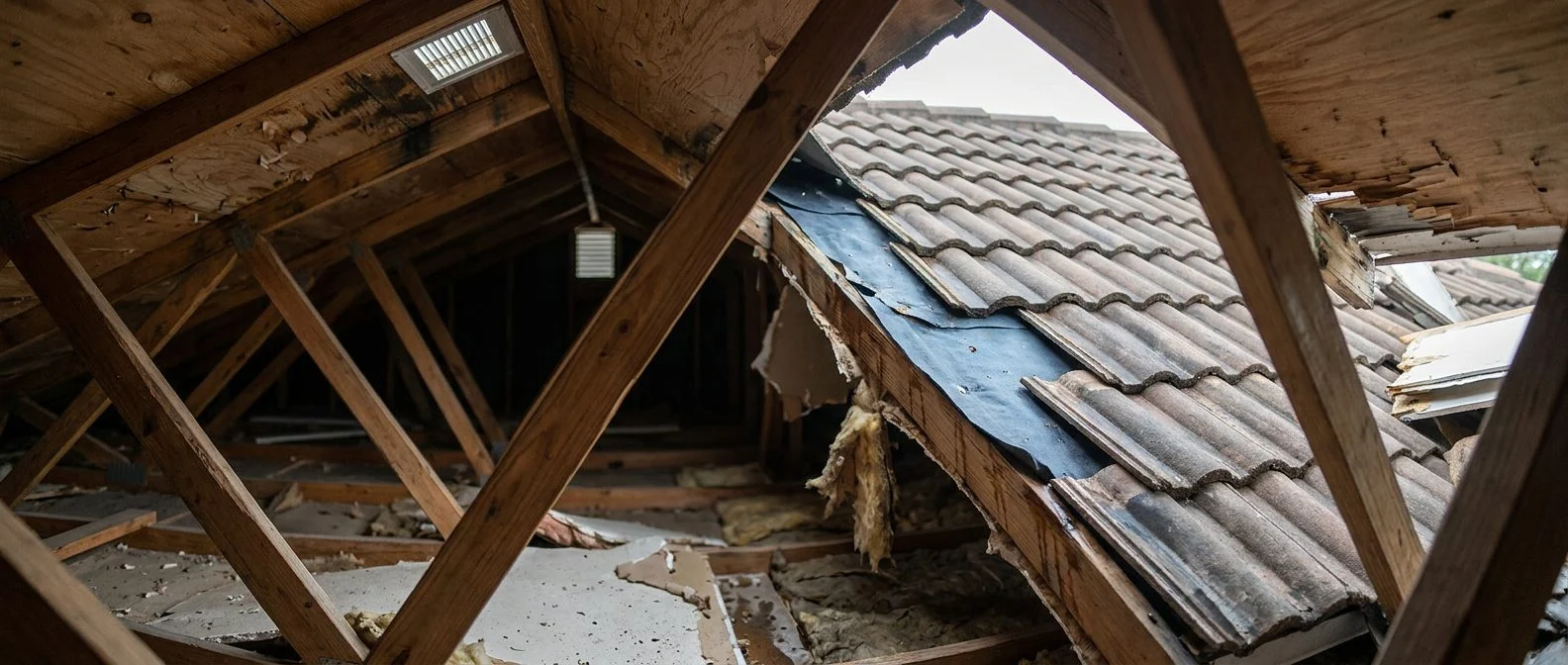
Tile Roofing | South Florida
Tile Roof Underlayment Replacement, Done Right
Underlayment is the hidden layer that keeps water out when tiles are worn or wind-driven rain gets underneath. Learn what replacement involves, what affects the cost, and how our team can help your home.
By Jonathan Rodriguez · Published October 27, 2026
Tile roof underlayment replacement South Florida homeowners need usually comes down to four things: the warning signs, the rules, the cost drivers, and the process. Tile roofs shed most rain, but the underlayment beneath the tiles is what keeps water out of the home. This guide walks through each part so you can decide what your roof needs.
What Tile Roof Underlayment Replacement Involves and Who It Is For
Tile roof underlayment replacement is a full swap of the water-resistant layer under the tiles. The crew removes the tiles, replaces the underlayment, and then puts the tiles back or installs new ones.
The underlayment sits on the roof deck, under the tiles and flashing. It does the work when tiles crack, slip, or let wind-driven rain reach the deck.
This work usually fits a few situations:
- An owner with a leak that keeps returning, or a ceiling stain that showed up after a storm.
- An owner who received an inspection finding or an insurance question about an aging tile roof.
- A buyer or agent dealing with a roof question during a home sale.
- A family member or property manager handling the roof for someone else.
If you found a stain or got a report you didn’t expect, you’re in the right place to start. The tile roofing guides for South Florida show how this work fits into a full roof plan.
If a ceiling stain or an unexpected inspection report has you looking into your tile roof, our team can look at it with you and explain what it would take. Talk it through with our team — the first consultation is free, confidential, and carries no obligation.

Signs Your Tile Roof Underlayment Is Failing
A leak that returns to the same spot is one of the clearest signs of underlayment trouble. Look for these warning signs:
- Leaks in the same area after tiles were repaired, or after heavy rain.
- Water stains on ceilings, walls, or attic framing, especially near valleys, roof penetrations, and eaves.
- Brittle, torn, or worn underlayment seen during an attic check or tile removal.
- Cracked, slipped, or missing tiles that expose the layer below.
- A musty smell, damp insulation, or soft decking in the attic.
A leak can start in more than one place. An on-site inspection finds the real cause before anyone sets the scope of work. Water that reaches the deck can add repair work, so early checks help.
Repair or Replace: How to Decide on a Tile Roof
Spot repair may be enough when damage is limited to a few tiles or one flashing area. Widespread underlayment wear usually points to full replacement.
Four factors help you decide:
- The age of the roof and how it has held up over time.
- How many separate leak locations you have found.
- How far the damage spreads across the roof.
- The condition of the decking under the underlayment.
Patching underlayment on an old roof can leave other sections exposed. A repair that stops one leak may not stop the next one. For the full picture, see tile roof replacement in Miami-Dade.
Florida and Miami-Dade Code Requirements for Tile Roof Underlayment
Florida law generally requires a permit before a building is repaired or altered. Under Fla. Stat. § 553.79, it is unlawful to alter, modify, or repair a building without first getting a permit from the enforcing agency.
The Florida Building Code contains the laws and rules that govern repair and construction across the state. Local rules add to it. Miami-Dade roofing permits include required forms, checklists, and contractor e-permitting. The City of Miami roofing permit page covers permits for roof repair or replacement inside city limits.
A permitted job gets inspections that check the work against the permit. Ask which permit applies to your address and which inspections come with it.
Underlayment Types and Materials for Tile Roofs
The right underlayment depends on roof slope, deck condition, wind zone, and the approved product for the job. No single product fits every roof.
Common categories include felt-based sheets, synthetic sheets, and self-adhered membranes used in valleys and other sensitive areas. Each one performs differently on four points:
- Water resistance, which keeps moisture out if water gets past the tiles.
- Tear strength, which holds up during tile work.
- UV exposure, meaning how long the layer can sit open before tiles go on.
- Adhesion to the deck, which matters on steep or high-wind areas.
The statute on secondary water barriers says that, for site-built, single-family residential structures constructed before the implementation of the Florida Building Code, their criteria may not be limited to one method or material. Roofing is one of the product categories approved under Fla. Stat. § 553.842, and a product may not be marketed as hurricane or windstorm protection unless it is approved under that section or s. 553.8425. For installation practice, the Tile Roofing Industry Alliance installation guides cover tile installation, code requirements, and high-wind methods in Florida.
Ask for the product name on the estimate. That lets you check it against its approval.
What Drives the Cost of Replacing Tile Roof Underlayment
Cost comes from the work on your roof, so the written estimate lists each part instead of one flat number. The main cost lines are:
- Tile removal and reinstallation, or replacement tiles.
- Tear-off labor for the old underlayment.
- The underlayment product and flashing.
- Decking repair, if soft or rotted sheathing appears after tear-off.
- Permits and debris disposal.
Some roofs take more labor. Steep pitch, multiple stories, tight access, valleys, hips, skylights, and roof penetrations all add time. Tile work varies too. Some existing tiles can be reused, some break during removal, and matching tiles may be hard to find.
Insurance can add another layer. Some homeowner policies pay for repairs on a replacement cost basis without covering code-required upgrade expenses, while others offer that upgrade coverage as an option. Read your policy to see how it applies to your roof.
Not sure what your next step is?
Talk it through with our team — the first consultation is free, confidential, and carries no obligation.
How the Tile Roof Underlayment Replacement Process Works, Step by Step
The process for tile roof underlayment replacement South Florida jobs runs in seven steps, from consultation to final inspection.
- Free first consultation. It is confidential and carries no obligation to continue (consulta inicial gratuita, confidencial y sin compromiso).
- On-site inspection. We check the tiles, underlayment, flashing, attic, and decking to confirm the scope.
- Written estimate. It lists tile removal, tear-off, the underlayment product, flashing, decking repair allowances, permits, and cleanup.
- Permit and scheduling. The permit is applied for, and timing is confirmed with you in advance.
- Protection and tear-off. Landscaping and interiors are protected, then the tiles come off and the old underlayment is removed.
- Decking and new underlayment. The deck is inspected and repaired, then new underlayment and flashing go in.
- Tile reinstallation and final inspection. Tiles are reset or replaced, the site is cleaned, and final inspection happens where required.
Timing depends on roof size and scope. The schedule is confirmed in writing before work begins.
Why Homeowners Choose ASP Superhome for Tile Roof Work
ASP Superhome offers tile roofing alongside metal roofing, roof repair and replacement, impact windows and doors, solar panels, solar battery backup, and kitchen remodeling. Related items can be scoped together under one estimate.
ASP Superhome serves Miami, Kendall, Fort Lauderdale, Boca Raton, West Palm Beach, Naples, and Fort Myers.
Our team builds the written estimate around the specific underlayment product, the tile plan, and the flashing work. That lets you check what’s included before any work starts.
Frequently Asked Questions About Tile Roof Underlayment Replacement South Florida
How much does it cost to replace tile roof underlayment?
Cost depends on tile removal, tear-off, the underlayment product, flashing, decking repair, permits, and disposal. The written estimate lists each of these items.
What underlayment works for tile roofs in Florida?
The right product depends on slope, deck condition, wind zone, and an approved product for the job. Ask for the product name on the estimate so you can check it.
What is the code for roofing underlayment in Florida?
The Florida Building Code governs roof repair and construction, since it contains all laws and rules which pertain to and govern the design, construction, erection, alteration, modification, repair, and demolition of public and private buildings. Miami-Dade and the City of Miami publish their own permit requirements.
When to Consider Roof Replacement
Can underlayment be replaced without removing all the tiles?
Partial work depends on how much damage is present and the tile condition found on inspection. An inspection shows whether a limited repair fits your roof.

Talk Through Your Roof With Our Team
If a ceiling stain or an inspection report has you looking into your tile roof, you don’t have to work out the next step alone. You may be looking into this for a family member, a tenant, or a property you manage, and that’s a fine place to start.
Send us your address, your roof type, and where the leak or concern shows up, so we can prepare for the visit. Request a quote or book an estimate with our team today.
Why Homeowners Start With a Free Consultation
A clear picture of the job
We look at your roof's tile condition, deck, and underlayment so you know what needs to be done and why.
An itemized written estimate
Your estimate lists each part of the work, from tile removal and flashing to permits and disposal, so nothing is left to guesswork.
Products suited to South Florida
We discuss underlayment options that fit your roof's slope, wind exposure, and the local climate.
Confidential and no obligation
Our free first consultation is confidential and comes with no obligation to continue.
Don't Wait for a Leak
Underlayment problems often stay hidden until water reaches the inside of your home. If your tiles are cracked, lifted, or the ceilings show staining, schedule an inspection before the damage spreads.
What Affects the Cost
Tile removal
Tiles must be carefully removed and stacked before the old underlayment can be reached, and that labor is part of the estimate.
Tear-off and decking
Damaged or soft decking may need repair before new underlayment goes down.
Flashing and details
Valleys, penetrations, and edges often need new flashing to keep the system watertight.
Permits and disposal
Permit requirements and removal of old materials are listed separately so you can review each line item.


