


Tile Roofing & Roof Repair | South Florida
Your Insurer Flagged Your Tile Roof? Start With a Clear Plan.
Learn what the letter usually means, what to gather, and how ASP Superhome can inspect your roof and help you decide your next step.
By Jonathan Rodriguez · Published November 2, 2026
If your insurance says my tile roof is too old, the letter is a starting point, not a final ruling. Roof-age letters usually ask for information or point to a policy condition tied to the roof’s age. This guide explains what the letter likely means, how roof age can change a payout, and what to do next.
What a Roof-Age Letter from Your Insurer Usually Means
A roof-age letter usually asks for information about the roof or notes a condition tied to its age. It shows how the insurer views the roof. It is not proof that the roof has failed.
Insurers may consider roof age in underwriting, but Florida law limits this for homeowners’ policies issued or renewed on or after July 1, 2022. An insurer may not refuse to issue or renew a homeowner’s policy solely because of roof age if the roof is less than 15 years old; this rule does not apply to mobile home policies. For a roof at least 15 years old, the insurer must let you have the roof inspected by an authorized inspector at your expense before requiring a replacement. The insurer also may not refuse solely because of roof age if that inspection shows 5 years or more of useful life remaining. Each insurer sets its own rules.
Start by reading three things in the letter. Check the date it was issued, any deadline it lists, and any document or inspection it requests.
Deadlines matter most if the roof was damaged in a storm. Under Fla. Stat. § 627.70132, a claim is barred unless notice is given to the insurer under the policy within 1 year after the date of loss. A supplemental claim is barred unless notice is given within 18 months.
Keep the letter with your policy declarations page.
If your insurer's letter has you weighing a repair against full tile replacement, our team can look at your roof with you. Talk it through with our team — the first consultation is free, confidential, and carries no obligation.

How Roof Age Can Affect Your Coverage and Payout
Roof age can change how much you receive for a roof loss, mainly through how the insurer values the roof. Under a replacement-cost policy, the dwelling loss is adjusted on replacement cost, not exceeding policy limits, which pays to repair or replace at today’s prices. Actual cash value pays replacement cost minus depreciation, which is the value lost to age and wear.
Under Fla. Stat. § 627.7011, a replacement-cost policy adjusts a repaired or replaced loss on replacement cost rather than actual cash value. The insurer must first pay at least the actual cash value, less your deductible. It pays the rest as work is performed and expenses are incurred.
Roof deductibles add a twist. If a roof deductible applies, the insurer may limit the roof payment to actual cash value until it receives reasonable proof you paid that deductible. Proof can include a canceled check, a money order receipt, or a card statement.
Older roofs usually carry more depreciation. The same storm damage can produce a smaller check on an older roof than on a newer one.
Premiums can change too. Ask your own insurance carrier whether it offers a premium discount for a new roof and which roof characteristics it takes into account. Those discounts are typically limited to roofs under 10 years old. Ask your insurer how a roof update could change your renewal terms.
How Old Can a Tile Roof Be Before Insurance Pulls Coverage?
Insurers set those criteria. Each insurer sets its own criteria, so the age that matters is the one in your insurer’s guidelines.
Citizens Property Insurance Corporation lists underwriting requirements for older roofs. These include age thresholds for tile roofs, documentation of remaining useful life, and proof of replacement when less than five years of useful life remains. Citizens is one insurer, so other carriers may use different rules.
Age is rarely the only factor. Insurers often weigh roof material, installation history, overall condition, and inspection findings together. Tile is a durable covering. The IBHS roof basics guide describes tile roofing materials and the test standards used for residential tile roofs.
Durable does not mean maintenance-free. Check the underlayment, the fasteners, and any cracked or displaced tiles. A roof older than an insurer’s guideline may still be insurable with conditions. The letter usually states what the insurer needs next, such as an inspection or photos.
How Long Does a Tile Roof Typically Last in South Florida?
A well-installed and well-maintained tile roof often outlasts many other roofing materials. Lifespan still varies with tile type, underlayment, installation quality, and exposure.
South Florida adds stress. Heavy rain, wind-driven storms, salt air near the coast, and strong sun all wear on a roof. Each one can shorten roof life or speed up wear on the tile, underlayment, and flashing.
Florida building rules matter too. The 2026 Florida Building Code added a new section requiring tile underlayment uplift resistance to meet the component and cladding loads of ASCE 7, according to the Florida Building Commission’s analysis of changes. A newer tile roof is built to a standard an older one may not meet.
Florida law also addresses windstorm protection during roof work. Under Fla. Stat. § 553.844, for site-built, single-family residential structures, a roof replacement must incorporate specified windstorm techniques, including secondary water barriers. Barrel and flat tiles also behave differently in high wind, which matters when you judge an older roof.
Reading the Numbers: Rules of Thumb and Replacement Costs
The 25% figure you may hear about is a policy limit, not a roofing rule of thumb. Under Fla. Stat. § 627.7011, unless the policyholder rejects it in writing, a dwelling policy is deemed to include law and ordinance coverage limited to 25 percent of the dwelling limit. That is a coverage cap for code-required work. It is not a formula for what a roof costs.
Repair quotes and replacement quotes differ a lot. Whether a figure like $30,000 is high depends on the roof’s size, tile type, pitch, access, and the scope of work.
Florida law also governs estimates. Under Fla. Stat. § 489.147, a contractor who gives an insured an agreement authorizing repairs under a property insurance claim must provide a good faith estimate of the itemized, detailed cost of services and materials. The final cost can still differ once the insurer adjusts the claim.
Keep written estimates and dated photos next to the insurer’s letter. Compare the numbers against your policy terms, not against a general rule.

Next Steps After You Receive a Roof-Age Letter
Work through these steps in order:
- Read the letter for dates, deadlines, and requested documents.
- Pull your policy and declarations page.
- Gather roof installation records, permits, and dated photos.
- Note any leaks, stains, cracked tiles, or displaced pieces.
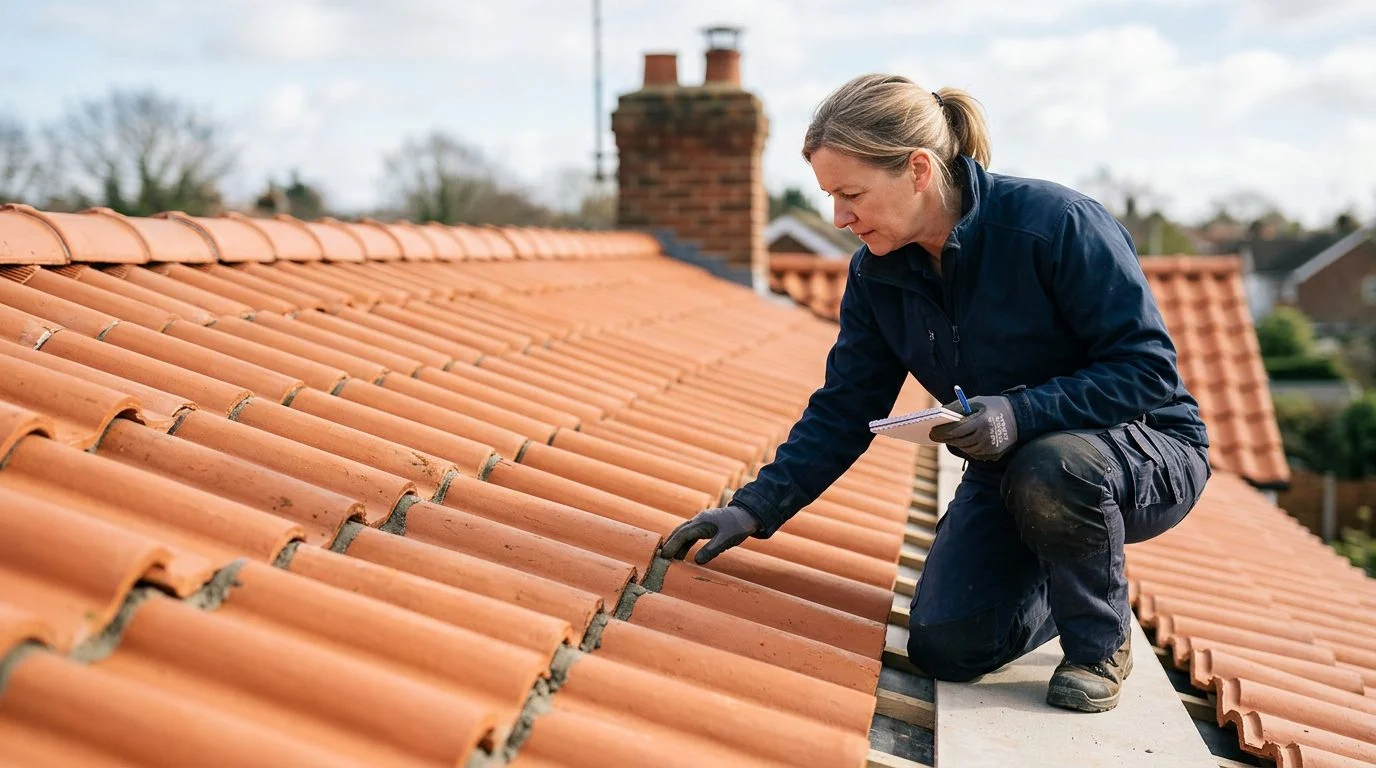
An on-site roof inspection records the roof’s current condition. That record helps no matter what the insurer decides, and it helps you compare repair with replacement.
Florida contract rules apply when you hire a roofer.
Common questions
If my insurance says my tile roof is too old, must I replace it?
Not by itself. The letter usually asks for information or flags a condition the insurer will review.
How long do I have to report storm damage?
Florida law generally requires notice within 1 year after the date of loss, following your policy’s terms.
If your insurer’s letter has you deciding between repairing your tile roof and replacing it, our roofing team can inspect the roof with you and talk through your options. Your first consultation is free, confidential, and carries no obligation to continue. Request a quote or book a free estimate.
How ASP Superhome Can Help
Review the Letter With You
We help you understand what your insurer is asking for so you can respond with confidence.
Roof Condition Check
We look at the age, condition and repair history of your tile roof and explain what we find in plain language.
Repair or Replacement Options
Whether your roof needs targeted roof repair or a full roof replacement, we walk you through practical options for your home and budget.
Confidential First Consultation
Our free first consultation is confidential and comes with no obligation to continue.
Don't Set the Letter Aside
An insurance letter about roof age is often a request for information or a notice that the insurer will review your roof. Read it closely, keep a copy, and respond to what it actually asks.
Your Next Steps
1. Read the Letter Closely
Note what the insurer is requesting, which roof details it mentions and any response instructions.
2. Gather Your Records
Collect your roof's installation date, permits, past repair invoices, photos and your policy documents.
3. Get a Roof Inspection
A professional look at your tile, underlayment, flashing and fasteners shows the true condition of your roof.
4. Respond With a Plan
Pair the inspection findings with your records and decide whether repair or replacement fits your situation.


