


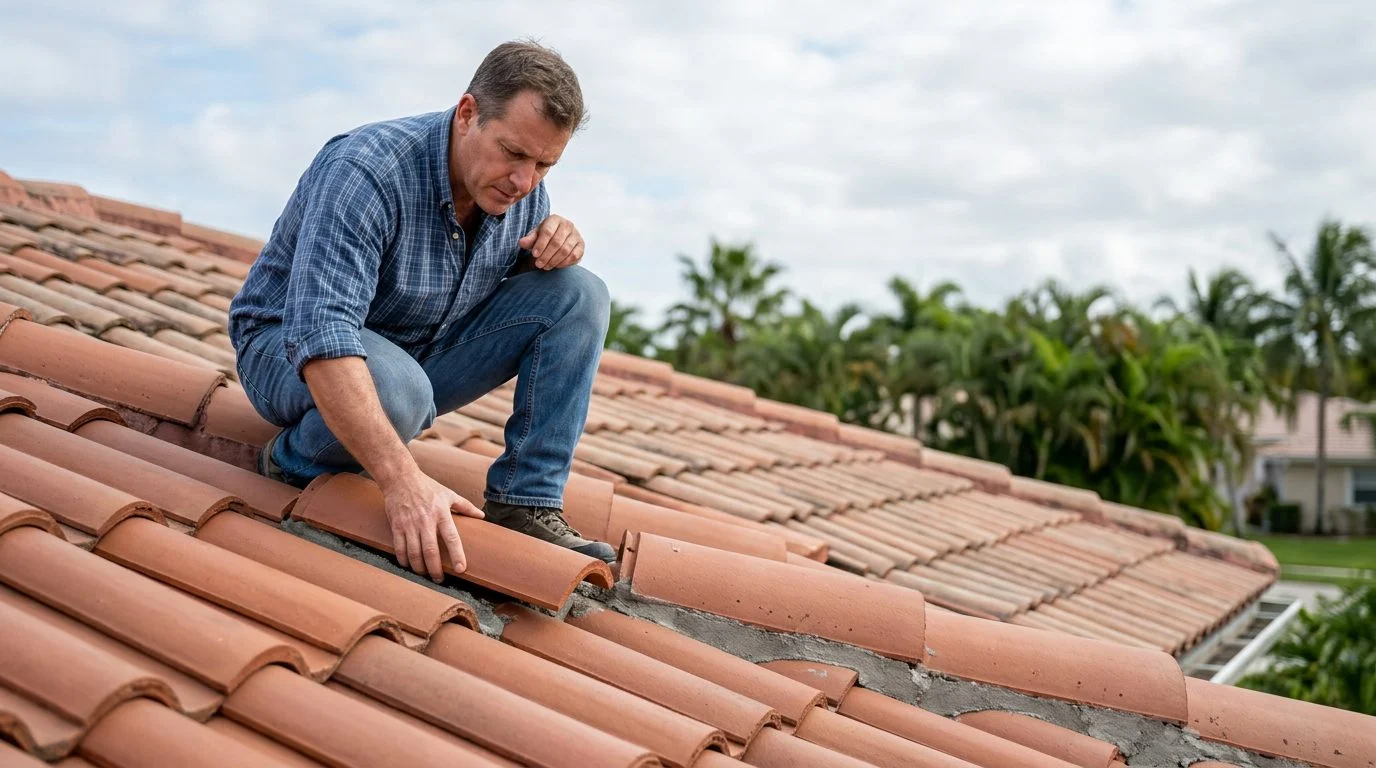
Tile Roof Repair · Broward County
Planning a Tile Roof Repair in Broward County? Start with the Permit
A plain-language guide to when a tile roof repair may need a permit, what to gather first, and how ASP Superhome can help you plan the job.
By Jonathan Rodriguez · Published October 24, 2026
Do I need a permit to repair tile roof broward county? Often, the answer is yes. The facts of the job and the local rules where the house sits decide it. Florida law generally requires a permit before a building is repaired. This page walks through the questions that usually matter, so you can ask the right ones before any work starts. It’s written for homeowners and for family members handling a home from a distance.
The Short Answer for Broward County Roofs
Whether a few-tile repair needs a permit depends on the job and the rules of the city or county where the house sits. Start with the state rule. Under Fla. Stat. § 553.79, it is unlawful to repair any building in Florida without first getting a permit from the enforcing agency. That rule applies unless another law provides otherwise. The permit comes with reasonable fees that the agency sets.
The Florida Building Code sets the rules that govern the repair of buildings across the state. Local building departments apply and enforce that code. So two homes in different Broward cities can get different handling for the same damage. Your permit question goes to the office that covers your property’s address. Skipping the permit step means the work moves ahead without the local review the code calls for.
If you found slipped or cracked tiles after a storm, or you're handling a parent's roof from out of town, reach out through the ASP Superhome contact page . Talk it through with our team — the first consultation is free, confidential, and carries no obligation.

Why Permit Rules Differ From City to City
Each city and county runs its own permit process, so similar damage can get different answers. It must also list the required attachments and drawings. Applicants can submit completed applications electronically.
The details vary in practice. The Miami-Dade County roofing permits page covers county forms, checklists, contractor e-permitting, and certain hurricane-mitigation documents.
Other Florida counties publish their own rules too. Charlotte County’s residential roof permit page covers permit documents, inspection timing, fees, owner-builder limits, and a small-repair exemption. Those examples show the range. They don’t set the rule for a Broward address.
Write down the property address and city before you call. Permit answers come from the jurisdiction where the house is located.
Repair Versus Roof Replacement: Where the Line Falls
A repair usually fixes a limited area. A replacement takes off and installs roofing across much or all of the roof. Local offices look at that difference. They also look at the materials and whether the work changes the roof covering or the structure. A few replaced tiles on an otherwise sound roof are often treated differently from a full re-roof. Still, the local rule sets the answer.
State licensing law gives a broad view of roofing work. Our team handles roof repair, roof replacement, metal roofing, and tile roofing for South Florida homeowners. A small tile fix can grow into more work once the roof is opened. That matters for the permit question.
For a broader look at this service, see our tile roofing in South Florida guide.
Work That Commonly Draws Permit Review
Work that changes the roof’s structure or its water barrier is the most likely to draw a permit review. Repairs involving decking, rafters, flashing, or roof penetrations may trigger review in many jurisdictions. Ask about the underlayment and any secondary water barrier, too.
Tile also raises a structural question. The National Roofing Contractors Association says clay and concrete tile roofing is durable and used in Florida. It also says the structural load capacity should be verified when another roof covering is replaced with tile. So a switch to tile, even in a partial repair, needs a structure check.
Roof-mounted equipment adds its own review questions. Solar attachments are one example, and many cities review them separately. If your repair touches a solar array or its mounts, tell the permit office at the start.
Licensing and Doing the Work Yourself
If a contractor does the work, the license must be the right state license. Under Fla. Stat. § 489.13, a local building department shall not issue a building permit to a contractor who lacks a valid active state certificate or registration in the right category. A local license alone is not enough for work that requires state licensure.
Unlicensed work carries penalties. The same statute lets the state impose an administrative fine of up to $10,000 on an unlicensed person guilty of unlicensed contracting. Under Fla. Stat. § 489.128, a contract entered into on or after October 1, 1990 by an unlicensed contractor is unenforceable by that contractor.
Section 489.128 sets no small-job limit. A contractor counts as unlicensed if it lacks the license this part requires for the scope of work under the contract, and only if it was unlicensed on the original contract’s effective date, if the contract states one, or, if not, on the date the last party signed it, if the contract states that date. If the contract gives no date, the test is the first day it provided labor, services, or materials. A business is unlicensed if it lacks a qualifying agent for that scope of work.
Pinellas County’s lien law information says a reputable Florida roofing contractor should be properly licensed and insured. It should obtain required permits, follow applicable codes, and include a license number in the contract. Before anyone climbs a steep tile roof, confirm the scope of work and the permit requirement.
When a Leak Shows Up: Documenting the Damage
A stain or wet ceiling after rain can mean water is getting past the tile layer. That makes a prompt look more urgent than the permit question alone. Keep records as you go. Take dated photos of the damaged tiles and the ceiling. Note when the leak first showed up and whether it returns with each rain. Save repair invoices and any permit paperwork.
These records give a contractor or permit office the facts to start from. They also help a family member or property manager follow the job from a distance. Keep copies in one folder so nothing gets lost during the repair.
Not sure what your next step is?
Talk it through with our team — the first consultation is free, confidential, and carries no obligation.
Next Steps for Your Tile Roof
The next step is to get the damage looked at, then sort out the permit question for that property. Bring your photos and notes to the building department for the city where the home sits. Ask what it requires for this exact repair.
ASP Superhome offers tile roofing and roof repair. If you found slipped or cracked tiles after a storm, or you’re handling a parent’s roof from out of town, reach out through the ASP Superhome contact page. Describe the damage and the property. ASP Superhome offers a free first consultation that is confidential and carries no obligation to continue (consulta inicial gratuita, confidencial y sin compromiso).
Can I put my own roof on in Florida?
Owner-builder rules vary by county, and Charlotte County’s roof page covers its own limits.
Do I need a license to repair a roof?
Work that requires state licensure needs a valid state certificate or registration.
How long does a roofing permit review take?
Timing in other cities can differ.
How ASP Superhome Helps You Prepare
Scope of work
We help you describe the repair clearly, from broken or cracked tiles to underlayment and flashing, so the request matches the work.
Site details
We note roof age, tile type, pitch, and access so the information you bring to the building department is complete.
Plain-language answers
We explain your options in everyday terms and answer questions before you commit to anything.
Confidential first conversation
Your free first consultation is confidential and comes with no obligation to continue.
Check Local Requirements First
Permit requirements depend on the municipality and the type of work. Confirm the requirements with the local building department before you start a tile roof repair.
Questions to Settle Before You File
What is being repaired?
Separate spot repairs of individual tiles from larger areas or structural work, since the scope can change how the request is handled.
What condition are the tiles in?
Note cracked, slipped, or missing tiles and any signs of water intrusion so the repair plan reflects the actual condition.
What sits beneath the tiles?
Underlayment, flashing, and fasteners are often part of tile roof repairs. Identify which components will be touched.
What records will you keep?
Photos, a written scope, and your contractor's paperwork make it easier to answer inspector questions later.


