


Tile Roofing | South Florida
Get Your Tile Roof Ready Before Hurricane Season Arrives
Wind is the main threat to tile roofs in Florida. Learn what to check, what to secure, and when to call for help. Start with a free first consultation, which is confidential and comes with no obligation to continue.
By Jonathan Rodriguez · Published November 2, 2026
To prepare a tile roof before hurricane season, check the tiles, fasteners, flashing, and gutters before June 1. Wind is the biggest threat, and loose or cracked tiles are the first to move. This checklist covers what to look for on South Florida homes in Miami, Fort Lauderdale, West Palm Beach, Kendall, Boca Raton, Naples, and Fort Myers.
Why the Atlantic Hurricane Season Makes Tile Roof Prep Urgent in Florida
You should prepare a tile roof before the Atlantic hurricane season begins on June 1. The season runs through November 30. Wind is the main threat to tile. Tiles that are already loose, cracked, or poorly fastened are more likely to move in a storm. Spring is the best time to look, because you can still schedule repairs before the work that often follows a storm. A seasonal checklist also helps. It turns a broad worry into specific items you can check one by one.
If loose tiles or worn flashing have you worried about this season, our team can look at your roof before June 1 and talk through your next steps. Talk it through with our team — the first consultation is free, confidential, and carries no obligation.

Walk the Property and Check for Loose, Cracked, or Missing Tiles
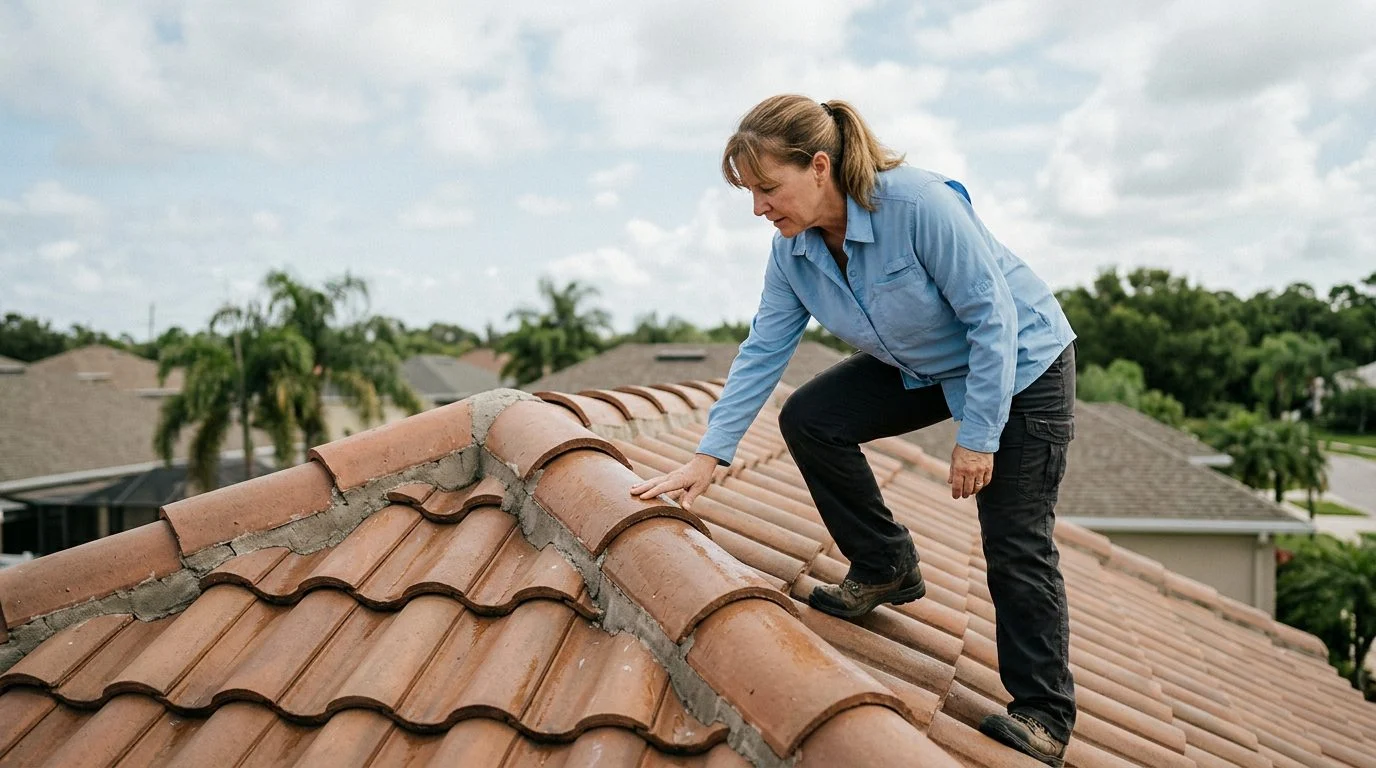
Start from the ground. Use binoculars to look for slipped, cracked, chipped, or missing tiles. Look for tiles that sit out of line with the rows around them. Those are often the tiles that have already shifted. Next, check the ridge tiles and hip caps. These pieces often lift first in high wind, so they deserve a close look. Then check tiles near the eaves and roof edges, where wind pressure is typically higher. Note any tile that rocks or moves when you look closely. Write down what you see, and take dated photos of each area. Those photos give you a baseline. You can compare the roof after the season or after a storm. Never climb onto a tile roof to test tiles by hand. Walking on tile can crack it.
Check Tile Fastening, Clips, and Underlayment
Fastening decides whether a tile stays on the roof in wind, so check it as closely as the tiles themselves. Look at nails, clips, and mortar. Look for rust or corrosion on metal clips and fasteners. Coastal homes can call for extra attention to clips and fasteners.
Inspect Flashing at Valleys, Chimneys, Vents, and Penetrations
Flashing is the metal or sealed piece that closes the joints where the roof meets walls, chimneys, vents, skylights, and valleys. Check it for lifted, bent, cracked, or separated pieces. Look at the sealant around each penetration. Sealant that is dried out, split, or pulled away leaves a path for water. Pay close attention to solar panel mounts and other rooftop equipment. Each mount is a penetration that must stay sealed. Water that gets in at flashing points often causes interior damage after heavy rain. These joints deserve careful review before the season.
Clear and Secure Gutters, Downspouts, and Drainage
Clear gutters and downspouts so heavy rain can drain away from the roof. Clogged gutters hold water against the fascia and eaves. During a heavy downpour, that water can back up and move under the tiles. Check that gutters are firmly attached. Make sure downspouts carry water away from the foundation. Remove leaves, palm fronds, and branch clippings from the roof surface. Clear them from valleys too, since water collects there. Trim tree limbs that hang over the roof. In high wind, branches can strike tiles and gutters and crack them. Check the drainage again after the first heavy rain of the season. A clean system is easier to judge when the storm rush starts.
When a Repair Should Come Before the Season
A few cracked tiles, a loose ridge cap, or failed sealant is usually a job for roof repair. Fix these before June 1 if you can. Repairs done before the season are usually simpler to schedule than repairs needed after a storm. After a storm, many roofs need work at the same time. Widespread cracking, sagging areas, recurring leaks, or aged fasteners across much of the roof may point toward roof replacement instead of spot repair. For projects in Miami-Dade County, it helps to look into permit requirements early.
Not sure what your next step is?
Talk it through with our team — the first consultation is free, confidential, and carries no obligation.
Plan Your Pre-Season Checklist Around Your Home
Finish the checklist and any repairs before June 1. Then recheck the roof after large storms during the season. Homes in Miami, Fort Lauderdale, Boca Raton, West Palm Beach, Kendall, Naples, and Fort Myers may face different wind and rain exposure. Tailor the inspection to your property and its surroundings. Keep your checklist, photos, and service records together in one place. These records help with maintenance and insurance questions. Florida law requires insurers to accept a uniform mitigation verification form signed by authorized mitigation inspectors. Schedule the next check in the same month each year.

Book a Pre-Season Roof Inspection With Our Team
If your tile roof shows loose tiles, questionable flashing, aging fasteners, or gutters that drain poorly, a pre-season inspection can show what needs attention. Our team at ASP Superhome assesses tile roofing and roof repair needs. We can also explain whether a repair or a larger project fits your home. The first consultation is free, confidential, and carries no obligation to continue. If loose tiles or worn flashing have you worried this season, contact our team to set up an inspection before June 1.
Frequently Asked Questions
When does hurricane season start in Florida?
The Atlantic hurricane season starts June 1 and runs through November 30.
Should loose tiles be fixed before hurricane season?
Yes, secure them before the season, because wind is the main threat to tile roofs.
Do Miami-Dade roofing jobs need permits?
Miami-Dade roofing permits require specified forms and checklists, and contractors use e-permitting.
Why Preparing Your Tile Roof Early Makes Sense
Wind is the main threat
Loose or cracked tiles can be lifted or displaced in strong winds, exposing the roof underneath to water.
Time to plan
Addressing repairs before the season starts gives you more room to schedule work at a comfortable pace.
Fewer surprises
A pre-season inspection helps identify small issues while they are still manageable.
Clear next steps
A written estimate lets you review the scope of work and decide what to address first.
A Simple Pre-Season Checklist
1. Inspect the tiles
Look for cracked, chipped, or slipping tiles, especially along ridges, eaves, and edges where wind pressure is highest.
2. Secure loose pieces
Have loose tiles re-set and fastened so they are less likely to move during high winds.
3. Check flashing and sealants
Review the flashing around chimneys, vents, and valleys, and look for dried or cracked sealant.
4. Clear the gutters
Clear debris from gutters and downspouts so water can drain properly during heavy rain.
Important: Do Not Wait Until a Storm Is Forecast
Once a storm is in the forecast, crews and materials can become harder to schedule. Working on a tile roof also carries real fall risk, so it is safer to leave roof work to trained professionals rather than climbing up yourself.


