


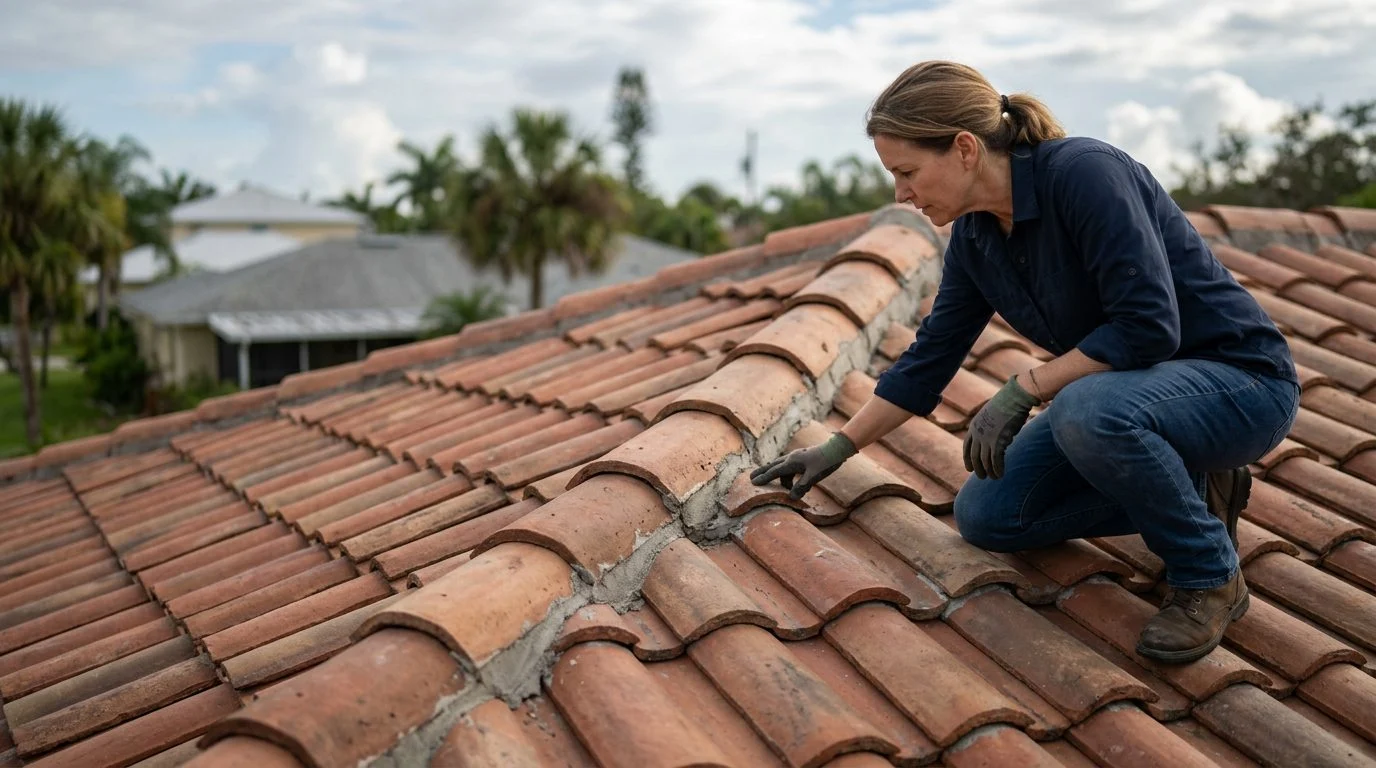
Tile Roofing · South Florida
Repair or Replace Your Tile Roof? Know What to Look For First
Cracked tiles, leaks, and age all raise the same question. Here is how to tell whether your South Florida tile roof needs a repair or a full replacement.
By Jonathan Rodriguez · Published October 25, 2026
When you’re asking when to repair or replace a tile roof in Florida, the answer comes from condition, not age. Repair makes sense when damage is limited and the layers beneath the tile are still sound. Replacement makes sense when damage is widespread, keeps coming back, or has reached the structure.
Why the Age of a Tile Roof Does Not Decide the Question
A 10-year-old roof is not old by default. Age is only a starting point. Condition decides whether a repair or a replacement makes sense.
A tile roof is a system, not just a row of tiles. It includes the tiles, the battens or mortar that hold them, the underlayment (a water barrier under the tiles), the flashing (metal pieces that seal edges and joints), and the roof deck (the solid base beneath everything). A problem in any one layer can let water reach the inside of the home.
A cracked tile may look like the whole problem. Sometimes it is. Other times it is the first visible sign that water has already passed the underlayment. A tile can look fine from the ground while the layer beneath it has failed.
The sections below walk through the signs of a roof that can be repaired, the signs of one that likely needs replacing, the Florida climate factors that speed up wear, and the cost drivers. Each part helps you sort your own situation.
If a cracked tile or a leak that keeps coming back has you weighing a patch against a new roof, our team can look at your roof with you. Talk it through with our team — the first consultation is free, confidential, and carries no obligation.

Signs a Tile Roof Can Often Be Repaired
A roof with damage in one area is often a good candidate for repair. Look for these signs.
- A few cracked, chipped, or slipped tiles in one section of the roof. If the rest of the roof is sound, replacing those tiles may be enough.
- Failed flashing, ridge caps, or sealant around vents, chimneys, valleys, and other openings. These spots leak often, and they can usually be fixed without disturbing most of the roof.
- A leak traced to one point. When water enters at one spot, and the underlayment and deck are still dry and sound there, a targeted repair can stop it.
A repair works best when the rest of the roof is in good shape. It fixes one point of failure. It does not change the condition of the other slopes.
So ask a simple question. Does the damage stay in one place? If it does, a repair can be the right call. If the same kind of damage shows up elsewhere, the picture changes.
Signs a Tile Roof Likely Needs Replacement
Replacement becomes more likely when damage spreads across the roof or reaches the layers under the tile. Watch for these signs.
- Widespread cracking or breakage across several slopes. Many broken tiles in many areas point to a roof-wide condition, not a few isolated hits from debris.
- Brittle, torn, or deteriorated underlayment. New tiles over failing underlayment still leave the home exposed to water.
- Repeated leaks in different rooms, or leaks that return after earlier repairs.
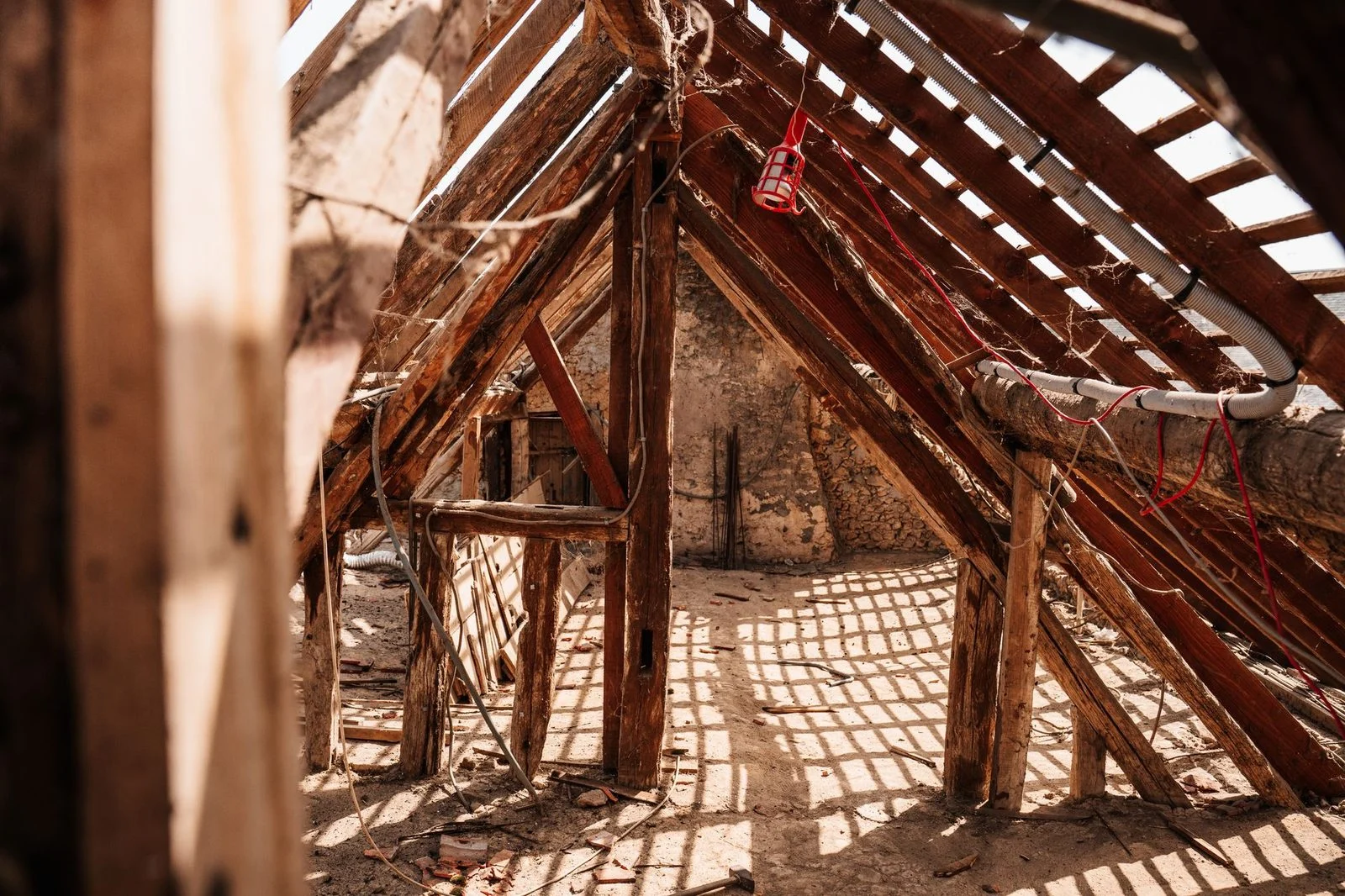
- Soft or rotted decking, sagging, or water stains in the attic or on ceilings. These signs mean moisture has reached the structure.
When you see these signs, get an on-roof inspection before you decide. Someone needs to see the underlayment and deck, not just the tiles. Only then is the full scope of the job clear.
How Florida Climate Shortens or Extends Tile Roof Life
Florida’s climate puts constant stress on a roof. Intense sun and heat wear down sealants, flashing, and underlayment over time. Repeated temperature swings can loosen fasteners and stress tiles, especially when details were installed carelessly.
Storm season adds wind-driven rain. Strong wind pushes water sideways and up under tile edges, into vents, and along valleys. A gap that would shed normal rain can let water through in a storm. That is how a small defect becomes an interior leak.
Humidity and salt air add more wear. Homes in coastal cities such as Miami, Fort Lauderdale, Boca Raton, and Naples face salt-laden air. Salt air speeds corrosion on metal flashing and fasteners. A corroded flashing or nail can fail long before the tile does.
Material and installation matter too. Clay tile and concrete tile are both heavy, and they need a strong support structure. They differ in how they weather, break, and need upkeep. Quality of installation affects how long any tile roof holds up, because weak details give water an entry point.
What a Repair Versus a Replacement Typically Costs
The cost of a repair or replacement depends on what the inspection finds. Several drivers shape the total.
- Number and location of damaged tiles. A handful of tiles on one slope costs far less than damage across the whole roof.
- Tile type and availability. Matching an older profile or color can be hard. A poor match may leave gaps that a patch cannot close.
- Underlayment condition. Failing underlayment often turns a small repair into a larger job.
- Decking. Rotted decking must be fixed before new tile goes on. A tile-only repair does not include that work.
A spot repair covers a small area. A full tear-off and reinstallation covers the whole roof. Extensive damage can push a repair toward replacement because the total scope grows.
On an aging roof, a repair can be a short-term fix. It may stop one leak while deterioration continues elsewhere. Weigh any repair against the roof’s remaining condition, not just the cost of one visit.
Insurance can also affect the decision. For a roof at least 15 years old, an insurer must let the homeowner have a roof inspection by an authorized inspector, at the homeowner’s expense, before requiring replacement as a condition of a policy. Under Florida law, when a roof is at least 15 years old, the insurer may not refuse to issue or renew a homeowner’s policy based solely on the roof’s age if an authorized inspector’s inspection of the roof indicates at least 5 years of remaining useful life (Fla. Stat. § 627.7011).
Tile Over Shingles and Other Situations That Change the Decision
Some homeowners ask whether they can install tile over an existing shingle roof. The existing roof’s condition decides what is possible. Its structure, its underlayment, and its flashing all matter.
Prior repairs can complicate a patch. A tile profile that doesn’t match the rest of the roof can leave gaps. Earlier work that was done without care can hide damage underneath.
Permits are a practical step, not a formality. Florida law makes it unlawful to repair or alter a building without first getting a permit, unless the law provides otherwise (Fla. Stat. § 553.79).
Code rules can also apply.
Not sure what your next step is?
Talk it through with our team — the first consultation is free, confidential, and carries no obligation.
Maintenance That Helps Delay Major Repair Bills
Routine care can delay a major repair. Start with a look at the roof after every significant storm. Focus on flashing, ridge caps, and penetrations. Note any tile that has shifted or slid.
Clear debris from valleys and gutters so water drains properly. Leaves and sand trap water and push it under the tile edges.
Address small cracks and loose tiles early. A small crack can admit water into the underlayment, where the damage spreads out of sight.
If a replacement becomes necessary, plan for the timeline. Permit review comes before work starts, and then tear-off and reinstallation follow. Factor that time into your schedule, especially before the rainy season.
Your Next Step After a Repair-or-Replace Question
Maybe a tile slipped after a storm, a leak came back, or a ceiling stain appeared. In each case, the real question is whether to patch one spot or plan a full replacement. An on-roof inspection answers that question. It shows whether damage stays in one area or reaches the underlayment and deck.
Contact ASP Superhome to arrange an on-roof inspection before you decide. Our first consultation is free, confidential, and carries no obligation to continue. Our team handles roof repair, roof replacement, and tile roofing, so we can help you weigh the options for your roof.
Is a 10 year old roof considered old?
Age alone does not make a 10-year-old roof old. Its condition, including tiles, underlayment, and flashing, decides whether it needs repair or replacement.
Can you repair a few cracked tiles on a tile roof?
Yes, when the cracks stay in one area and the underlayment and deck below are sound. Widespread cracking usually points toward a larger job.
When is a tile roof leak a sign of full replacement?
A leak points toward replacement when it returns after repairs, shows up in several areas, or comes with rotted decking. Those signs suggest the problem reaches beyond one spot.
Do I need a permit to repair or replace a roof in Florida?
Under Florida law, a permit may not be issued for roof repair work unless the applicant complies with the plan review requirements established by the Florida Building Commission within the Florida Building Code.
Signs a Repair May Be Enough
Cracks in one area
A few cracked or slipped tiles confined to one section of the roof can often be replaced without disturbing the rest of the system.
Sound underlayment and deck
If the underlayment and roof deck beneath the tiles are still solid, targeted repairs can restore weatherproofing.
Isolated leaks
A leak traced to a single flashing point or a damaged penetration is usually a focused fix rather than a sign of total failure.
Signs It May Be Time to Replace
Widespread cracking
When cracks and breaks appear across large sections, the roof is likely wearing out as a whole, and piecemeal repairs may not hold.
Failing underlayment
Brittle, torn, or water-damaged underlayment means the roof's second line of defense is compromised, even if the tiles look intact.
Recurring leaks
Leaks that return after repeated repairs often point to deck, flashing, or underlayment problems that call for replacement.
Don't Wait on Water Stains
Water stains on ceilings, damp insulation, or dripping in the attic are signs of an active leak. Have the roof inspected promptly to prevent further damage to the interior of your home.
Why Homeowners Start with ASP Superhome
Honest Assessment
We look at the tiles, underlayment, flashing, and deck together so you get a clear picture of what your roof actually needs.
Repair or Replacement Options
We explain the practical options for your roof and your budget, so you can compare the choices in front of you.
Complete Home Solutions
Beyond tile roofing, ASP Superhome also handles metal roofing, roof replacement, impact windows and doors, solar, and kitchen remodeling.
Free, Confidential Consultation
Your first consultation is free, confidential, and comes with no obligation to continue.
Not Sure Whether Your Tile Roof Can Be Repaired? Let's Take a Look.
Related practice areas
- Tile Roofing in South Florida: Costs, Styles & Installation Guide
- Tile Roofing in Miami


