


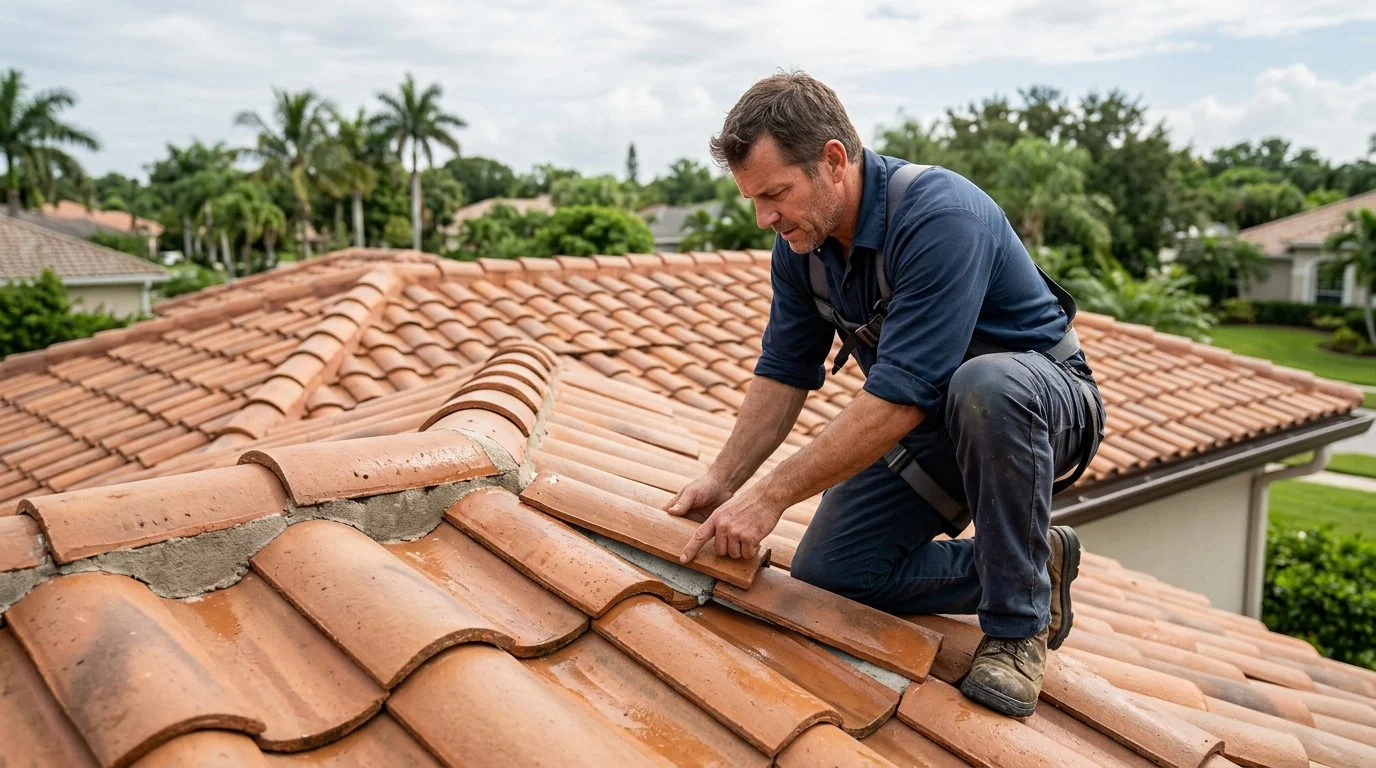
Tile Roofing | South Florida
A Tile Roof Is Only as Strong as the Layer Beneath It
Learn how a secondary water barrier protects your home from wind-driven rain in Miami, Fort Lauderdale, West Palm Beach, Boca Raton, Naples, and Fort Myers.
By Jonathan Rodriguez · Published October 23, 2026
A secondary water barrier is a water-resistant layer that sits under the tile on a Florida roof. It is the backup. If wind or rain gets past the tile, this layer is meant to keep water away from the roof deck and the home below. Many homeowners in Miami, Fort Lauderdale, West Palm Beach, Kendall, Naples, Fort Myers, and Boca Raton first hear this term during a storm, a wind mitigation inspection, or a reroof. This guide explains what the layer does, what Florida rules say about it, and why the deck and fasteners matter just as much.
What Secondary Water Resistance Means on a Tile Roof
A secondary water barrier is the layer under the tile that sheds water if the tile fails. You may also hear it called secondary water resistance (SWR), an SWR barrier, or simply underlayment. In everyday Florida roofing talk, these terms usually point to the same layer.
Think of the tile as the first line of defense. Each tile overlaps the next to shed rain. The underlayment is the second line. It keeps water moving away from the deck if the first line is breached.
This layer is hidden. Once the tile is on, you cannot see it from the ground. That is why the question usually comes up during repairs, inspections, and reroofs, when someone lifts tile and looks underneath.
A tile roof can look sound and still rely on a worn underlayment. Looks alone cannot tell you how well the backup layer is doing its job.
If a storm, an inspection form, or a parent's roof has you wondering about the layer under the tile, our team is ready to talk it through with you. Talk it through with our team — the first consultation is free, confidential, and carries no obligation.
Why Tile Alone Does Not Keep Water Out
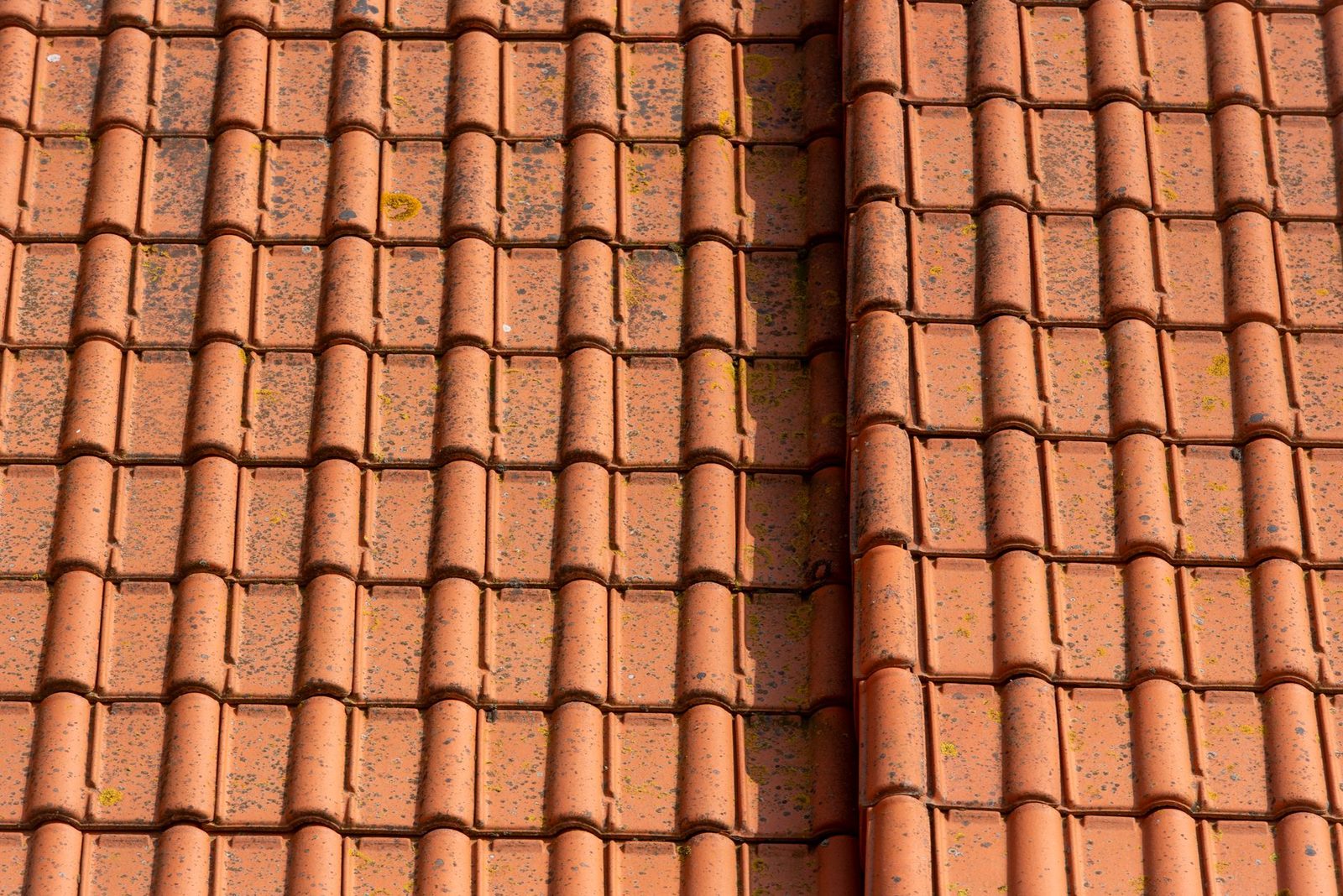
Tile alone does not seal a roof. The gaps between pieces are part of how tile works. Water can still reach the layer beneath when wind pushes it sideways or uphill.
South Florida storms make this worse. Wind-driven rain can push water under tile edges, along ridges, and into valleys, where water collects and runs. A tile that has slipped or lifted, even slightly, opens a path.
Older roofs face more of this risk. Over time, nails can back out, tiles can shift out of alignment, and clips or mortar can weaken. When that happens, the roof leans more heavily on the layer underneath.
A common mistake is judging a tile roof from the street. A leak often shows up inside long after the water got in. By then, the underlayment may have been failing for a while.
What the Florida Building Code Says About Tile Roof Waterproofing
The Florida Building Code covers the repair and replacement of buildings, and that includes tile roofs. Fla. Stat. § 553.73 says the code governs the design, construction, alteration, modification, repair, and demolition of buildings.
The exact underlayment type and placement come from the code edition and the county.
High-wind and coastal areas add rules. Fla. Stat. § 553.8425 says changes to the code do not void approval of products already installed in existing buildings, if those products met code when installed.
Whether your roof must add or upgrade this layer depends on the facts. Those facts include the roof’s age, the code in effect when it was built or reroofed, the county, and what is already installed.
How a Wind Mitigation Inspection Checks the Roof
A wind mitigation inspection records the roof’s features on a uniform form. The secondary water resistance question is one of those items. The form also covers the roof covering, deck attachment, and roof-to-wall connections.
Fla. Stat. § 627.711 requires the Financial Services Commission to develop one uniform mitigation verification inspection form. Insurers must use it when policyholders submit it for wind insurance discounts.
Insurers must also clearly notify applicants or policyholders of personal lines residential property insurance policies, at issuance and each renewal, using a form prescribed by the Office of Insurance Regulation, of the availability and range of each premium discount, credit, other rate differential, or reduction in deductibles for properties on which fixtures or construction techniques demonstrated to reduce the amount of loss in a windstorm can be or have been installed or implemented.
Accuracy matters here. A person who knowingly provides a false or fraudulent form to get a discount they are not entitled to commits a first-degree misdemeanor under the same statute.
Older homes may carry HO-8 coverage. The Florida Office of Insurance Regulation notes that eligibility and coverage can differ by insurer.
How the Roof Deck and Roof-to-Wall Connections Affect Water Protection
The roof deck is the base the underlayment and tile are fastened to. Its nailing decides how the whole system handles wind. If the deck lifts, the underlayment and tile lift with it.
Roof-to-wall connections, such as hurricane clips and straps, tie the roof structure to the walls. They help hold the roof in place during high winds.
Roof replacement may include techniques for roof-to-wall connections and for strengthening or correcting roof-decking attachments and fasteners during reroofing. This applies to site-built, single-family homes.
A common mistake is installing new tile over old, loose deck fasteners. The weakest link stays in place even though the roof looks new.
What a Reroof Does to the Secondary Barrier and the Deck
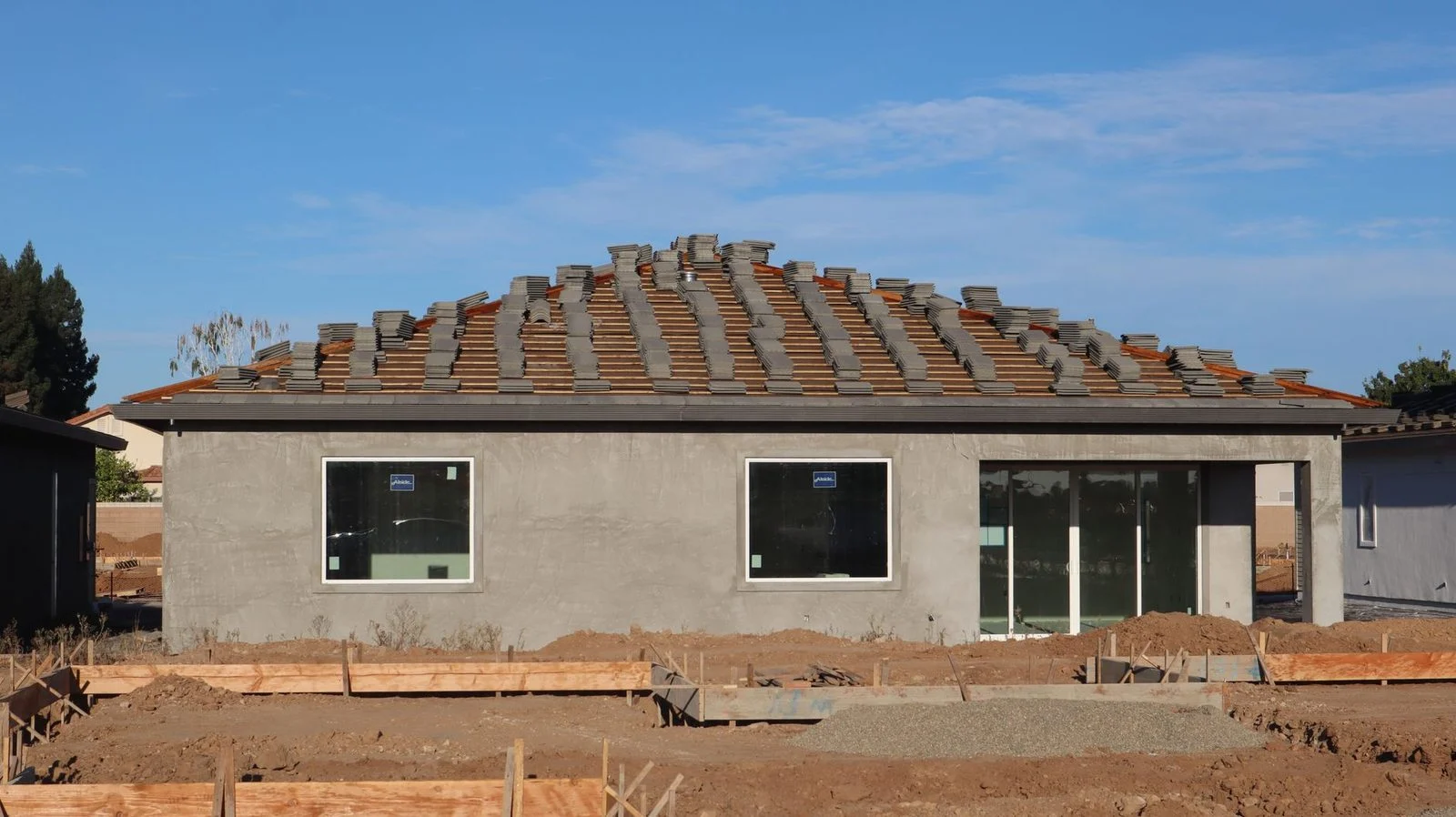
A reroof usually means removing the tile, checking the deck, installing new underlayment, and setting the tile again. Each step belongs to the same system. Skipping one weakens the others.
Permits matter too. Fla. Stat. § 553.79 says a single-family building permit expires one year after issuance or on the effective date of the next code edition, whichever is later. A local government may send expiration notice at least 30 days ahead.
Local guidance shows what a reroofing permit can involve. Lake County’s roofing guidelines describe affidavits, documentation, and a final inspection.
Not sure what your next step is?
Talk it through with our team — the first consultation is free, confidential, and carries no obligation.
Common Questions About Tile Roof Lifespan and Reroofing Yourself
A tile roof’s lifespan turns on the condition of the underlayment, the fastening, and the tile together. The tile alone does not set the timeline.
Can a tile roof last 50 years?
A tile roof’s life depends on the whole assembly, not just the tile. Tile is durable, but a worn underlayment or loose fastening can shorten the roof’s service life.
The National Roofing Contractors Association says clay and concrete tile are durable roofing materials used in Florida. The same guidance says roof load capacity should be verified when replacing another covering with tile.
Can I reroof my own house in Florida?
Reroofing typically involves a permit, a final inspection, code-compliant underlayment, a deck check, and proper fastening. Those are the parts homeowners most often miss, and they affect both safety and insurance paperwork.
What if tiles slid or fell after a storm?
Sliding or fallen tiles are a warning sign that the fastening or underlayment may be compromised. Have the roof looked at before the next rain.
Talk With Our Team About Your Tile Roof
Many readers arrive here because a storm, an inspection form, or a parent’s roof raised the question. Judging the layer under the tile from the ground is hard. You are not expected to know the answer on your own.
Our team can look at the underlayment, deck, and fastening in person. We can explain what we find in plain terms and what it means for your roof.
Our first step is a consulta inicial gratuita, confidencial y sin compromiso. In English, that means a free first consultation that is confidential and carries no obligation to continue.
If a storm, an inspection form, or a roof you’re responsible for has you wondering about the layer under the tile, request your free estimate with ASP Superhome.
Why the Secondary Water Barrier Matters
Protection Below the Tile
Tile sheds most rain, but wind can drive water under the tiles, where it can reach the roof deck if no backup layer is in place.
A Complete Roof System
Tile, underlayment, fasteners, and flashing work together. A weak point in any one of them can shorten the life of the whole roof.
Built for South Florida Conditions
Intense sun, heavy storms, and humidity put constant stress on roofing materials, which is why the layers beneath the tile deserve close attention.
Planning Before Replacement
Reviewing the barrier during roof replacement or repair helps you address hidden wear while the work is already underway.
Important: Tile Alone Is Not Enough
Roof tile is durable, but it is not a complete waterproofing system. Worn underlayment, loose fastening, or damaged flashing can let water in even when the tiles look intact.
Questions to Ask About Your Tile Roof
What is under my tiles?
Ask what underlayment and secondary water barrier are installed, and whether they are suited to your roof's slope and wind exposure.
How is the roof fastened?
Proper fastening keeps tiles and underlayment secure during high winds. Loose or corroded fasteners are a common concern after storms.
Are flashings sealed?
Valleys, penetrations, and wall transitions are frequent leak points. Check that these areas are detailed correctly as part of any repair or replacement.
Is the permit handled?
Reroofing often involves a permit and inspection. Make sure your project includes these steps so the work is documented and checked.
Talk With ASP Superhome About Your Tile Roof. Your First Consultation Is Free, Confidential, and Comes With No Obligation to Continue.
Related practice areas
- Tile Roofing in South Florida: Costs, Styles & Installation Guide
- Tile Roof Hurricane Clips: A South Florida Homeowner Guide


