


Tile Roofing & Roof Repair | South Florida
Roof Tiles Slipping Out of Place? Start With These Safe Steps
Florida storms, heat, and wind can loosen roof tiles over time. Learn what to check, what to avoid, and when to bring in our team for a free estimate.
Start With a Free First Consultation
Free
First consultation
Confidential
Your details stay private
No obligation
Decide whether to continue
By Jonathan Rodriguez · Published October 26, 2026
Slipped roof tiles usually mean wind or age has moved a tile out of place. Look from the ground first, then check the attic after the next rain. Don’t wait. A shifted tile can expose the layer beneath it, and a small gap can turn into a leak.
This guide covers how to spot slipped tiles, what causes them, when a repair may need a permit, and which steps are safe for a homeowner.
What Slipped Roof Tiles Look Like
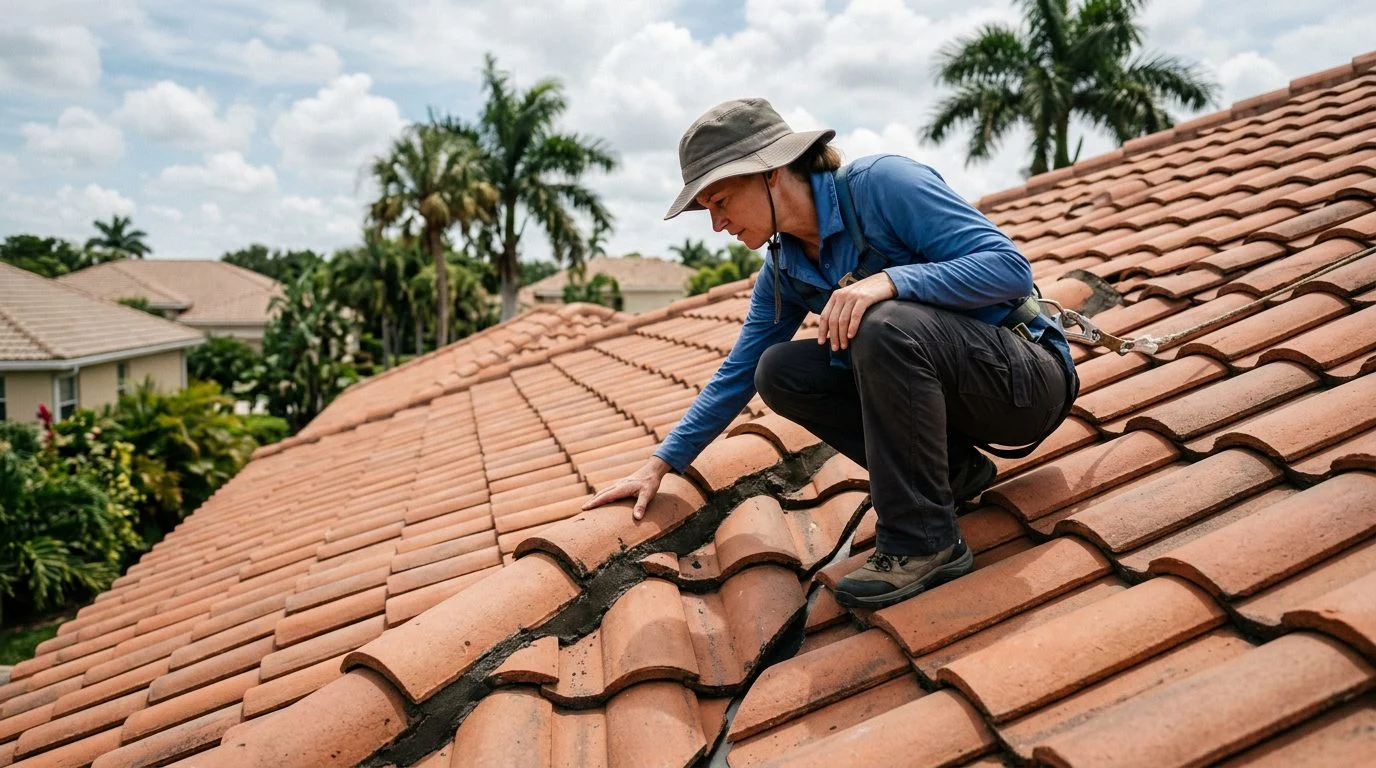
A slipped roof tile sits out of line with the rows around it. It may stick out past the eave farther than its neighbors, or sit higher or lower in its course. One tile that breaks the pattern stands out.
Other signs are easy to see from the yard. Look for tiles in the gutters, on the driveway or in the landscaping after a windy night. A gap that shows dark felt or bare deck is another warning sign.
A dirty or weathered tile still sits in its place. Moss, algae and faded color change how a tile looks, not where it sits. Compare the tile to its neighbors. If the edge, height or line is off, the tile has moved.
If tiles on your roof shifted after a storm, you don't have to figure out the repair alone. Our team can inspect your roof and walk you through your options. Talk it through with our team — the first consultation is free, confidential, and carries no obligation.

What Causes Roof Tiles to Slip or Slide
Wind uplift is a main cause. Strong gusts get under a tile’s edge and lift it. Over repeated storms, that lift can slide the tile out of line.
Fasteners and clips also wear out. Metal clips corrode, and old mortar cracks. When these parts stop gripping, the tile has nothing holding it.
Foot traffic causes damage too. Maintenance crews, satellite installers and solar workers all walk roofs, and each step can shift tiles. A missing clip or uneven alignment from the original install can also show up years later.
Cracks, Chips, and Missing Pieces
A cracked or missing tile should be replaced, not just pushed back into line. Start your check at the eave, the rake edge and the ridge. Those edges take the most wind, so tiles there often crack or lift first.
Hairline cracks may still shed water. A broken tile with a hole or missing corner exposes the underlayment, the water-resistant layer under the tile. Once sun and rain reach it, it wears down faster.
Missing tiles leave the roof deck open to weather. Even one gap can let rain run down to the attic. Treat a slipped tile as a warning, even if it looks minor. A tile that moved once can move again in the next storm.
Telltale Water Stains and Leaks
Water stains on a ceiling or wall below a slipped tile area are the clearest sign of a leak. Stains may also show on light fixtures or trim.
Check the attic too. Look for damp insulation, dark spots on the roof deck, or a musty smell after rain. A flashlight along the rafters can reveal a wet line or drip mark where water enters.
Untreated leaks cause lasting harm. Water can soften and rot wood in the deck and framing. Damp areas grow mold. Drywall, paint and fixtures can stain or sag. A small leak is usually simpler to fix than the damage it leaves behind.
Safety First: Gear and Limits for Ground-Level Checks
Stay off a tile roof unless you have the right gear and footing. Tiles can be steep, loose, cracked or wet. One step on a slipped tile can break it or send you sliding.
If you must go on or near the roof, use a fall-protection harness, non-slip footwear and a stable ladder on firm, level ground. Have someone stand by below. Don’t work up there alone after rain or in high wind.
Most checks can be done from the ground. Photograph the roof with a zoom lens. Count missing tiles and note where they are. Look for tile fragments and debris in the gutters.
Keep children and pets away from the area below while tiles are loose. A falling tile can hurt anyone standing under the eave. Use cones or tape to mark the area if needed.
Steps to Reposition and Secure Slipped Tiles
A slipped tile can often be reset when it is intact and the underlayment is sound. A cracked or badly worn tile usually needs replacing instead.
Gather the right tools: a pry bar, a roofing hammer, tile hooks or clips, and replacement tiles that match your roof’s profile and color. A different profile can sit out of line with its neighbors.
Work in order. Lift the tile carefully. Check the underlayment for tears or wet spots. Re-hook or clip the tile, then reseat it so its edge lines up with the course.
Secure the tile with the correct clip or fastener so it resists wind. A clip that is too short or the wrong type won’t hold. Replace any cracked tile instead of gluing it back.
If several tiles have slipped, or the underlayment is brittle, the problem may cover a whole section. At that point a single reset is not enough, and the job becomes a roof repair.
Not sure what your next step is?
Talk it through with our team — the first consultation is free, confidential, and carries no obligation.
When a Tile Repair Involves a Permit or Product Approval
Whether a tile repair needs a permit depends on the scope of the work and the local jurisdiction. Miami-Dade County publishes its roofing permit guidance, including required forms and checklists.
Product approval matters too. Under Fla. Stat. § 553.842, the Florida Building Commission must use one of the statutory methods to approve roofing, along with other listed categories of products.
Under Fla. Stat. § 553.8425, a product with a certification mark, label or listing from an approved agency needs no further documentation to show code compliance. Code changes don’t void approval of products already installed that met code when they went in.
The Florida Building Commission’s staff analysis on tile roof repair addresses how roof repairs and existing or used concrete roof tiles are treated under building-code requirements.
How Our Team Handles Slipped Tile Repairs
Our team starts with an inspection of the roof and attic before any tile moves. We look for slipped or damaged tiles, check the underlayment and see whether a leak has started.
From there, we can reset, secure or replace tiles as part of our roof repair service. We explain what we find before any work begins, so you can decide what fits your roof.
If the proposed roof work is related to an insurance claim, contact your insurance company to verify coverage, deductibles and policy terms before signing.
If your tiles shifted, reach out through our contact page to talk about your roof. Your first consultation is free, confidential and comes with no obligation to continue.
Frequently Asked Questions
Can I reset a slipped tile myself?
A single intact tile can sometimes be reset from a safe position. Walking a steep tile roof is risky, so stay off it unless you have proper gear.
Does a tile repair need a permit?
Permit rules vary by county. Miami-Dade and Charlotte County each publish their own roof permit rules.
Is it safe to walk on a tile roof after a storm?
Usually not. Wet, cracked or loose tiles can break underfoot, and a fall from a steep roof can cause serious injury.
Simple Homeowner Steps for Slipping Tiles
1. Look From the Ground
Use binoculars or a camera zoom to check for tiles that look shifted, cracked, or missing. Note any pieces on the ground or in gutters after a storm.
2. Stay Off a Steep Roof
Tile roofs are slippery and fragile. Walking them without proper gear can break tiles and cause serious falls. Leave the climb to trained professionals.
3. Document What You See
Take dated photos of the roof, gutters, and yard. Clear records help when you describe the damage and discuss next steps.
4. Ask for a Professional Look
Loose tiles can signal underlying problems such as worn fasteners or water entry. Our team can inspect the roof and explain repair options.
Important Safety Note
Do not climb a steep or damaged tile roof to reset tiles yourself. A single tile may look easy to fix, but broken tiles, unstable footing, and hidden water damage can make it dangerous and costly.
How Our Team Can Help
Roof Inspection
We check the tiles, underlayment, and fasteners to find the cause of slipping rather than only the visible tile.
Clear Repair Options
We explain whether a spot repair, a section replacement, or a full roof replacement makes sense for your home.
Permit Guidance
Permit rules vary by county across South Florida. Ask our team what applies to your property before work begins.
Storm-Ready Planning
We help you plan repairs before the next rainy season or hurricane watch so small problems do not become leaks.
Get Your Tile Roof Checked Before the Next Storm
Related practice areas
- Tile Roofing in South Florida: Costs, Styles & Installation Guide


