


Tile Roofing | South Florida
Know What Goes Into Your Tile Roof Underlayment Cost
Underlayment is a key part of any tile roof. Learn what shapes the price in Miami, Fort Lauderdale, West Palm Beach, Boca Raton, Naples, Fort Myers and Kendall, then book a free estimate with ASP Superhome.
By Jonathan Rodriguez · Published November 1, 2026
How much does it cost to replace the underlayment on a tile roof? It depends on the specific roof. The estimate is built from the roof’s area, its pitch, how many tile rows must be lifted, and the condition of the deck underneath.
This guide explains each cost driver in plain terms. It is written for South Florida homeowners, buyers, and family members who are facing a leak, an inspection note, or a repair quote they did not expect. Contact ASP Superhome to review the details of your project with our team.
What underlayment does under a tile roof
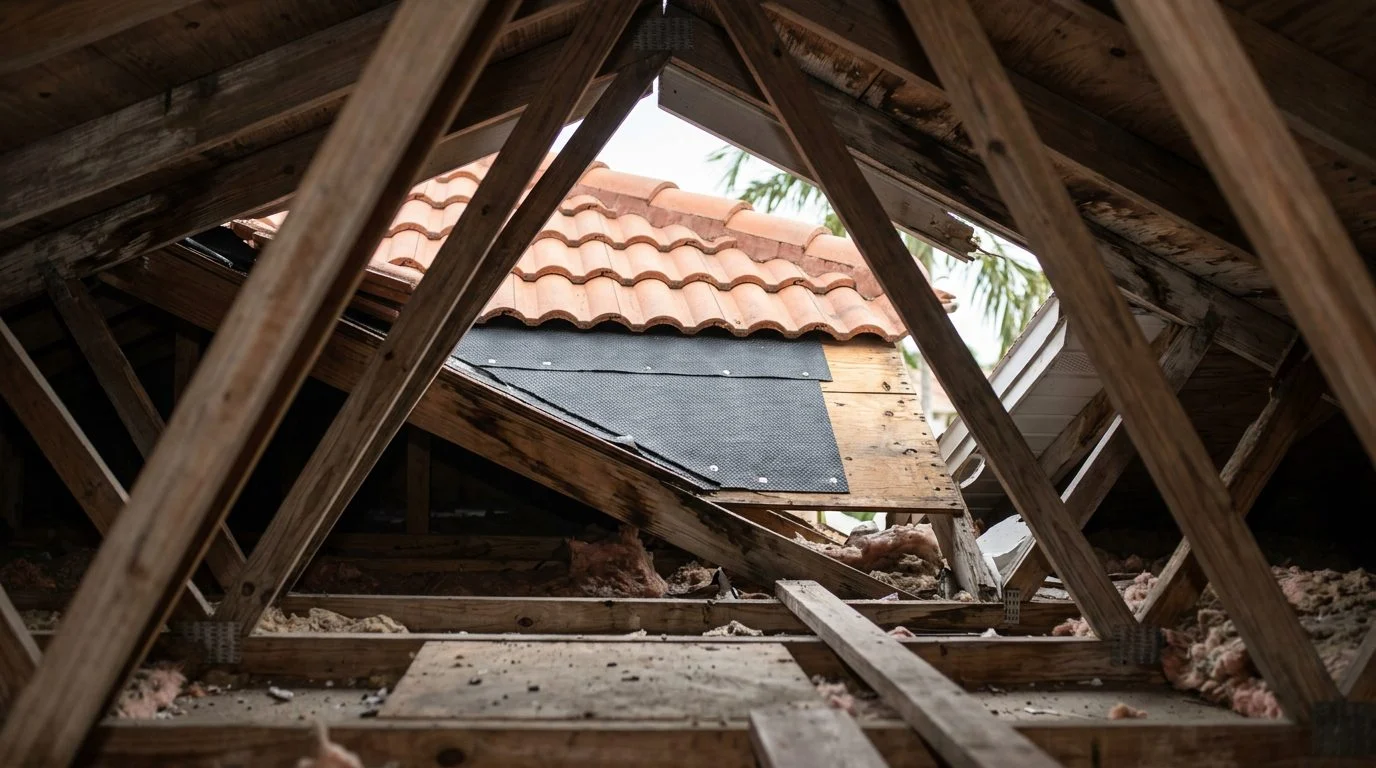
Underlayment is the water-resistant layer that sits under the tile and sheds water that gets past the tiles. The tile is the top layer. The underlayment is the layer that keeps water moving off the house when wind or rain pushes past the tile.
Most homeowners never see it. It comes into view during a tile removal, a leak investigation, or an inspection, when workers lift tiles and look underneath.
South Florida adds pressure to this layer. Heavy rain, wind-driven rain, and strong sun work on the roof year-round. A tile roof is a system, so the condition of the underlayment affects the whole roof. The Insurance Institute for Business & Home Safety’s Roof 101 overview covers residential tile roofing materials and common installations, which is useful background.
For more on tile roofing topics, see our tile roofing guide for South Florida.
Not sure what your next step is?
Talk it through with our team — the first consultation is free, confidential, and carries no obligation.

How much does it cost to replace tile roof underlayment?
Underlayment replacement is priced as part of a tile roof job, usually by roof area. Many contractors measure roof area in roofing squares, where one square equals 100 square feet.
A larger house usually has more roof to cover. Roof area is not the same as floor area, though. A steep or multi-plane roof has more surface than its footprint suggests.
A full tile roof replacement for a house of about 2,500 square feet includes much more than underlayment. It covers tile, flashing, labor, cleanup, and more. That is why the underlayment line should be separated out in the estimate. Otherwise, you can’t see what you’re being asked to pay for.
No single price applies to every roof. A clear estimate comes from measuring the specific roof, reviewing the tile and deck, and listing each cost on its own line.
What factors affect the cost of replacing underlayment?
Roof area, tile removal, deck condition, access, permits, and material choice shape the price most. Each one changes a different line of the estimate.
- Roof area and pitch. Steeper or more complex roofs take more time and more safety equipment.
- Tile courses to lift. Reaching the underlayment means lifting and resetting tile rows. This is often the largest labor driver.
- Deck condition. Boards or sheathing may need repair before new underlayment goes down.
- Access and height. The number of stories and the way crews can reach the roof both affect crew time.
- Material selected. This changes the material line only.
Florida law also limits inspection charges. Under Florida Statutes § 553.79, inspection fees may not be based on the total cost of a project. They also may not exceed the actual inspection costs the local enforcement agency incurs.
What underlayment materials are used on tile roofs?
Tile roofs use felt-based underlayment, synthetic underlayment, or self-adhering sheets, depending on the roof and its age. Felt is the traditional product. Synthetic products are a newer option that many roofers use.
Material choice changes the material line of the estimate. It does not change the need for a water-resistant layer. A cheaper product still has to do the same job under the tile.
Existing self-adhering underlayment adds a code question. The 2026 Florida Building Code analysis for existing buildings added a new section on underlayments that may go over an existing self-adhering underlayment during clay and concrete tile replacement. That is one reason the existing layer matters to the estimate.
To compare product types, read our underlayment type comparison guide.
Why does labor make up so much of the underlayment cost?
Labor is often the largest share of an underlayment job. Tiles must be lifted, stacked, and reset by hand before the crew can reach the underlayment.
Tile is heavy, and its edges can crack. Older roofs often have brittle tile. Broken or brittle tile can add to the cost, because replacement tiles and extra time both cost money.
Tile needs careful handling. That care takes time, and the time shows up in the labor line. Our team can itemize tile removal and reset as separate line items for your project. That way you can see where the money goes and ask questions about each one.
Do tile roofs need to be replaced, or can the underlayment be repaired?
Not every leak means a full replacement. A repair can be the right scope when the damage is limited. The answer depends on how far the damage reaches.
The Tile Roofing Industry Alliance guidance on storm-damaged tile covers evaluating damaged tile, choosing between repair and replacement or harvest-and-repair, and inspecting underlayment. Ask how any proposed repair compares with that limit.
A roof professional can check the tile’s age, the deck’s condition, and how far water has traveled before a decision is made. For the age question, see our 15-year roof rule guide.
Cost is not the only concern.
Not sure what your next step is?
Talk it through with our team — the first consultation is free, confidential, and carries no obligation.
What Florida code rules apply to underlayment?
Under Florida Statutes § 553.73, the Florida Building Code covers the design, construction, alteration, repair, and demolition of buildings.
A 2026 code update covers underlayment for tile roofs:
- Hip and ridge lap. The Building edition makes the same change.
- Tile underlayment uplift.
- Recovering versus replacement. The 2026 Existing Building analysis says the upper roof covering may be removed during recovering only when the existing or repaired substrate is adequate for the new roof covering.
These rules affect the scope of the work, so they belong in the estimate. For a detailed walkthrough, see our roofing underlayment code guide.

How do you get a clear underlayment estimate?
A useful estimate shows each cost driver on its own line. You can then compare it with the roof and ask about any line you don’t understand.
Look for these items:
- Roof measurements, in squares or square feet
- Tile removal and reset, listed separately
- Underlayment type and any self-adhering layer
- Notes on deck condition and any board repair
- Permits, inspections, and inspection fees
- Cleanup and disposal
You may be reviewing a home you didn’t choose to repair. You may be handling an inspection note or managing a leak for a family member. In those cases, clear numbers help before any decision is made.
Frequently asked questions
How much does it cost to replace the underlayment on a tile roof?
It depends on the specific roof. Area, tile removal, deck condition, access, and permits all shape the estimate.
Do tile roofs need to be replaced?
Not every leak means a full replacement. A roof professional can check tile age, deck condition, and water spread before a decision is made.
Does replacing tile roof underlayment need a permit?
The Florida Building Code is adopted statewide under Fla. Stat. § 553.73, and, unless otherwise provided by law, Fla. Stat. § 553.79 makes it unlawful to alter, modify, or repair any building without first obtaining a permit from the appropriate enforcing agency, so whether a specific underlayment job needs one depends on its scope and the local enforcing agency. Charlotte County’s roof permit page is one example of how local rules work.
If an inspection note or a leak has you facing tile roof work you didn’t plan for, ASP Superhome offers a free initial consultation that is confidential and without obligation. Contact ASP Superhome to talk through your roof.
How We Approach Your Underlayment Estimate
On-Site Review
We look at your roof in person so the estimate reflects your home's actual layout, pitch, and access, not a generic average.
Clear Scope Breakdown
Your estimate explains the work involved, including tile removal, deck condition, underlayment type, and any permit needs.
Confidential Consultation
Our free first consultation is confidential and comes with no obligation to continue.
Plain-Language Answers
Our team will walk you through options and explain each line item so you can decide with confidence.
Don't Judge a Roof by Its Tiles Alone
A leak or a worn-looking roof does not automatically mean the whole system must be replaced. Underlayment condition is often hidden beneath the tiles, so an inspection before you commit to a budget is the most reliable way to plan.
Common Questions About Tile Roof Underlayment
What Drives the Cost?
Roof area, the amount of tile that must be removed, the condition of the deck, access to the roof, and permit requirements all shape the final estimate.
Does Every Leak Mean a Full Replacement?
Not necessarily. A roofing professional can check tile age, deck condition, and how far water has spread before recommending a decision.
Can Underlayment Be Replaced Without Replacing the Tiles?
It depends on the roof. Whether tiles must come off is a question we answer during the on-site review, based on what we find.
How Do I Get Started?
Reach out to ASP Superhome for a free, confidential first consultation with no obligation to continue. We will review your roof and provide a written estimate.


