


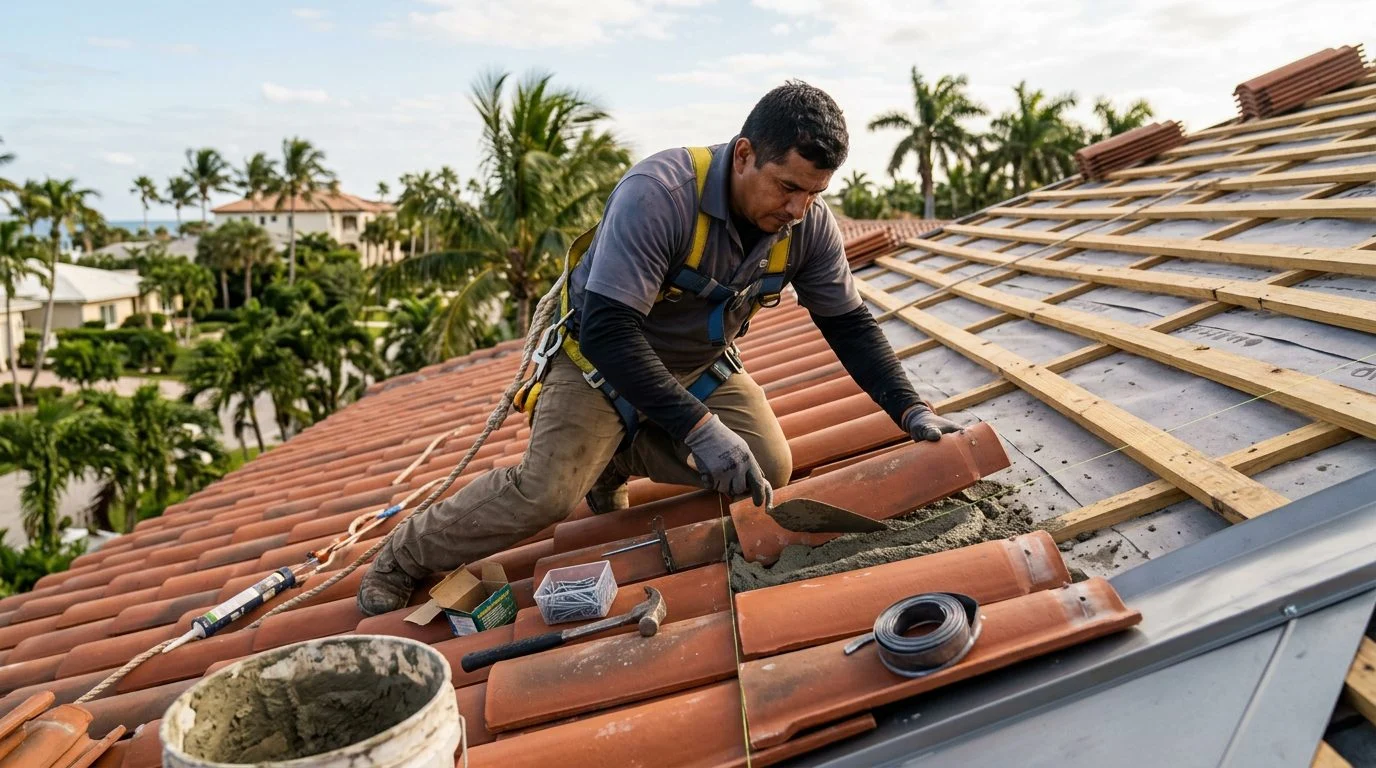
Tile Roof Installation | West Palm Beach & Palm Beach County
Tile Roofs Built to Handle South Florida Weather
ASP Superhome installs tile roofs for homes across Palm Beach County, from roof replacement to repair. Start with a free first consultation: confidential and with no obligation to continue.
By Jonathan Rodriguez · Published October 23, 2026
Homeowners searching for tile roof installation Palm Beach County services usually want three answers: what’s included, how the work runs, and what Florida code requires. This guide covers all three, so you can decide what to do next.
What Tile Roof Installation Is and Who It Is For
A tile roof installation is a complete new roof system with tile as the roof covering. It is different from a repair, which fixes damaged areas on a roof that is otherwise sound.
Homeowners usually need this in three situations. They are building a home, replacing a roof that has reached the end of its useful life, or they want tile on an existing house for its look and durability.
The National Roofing Contractors Association describes clay and concrete tile roofing, including its use in Florida. Each type has its own weight and appearance, so the choice should follow your roof’s structure.
Tile is heavy. When tile replaces another roof covering, the roof’s structural load capacity must be verified, according to the NRCA. This check comes early in planning, before any material is ordered.
A repair fits best when damage is limited and the rest of the roof is sound. When damage is spread out, or the roof is near the end of its life, a full installation is worth pricing side by side with repairs.
Not sure what your next step is?
Talk it through with our team — the first consultation is free, confidential, and carries no obligation.

What a Tile Roof Installation Covers
A complete installation covers the roof deck, the water barriers under the tile, the tile itself, the flashing, and final cleanup. Here is what the written scope should include.
- Inspection: The roof deck and structure are checked before work starts.
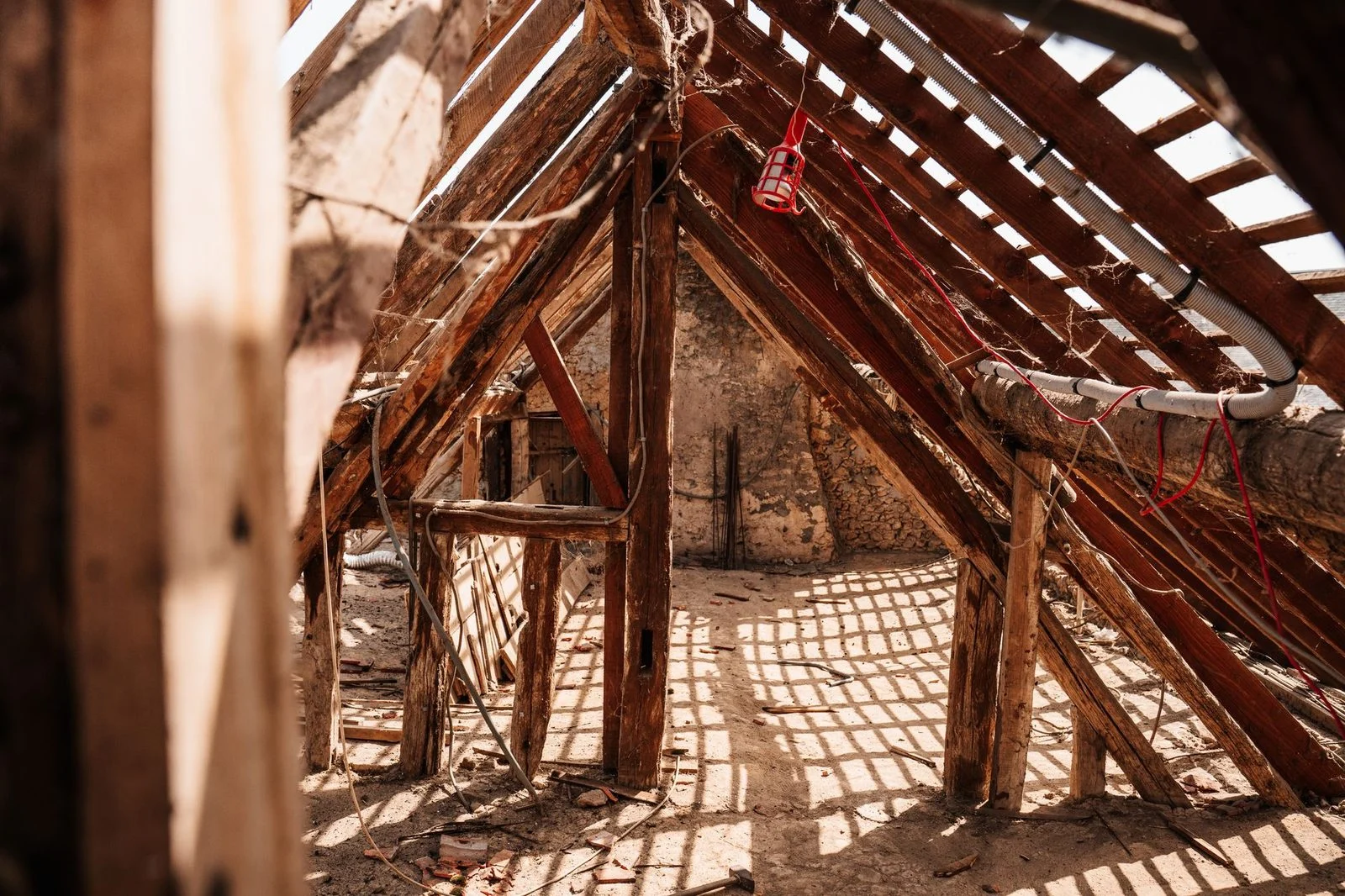
- Tear-off: Existing roofing layers are removed when needed, and debris is hauled away.
- Underlayment and water barrier: A secondary water barrier goes under the tile. Florida law allows more than one method or material for it (Fla. Stat. § 553.844).
- Tile setting: Each tile is mechanically fastened, not only set in place.
- Flashing: Flashing is installed at valleys, walls, vents, other penetrations, and roof-to-wall transitions.
- Trim and cleanup: Ridge, hip, and eave components are finished, and the site is cleaned.
Before you sign, ask for the written scope. It should name the tile type, underlayment, fastening method, and flashing details for your home.
How the Installation Process Works, Step by Step
The process for tile roof installation Palm Beach County projects runs in six steps, from a first conversation to a final walkthrough.
- Free first consultation. Our free first consultation is confidential and comes with no obligation to continue. We talk through the roof’s condition and your goals.
- On-site inspection. We measure roof area and pitch and identify any existing layers.
- Written estimate and quote. The estimate lists materials, tile type, underlayment, fastening, and scope.
- Scheduling and staging. Materials are staged once the start date is set.
- Installation. Tear-off, deck repair where needed, underlayment, tile, and flashing follow in order.
- Final inspection and walkthrough. We clean up and walk you through the finished roof.
Timelines vary with roof size, weather, and permit timing. Your written estimate shows the expected schedule for your home.
Unless otherwise provided by law, Florida law makes it unlawful to repair or alter a building without first getting a permit from the enforcing agency (Fla. Stat. § 553.79).
Florida Building Code and Tile Roof Fastening
The Florida Building Code sets the wind and fastening rules for roofs. Your estimate should show how your roof will meet them.
The Florida Building Code contains or incorporates the laws and rules that govern the construction and repair of buildings (Fla. Stat. § 553.73). Under Fla. Stat. § 553.73(7)(a), the Florida Building Code is updated on a three-year cycle, using the most current editions of the model codes it references.
Wind rules add more requirements. For a site-built, single-family home in the wind-borne debris region with an insured value of $300,000 or more (or, if uninsured or without documented insured value, a just valuation of $300,000 or more for ad valorem taxation), a roof replacement must incorporate the roof-to-wall connection techniques specified in the statute (Fla. Stat. § 553.844). Roof-to-wall connections are not required unless evaluation and installation at gable ends or all corners can be completed for 15 percent of the cost of roof replacement.
Partial work follows its own rule. When 25 percent or more of a roof built or replaced under the 2007 code or later is repaired, replaced, or recovered, only that portion must meet the code in effect.
Why fastening matters: in South Florida’s wind and heavy rain, fasteners and underlayment keep tile in place. For technical detail, the Tile Roofing Industry Alliance publishes installation guides on code requirements and acceptable products for high-wind use in Florida.
Why Choose ASP Superhome for Tile Roofing in Palm Beach County
ASP Superhome handles tile roofing together with related home projects, so one conversation can cover your whole exterior plan.
- Complete home solutions: Tile roofing, metal roofing, roof replacement and repair, impact windows and doors, solar panels, solar battery backup, and kitchen remodeling.
- Coordinated scope: Roofing, impact windows, and solar work can be reviewed together when planned at the same time.
- Support staff: Our team handles scheduling, estimates, and follow-up.
- Service area: We work with homeowners in West Palm Beach and Boca Raton, and across other South Florida markets.
Florida law protects you in the contract. A residential roof contract must include a notice about practices the contractor may not engage in. If that notice is missing, the owner may void the contract within 10 days after signing (Fla. Stat. § 489.147). Repair and construction agreements on residential property also need a written statement on the Florida Homeowners’ Construction Recovery Fund, unless labor and materials total $2,500 or less (Fla. Stat. § 489.1425).
Frequently Asked Questions About Tile Roof Installation
How much does tile roof installation cost in Florida?
Cost follows roof area, pitch, tile type, deck condition, and whether a tear-off is needed. A written estimate gives a figure for your specific home.
Can insurance help pay for a tile roof replacement?
Coverage depends on your policy and documented damage, so talk to your insurer early. Under Fla. Stat. § 627.70132(2), notice of a claim or reopened claim must be given to the insurer in accordance with the policy within 1 year after the date of loss, and notice of a supplemental claim within 18 months after the date of loss; these time limits are paused during a deployment to a combat zone or combat support posting that materially affects a servicemember named insured’s ability to file (Fla. Stat. § 627.70132).
How long does tile roof installation take?
Timing depends on roof size, weather, and permit timing. Your written estimate shows the expected schedule.
Is concrete tile or clay tile better for Florida homes?
Both types are used on Florida roofs. The right fit follows from your roof’s structure and look, and we can review both options with you during the consultation.
Do I need a permit for tile roof work?
Florida law bars the enforcing agency from issuing a permit for construction, erection, alteration, modification, repair, or demolition of any building until the appropriate certified firesafety inspector has reviewed the plans and found they comply with the Florida Fire Prevention Code and the Life Safety Code; buildings not subject to a firesafety code are not required to have plans reviewed by the firesafety inspector (Fla. Stat. § 553.79). Your estimate will list the permit steps for your home.
Do I need to be home during installation?
Our team explains site access and coordination during the estimate, so you know what to expect.
Not sure what your next step is?
Talk it through with our team — the first consultation is free, confidential, and carries no obligation.
Ready to Plan Your Tile Roof?
If your tile roof is aging, or storm wear has left you unsure what it needs, a clear written scope is the right place to start. ASP Superhome can review your roof’s condition, the code points that apply, and the options for your home. Reach out through our contact page to book your first consultation.
What to Expect When You Work With Us
Clear, written estimates
We outline the tile, underlayment, deck work, and any tear-off so you can see how each part of the project is priced.
A straightforward schedule
We walk you through the sequence of work before the crew arrives, so you know what to expect each day.
Attention to wind and weather
Tile roofs in South Florida face heavy rain, salt air, and high winds. Our installation focuses on secure fastening and proper sealing.
A dedicated point of contact
Our team stays in touch from your first call through final cleanup, so questions get answered promptly.
Ask for a Written Estimate
Tile Roofing Services
Tile Roof Installation
New tile roofs for new construction and homes that need a fresh start, installed with attention to underlayment and flashing.
Roof Replacement
Full tile roof replacement, including removal of the existing roof and inspection of the deck before new tile goes down.
Roof Repair
Repairs for cracked or displaced tiles, damaged flashing, and leaks, so your roof stays sound between larger projects.


