


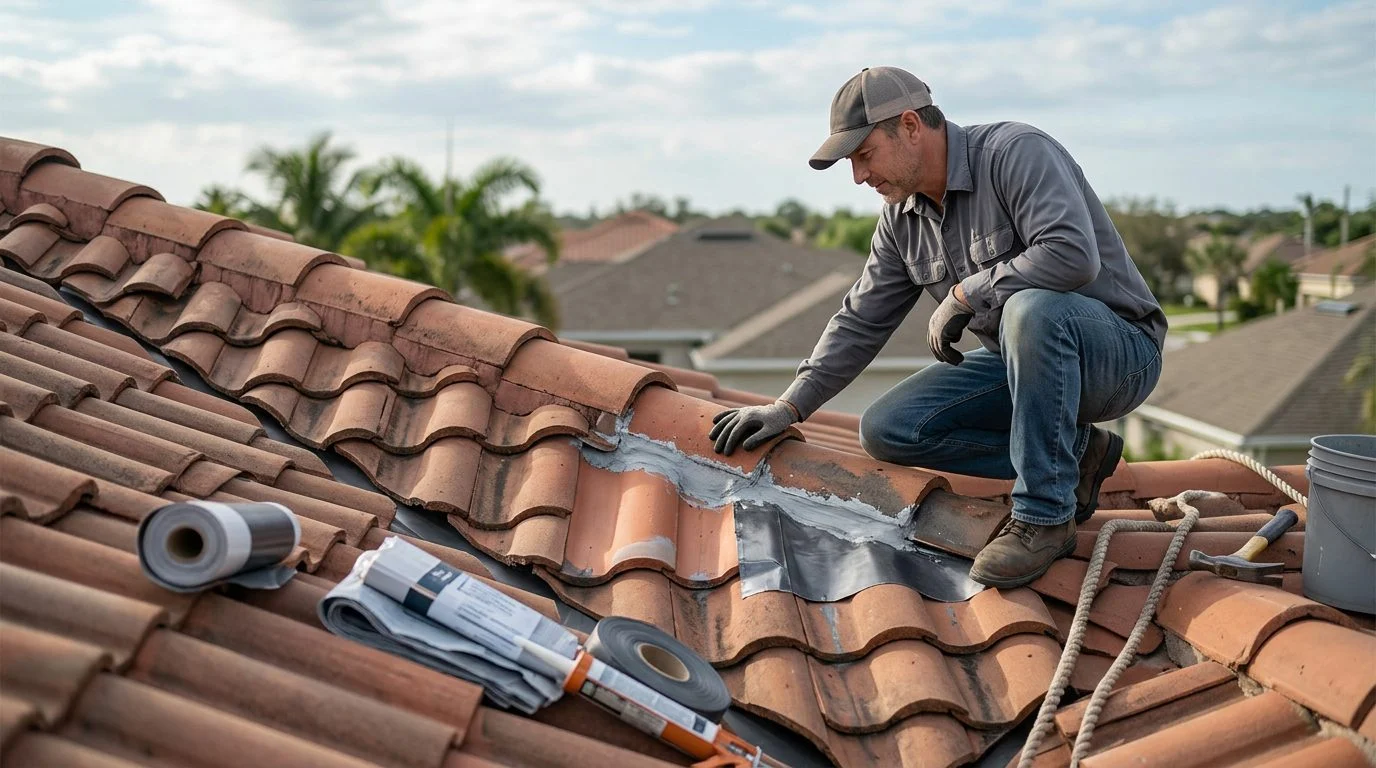
Tile Roof Repair | South Florida
Found a Leak in Your Tile Roof After a Storm? Let's Find It.
Storms can crack tiles, lift underlayment, and open small paths for water. ASP Superhome focuses on tile roof leak repair across Miami, Fort Lauderdale, West Palm Beach, Kendall, Naples, Fort Myers, and Boca Raton.
By Jonathan Rodriguez · Published October 21, 2026
Tile roof leak repair after a storm starts with finding the damage that let water in. Wind and debris often crack, shift, or remove tiles, or lift the flashing and underlayment beneath them. This guide explains the signs, the damage that causes leaks, what a repair involves, and what drives the cost.
What a Storm-Related Tile Roof Leak Looks Like
A storm-related tile roof leak shows up as water inside the home after wind, rain, or debris has damaged the roof. Look for these early signs:
- Water stains on ceilings or walls.
- Drips during or after rain.
- Damp attic insulation or a musty smell.
- Peeling paint near exterior walls.
Water often runs along rafters or the underlayment before it drops. That means the stain may sit well away from the spot where water actually entered.
Treat the leak as urgent if water drips steadily, a ceiling sags, or water reaches light fixtures or outlets. Turn off power to affected fixtures if you can do so safely.
This page is for homeowners and for anyone managing a property, such as a family member’s house or a rental, who needs to understand what happened.
If storm water is coming through your ceiling, you don't have to find the source alone. ASP Superhome can inspect your tile roof and walk you through what it finds. Talk it through with our team — the first consultation is free, confidential, and carries no obligation.

Common Storm Damage That Lets Water In
Wind and flying debris usually let water in by moving or breaking tiles, or by lifting the parts that sit beneath them.
- Cracked or broken tiles. A cracked tile can leak. Whether it does depends on where the crack sits, whether the underlayment below is still intact, and how water runs across the roof.
- Missing or displaced tiles. Open spots expose the underlayment to wind-driven rain, which can push water under nearby tiles.
- Damaged flashing. Flashing is the metal or sealed piece that keeps water out where the roof meets chimneys, vents, skylights, valleys, and walls. It is a common entry point.
- Torn or lifted underlayment. This is the water barrier under the tiles. It can look fine from the ground and still let water through.
- Damaged ridge caps and hip tiles. These pieces at the peak and corners let wind-driven rain in at the top of the roof.
Because water travels, the inside damage may sit several feet from the actual break. Tracing the path from the stain back to the break is part of a proper inspection.
What a Tile Roof Leak Repair Includes
A tile roof leak repair fixes the entry point and the damage around it, not just the stain inside.
- Replacing cracked, broken, or missing tiles, with matching profiles where available.
- Resetting displaced tiles and checking fasteners and clips.
- Repairing or replacing damaged flashing at penetrations, valleys, and wall joints.
- Patching or replacing compromised underlayment in the affected area, as far as access allows.
- Sealing and repairing ridge and hip pieces.
- Checking nearby areas for water movement, so the work covers the full path of the leak.
Code questions can come up with tile work. The Florida Building Commission staff analysis addresses how code requirements treat roof repairs and the use of existing concrete roof tiles. Permits matter too.
How the Repair Process Works
A Florida tile roof leak repair usually moves through five steps: a first consultation, an inspection, written findings, the repair, and a final check.
- First consultation. You describe the leak, the storm, and any interior damage. The first consultation is free, confidential, and carries no obligation to continue.
- Inspection. The roof is checked for tile condition, flashing, underlayment access, and signs in the attic.
- Written findings. You receive a written explanation of what was found and which repairs address it.
- Repair. The crew fixes the source and checks surrounding areas.
- Final check. The repaired area is reviewed, and you get guidance on maintenance and any follow-up items.
Timelines depend on the size of the damage, the materials needed, and the weather.
Under section 489.147(7), Florida Statutes, a contractor executing a contract to replace or repair a roof of a residential property is required to put a specific notice in the contract, or in an attachment to it, printed in boldface lettering no smaller than 14-point on the page where the homeowner signs. That notice advises that, if the proposed work is related to an insurance claim, you should contact your insurance company to verify coverage for the proposed roofing work, including any claims, deductibles, and policy terms, before signing the contract.
Claim timing matters too. Under Fla. Stat. § 627.70132, a claim is barred unless notice reaches the insurer under the policy terms within 1 year after the date of loss. A supplemental claim is barred unless notice is given within 18 months. For hurricanes, the date of loss is the date the storm made landfall.
What Affects the Cost of Fixing a Leaky Tile Roof
Cost depends mainly on how many tiles and flashing areas are damaged, how hard they are to reach, and the roof’s pitch and height.
- The number and location of damaged tiles.
- Flashing work at penetrations, valleys, and walls.
- Underlayment access.
- Roof pitch, height, and accessibility.
A targeted repair costs less than work spread across several slopes or large underlayment areas.
The leak can also cost more than the roof work. Interior drywall, insulation, and flooring may need repair too, and those costs are separate from the roof itself.
Acting early often keeps the job small. Water left in place can spread damage to the decking and interior finishes.
A precise figure comes from an on-site inspection, which is where the estimate starts.
Why Temporary Fixes Such as Flex Seal Fall Short
Sprays and sealants cover a surface. They don’t replace broken tiles, reset displaced ones, or repair flashing.
- Sprays coat exposed areas but leave the cause in place.
- Sealant can trap moisture under the surface, which makes the real entry point harder to find.
- A tarp can limit more water while a permanent repair is scheduled, but it doesn’t fix the cause.
- Walking a wet or damaged tile roof risks falls and broken tiles. Inspection and repair belong with a roofing crew.
Our team identifies the actual entry point before recommending any work. The repair follows from that finding, not from a guess.
Not sure what your next step is?
Talk it through with our team — the first consultation is free, confidential, and carries no obligation.
Why Choose ASP Superhome for Tile Roof Leak Repair
ASP Superhome handles storm-related tile repairs alongside related home work, so one provider can look at the whole picture.
- Tile roofing, roof repair, roof replacement, and metal roofing.
- Impact windows and impact doors, when storm damage reaches openings.
- Solar panels, solar battery backup, and kitchen remodeling.
Our written findings explain scope, materials, and next steps, so you can see what is proposed and why.
Roof work can also matter for insurance. The Florida Office of Insurance Regulation explains that wind-mitigation inspections use a form with a validity period. Qualifying hurricane-loss mitigation measures can produce insurance premium savings or discounts.
Service areas include Miami, Fort Lauderdale, West Palm Beach, Kendall, Naples, Fort Myers, and Boca Raton.
Frequently Asked Questions
How much would it cost to fix a leaky roof?
Cost depends on the source, the number of areas affected, and access. An on-site inspection gives you an accurate estimate.
Will a cracked roof tile leak?
It can. The risk goes up if the underlayment below is also damaged or if water runs toward the crack.
What is the typical cost of installing a tile roof in Florida?
Installation costs differ from leak repair. A replacement estimate depends on roof size, tile type, and condition.
Can I spray Flex Seal on a leaking roof?
Sprays can cover a surface. They don’t replace broken tiles or repair flashing or underlayment.
Does a storm leak always mean full roof replacement?
Not always. Many storm leaks affect only specific tiles, flashing, or underlayment areas, and the inspection sets the scope.
What should I do first after a storm leak?
Photograph interior and exterior damage, place containers under drips, and request an inspection from ASP Superhome.
Next Step: Request a Free Estimate for Your Leak
If water is coming through a ceiling after a storm, the next step is an inspection that finds where it’s getting in.
You may be handling this for a home you don’t live in, a tenant, or a family member. You may not be ready to hire anyone yet, and that’s a normal place to start. Gather a few details first: where the leak shows, photos, the storm date, and any interior damage. Then request a free estimate and the team will inspect the leak source with you.
Common Causes of Post-Storm Tile Roof Leaks
Cracked or Broken Tiles
Wind-driven debris and hail can crack concrete or clay tiles, leaving an opening for rain to reach the layers below.
Displaced or Slipped Tiles
High winds can shift tiles out of position, exposing the underlayment and letting water run beneath the surface.
Damaged Underlayment
Even when tiles look intact, the underlayment beneath them can tear or deteriorate, allowing water to seep into the structure.
Flashing and Penetration Gaps
Storms can loosen flashing around vents, chimneys, and skylights, which are common points where water finds its way in.
How We Approach Tile Roof Leak Repair
Inspection Before Repair
We look at the tiles, underlayment, flashing, and penetrations to identify where water is actually entering, so repairs address the source.
Clear, Written Estimates
You receive a clear explanation of the work needed and an estimate you can review before anything begins.
Repair or Replacement Options
Depending on the condition of your roof, we discuss targeted repairs as well as roof replacement with tile or metal roofing.
Support From Our Team
Our team stays in touch from the first call through the finished work, so you always know what to expect.
Don't Ignore a Small Drip
A stain on a ceiling or a few drops after rain can signal water moving through the roof structure. Leaving it alone can lead to damage to insulation, drywall, and wood framing. Take photos of any visible damage and schedule an inspection as soon as you can.
Questions Homeowners Ask
How much does a tile roof leak repair cost?
Cost depends on the number of areas affected, the type of tile, and how easily the roof can be accessed. An on-site inspection gives you an accurate estimate.
Will a cracked tile really leak?
It can. The risk increases when the underlayment beneath it is also damaged or when water flows toward the crack.
Can you repair a few tiles instead of the whole roof?
In many cases, yes. Targeted repairs are possible when damage is limited and the underlying structure is sound. We will tell you honestly what your roof needs.
Start With a Free First Consultation
Related practice areas
- Tile Roofing in South Florida: Costs, Styles & Installation Guide
- Tile Roof Replacement Fort Myers Naples: Costs and Steps


