


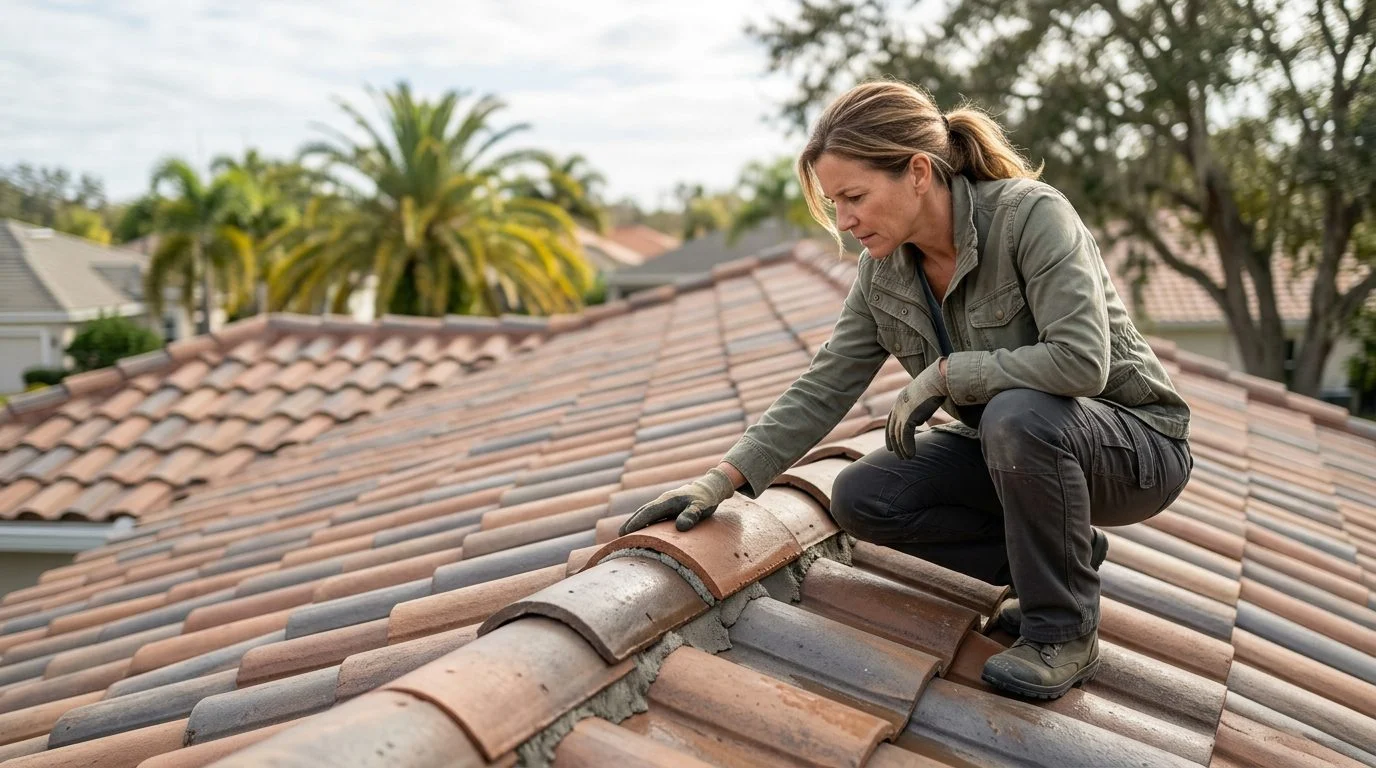
Tile Roofing · South Florida
Replacing Old Tiles? Know Your Options Before You Decide
Overlay or tear-off: ASP Superhome looks at your roof deck, underlayment, and existing tiles, then recommends the approach that fits your home. Start with a free first consultation.
By Jonathan Rodriguez · Published October 20, 2026
A new tile roof can sometimes go over old tile, but not every roof qualifies. An overlay works best when the roof deck, underlayment, and flashing are still sound. When water has reached the layers below the tiles, the old roofing often has to come off first. This guide covers both paths, the Florida rules that shape the choice, and the warning signs that point toward a full tear-off. Homeowners in Miami, Fort Lauderdale, West Palm Beach, Kendall, Boca Raton, Naples, and Fort Myers all face this question. The answer starts with a look at the roof itself.
Tile Roof Overlay vs. Tear-Off: What Each Means
An overlay installs new roof covering on top of the existing tile. A tear-off removes the old tile and underlayment down to the roof deck before anything new goes on.
The two paths differ in three ways. They differ in weight, because a second layer of tile adds load to the frame. They differ in what can be seen, since a tear-off exposes the deck, fasteners, and flashing. They also differ in how much of the structure gets reviewed. The NRCA roofing materials guidance notes that when tile replaces another roof covering, the building’s structural load capacity must be verified.
An overlay often suits a home with sound decking, one existing layer, and no active leaks. A tear-off suits a roof with water damage, many broken or slipped tiles, failing underlayment, or more than one old layer. The right path depends on the facts of the specific roof. That is why an on-site look comes first.
If a leak or cracked tiles have you weighing an overlay against a full tear-off, our team can talk it through with you. Talk it through with our team — the first consultation is free, confidential, and carries no obligation.
What Florida Building Rules and Permits Check
Florida roof work falls under the Florida Building Code, and roof replacement generally requires a permit. The Florida Building Code governs the design, construction, and demolition of public and private buildings.
Under Fla. Stat. § 553.79, unless otherwise provided by law, it is unlawful to repair or alter a building without first getting a permit from the appropriate enforcing agency. If a permit is denied for non-compliance, the agency must name the plan features that fall short.
Local building departments in Miami-Dade, Broward, Palm Beach, Collier, and Lee counties handle these permits. Enforcement can add conditions, so each project is checked against local rules too. For one common case, Fla. Stat. § 553.792 sets a 5-business-day deadline, counted after receiving a complete and sufficient application, for a roofing permit on an existing single-family home when the work is under $15,000 and a local plans reviewer is used, unless the applicant waives the timeframe in writing.
Signs an Overlay May Not Be the Right Fit
An overlay is a poor fit when the problem sits under the tiles. Watch for these signs:
- Active leaks, water stains on ceilings, or wet attic insulation.
- Soft, spongy, or sagging decking underfoot.
- Cracked, slipped, or missing tiles in several areas.
- Existing layers that add weight and make fastening harder.
- Failing flashing, valleys, or roof penetrations.
New tile can hide these problems without fixing them. A cracked underlayment or rotted deck stays in place under the new covering, out of sight. That hidden damage can lead to more repair work later.
What a Tile Tear-Off Includes
A tile tear-off strips the roof back to the deck, repairs what lies underneath, and rebuilds the system in layers. A complete scope usually includes:
- Removal of old tile and underlayment, with debris hauled away.
- Inspection of the roof deck, with damaged or rotted sheathing replaced.
- New underlayment suited to the roof system being installed.
- New flashing at walls, chimneys, penetrations, and valleys, plus drip edge at eaves and rakes.
- New tile fastened for the wind exposure of the property.
Product approval matters too. Tile systems are also approved for specific applications, as shown in this Miami-Dade County Product Control notice of acceptance.
How the Process Works, Step by Step
The process moves from a site visit to a written scope, a permit, installation, and a final inspection.
- Initial consultation and roof assessment. The team reviews the existing tile, deck access points, and any visible leak points.
- Written estimate. The estimate states whether the job is an overlay or a tear-off, plus decking, flashing, and materials.
- Permit application. Where a project needs a permit, the application goes to the local building department.
- Installation. Material staging and work follow a schedule shaped by roof size, decking repairs, and weather.
- Final inspection. The completed roof is inspected and the records are documented.
Timelines vary with roof size, decking condition, permit processing, and weather. The estimate sets the schedule before any work starts.
Insurance, Wind Ratings, and Documentation
Your insurer sets discounts and coverage, but permit and installation records help when a roof is replaced.
Coverage written on a replacement cost basis can extend to work that building codes require. The Florida Department of Financial Services insurance tips say roof discounts vary by insurer and are typically limited to roofs under 10 years old.
ASP Superhome provides tile roofing, roof replacement, and roof repair in the service area. Our team can explain what permit and installation records will cover, so you know what to share with your insurer.
Not sure what your next step is?
Talk it through with our team — the first consultation is free, confidential, and carries no obligation.
Common Questions About Tile Roof Overlays
Sometimes you can put tile over old tile in Florida, if the deck, underlayment, and flashing are sound and the permit path allows it.
Can you use old roof tiles?
Reuse depends on the tile’s condition, fit, and whether it meets the requirements of the new installation. An inspection decides that.
Do roofers always remove old roofing?
Not always. A tear-off is the better path when the deck or underlayment is damaged, and the inspection sets the scope.
How many layers of roofing are allowed in Florida?
Local enforcement can add conditions, so the layer count is checked for your address during the consultation.
Can I put tiles on a flat roof?
Tile is generally installed on sloped roofs. Low-slope roofs need a different system, so the pitch is checked during the consultation.

Talk Through Your Roof With Our Team
Whether a tile roof can go over old tile is a question for the roof itself. If a leak, a cracked tile, or an inspector’s note has you weighing an overlay against a full tear-off, you don’t have to sort it out alone. You may be reading this for a parent or family member, facing a decision you didn’t plan for.
Our first step is a free, confidential initial consultation with no obligation to continue. Our team reviews the existing tile, the deck, and the overlay-versus-tear-off question. Then they explain the written scope and permit path before you decide anything. To book an estimate or request a quote, use the contact page, and bring any photos or inspection notes you already have.
What We Check Before Recommending Overlay or Tear-Off
Roof Deck Condition
The decking under your tiles shows whether the structure can support a new roof system and where repairs may be needed.
Underlayment and Water Barriers
We assess the underlayment and flashing to see whether they can stay in place or need to be replaced for lasting protection.
Tile Condition and Fit
Existing tiles are reviewed for cracks, wear, and fit. Reuse is only considered when the tiles meet the requirements of the new installation.
Clear Written Scope
You receive a plain-language explanation of the recommended approach so you can compare it with your goals and budget.
Don't Assume Old Tiles Can Be Reused
Tile roofs can look sound from the ground while the deck or underlayment beneath them has already deteriorated. Have the roof inspected before you decide to overlay.
Overlay vs. Tear-Off at a Glance
Overlay
A new layer of roofing is installed over the existing roof. It can reduce disruption and debris when the deck and underlayment are sound and the structure can accept the added weight.
Tear-Off
The old roof is removed down to the deck. This is often the better path when the deck or underlayment is damaged, and it gives a full view of the structure.
Reusing Tiles
Some existing tiles may be reused, but only if they are in good condition and fit the new system. Inspection determines what is practical.
Repairs First
If the damage is limited, targeted roof repair may be enough to protect your home while you plan a full replacement.
Not Sure Which Approach Is Right for Your Roof? Let's Take a Look
Related practice areas
- Tile Roofing in South Florida: Costs, Styles & Installation Guide
- Tile Roof Replacement Cost Per Square in Florida


