


Tile Roofing | South Florida
Tile Roof Re-Bedding Mortar Cost in South Florida
Loose or cracked tiles can be a sign your roof needs re-bedding. Here is what affects the cost and how to get a clear estimate for your home.
Start with a no-pressure conversation
Free
First consultation
Confidential
Your roof details stay private
No obligation
Decide whether to continue
By Jonathan Rodriguez · Published November 1, 2026
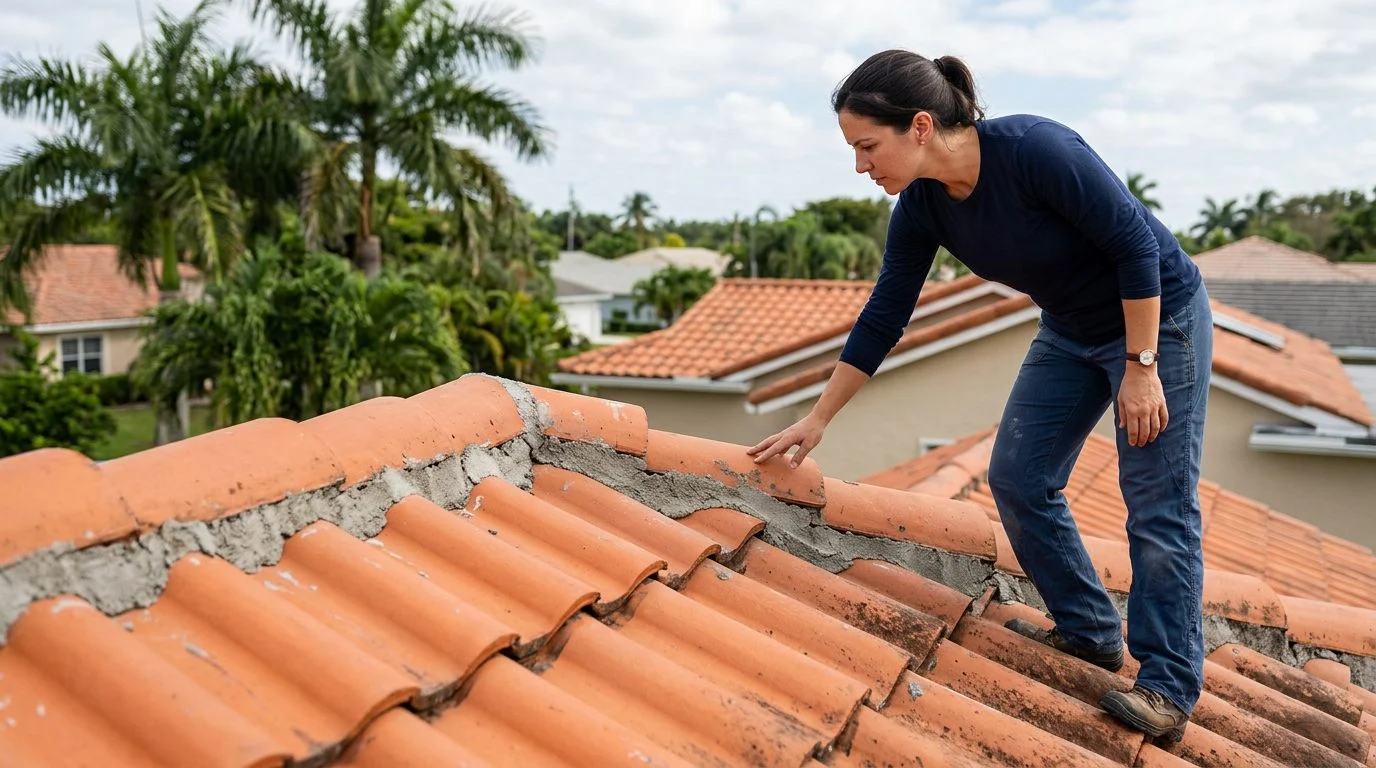
Tile roof re-bedding mortar cost depends on how many tiles are loose, how much of the roof is affected, and how hard the work is to reach. Re-bedding means lifting loose tiles, clearing out failed mortar, and setting the tiles in fresh mortar. It is a targeted repair, not a full roof replacement. Here is how to spot the problem, rule out other causes, and understand what drives the price on South Florida homes in Miami, Fort Lauderdale, West Palm Beach, Kendall, Boca Raton, Naples, and Fort Myers.
What Re-Bedding Mortar Does on a Tile Roof
Re-bedding mortar holds tile roof tiles in place. On many tile roofs, each tile sits in a bed of mortar that bonds it to the roof below. That bond helps the tile resist wind and rain.
Over time, the mortar can crack, crumble, or lose its grip. When the bond fails, the tile can slide, rock, or lift. Wind-driven rain can then get under the tile.
Re-bedding fixes that bond. The crew lifts the affected tiles, removes the failed mortar, and sets the tiles back in fresh mortar. Re-bedding is not the same as a roof replacement. A replacement removes the whole roof covering. Re-bedding repairs only the areas where the bond has failed.
Tile is a durable roofing material used across Florida, according to the NRCA roofing materials guidance. For hip, ridge, and rake tiles, the FRSA hip, ridge and rake guidance says the approved method includes mortar attachment.
Not sure what your next step is?
Talk it through with our team — the first consultation is free, confidential, and carries no obligation.
Signs a Tile Roof May Need Re-Bedding
Tiles that slide, shift, rock, or sit out of line are the clearest sign that a re-bedding repair may be needed. Start with the eaves, rakes, ridges, and hips. Loose tiles show up most often in these edge and cap areas.
Cracked or crumbling mortar is another sign. You may see it from the attic, at the eave edge, or along a ridge line. Old mortar chunks or fine dust on the ground near the roof edge can also point to failing mortar.
Water stains after a storm can trace back to displaced tiles. If a leak appears after wind-driven rain, check for a shifted tile above that spot.
Do not walk on a tile roof to check it yourself. Tiles can crack under your weight, and a broken tile leaves the roof open to water. Look from the ground and the attic instead, then let a trained crew take a closer look.
Other Causes of Tile Movement to Rule Out
Not every loose tile points to bad mortar. Other parts of the roof can make tiles move, and each one needs a different fix.
Underlayment and battens support the tile from below. If they fail, tiles can lose support even when the mortar is sound. The 2026 Florida Building Code analysis notes that section 1518.8.8 requires tile underlayment uplift resistance to meet the component and cladding loads of ASCE 7.
Flashing and ridge problems can look like loose tiles. Water can leak where flashing has pulled loose, and the staining may seem to come from the tiles. The repair for flashing is different from the repair for mortar.
Broken or brittle individual tiles often need replacement rather than re-bedding. A single cracked tile can be swapped out. Identifying the tile type first, whether concrete or clay, helps find a match.
A close inspection separates these causes. That way, the repair matches the real problem.
How a Re-Bedding Job Is Typically Done
A re-bedding job starts with an inspection and ends with a check of the finished work. Each step builds on the one before it.
First, the crew inspects the roof and marks loose, cracked, or missing tiles. They also check the underlayment, battens, and flashing near the damage.
Next, they remove the loose tiles and clear out the old, failed mortar. A clean surface helps the new mortar bond.
Then they apply fresh mortar and reset the tiles in line. Hip, ridge, and rake pieces get the same care, because their approved method also relies on mortar attachment.
Last, the crew checks the finished work. They confirm that tiles are stable and aligned.
What Re-Bedding Costs and What Drives the Price
Tile roof re-bedding mortar cost depends on the size and condition of the affected area, not on a flat rate. A written estimate after inspection gives the figure for your specific roof.
Several factors move the number. Roof size and pitch matter, along with the total number of tiles in the repair area. Extent matters too. A few loose tiles cost less to fix than mortar failure across several slopes.
Access and height add to the work. Staging and protection take time. Ridge, hip, and eave work often takes more labor per foot than field tile. Broken tiles that need replacing, and whether the existing tile type is still available to match, also change the total.
Insurance is a separate question. The Florida Office of Insurance Regulation says homeowners coverage depends on the policy form and on covered or excluded perils, and it may include storm-related property damage. Your policy wording decides what applies.

Next Steps for a Tile Roof in South Florida
The next step is a close inspection that tells mortar problems apart from other causes. The right repair follows from that diagnosis.
If tiles slide after a storm, or you’re unsure whether an earlier re-bedding job was needed, a second look can help. Our tile roofing guide explains the system in more detail. The guide on telling concrete tile from clay tile can help you plan the repair. An annual tile roof maintenance guide covers ongoing checks after a re-bedding job.
Can I walk on my tile roof to check for loose tiles?
It’s better not to. Tiles can break underfoot, so a close check should come from a trained crew.
Is re-bedding the same as a roof replacement?
No. Re-bedding resets loose tiles in fresh mortar, while a replacement removes the whole roof covering.
What makes tile roof re-bedding mortar cost go up?
Extent of damage, roof size and pitch, access, ridge and hip work, and broken tiles that need replacing are the main drivers.
ASP Superhome offers a free first consultation that is confidential and carries no obligation to continue. If your tile roof needs a closer look, book your free estimate and get a written quote for your roof.
What shapes re-bedding mortar cost
Number of loose tiles
A few tiles in one area is a different job than tiles lifting across several sections of the roof.
Roof size and pitch
Larger or steeper roofs take more labor and more time to work safely.
Access and roof layout
Multiple levels, hips, valleys, and hard-to-reach areas can add time to the job.
Condition of underlayment
If the underlayment or deck is damaged, the scope of work may grow beyond re-bedding.
Tile type and availability
Matching or replacing damaged tiles depends on the profile and how easily matching pieces can be sourced.
Don't climb onto a tile roof to check it yourself
Tile can crack under foot, and the damage may not be visible from the ground. Let a trained crew do the close inspection.
Re-bedding, repair, or replacement?
Re-bedding
Resets loose tiles in fresh mortar when the roof covering is otherwise sound.
Roof repair
Addresses specific damaged areas, flashing, or leaks without redoing the whole roof.
Roof replacement
Removes the full roof covering when damage is widespread or the system is near the end of its life.


