


Tile Roofing & Roof Repair | South Florida
Tile Roof Leaking Around the Chimney? Find the Source Before It Spreads
Learn the common causes of chimney leaks on Florida tile roofs, how to spot early warning signs, and which fixes often apply. Then book a free estimate with ASP Superhome.
Start With a Free First Consultation
Free
First consultation
Confidential
Every conversation
No obligation
To continue
By Jonathan Rodriguez · Published October 27, 2026
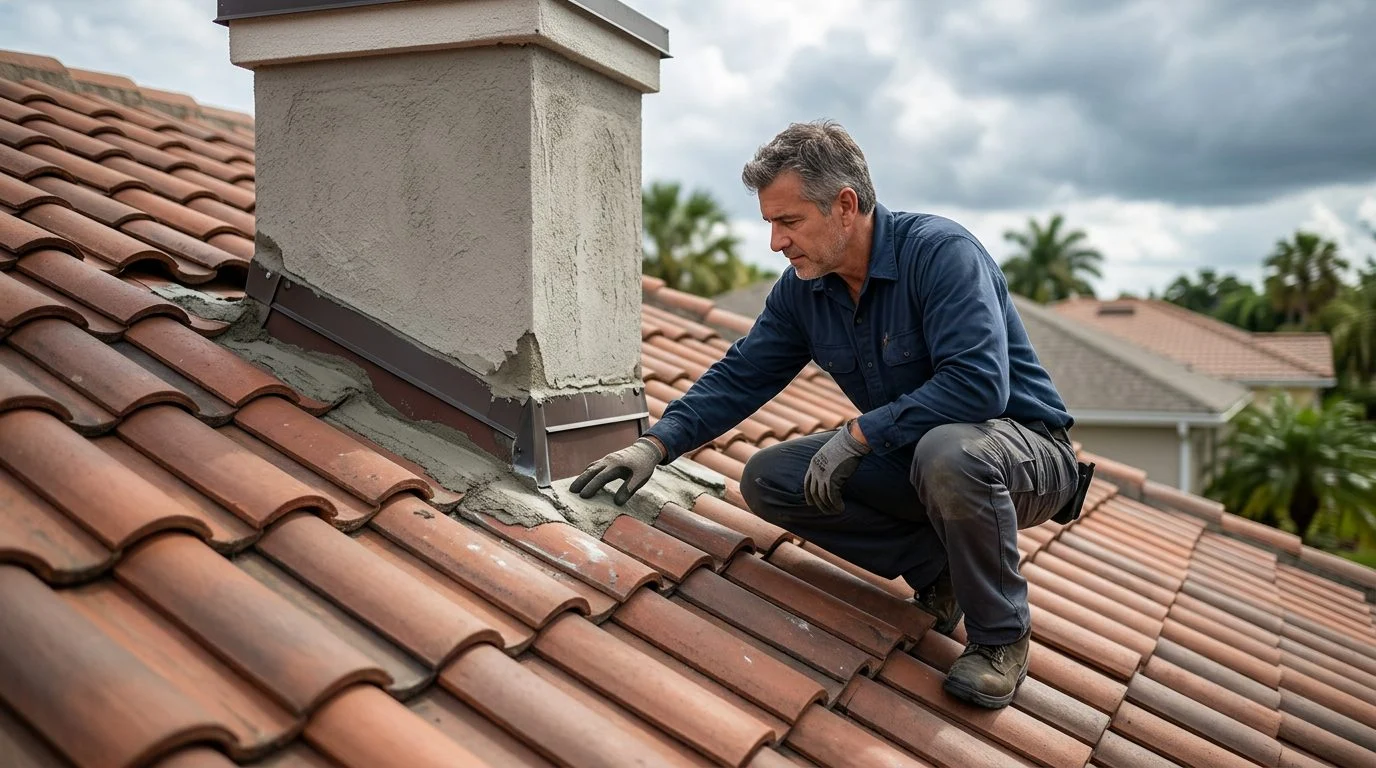
A tile roof leaking around the chimney usually lets water in at the flashing. Flashing is the metal seal where the chimney meets the tiles. The stain inside the house can appear far from the real entry point, so the source is often hard to spot.
This guide covers the warning signs, the common causes, and why the leak should be traced before anyone patches it. It’s written for South Florida homeowners, and for anyone looking after a home for a family member, tenant, or co-owner.
What Are the Signs of a Chimney Roof Leak on a Tile Roof?
The main sign is a stain, drip, or damp spot on the ceiling or wall closest to the chimney. It often shows up during rain or right after a storm.
Check the attic, too. Look for damp insulation, darkened wood, or a musty smell near the base of the chimney. These clues suggest water has been getting in for a while.
Timing matters. Water that appears mainly during wind-driven rain often points to the flashing. Wind can push rain sideways, under the edges of the seal. A leak that only shows up in heavy wind is a clue, not a diagnosis.
Location can mislead you. Water can run along the roof deck and rafters before it drips. A stain in the middle of a room can still start at the chimney. Write down when the stain appears and which way the wind was blowing.
If a stain near your chimney appeared after a storm and the source is still unclear, our team can examine the flashing and tiles before any repair is chosen. Talk it through with our team — the first consultation is free, confidential, and carries no obligation.
What Causes a Roof Leak Near a Chimney?
Most chimney leaks start at the flashing. Step flashing sits under each tile row beside the chimney. Counter-flashing is set into the mortar joints and covers the step pieces. Together they shed water. When either one fails, water finds a path underneath.
Flashing fails for predictable reasons. The sealant dries out and cracks. Metal rusts. Nails back out of the deck. The chimney and the roof also move at different rates as temperatures rise and fall, which strains every joint. South Florida’s sun and heavy rain speed up that wear.
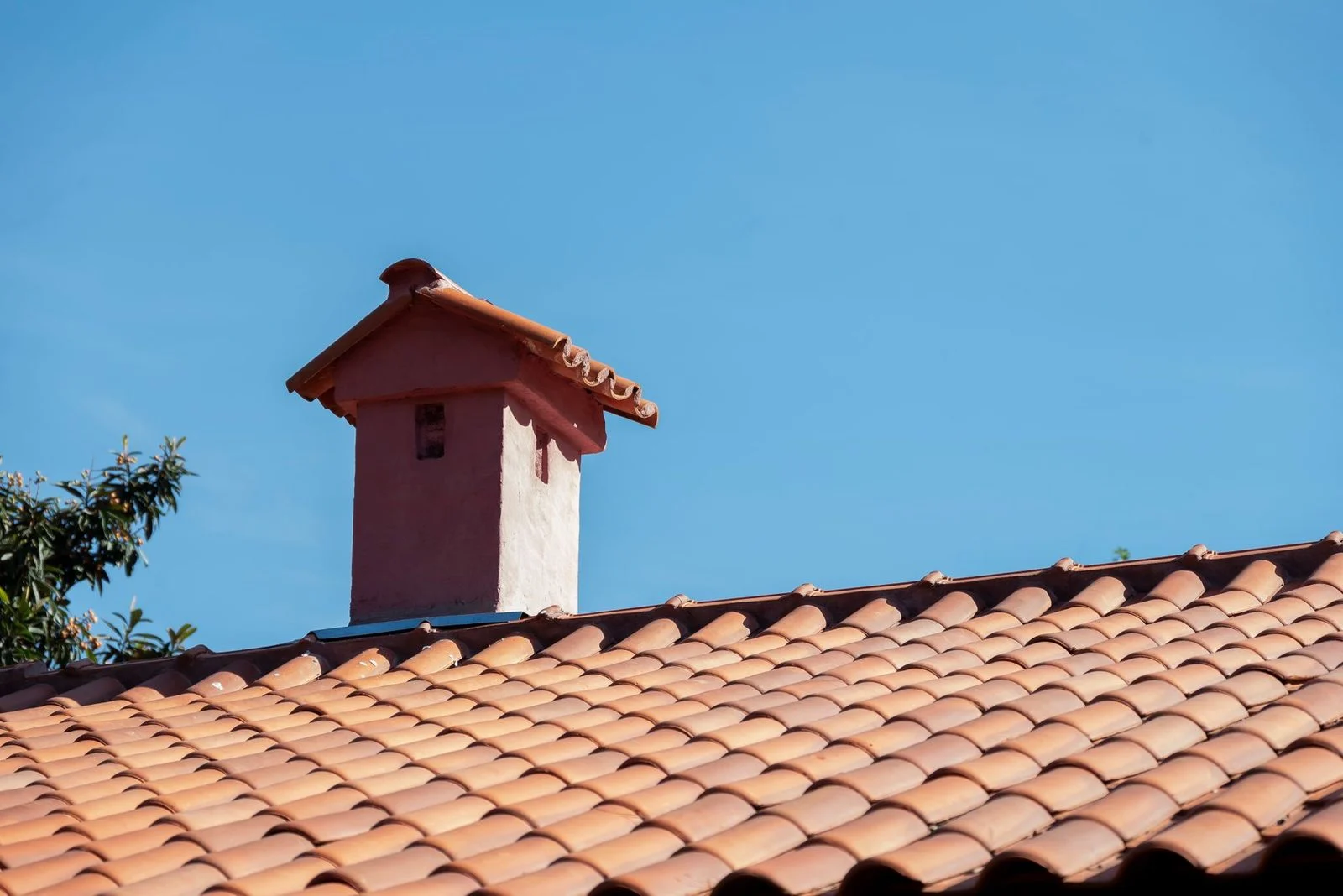
The chimney itself can leak. Cracked mortar lets water run down the masonry and into the roof structure. Those cracks can be hard to see from the ground, especially near the crown at the top.
Tiles uphill of the chimney matter too. A cracked, slipped, or missing tile sends water toward the opening. The National Roofing Contractors Association describes concrete and clay tile as durable, and both are used in Florida. Durable tile still needs its flashing and mortar kept sound.
How Does Water Travel From the Chimney to Your Ceiling?
Water usually moves under the flashing, then across the roof deck until it finds a low point to drip from. The path is rarely straight. Water runs down the tile surface and reaches the chimney. It slips under the flashing into the underlayment, the water-resistant layer beneath the tiles. From there it follows the roof deck and rafters downhill until it drips onto a ceiling or wall.
Narrowing down the source starts on the ground and in the attic. From the ground, look at the chimney crown, the flashing edges, and the tiles uphill of the chimney. Use binoculars rather than climbing. In the attic, check the decking and rafters on the uphill side of the chimney. The darkest staining near the chimney is a strong clue.
Stay off wet tile. The OSHA roofing fall hazards publication states that roofing involves significant fall hazards.
Why Should the Leak Be Traced Before It Is Patched?
A leak should be traced first because a patch on the stain doesn’t close the entry point. Sealant spread over the visible surface can hide the real path. Water then keeps moving through the decking, out of sight, while the ceiling looks fine for a while.
A common mistake is patching the ceiling and calling the job done. That treats the symptom. The entry point, wherever it is, stays open. A proper trace checks the flashing, the chimney masonry, the tiles, and the underlayment. Only then can a repair be chosen that fits the cause.
Ask for the findings in writing, with photos of the entry point. A written diagnosis gives you a clear record to share with family members or an insurer.
How Are Roof Leaks Around a Chimney Repaired?
Most chimney leak repairs reseal or replace the flashing, repair the mortar, and fix the tiles at the base. Each piece addresses one possible entry route.
The flashing work covers the step pieces under the tiles and the counter-flashing set into the mortar. Mortar repair means repointing cracked joints so water can’t run into the roof. Tile work realigns or replaces tiles so water flows away from the opening.
What the inspection finds decides whether the damage stays limited or reaches the underlayment or decking. The Florida Building Commission staff analysis addresses how roof repairs, related work, and reuse of existing concrete roof tiles are treated under building code requirements. It’s a useful reference for the code side of any tile repair.
If the roof is near the end of its service life, the choice may shift toward a tile roof repair or a full roof replacement. An aging roof can leak in more places than the chimney.
Does Home Insurance Cover Water Damage From a Leaking Roof?
Coverage depends on the policy wording, the cause of the loss, and how the damage developed. Florida law also sets deadlines for reporting a claim.
The policy’s own notice terms also apply.
Roof payments can work differently. The Florida Department of Financial Services explains how an assignment of benefits affects claims, repair decisions, and payment.
Keep a record. Take dated photos of the stain, the attic, and the chimney area. Keep receipts for any temporary protection. While you wait, clear debris from the chimney area, place containers under drips, and avoid walking on wet tile. Citizens Property Insurance Corporation sets documentation requirements for older roofs, so keep roof records handy.
Not sure what your next step is?
Talk it through with our team — the first consultation is free, confidential, and carries no obligation.
Related Tile Roofing Guides and Your Next Step
A direct look at the flashing, mortar, and tiles is the clearest next step when the source is still unclear. Start with our tile roofing guide for South Florida for the full picture.
Maybe the stain showed up in a home you don’t live in, or a tenant reported it. If that’s where you are, we can examine the chimney before any repair is chosen. Our free first consultation is confidential and carries no obligation to continue. Contact us to set one up.
Frequently Asked Questions
How can I tell if the chimney is causing a tile roof leak?
Stains closest to the chimney, especially during wind-driven rain, point toward the flashing. A trace of the flashing and tiles confirms the source.
Can a chimney leak be fixed without replacing tiles?
Some repairs involve only the flashing or mortar. The inspection at the roof decides the scope.
Should I patch the ceiling stain first?
No. Trace the source first, so a patch doesn’t hide the real entry point.
What a Chimney Leak Inspection Should Cover
Flashing Condition
The metal flashing where the chimney meets the tile is the most common leak point. Its seal, corrosion, and fastening all matter.
Mortar and Masonry
Cracked crown caps, deteriorated mortar joints, and loose bricks can let water run down into the roof structure.
Tile Displacement
Cracked, slipped, or missing tiles near the chimney can channel rainwater beneath the underlayment.
Interior Signs
Water stains, peeling paint, or damp insulation near the chimney chase help confirm where the water is entering.
Don't Ignore Small Stains
Water that enters near a chimney can soak into framing and insulation before it shows up on a ceiling. Early inspection often means a smaller, more targeted repair.
Common Chimney Leak Fixes
Flashing Repair or Replacement
Damaged or improperly sealed flashing is re-secured or replaced so water sheds away from the chimney and tile field.
Mortar and Crown Repair
Deteriorated mortar joints and crown caps are repaired to keep rain from entering the masonry and running down inside.
Tile Repair Around the Chimney
Cracked or displaced tiles near the chimney are replaced and realigned to restore a proper water-shedding layer.
Full Roof Replacement
When the surrounding tile, underlayment, or flashing has reached the end of its service life, replacement may be the more durable option.


