


Tile Roofing | South Florida
What Does a Tile Roof Replacement Really Cost in Florida?
Learn what drives the price of replacing a tile roof, from roof size and tile type to structural repairs and upgrades, and how a measured roof leads to a clear estimate.
By Jonathan Rodriguez · Published November 1, 2026
How much does it cost to replace a tile roof in Florida? No single figure fits every home. The price is built from your roof’s measured area, its pitch, its layout, and the labor and materials needed to remove and reinstall the tile. Once you know those parts, a quote is much easier to read.
Homeowners in Miami, Fort Lauderdale, West Palm Beach, Kendall, Naples, Fort Myers, and Boca Raton often start this research after an inspection flags a problem, after storm damage, or while buying a home. Below is what moves the number and what a written estimate should show.
How tile roof replacement pricing works in Florida
A tile roof replacement is priced as one full job, not as a per-tile figure. The question of how much does it cost to replace a tile roof in Florida starts with measuring the actual roof.
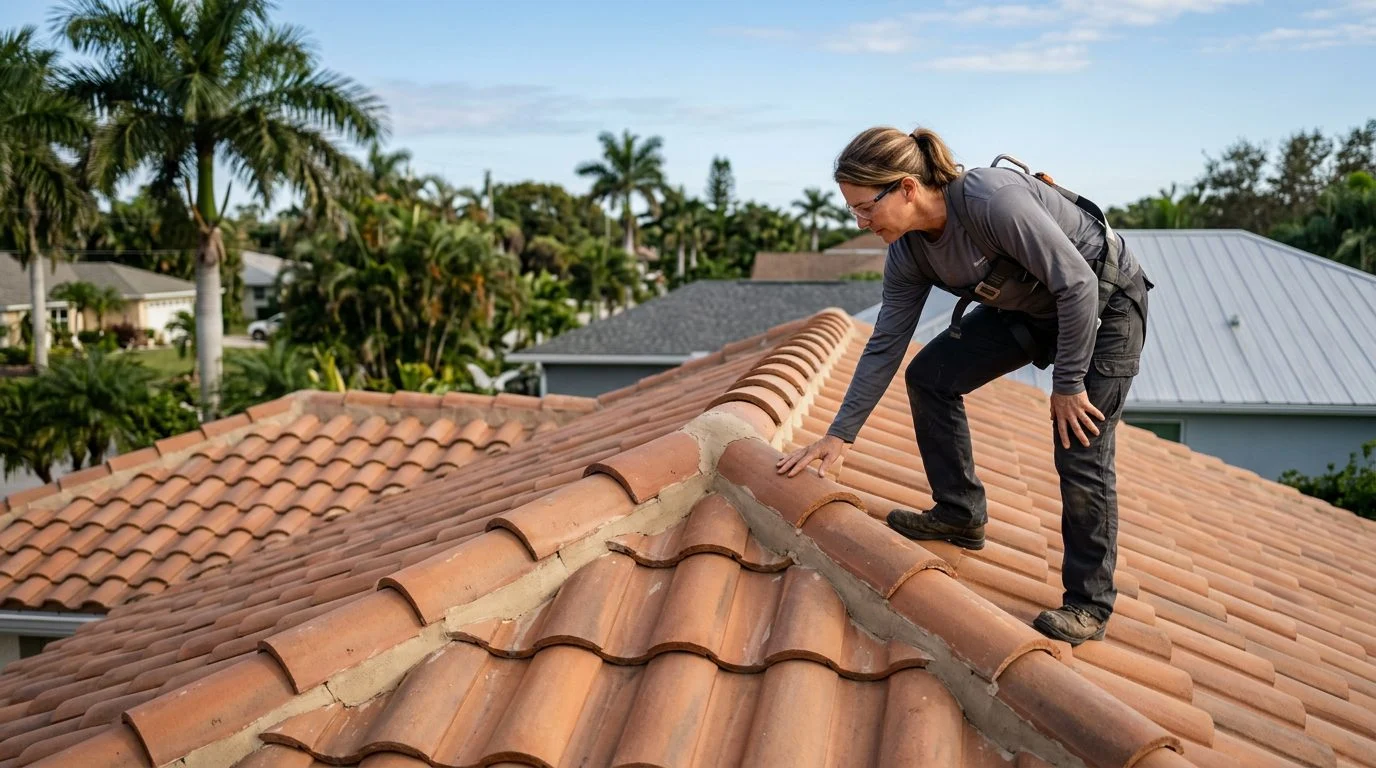
Installers weigh the roof area, the pitch (slope), the layout of hips, valleys, and ridges, and the labor and materials needed to remove and reinstall the tile. Each of these changes the hours on the job and the amount of material you buy.
Florida homes often carry heavier tile systems. The structure under the roof matters as much as the tile on top. A quote that skips that check can look low for the wrong reason.
Because every roof is different, no single average applies to every house. Think of the estimate as a map of the job. Each line should match something real on your roof.
If an inspection flagged your tile roof or a storm left you with questions, we can measure your roof and put the price in writing. Talk it through with our team — the first consultation is free, confidential, and carries no obligation.

Factors that move the price
Roof size is the largest driver of total cost. Tile, underlayment, and labor all scale with the area that must be covered.
Steep pitch, multiple roof levels, valleys, hips, and many penetrations add labor time and material waste. Vents, skylights, and chimneys each need cutting, flashing, and careful fitting. A roof with many of these details takes longer and produces more scrap tile.
Access and site conditions matter too. A tight lot, a narrow driveway, or limited space for a dumpster can slow the crew and add labor. Plan how the old tile will leave the property before work starts.
Roof problems found during tear-off can change the final scope. Rotted decking or damaged framing often shows up only after the old tile comes off. A written estimate should explain how those findings are priced.
Tile type: clay versus concrete, flat versus barrel
Clay and concrete tile differ in weight, material cost, and installation method. Those differences affect both the materials line and the structural check.
Concrete tile is heavier than many alternatives, so the structure must be assessed before replacement. It can also crack under foot traffic, so workers and homeowners should step carefully. Matching replacement pieces can be harder to find years later, which matters when a few tiles break.
Flat tile and barrel (S-profile) tile differ in installation labor and in how much tile a roof area needs. Each profile sits on the roof in its own way, so the tile count and labor change with it.
Hip, ridge, and rake pieces need their own attention. Florida guidance on hip, ridge, and rake tile installation covers approved mortar attachment and compliance with the FRSA-TRI manual or HVHZ roofing application standards.
Tear-off, underlayment, and decking repairs
Tear-off cost depends on how much old tile and underlayment must come off and be hauled away. More layers and more weight mean more labor and more disposal.
Underlayment and flashing are part of the roof system, and they are priced apart from the visible tile. Your estimate should name the underlayment it uses.
The drip edge is applied under the FRSA-TRI tile installation manual.
Decking sits under the underlayment. The recovering versus replacement analysis ties recovering a roof to decking that is adequate. Damaged decking can change whether a roof is recovered or fully replaced. Ask that your estimate state how decking issues are handled, including any allowance and whether repairs are priced separately.
Permits, inspections, and code upgrades
Our team can walk you through the paperwork and approval steps that may apply to your project. Florida law requires a permit before a building is altered, modified, or repaired, and the enforcing agency may set reasonable fees for that permit.
Permit steps differ by county and city. The Charlotte County residential roof permit page shows how one Florida county handles documents, fees, and inspection steps. Those rules are local, so your estimate should state who pulls the permit and which fees it includes.
Some upgrades are required, not optional. Under Fla. Stat. § 553.844, a roof replacement on a site-built, single-family home must include certain techniques the statute names. The same statute says that for a site-built, single-family home in the wind-borne debris region with an insured value (or, if uninsured, a just valuation) of $300,000 or more, a roof replacement must include roof-to-wall connection improvements, but those connections at gable ends or all corners are not required unless evaluation and installation can be completed for 15 percent of the roof replacement cost. If 25 percent or more of a roof section is repaired, replaced, or recovered, and that roofing system was built, repaired, or replaced in compliance with the 2007 Florida Building Code or a later edition, only the repaired, replaced, or recovered portion must meet the code in effect.
Insurance, roof deductibles, and checking the estimate
Insurance terms affect how code-required work is paid, so read your policy before you plan the budget. Florida law describes a replacement-cost option that can include the cost to meet current laws and ordinances. Under Fla. Stat. § 627.7011, that added cost may be limited to 25 percent or 50 percent of the dwelling limit, as the policyholder selects.
The same statute covers roof deductibles. If a roof deductible applies, the insurer may limit the roof payment to actual cash value until it receives reasonable proof that you paid the deductible.
Florida law also covers early payments to contractors. Under Fla. Stat. § 489.126, a contractor who receives more than 10 percent of the contract price as initial payment for residential work must apply for necessary permits within 30 days after payment, unless no permit is required, the contractor has just cause, or the person who paid agreed in writing to a longer period.
A complete written estimate should list measurements, tile type, underlayment, flashing, drip edge, tear-off, decking allowance, disposal, permits, and warranty terms. Read each line and ask what it covers. If something is missing, ask about it before you agree to anything.
Not sure what your next step is?
Talk it through with our team — the first consultation is free, confidential, and carries no obligation.
Common questions about tile roof costs
Averages vary with roof size, tile type, and complexity, so your measured roof sets the figure.
How much is the average roof in Florida?
Averages vary widely with size, tile type, and roof complexity. The figure that matters for your home comes from a measured roof and a written estimate.
Do I need a permit to replace a tile roof in Florida?
Florida law generally requires a permit before a building is repaired or altered. Fees and inspection steps are set locally.
When is the right time of year to replace a roof?
Permit timing and weather both affect when crews can start. Ask for the expected timeline in your written estimate.
What are the disadvantages of concrete roof tiles?
Concrete tile is heavy, so the structure must be checked first. It can also crack under foot traffic and may be hard to match years later.

Request a written estimate for your tile roof
The way to get a price for your roof is an on-site inspection followed by a written estimate. A general article can explain the parts, but only measurements of your roof can set the number.
You may be reading this after an inspector flagged your roof, after storm damage, or while deciding on a home purchase. In each case, a measured estimate turns general questions into numbers you can review. If you’re asking how much does it cost to replace a tile roof in Florida for your own home, that’s the answer that counts.
Our first consultation is free, confidential, and comes with no obligation to continue. Ready to see what your roof needs? Request a written estimate, and we’ll walk through the scope, materials, and permit steps with you.
What Shapes the Cost of a Tile Roof Replacement
Roof Size and Pitch
Total square footage, slope, and the number of planes all affect how much material and labor the job requires.
Tile Type and Profile
Concrete and clay tiles differ in weight, style, and installed cost, and your choice can change both the material budget and the structure needed to support it.
Condition of the Underlayment and Deck
Once the old roof is removed, any damaged decking, underlayment, or flashing that needs repair adds to the scope of work.
Removal, Disposal, and Upgrades
Tear-off, hauling, and add-ons such as impact-rated components or updated ventilation are priced separately and should appear on your written estimate.
How We Approach Your Estimate
We Measure Your Roof
Our team evaluates your actual roof, not a generic average, so the figures reflect your home's size, pitch, and layout.
You Receive a Written Estimate
We itemize materials, labor, removal, and any repairs so you can see exactly what each line item covers.
Your Questions Get Answers
We walk you through tile options, timing, and the steps involved so you can compare the choices that fit your home.
A Confidential First Consultation
Our free first consultation is confidential and comes with no obligation to continue.
Be Careful With Quotes Given Without an Inspection
A price quoted before anyone has measured and inspected your roof is only a rough guess. Ask for a written estimate that lists the tile, underlayment, decking repairs, and removal before you make any decisions.


