


Tile Roofing | South Florida
Tile Roof Inspection After a South Florida Hurricane
Wind-driven rain and debris can loosen or crack tiles you never see from the ground. Get a close look at your roof and a clear picture of what needs attention.
Start with a no-pressure conversation
Free
First consultation
Confidential
Your information stays private
No obligation
Decide with no commitment to continue
By Jonathan Rodriguez · Published October 23, 2026
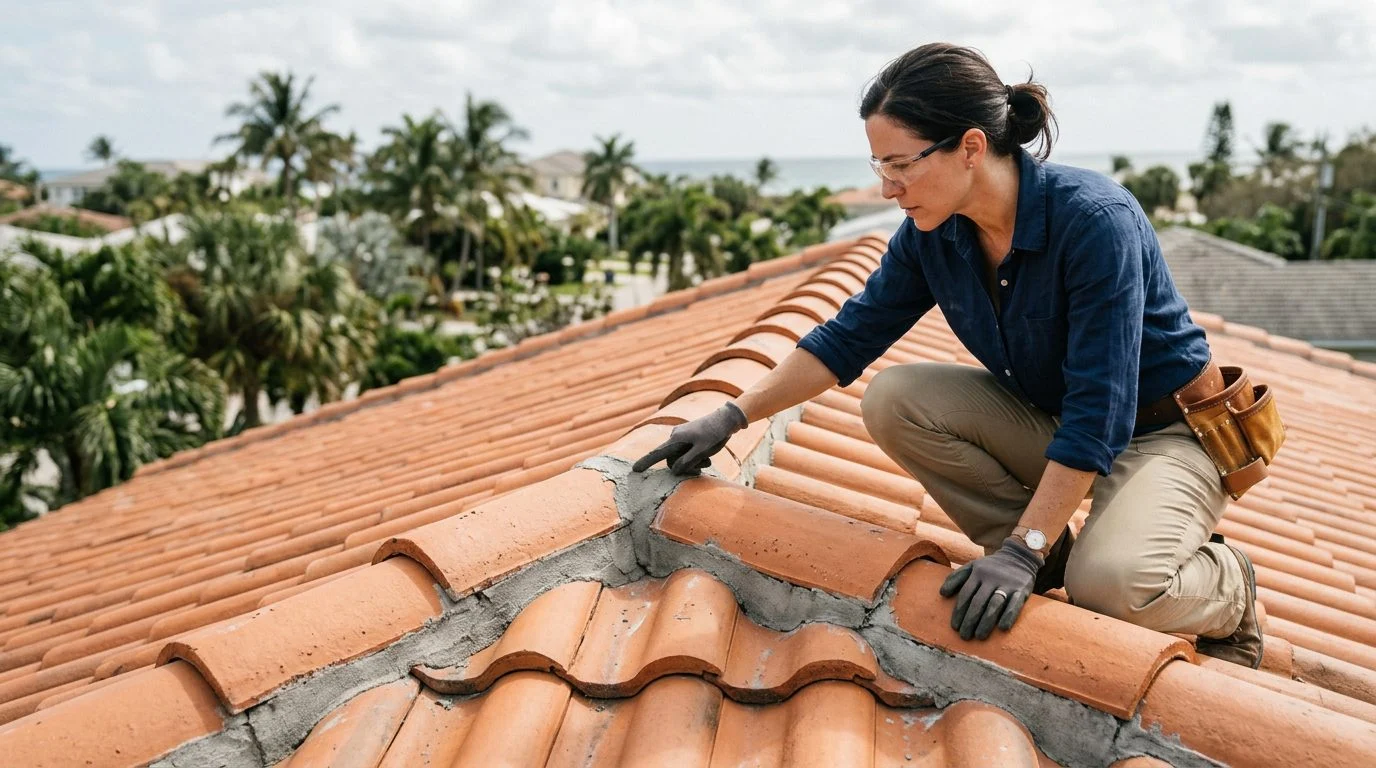
A tile roof inspection after hurricane South Florida storms is a close, written check of your roof’s tiles, underlayment, flashing and edges. It finds wind and water damage you may not see from the ground. This page explains what gets checked, what you receive, and how the process runs for homes in Miami, Fort Lauderdale, West Palm Beach, Kendall, Boca Raton, Naples and Fort Myers.
What a Post-Hurricane Tile Roof Inspection Is and Who It Is For
A post-hurricane tile roof inspection is a documented check of your roof after wind or heavy rain. It looks at the parts of a tile roof that storms can loosen, lift or break.
It fits homeowners with concrete or clay tile roofs. It also fits anyone who wants to know whether a storm has harmed the roof before a leak shows up inside.
Timing matters. Water can enter through a damaged spot that you can’t see from the ground. A check soon after the storm records conditions while the damage is still easy to observe.
If you already see a leak, read our guide to tile roof leak repair after a storm. It covers the repair side of the same problem.
If wind or rain left cracked tiles or ceiling stains on your roof, you don't have to sort out the damage alone; contact our team to request a quote. Talk it through with our team — the first consultation is free, confidential, and carries no obligation.

What We Check on a Tile Roof
We check each part that keeps water out, from the tile surface down to the ceilings below.
- Tiles: cracked, chipped, slipped, lifted or missing tiles, and tiles pushed out of line at edges and ridges.
- Underlayment: spots where tiles are gone and the layer beneath is exposed, torn or wet.
- Flashing: metal flashing around chimneys, vents, skylights, walls and valleys, checked for lifting, bending or separation.
- Ridge, hip and valley parts: ridge caps, hip tiles, and valleys where water tends to run together.
- Penetrations and fasteners: seals around pipes and vents, and fastening where it can be reached safely.
- Interior signs: stains, soft spots or damp areas in ceilings and attic spaces.
Replacement tile matters, too. The Miami-Dade product approval shows that concrete roof tile is a recognized roof tile type. It also shows one flat-profile, interlocking concrete system tested under TAS 112 and approved for specified Florida Building Code and High-Velocity Hurricane Zone uses.
Storm Damage Signs That Point to Water Entry
Cracked, lifted or missing tiles and damaged flashing can all let water reach the roof deck. Some of these signs are easy to spot, and others are not.
- From the ground: displaced tiles, debris on the roof, and bent metal at the edges.
- Easy to miss: hairline cracks, tiles that look intact but have shifted, and small gaps at flashing seams.
- Inside the home: new ceiling stains, peeling paint along ceiling lines, musty smells, and dampness in upper rooms or closets.
Leaks can show up days or weeks after a storm. Water can soak the layers beneath the tiles before anything drips. Write down what you see and when you see it. Dated notes make changes easier to track.
Researchers studying hurricane damage look at more than the roof surface. The IBHS post-hurricane investigations consider wind exposure, construction era, roof structures and building codes.
How the Inspection Works, Step by Step
The process moves from a first conversation to a written estimate in five steps.
- First consultation. You describe the storm, what you’ve noticed, your roof type and your home’s location. Our first consultation is free, confidential and carries no obligation to continue.
- Scheduling. We book the on-site visit and bring the equipment needed to check the roof safely.
- Roof walk and photos. We photograph each area, with close-ups of tiles, flashing and any interior damage.
- Findings review. We go over what we found, where it is, and how serious it appears.
- Written estimate. Repair items are listed separately from any larger replacement scope, so you can compare your options.
Timing varies. Scheduling and the length of the visit depend on the size and condition of the roof and crew availability after a storm.
How the Inspection Report Supports Your Insurance Claim
The report gives your insurer organized facts: dated photos, notes by location, interior findings and a written estimate. Your insurer makes its own decision on coverage and payment. Our report describes what we observed and what the estimate covers.
Deadlines matter. Under Fla. Stat. § 627.70132, a claim is barred unless notice reaches your insurer under your policy within 1 year after the date of loss. A supplemental claim for added damage has an 18-month limit. For hurricanes, the date of loss is the date the hurricane made landfall; for tornadoes, windstorms, severe rain, or other weather-related events, it is the date the National Oceanic and Atmospheric Administration verifies the event.
Payment rules also matter. Under Fla. Stat. § 627.7011, for a dwelling insured at replacement cost, the insurer first pays at least the actual cash value of the loss, less your deductible. It pays the rest as work is performed and expenses are incurred, but if your dwelling is a total loss, the insurer must pay the replacement cost coverage without holding back any depreciation. If a roof deductible applies, the insurer may limit roof payment to actual cash value until it gets proof you paid that deductible.
Contracts have rules, too.
Why Choose ASP Superhome for Tile Roof Inspection
ASP Superhome handles tile roofing, roof repair and roof replacement. That means the inspection can lead straight into the work your report recommends.
- Related roof work: tile roofing, roof repair, roof replacement and metal roofing.
- Service areas: Miami, Fort Lauderdale, West Palm Beach, Kendall, Boca Raton, Naples and Fort Myers.
- One point of contact: our team handles the inspection, the findings review and the written estimate.
- Written findings: you get documentation you can keep and share with your insurer.
Not sure what your next step is?
Talk it through with our team — the first consultation is free, confidential, and carries no obligation.
Frequently Asked Questions About Tile Roof Inspections After a Hurricane
Do I need a tile roof inspection after hurricane South Florida storms if I see no damage?
Many tile damage points show only on the roof. A close check can find what a view from the ground misses.
Should I wait for a leak before I call?
No. Documenting conditions early gives a clearer record of what the storm did.
What is in the written estimate?
It lists repair items by location. Any larger replacement scope is shown separately.
Does the inspection file a claim for me?
No. The inspection documents what we find. Your insurer decides coverage.
How long do I have to report storm damage in Florida?
Under Fla. Stat. § 627.70132, a claim generally must be noticed within 1 year after the date of loss. Fla. Stat. § 627.70132 reads: “A supplemental claim is barred unless notice of the supplemental claim was given to the insurer in accordance with the terms of the policy within 18 months after the date of loss.” Fla. Stat. § 627.70132 reads: “(2) A claim or reopened claim, but not a supplemental claim, under an insurance policy that provides property insurance, as defined in s. 624.604, including a property insurance policy issued by an eligible surplus lines insurer, for loss or damage caused by any peril is barred unless notice of the claim was given to the insurer in accordance with the terms of the policy within 1 year after the date of loss.”

Request a Quote for Storm-Damaged Tile Roof Repairs
If a storm cracked your tiles, lifted ridge caps or left stains on your ceilings, your roof needs a closer look now. Contact ASP Superhome to request a quote and start with documented findings for your home.
What we check on a tile roof after a storm
Cracked or displaced tiles
Wind can lift, slide, or crack tiles and leave gaps where water can get in. We look for both obvious breaks and subtle shifts along the roof.
Underlayment and flashing
Water protection lies beneath the tiles. We check the underlayment, valleys, and flashing around vents, chimneys, and walls for damage.
Ridge caps and edges
Ridge and hip caps take a lot of wind load. Loose or missing pieces here are common after a storm and can lead to larger problems.
Signs inside the home
Stains on ceilings, damp insulation, or water in the attic can point to roof damage. We note these signs and trace them back to the source.
Why homeowners reach out to ASP Superhome
A clear, written picture
Our team documents what we find with notes and photos, so you understand the condition of your roof in plain terms.
Repair or replacement options
Depending on what the inspection shows, we discuss roof repair or roof replacement and explain the trade-offs.
Built for South Florida homes
We work across South Florida, from Miami and Fort Lauderdale to West Palm Beach, Boca Raton, Naples, and Fort Myers.
Straight answers
Ask us anything about your tile roof after the storm. Our team will walk you through your options at your pace.
Don't wait for a leak to act
Damage can be hidden under intact-looking tiles and may only show up after the next heavy rain. Taking clear photos and having your roof inspected early gives you a better record of what the storm did.
Get a close look at your tile roof today
Related practice areas
- Tile Roofing in South Florida: Costs, Styles & Installation Guide
- Replace Broken Roof Tiles South Florida | ASP Superhome


