


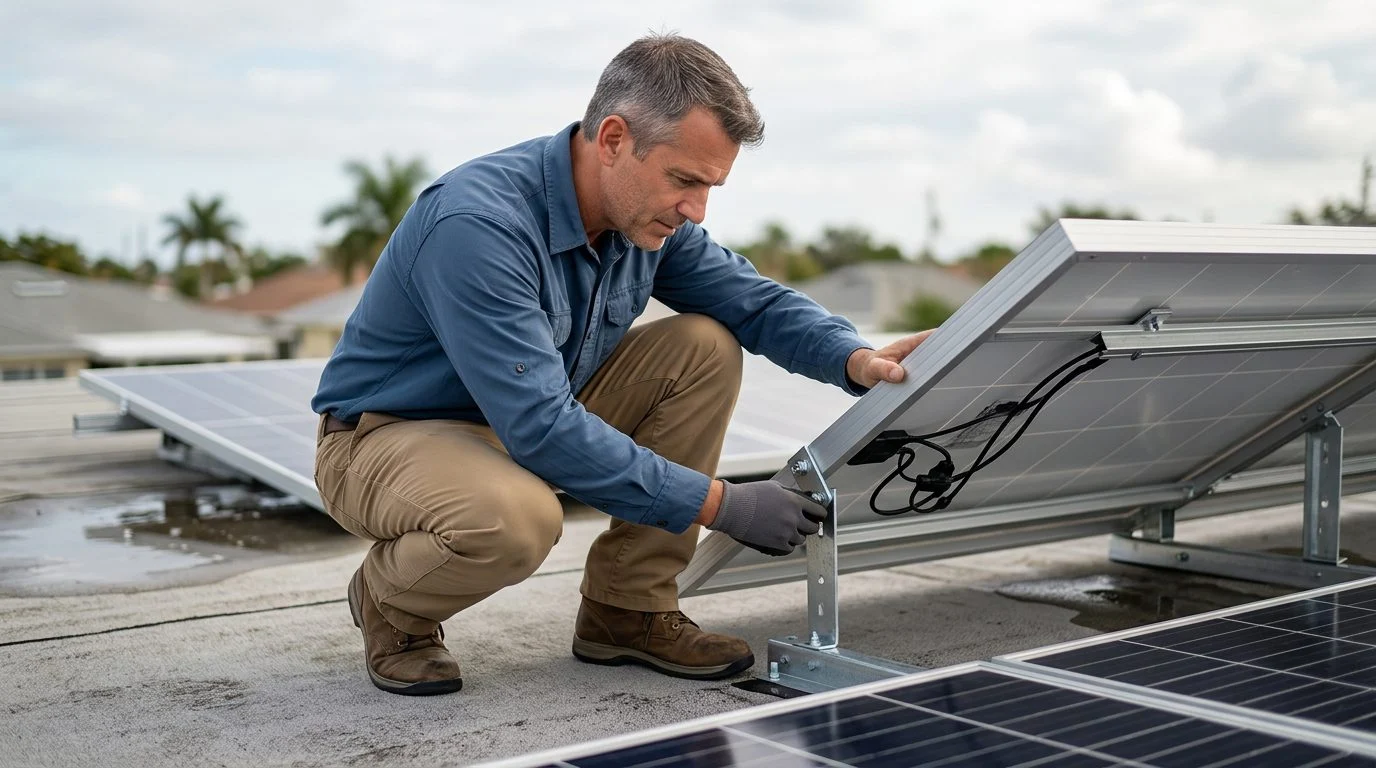
Solar Panels | South Florida Guide
Can You Put Solar Panels on a Balcony in Florida?
A plain-language guide to balcony solar rules for homeowners in Miami, Fort Lauderdale, West Palm Beach, Kendall, Boca Raton, Naples and Fort Myers. Your first consultation is free, confidential and comes with no obligation to continue.
By Jonathan Rodriguez · Published November 1, 2026
Does Florida allow balcony solar panels? Florida’s main solar statute blocks local bans on renewable energy devices, but it does not settle whether one plug-in unit fits your balcony. Whether it fits depends on the facts: your building’s rules, your local permit office, and how the unit connects to your home.
Balcony solar, also called plug-in solar, is a small setup, often one to a few panels, that plugs into a standard household outlet. Rooftop solar is a larger array that connects to the electrical system and the utility grid. This guide gives the direct answer first, then the rules behind it. If you’re researching this for a parent or a tenant, the last section gives you a checklist.
Does Florida allow balcony solar panels? The short answer
State law protects solar devices from local bans, but a balcony unit still has to clear building, permit, and utility rules. Under Fla. Stat. § 163.04, an ordinance that prohibits, or has the effect of prohibiting, solar collectors or other renewable energy devices is expressly prohibited. That protection is real, but it works at the level of ordinances and binding agreements. It does not, on its own, approve a particular balcony. Florida’s rules on this topic can change, so the current statute text on the official legislative site is the reference to rely on. Think of it this way: the state sets the floor, and your building and city add the rest.
Not sure what your next step is?
Talk it through with our team — the first consultation is free, confidential, and carries no obligation.
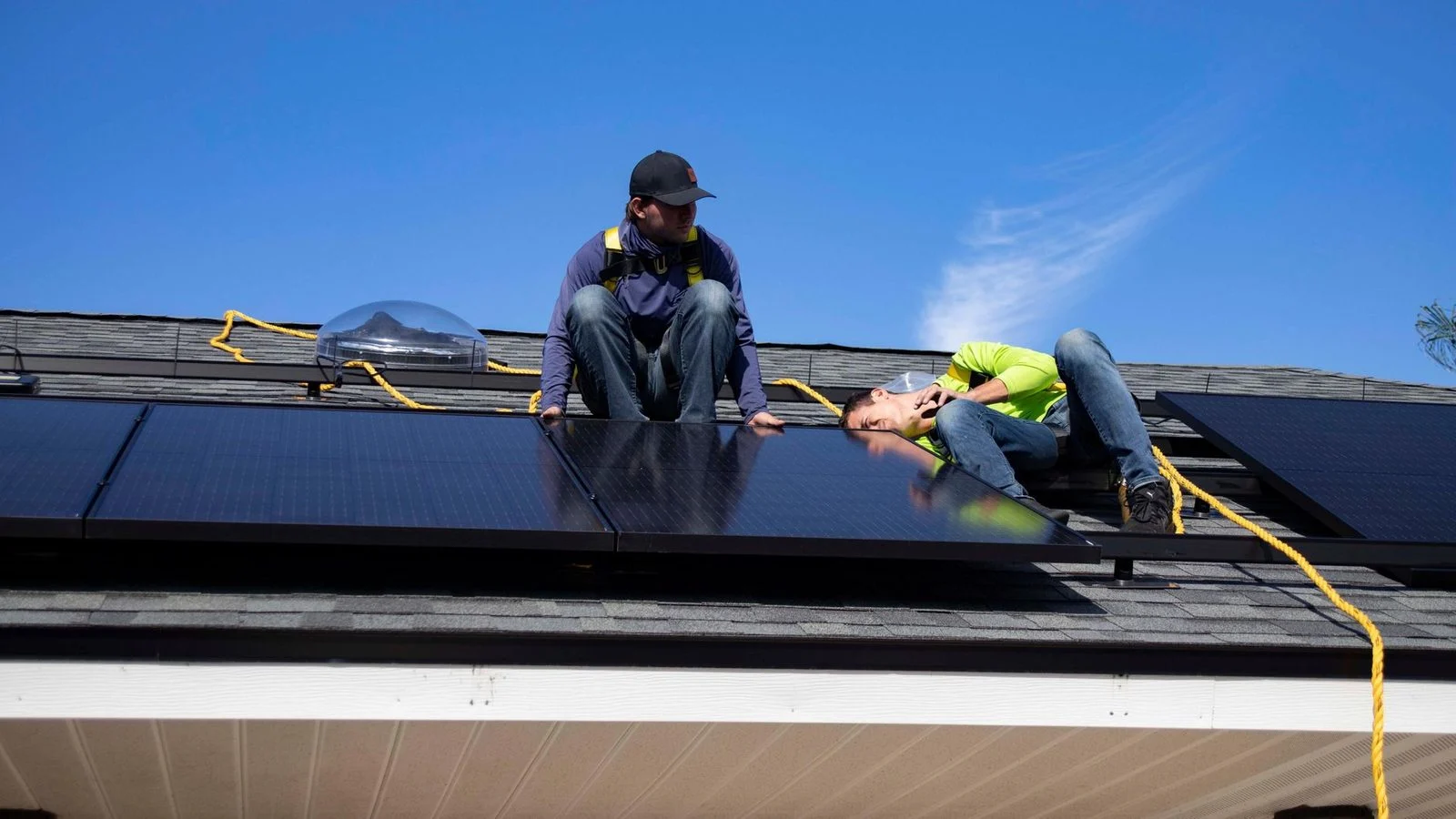
What are balcony solar and plug-in solar systems?
A plug-in system is a small, low-output setup that connects through a standard outlet. A typical kit includes one or more panels, a microinverter that converts the panels’ direct current into household alternating current, and a cord. A rooftop array uses a grid-tied inverter and needs a utility connection, which is where the bigger permit and inspection steps come in. Whether a plug-in unit needs those steps turns on state and local rules, not on the product alone. The product is only part of the question. The mounting spot, the wiring path, and the building’s rules decide whether the setup is workable. Before you buy, ask for the listing and certification paperwork and confirm the installation plan with local officials.
Solar built into the roof itself is a different product. The Florida Building Commission’s analysis of the 2026 code says building-integrated solar roof coverings must be listed and labeled under UL 7103 (Florida Building Commission code analysis). That matters for tile and metal roofs, where the roof covering and the solar layer can be one assembly.
Which Florida statutes matter for balcony solar?
The statutes that matter most protect solar devices, and they also set limits. Under § 163.04(2), a deed restriction or similar binding agreement may not prohibit solar devices on covered buildings. Under Fla. Stat. § 163.04(2), the controlling entity under a deed restriction or similar binding agreement may determine the specific roof location for solar collectors within an orientation to the south or within 45° of the cardinal south direction, provided that the choice does not impair the effective operation of the collectors. That choice may not impair the collectors’ operation. Notice that this roof-direction rule covers roofs only. A balcony question needs the other sections above. Under § 163.04(3), the prevailing party in litigation under that section is entitled to costs and reasonable attorney’s fees. Fla. Stat. § 366.91 defines renewable energy to include solar energy. It also says a contracting producer must pay the actual costs of its interconnection with the grid. Use the linked statute text as the reference, since summaries leave out details.
Can condo, HOA, or lease rules block balcony solar?
Association rules can still shape exterior changes, but they cannot simply ban solar devices. Under Fla. Stat. § 720.3035, an association’s review of changes is allowed only to the extent the declaration of covenants or other published guidelines and standards authorized by the declaration specifically state or reasonably infer the location, size, type, or appearance. That review must apply to all owners evenly. Under § 163.04, an owner may not be denied permission to install solar devices by an entity that controls alterations with respect to residential dwellings and within the boundaries of a condominium unit, though that entity may determine the specific roof location for solar collectors within an orientation to the south or within 45° east or west of due south if the determination does not impair their effective operation. That includes condominium unit boundaries.
Practical steps: request your governing documents and any architectural rules in writing. Ask who controls and maintains the balcony, because that answer shapes who must approve the work. Renters need the owner’s written permission before any installation, and the lease may set further limits. If a request is denied, ask for the reason in writing. A written answer protects you if the question comes up again.
Hurricane rules also matter here. Under § 720.3035, the board or any architectural, construction improvement, or other such similar committee may not deny a hurricane protection application that conforms to the specifications adopted by the board or committee, but the board or committee may require a parcel owner to adhere to an existing unified building scheme regarding the external appearance of the structure or other improvement on the parcel. The same subsection lists impact-resistant windows and doors, and certain roof systems, as hurricane protection. Condo boards follow a parallel rule: Fla. Stat. § 718.113 provides that, if the documents require the board’s consent, a board may not deny a unit owner’s request to install or replace hurricane protection that meets the board’s adopted specifications, although a board may require the unit owner to adhere to an existing unified building scheme regarding the external appearance of the condominium.
What local permits and electrical rules apply?
Local building offices can require permits and inspections, and the state building code governs the permitted work. Fla. Stat. § 553.73 says the Florida Building Code contains the laws governing the design, construction, alteration, and repair of buildings. For grid-tied systems, Homestead’s net metering page lists an application, a building permit, and an inspection among its steps (Homestead net metering). Many cities and counties in South Florida, including Miami-Dade, Broward, Palm Beach, Collier, and Lee, run their own permit steps, so ask the office for your address. Keep copies of every permit, inspection, and approval for the unit’s records.
A plug-in unit still feeds a household circuit, so contact our team to discuss the outlet, circuit load, and grounding before you connect anything. That review is a basic step, and it doesn’t replace the permit process.
How do utility rules differ from rooftop solar?
Utility rules apply when a system runs in parallel with the grid, and Florida’s interconnection rule sets the steps. Fla. Admin. Code R. 25-6.065 requires local code officials to inspect and approve customer-owned renewable generation before it runs in parallel with an investor-owned utility. The customer must notify the utility at least 10 days before placing equipment in service. The rule bars utilities from requiring liability insurance for Tier 1 systems. It caps that insurance at $1 million for Tier 2 and $2 million for Tier 3. Its steps apply to investor-owned utilities.
Rooftop solar that runs with the grid goes through this utility path. That is the kind of work ASP Superhome handles for rooftop systems. A plug-in unit’s path is shaped by state and local rules. For roof questions to settle first, see our tile roof repair guide. For the rooftop path, see our solar panels guide.
Not sure what your next step is?
Talk it through with our team — the first consultation is free, confidential, and carries no obligation.
What should you gather before deciding for a family member?
Gather the governing documents, written owner or landlord approval, the product listing, and the permit history before you choose a next step. Whether Florida allows balcony solar panels for a parent’s unit starts with those papers. If that’s you, write down the questions the association or landlord must answer before you move forward.
Before adding anything to the roof, contact our team to talk through the roof’s condition; the first consultation is free, confidential, and comes with no obligation to continue. The U.S. EPA’s cool roofs guidance covers how cool roofs that reflect sunlight can reduce the heat a building absorbs.
Is balcony solar legal in Florida?
Florida’s main solar statute bars local bans on renewable energy devices. Your building’s rules and local permit steps decide the rest.
Do I need a permit for balcony solar in Florida?
Local building offices can require permits and inspections for solar work. The office that covers your address sets its own permit steps.
Can a condo association stop solar panels?
State law says an owner may not be denied permission to install solar devices by an entity with approval power. Association rules can still control placement and appearance.
If you’re weighing a balcony or plug-in unit for a condo, a rental, or a parent’s home, ASP Superhome offers a free first consultation that is confidential and carries no obligation to continue. Contact ASP Superhome to talk through your building and your options.
What shapes a balcony solar project
State law sets the starting point
Florida's main solar statute addresses local restrictions on renewable energy devices. It does not settle every detail of your installation.
Your building's rules matter
Condo associations, HOAs and building management can set rules on what is mounted on balconies, railings and exterior walls.
Storage changes the plan
A solar battery backup can change how a balcony system is sized, wired and placed, so plan it together with the panels.
Check before you mount anything
Building rules and local permit requirements can apply to balcony solar even when state law is favorable. Confirm both before you buy or install equipment. Our team can review the details for your address with you.
Planning your balcony solar project
Review your building rules
Ask your building or association for its written rules on balcony equipment, railings and exterior changes.
Confirm local permit steps
Contact the building office for your address to learn what permits and inspections it requires.
Plan panels and battery storage
Size the panels, mounting and any solar battery backup for your daily energy use and your space.
Book a free estimate
Meet with ASP Superhome for a free, confidential first consultation with no obligation to continue.
Ready to plan your solar project?
Your first consultation is free, confidential and comes with no obligation to continue.


