


Tile Roofing | South Florida
Does Your Tile Roof Need Underlayment in Florida?
Tiles do most of the work, but the layer beneath them decides how well your home stays dry in a storm. Here is what to know before your next roof decision.
By Jonathan Rodriguez · Published November 9, 2026
Does a tile roof need underlayment in Florida? In most cases, yes. Most tile roofs rely on a secondary water barrier beneath the tiles. Tile sheds most rain, but it doesn’t stop every drop on its own. The layer under it is the backup.
What Is a Secondary Water Barrier Under a Tile Roof?
A secondary water barrier is the water-resistant layer installed beneath the tiles. It backs up the tile when water gets past it. Most people call it underlayment, and in everyday talk the two terms mean the same layer.
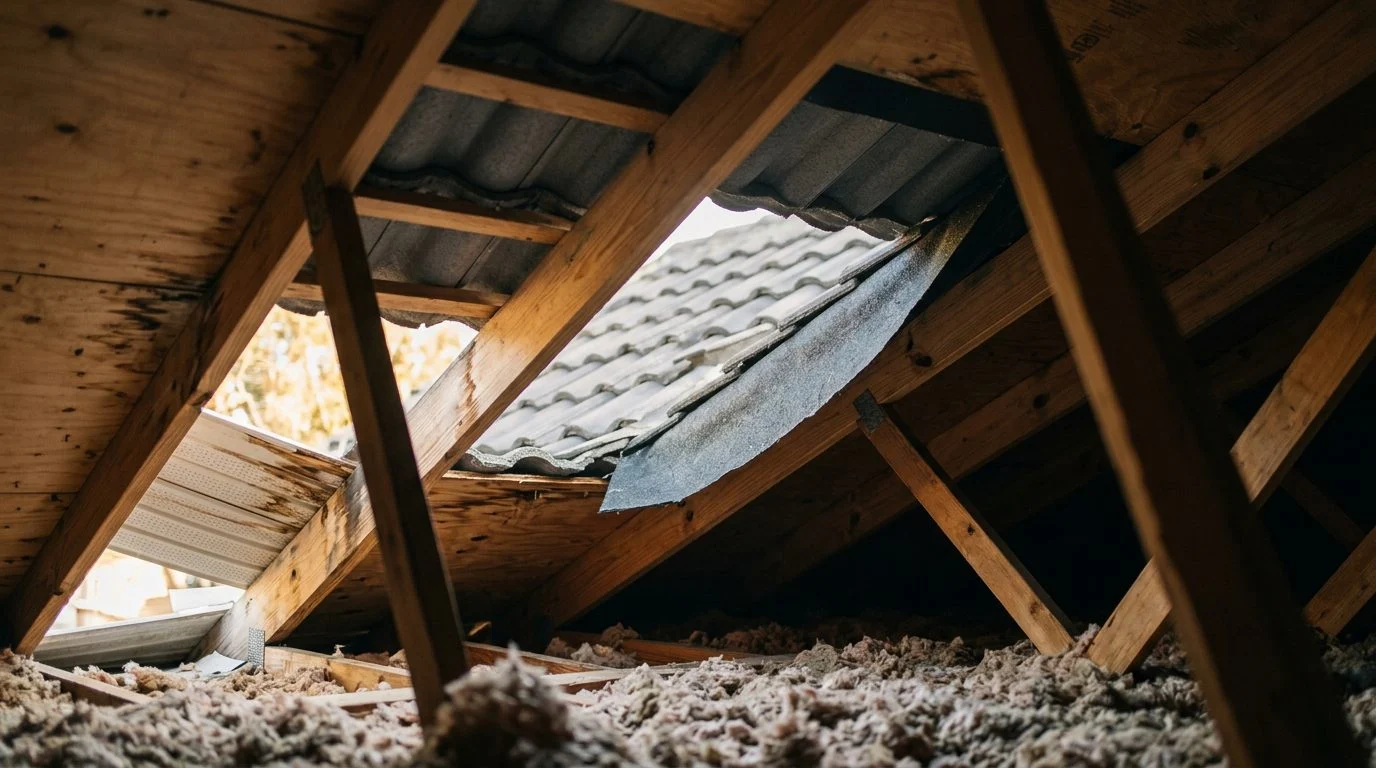
Tiles overlap and interlock. That shape sheds water well, but the joints leave gaps. Wind can push rain into those gaps. The barrier sits on the roof deck, the solid base the tiles are fastened to, and catches what gets through.
There are two common types. Felt-style underlayment is a roll product that is laid and fastened to the deck. A self-adhered membrane has a sticky backing that bonds to the deck and seals around fasteners. Each has its own installation rules, so ask how the layer on your quote will be installed.
If a tile cracked after a storm or a ceiling stain appeared, you don't have to work out what's under your roof alone. We can look at it with you. Talk it through with our team — the first consultation is free, confidential, and carries no obligation.

Does Florida Require a Secondary Water Barrier on Tile Roofs?
Florida law sets a statewide framework for secondary water barriers on roofs. The statute says that, for site-built, single-family residential structures constructed before the implementation of the Florida Building Code, the criteria may not be limited to one method or material [Fla. Stat. § 553.844]. The Florida Building Code also governs the design, construction, alteration, and repair of buildings [Fla. Stat. § 553.73].
Metal roofing is one of the roofing options ASP Superhome offers for South Florida homes. Tile roofing is another roofing option ASP Superhome offers for South Florida homes.
Florida law lists roofing among the product categories that need statewide approval [Fla. Stat. § 553.842]. Permits matter too. Except as provided in subsection (8), a permit for roof repair or alteration cannot be issued until the local building code administrator or inspector has reviewed the plans and found them in compliance with the Florida Building Code or local amendment thereto [Fla. Stat. § 553.79].
Which layer your roof needs depends on its location and permit date. Our tile roofing guide covers the wider context.
Why Doesn’t Tile Alone Keep Water Out?
Tile alone doesn’t keep water out, because wind and damaged tiles can open a path under it. Wind-driven rain doesn’t fall straight down. Strong gusts push water sideways and upward, past the edges and joints of the tile. That’s why a roof can leak during a storm even when most tiles look fine.
Cracked or slipped tiles are a bigger problem. A broken tile leaves the layer below exposed. A tile that shifts can open a gap at its edge. Once water reaches the deck, the barrier is what stands between the rain and your ceiling.
The roof deck matters too. Nail holes and seams can let water through if nothing covers them. The barrier is the layer that covers them. The Tile Roofing Industry Alliance installation guides cover proper tile installation practices and high-wind applications in Florida.
When Does the Secondary Water Barrier Matter Most?
The barrier matters most during a reroof, during a tile repair that exposes the layer, and on older roofs where the layer has aged. Each case asks a different question.
When you replace a tile roof, the old underlayment comes off. Generally, the new barrier should comply with the applicable code, subject to exceptions described later in this article. Fla. Stat. § 553.79 reads: “(b) If a building permit is expired and its requirements have been substantially completed, as determined by the local enforcement agency, the permit may be closed without having to obtain a new building permit, and the work required to close the permit may be done pursuant to the building code in effect at the time the local enforcement agency received the application for the permit, unless the contractor has sought and received approval from the local enforcement agency for an alternative material, design, or method of construction.” Florida has a partial-replacement rule. If 25 percent or more of a roof section that was built, repaired, or replaced in compliance with the 2007 code or a later edition is repaired, replaced, or recovered, only that portion must meet the code in effect [Fla. Stat. § 553.844].
Replacing a few tiles can expose the layer below. If that layer is brittle or torn, the repair may need more than new tiles. Underlayment ages, and over time it can dry out or tear. Then it stops backing up the tile as intended.
A leak can also show up long after the first water entry. Water can travel along the deck or framing before it stains a ceiling. That’s why the barrier’s condition is worth checking during any tile repair.
How Can You Tell What Is Under an Existing Tile Roof?
You usually can’t see the layer from the ground. The usual ways to confirm it are a roof inspection or lifting tiles during a repair. A few signs call for a closer look. Watch for stains on ceilings near exterior walls, damp insulation, loose or cracked tiles, and tiles that move in the wind.
A wind mitigation inspection can record roof covering and fastening details. Florida sets a uniform mitigation verification form, and insurers must accept it as valid when an authorized mitigation inspector signs it, though an insurer may, at its own expense, require independent verification first. Citizens Property Insurance Corporation, however, may not require independent verification or reinspection, absent material changes to the structure during the term stated on the form, if the form was signed by an authorized mitigation inspector and verified by a quality assurance program approved by Citizens before it was submitted [Fla. Stat. § 627.711].
Structure is a separate question.
Frequently Asked Questions
Does a tile roof need underlayment in Florida?
Most tile roofs rely on a secondary water barrier beneath the tiles. Florida law sets criteria for these barriers under Fla. Stat. § 553.844.
Is underlayment the same as a secondary water barrier?
In everyday use, yes. Both describe the water-resistant layer under the tiles.
Can a tile roof leak even when it looks fine?
Yes. Water can enter through gaps or nail holes and travel before it shows on a ceiling.
Talk Through Your Tile Roof Decision With ASP Superhome
If you’re weighing a tile roof repair or replacement, check the layer under the tile before you commit. Maybe a tile cracked after a storm, a ceiling stain appeared, or a reroof quote doesn’t say what goes beneath the tiles. ASP Superhome offers a free first consultation that is confidential and comes with no obligation to continue (consulta inicial gratuita, confidencial y sin compromiso). Contact ASP Superhome to request a quote and talk through the barrier question for your roof.
Don't assume the tiles alone keep water out
Tiles shed most rain, but wind-driven rain can push past them and reach the layers below. Ask about the water barrier under your tiles before any tile roof repair or replacement.
What we look at on your tile roof
The water barrier
We check the condition of the layer beneath your tiles and whether it is still doing its job.
Tile and fastener condition
Cracked, slipping, or loose tiles can expose the roof below and affect how water moves across it.
Options for your home
We explain the repair, partial replacement, or full replacement choices that fit your roof and budget.
A clear written plan
You receive a straightforward summary of what we found and what we recommend, with no pressure.
Signs your tile roof may need a closer look
Leaks after storms
Water stains on ceilings or walls after heavy rain or wind can point to moisture getting past the tiles.
Brittle or missing tiles
Tiles that crack, slide, or disappear leave the roof more exposed to wind-driven rain.
An older roof
As a roof ages, the materials beneath the tiles can wear down, even when the tiles still look intact.
Planning a replacement
A full roof replacement is the right time to review the water barrier, not just the tiles on top.


