


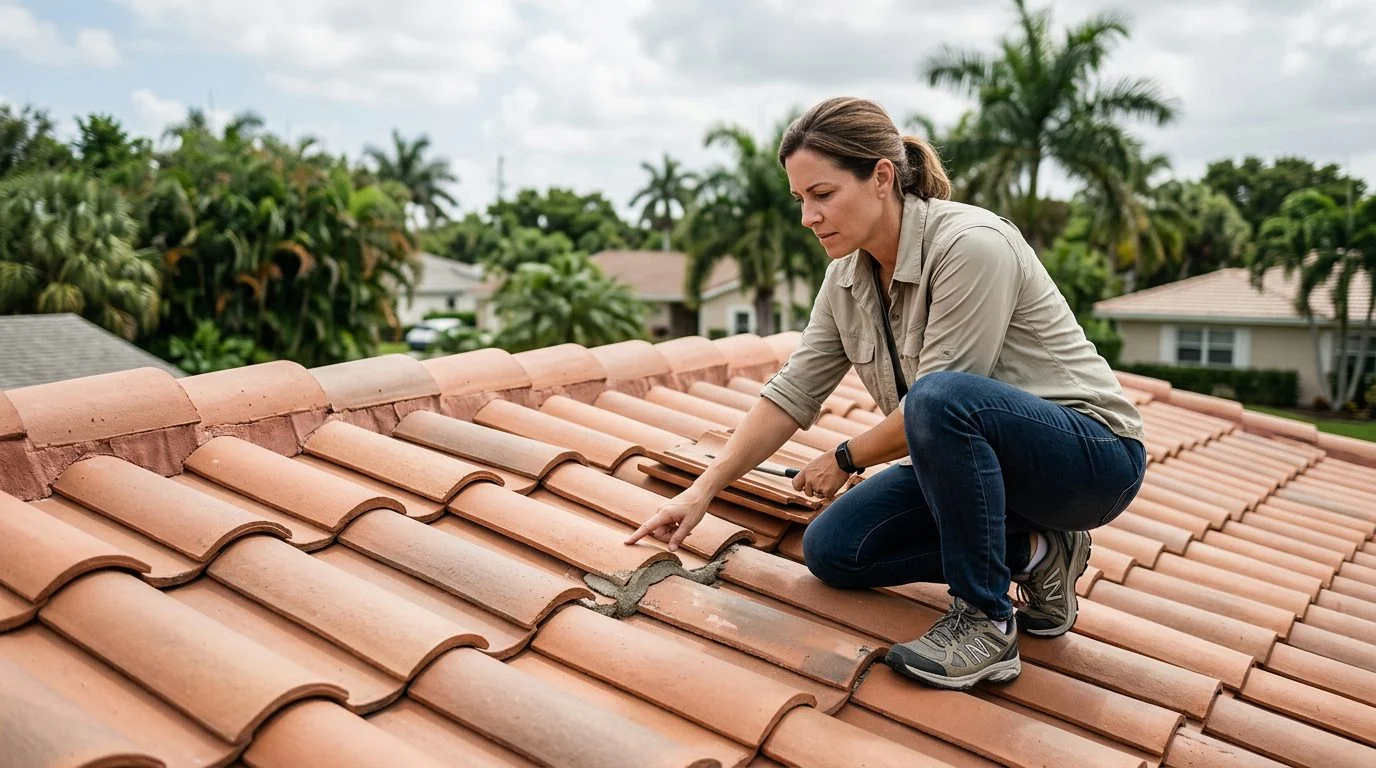
Tile Roofing | South Florida
Not Sure What Roof Tiles You Have? Start Here.
A practical guide for homeowners in Miami, Fort Lauderdale, West Palm Beach, Boca Raton, Naples, Fort Myers and Kendall on how to identify your roof tiles before you repair or replace them.
By Jonathan Rodriguez · Published October 26, 2026
Why knowing your roof tile type matters
Knowing your roof tile type tells you how a repair or matching replacement should be planned. The type decides the weight, profile, and color of any tile you need.
If you have a cracked tile after a storm, a missing piece, or a repair estimate you can’t read, the tile type is the first fact to pin down. A tile that looks close can still sit wrong beside the rest of the roof.
Permits add another reason. Under Florida law, a permit is generally required before a building is repaired, unless another law provides otherwise (Fla. Stat. § 553.79). Roof repair and replacement work may require a permit, and our team can review what applies to your project.
This guide covers checks you can do from the ground, from a window or with binoculars, and from the attic. Stay off the tiles. They can crack under your weight and cause new damage. For an overview, read our South Florida tile roofing guide.
If a broken tile has you unsure what to order, our team can review your photos and sample with you. Talk it through with our team — the first consultation is free, confidential, and carries no obligation.
Start with the shape and profile of the tile
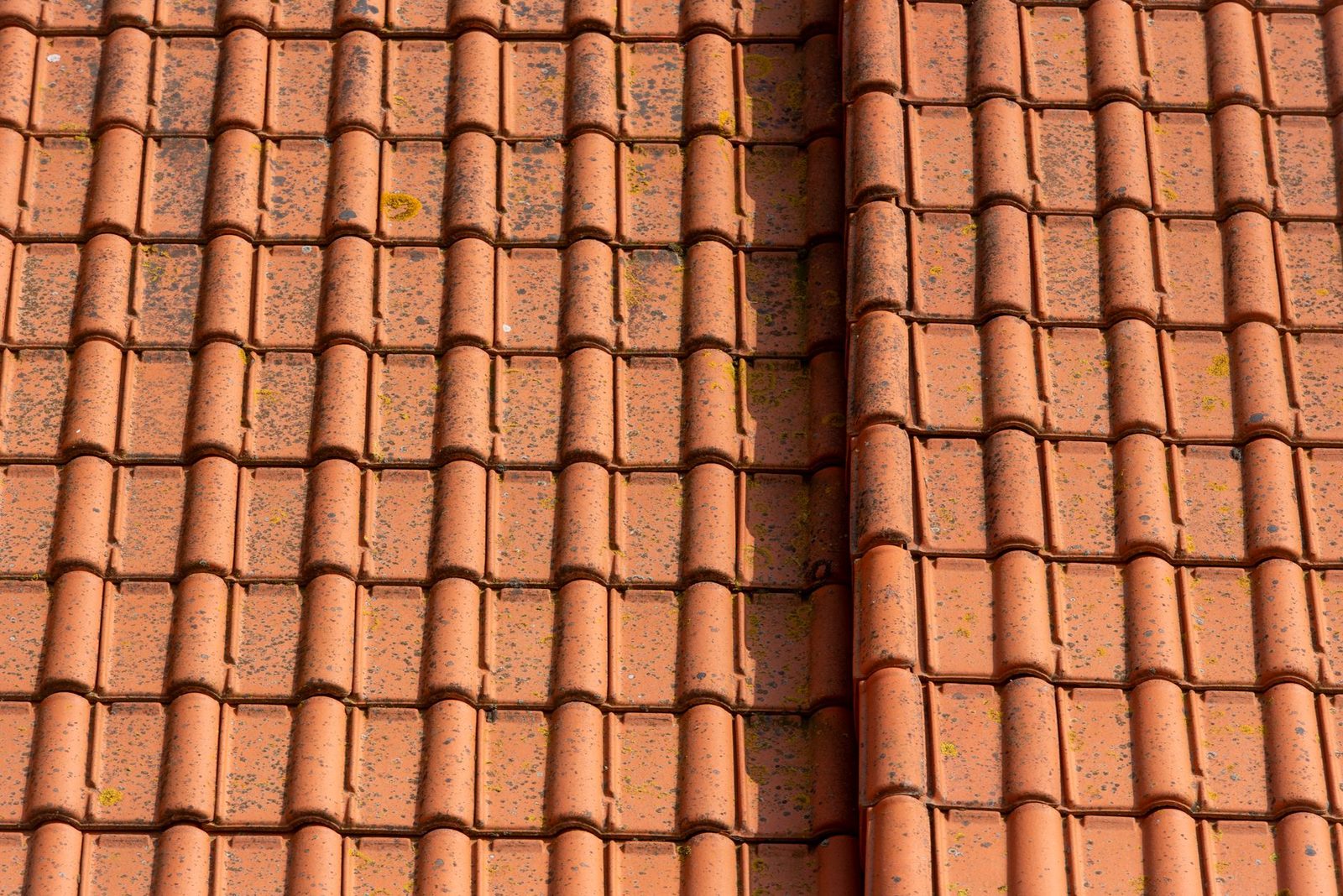
The profile, or shape, is the quickest clue to your tile type. Look at the roof from the ground with binoculars, or from a window if you have one. Don’t climb onto the roof.
Common South Florida profiles include barrel or S-shaped tiles, flat tiles, and Spanish-style tiles. Barrel and S-shaped tiles have a curve. Flat tiles are nearly level. Spanish-style tiles have a curved profile with a rounded rib.
Look closely at the edges, the curve, and how each tile interlocks with its neighbors. Note the spacing and the overlap pattern.
The profile is a starting clue, not a final answer. Confirm it with the checks below. Compare the whole roof, not just one spot. Older repairs often leave a few tiles that differ in profile or color. Note where those sit and take a photo.
Telling clay from concrete tile
Clay tile usually has color that runs all the way through its body. Concrete tile usually has a painted or coated surface. That difference is the first visual test.
A chipped edge or broken piece shows the body most clearly. Look at the cut face. If the color runs through, the tile is more likely clay. If you see a sandy or gray core under a painted top layer, it is more likely concrete.
Sun fades color over time. Compare a shaded area, such as under an eave or on a less sunny side, rather than a sun-bleached section. The shaded area shows the true color.
If you have a spare or loose tile on the ground, hold it and tap it gently. Note the sound and the feel. Never pull or tap a tile still on the roof.
Lightweight or regular weight: what the weight tells you
Concrete tile comes in lightweight and regular weight versions. Lightweight tile is thinner and lighter in the hand. Regular weight tile is thicker and heavier.
Judge thickness from a broken edge or from a tile pulled during a repair. Measure it with a ruler and write the number down. Keep the note with your photos.
Weight class matters because the roof frame carries the load of every tile. A replacement from the wrong weight class can fit poorly or change how the roof is loaded. Confirm the weight class before you order any replacement tile.
Manufacturer approvals show the exact profile and dimensions for each product line. Miami-Dade’s product approval for Crown Windsor concrete tile is a product-specific document for one manufacturer’s tile.
Checking the underside, the attic, and any markings
From the attic, look up at the underside of the tiles where they sit on the battens. Battens are the strips of wood or metal the tiles rest on. Note how each tile hooks, nails, or sits.
Look at the protective layer under the tiles, called the underlayment. Its material and layout can help identify the system on your roof.
Check the back of a tile when you can see it safely. Look for a manufacturer name, a mold stamp, or a date.
The Tile Roofing Industry Alliance publishes tile roof installation guides. To discuss what a tile system should look like on your home, contact our team to book a free first consultation, which is confidential and has no obligation to continue. If the underlayment looks damaged, read our tile roof underlayment replacement guide.
When a tile is broken or missing: sampling and matching
Save a whole or near-whole tile so the match can be checked. A small fragment rarely shows the full profile.
Take photos from several angles. Capture the front, the back, the edges, and the profile. Place a tape measure in the frame so size is clear. Shoot in daylight and note where each tile came from on the roof.
A single replacement may not match an older roof’s color or profile. Sun fading and past repairs can make new tile look different. That is why a matching plan matters. Read more on matching roof tile replacement.
Partial work can carry code requirements. For partial jobs, see partial tile roof replacement.
Not sure what your next step is?
Talk it through with our team — the first consultation is free, confidential, and carries no obligation.
Bring your findings to a free first consultation
You may be holding a broken tile, a repair notice, or a roof you manage for a family member. You may not know what to order yet. That is a normal place to start.
Gather your photos, the sample tile, the thickness note, and your attic notes. Those details give the next step something to work from.
How can I identify my roof tiles?
Start with the profile, then check the color through a chipped edge and the underside in the attic. Compare the results before you order any replacement.
Do I need a permit to replace a few broken tiles?
Local requirements for exterior projects can vary, so our team can explain what applies to your specific project. Confirm the permit requirement for your job before work starts.
Reach out through our contact page and send your photos, sample, and notes. Our first consultation is free, confidential, and comes with no obligation.
A Simple Way to Start Identifying Your Tiles
1. Look at the profile
Note the shape and profile from the roof edge or ridge. Tile shapes such as flat, S-shaped and barrel-style look different and are not interchangeable.
2. Check the color and material
From a safe vantage point, look at a chipped or broken edge. The color through the break often shows more than the surface, which may have faded or weathered.
3. Inspect the underside
If you have attic access, look at the back of the tiles and the underlayment. Markings, thickness and how the tiles interlock all help narrow down the type.
4. Compare before you order
Gather your findings, including photos and measurements, so you can match replacement tiles accurately before any work begins.
Do Not Pull Tiles to Check Them
Roof tiles are heavy and brittle, and walking on or prying at them can crack neighboring tiles and cause leaks. Look from the ground, from a window, or from the attic instead, and leave any closer inspection to a professional.
Why Talk With Our Team Before You Replace Tiles
Identification that guides your options
Knowing your tile type helps determine whether a repair, a partial match or a full roof replacement makes the most sense.
Clear answers about local requirements
Requirements for exterior projects can vary, so our team can explain what applies to your specific project.
A free, confidential first consultation
Start with a no-obligation conversation about your roof, your home and your goals.
Serving South Florida homeowners
We work with homeowners across Miami-Dade, Broward, Palm Beach, Collier and Lee counties.


