


Tile Roofing · Boca Raton
Tile Roofing in Boca Raton: Repair, Replacement & Costs
Clear answers on tile roof repair, replacement, and pricing for Boca Raton homeowners. Start with a free first consultation, confidential and with no obligation.
By Jonathan Rodriguez · Published October 17, 2026
Tile roofing in Boca Raton is a layered system, so a good repair or replacement decision looks past the tiles you can see. This guide answers the questions homeowners ask most: what the roof is made of, what it costs, when a repair makes sense, and what paperwork matters after storm damage. Clay and concrete tile are durable roofing materials used in Florida, according to the NRCA roofing materials guidance.
Tile Roofing in Boca Raton: What Your Roof Is Made Of
Most tile roofs in Boca Raton are clay or concrete tile laid over a water-resistant underlayment. Clay tile is fired from earth and has a long history on South Florida homes. Concrete tile is made from cement and sand, and manufacturers often shape it to look like clay. Both types sit on top of underlayment, which protects the roof deck if water gets past the tiles.
The tiles are only one part of the system. Fasteners hold each tile in place. Flashing seals the joints around vents, chimneys, and walls. Ridge and hip caps cover the peaks and corners. If any one of these layers fails, the whole roof can leak.
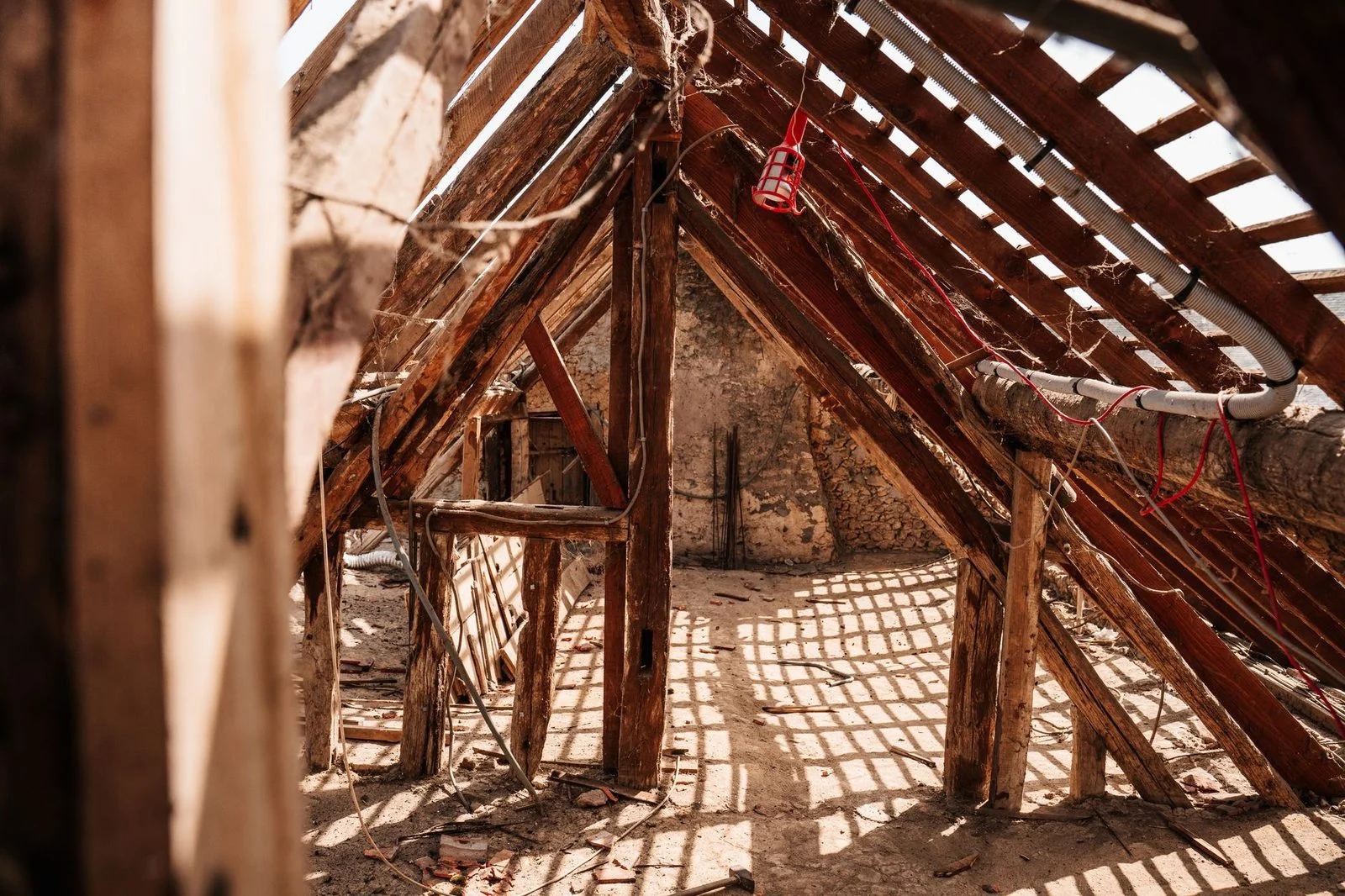
Tile is heavy, so the roof frame has to carry it. The NRCA guidance says that when replacing another roof covering with tile, the building’s structural load capacity must be verified. The Tile Roofing Industry Alliance installation guides cover proper installation practices, code requirements, and approved products for high-wind use in Florida. A roof that looks sound from the street can still have a weak point underneath.
If a cracked tile after a storm or a loose ridge cap has you torn between repairing and replacing, our team can look at your roof and talk through the options with you. Talk it through with our team — the first consultation is free, confidential, and carries no obligation.

Average Cost of a Tile Roof in Florida
The cost of a tile roof hinges on the size and pitch of the roof, the type of tile, and the work hidden under the tiles. A steep roof takes more time and more safety setup than a low, flat-pitched one. Clay and concrete products differ in weight, profile, and color availability, and those differences affect both materials and labor.
Hidden work often adds the most surprise. Once tiles come off, the crew may find damaged underlayment or soft deck boards that need replacing. Access to the property also shapes the plan, from where equipment can be staged to how far materials must be carried up to the roof.
Permits add steps to the project. Miami-Dade County also publishes roofing permit forms and checklists on its roofing permits page.
A reliable number for your roof comes from a written estimate after an on-site inspection. Ask for the tile, underlayment, and deck work to be listed separately. That way you can see what drives each line.
Tile Roof Repair vs. Replacement in Boca Raton
A repair fixes a small area, such as a few cracked or slipped tiles. Replacement installs a new roof covering over the whole roof. Choosing between them starts with the damage you can see and the layers you can’t.
A partial tile roof repair can last, but how long it lasts turns on three things. The first is the age of the underlayment. The second is the condition of the tiles around the damage. The third is what caused the damage. A single broken tile from a fallen branch is a different problem than a leak that started under a whole section of roof.
Signs that point toward repair include a few broken or slipped tiles, sound underlayment, intact tiles around the damage, and one clear cause. Signs that replacement deserves a serious look include leaks in several spots, brittle or failing underlayment, widespread cracking across the roof, and tiles that won’t lie flat.
Replacement also brings code questions. Florida law says a roof replacement on a site-built, single-family home must include certain windstorm techniques, including secondary water barriers. Whether a roof-to-wall connection upgrade applies depends on conditions set out in Fla. Stat. 553.844, including the building’s insured or just value (at or above $300,000), whether the building is in the wind-borne debris region, and whether the upgrade’s cost falls within the statute’s limit relative to the roof replacement.
Ridge Cap and Mortar Maintenance on Tile Roofs
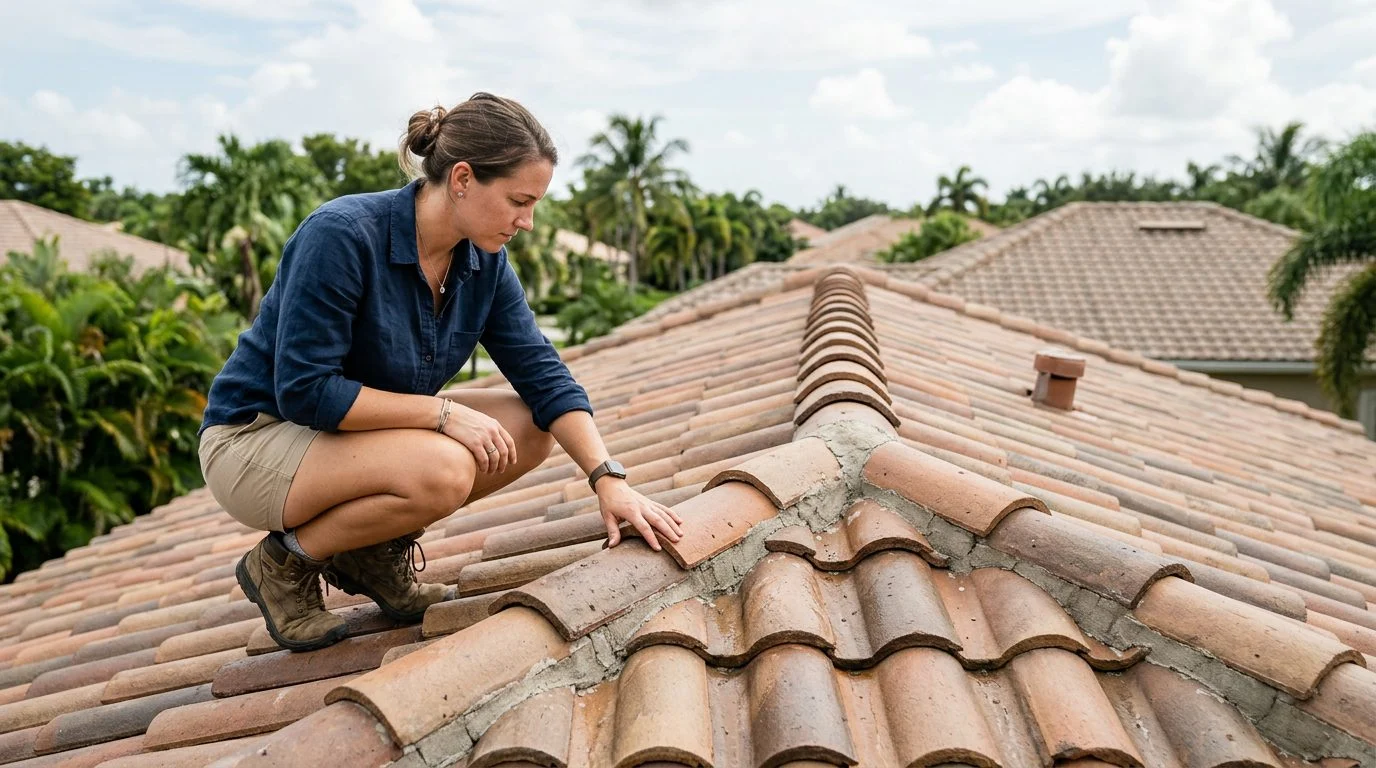
Ridge and hip caps are the curved tiles along the peaks and corners of the roof. They sit on a bed of mortar and hold the top row of tiles in place. When caps fail, wind and water can get under the top row and move the tiles.
From the ground, look for caps that sit out of line, gaps of daylight along the peak, or cracked caps. Pieces of tile on the lawn or in the gutters are another warning sign. Missing or crumbling mortar is harder to see, but it often shows up as caps that rock or shift.
Inspect caps after heavy wind or rain. Strong storms are when loose caps tend to show up. A small repair made early is easier to handle than water damage inside the home.
Cap work is usually a targeted repair. The crew resets or rebeds the affected caps rather than replacing the whole roof. That makes it one of the more practical fixes on a tile roof.
Downsides of Having a Tile Roof
Tile has real downsides, and knowing them helps you plan. The three main ones are weight, fragile tiles, and repairs that need careful matching.
Weight matters most. Tile is heavy, so the framing must carry the load. This is why roof structure is part of any tile evaluation, especially when a lighter roof covering is being switched to tile.
Tiles can crack or slip under foot traffic. Walking on a tile roof calls for real care, and most homeowners are better off leaving that work to trained roofers. A single misstep can break tiles that were fine before.
Repairs need tiles that match the existing profile and color. Older roofs may have faded tiles or shapes that are no longer made. That can make a spot repair more involved than it would be on another roof type.
These are workable issues, not reasons to avoid tile. Knowing them early helps you schedule inspections and repairs before small problems grow.
Insurance Considerations for Partial Tile Roof Repairs
Good records make a partial tile repair easier to document. Florida law also sets deadlines for reporting roof damage to an insurer, so timing matters.
Keep dated photos of the affected area before and after repairs. Keep a written scope of work and itemized invoices. Store them with your home records and your original policy, along with any prior repair records.
Under Fla. Stat. 627.70132, a claim is barred unless notice was given to the insurer under the policy within 1 year after the date of loss. A supplemental claim for more damage found during repairs is barred unless notice was given within 18 months after the date of loss. For hurricanes, tornadoes, windstorms, and other weather events, the date of loss is the landfall date, or the date the event is verified by the National Oceanic and Atmospheric Administration.
Roof payments can also involve a deductible step. Proof includes a canceled check, a money order receipt, or a credit card statement.
Roofing contracts carry a notice too. Review your policy language and ask your insurer what it covers. Coverage turns on the policy and the cause of the damage.
Not sure what your next step is?
Talk it through with our team — the first consultation is free, confidential, and carries no obligation.
Lifespan of a Tile Roof in Florida
A tile roof in Florida can last many years when it is well installed and maintained. Its lifespan hinges on the tile itself, the underlayment and fasteners, sun exposure, humidity, salt air, wind, and the upkeep it gets over time.
Good habits help. Inspect the roof after big storms and on a regular schedule. Repair cracked or slipped tiles promptly rather than waiting. Pay attention to caps and flashing, since those are common points where water enters.
The age of a roof can also show up in insurance records. Fixing a single section does not always tell you how the whole roof is holding up.
Under Fla. Stat. 627.7011, when a home’s roof is 15 or more years old, the insurer must allow the homeowner to have the roof inspected by an authorized inspector before it can require roof replacement as a condition of issuing or renewing coverage. Under Florida law, a homeowner’s insurer generally cannot refuse to issue or renew a homeowner’s policy based only on the age of the roof when an inspection by an authorized inspector shows at least 5 years of useful life remaining, subject to the conditions the statute sets out.
Talk With Our Team About Your Boca Raton Tile Roof
If a cracked tile, a loose ridge cap, or a ceiling stain has you weighing repair against replacement, our team can look at your roof with you. Start by noting where the damage is, when you first saw it, and whether it followed a storm. Photos help.
ASP Superhome offers a free first consultation that is confidential and comes with no obligation to continue.
Request a free estimate or quote for your tile roof through our contact page. Our team will walk through repair and replacement options for your Boca Raton home.
Frequently Asked Questions
What is the average cost of a tile roof in Florida?
The cost turns on roof size, pitch, tile type, and the work under the tiles. A written estimate after an on-site inspection gives the figure for your roof.
Can a partial tile roof repair last as long as a full replacement?
It can, when the underlayment is sound, the surrounding tiles are in good shape, and the damage has a clear cause.
Do I need a permit to repair a tile roof in Miami?
The City of Miami requires permits for residential roof repair and replacement, according to its permit catalog.
How long do I have to report roof damage to my insurer in Florida?
Under Florida law, a claim is barred unless notice is given within 1 year after the date of loss. A supplemental claim has an 18-month window.
How We Approach Tile Roofing Projects
Inspection first
We look at the tiles, underlayment, flashing, and structure before recommending any work, so the scope reflects what your roof actually needs.
Written estimate
You receive a written estimate based on your roof's size, pitch, tile type, and the work beneath the tiles.
Clear options
We explain repair and replacement side by side, so you can weigh the short-term and long-term choices for your home.
Straight answers
Our team answers your questions in plain language, without pressure to commit to any work.
Don't Ignore Early Signs of Tile Damage
Cracked, slipping, or missing tiles and staining on ceilings can signal water getting under the roof. Small problems caught early are often simpler and less costly to address than water damage spreading through the home.
Tile Roofing Services in Boca Raton
Tile Roof Repair
Replacing cracked or broken tiles, resealing flashing, and addressing leaks at the source.
Tile Roof Replacement
Full tear-off and installation of new tile, with attention to underlayment and deck condition.
Partial or Full Scope
Repairs when the rest of the roof is sound, and full replacement when wider damage makes it the better path.
Impact-Ready Upgrades
Tile roofing paired with impact windows and doors for a more complete home upgrade.
Start With a Free First Consultation
Related practice areas
- Tile Roofing in South Florida: Costs, Styles & Installation Guide
- Roof Repair in Boca Raton: Leaks & Storm Damage


