


Roofing | South Florida
Tile Roofs Are Durable. Here's What to Weigh Before You Decide.
Weight, moisture, breakage, upkeep, and hidden underlayment wear each affect a South Florida home differently. Know the trade-offs before you choose your next step.
By Jonathan Rodriguez · Published October 18, 2026
The main downsides of having a tile roof are weight, moisture, breakage, upkeep, and an underlayment that can age out of sight. Tile is durable and common across Florida. Each downside still carries real trade-offs for a South Florida home, and some don’t show up until a problem starts. Here’s what to weigh before you decide what to do next.
Why the weight of a tile roof matters
Tile is heavier than asphalt shingles or metal panels, and that weight rests on the whole roof structure. Because tile is heavier than many other roof coverings, the structure’s ability to bear that weight is worth checking before installation. That check looks at the rafters, trusses, and walls under the roof. A home built for lighter roofing may need reinforcement before it can carry tile.
Weight also matters in storms. Hurricane winds pull hard on every tile, so each one needs secure attachment. A heavy roof that isn’t attached well can lose tiles, and a lost tile opens a path for water. Florida law also caps the required cost of roof-to-wall connection improvements for qualifying homes during reroofing, at a percentage of the roof replacement cost. Under Fla. Stat. § 553.844, the roof-to-wall connection provision applies only to certain site-built single-family residential structures that meet the value and wind-borne-debris-region conditions stated in the statute, so whether it applies to a tile roof replacement depends on the specific home. Do the structural check before work starts, not after.
If a tile roof came with a home you didn't choose, we'd be glad to look at it with you and talk through your options. Talk it through with our team — the first consultation is free, confidential, and carries no obligation.
Water absorption and moisture problems
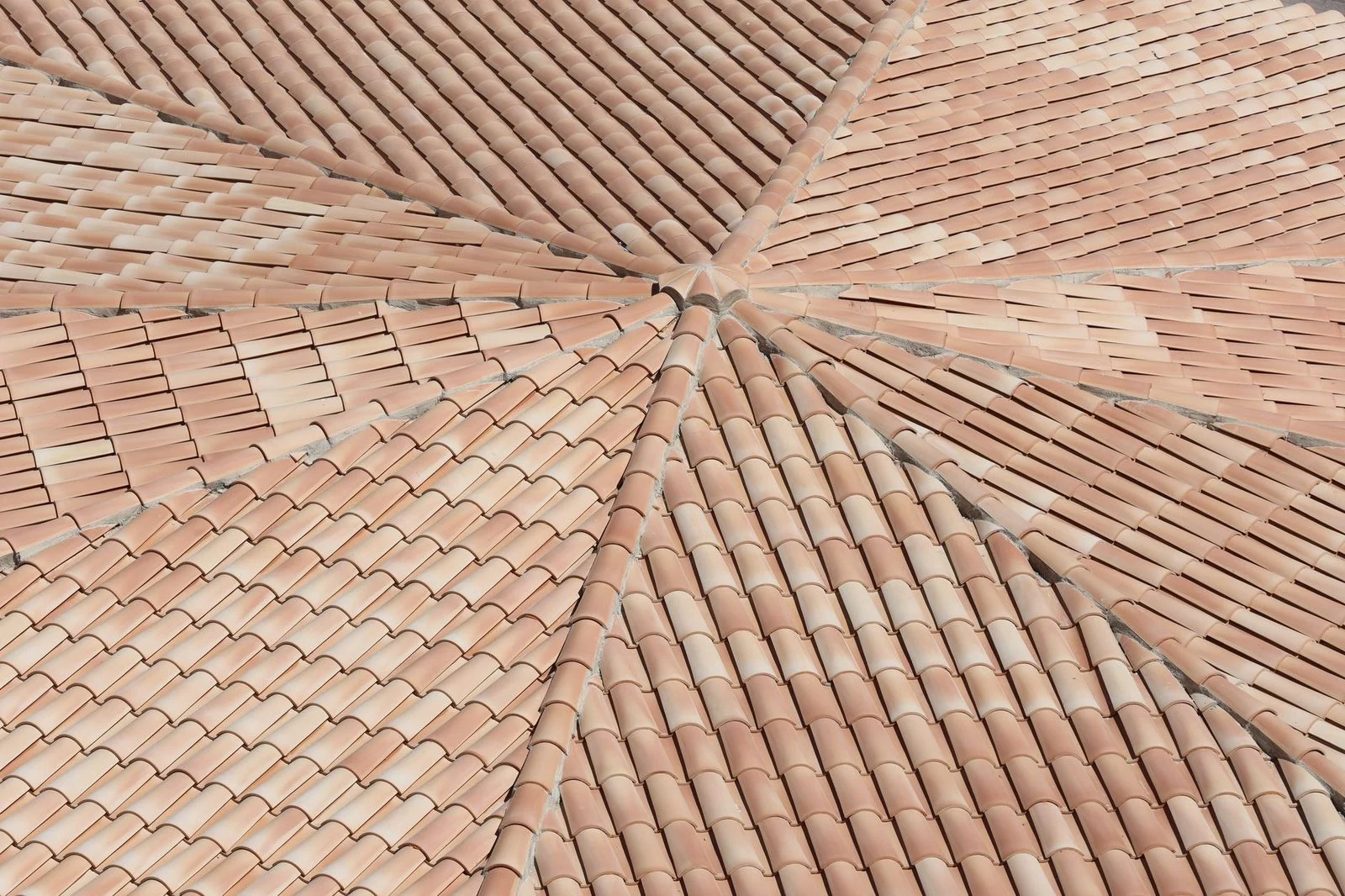
Concrete tile is porous, so it can soak up moisture and hold it. Absorbed water adds weight over time. Humid South Florida weather also favors algae, moss, and dark staining. Those marks can look like a cosmetic issue, but they can also show that water is sitting where it shouldn’t.
How well a tile roof sheds water depends on the tile profile, the roof pitch, and how well the tiles are fitted and kept up. A cracked or out-of-line tile sends water somewhere it wasn’t meant to go. When water gets past the tile, the layers below matter most. That backup layer is the secondary water barrier. Fla. Stat. § 553.844 says the criteria for secondary water barriers may include roof shape, slope, and the make-up of the whole roof system. It also says they may not be limited to one method or material.
If that backup layer or the flashing around vents, valleys, and walls fails, moisture can reach the decking and the rooms below. Water damage often stays hidden until a stain appears on a ceiling. Catching it early keeps the repair smaller.
Cracking, chipping, and broken tiles
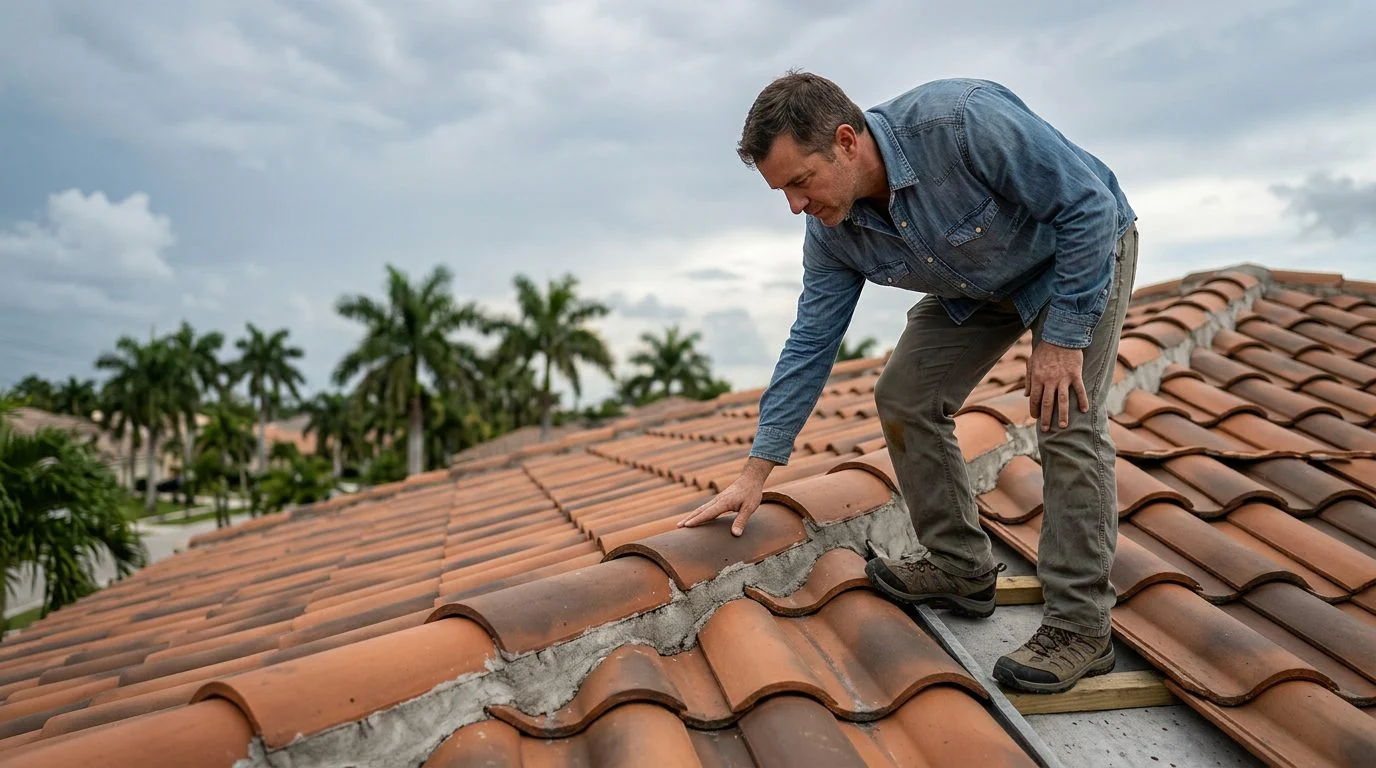
Tile is brittle, so it cracks or chips under impact. Foot traffic, falling branches, hail, and flying debris can all break it. A single cracked or missing tile can open a path for wind-driven rain. Treat a broken tile as urgent instead of waiting for the next scheduled check.
Replacing one tile is a repair job. The harder part on an older roof is matching the profile and color. Tile that has faded or came from a line no longer made may not blend with the rest of the roof. That mismatch can stay visible for years. Weigh it before you decide between a few spot repairs and a larger job.
Walking on tile also causes breakage. One misstep can crack a tile or shift its neighbors. That’s why inspections, cleaning, and tile roof repair work are a good reason to contact ASP Superhome.
Maintenance needs and an underlayment that can fail early
Tile roofs need regular inspection, cleaning, and upkeep of ridge and hip caps. That adds to the lifetime cost.
Beneath the tile sits the underlayment, which is the secondary water barrier. It can age, degrade, or fail before the tile does. Because it sits hidden, damage can go unnoticed until water shows up inside. That’s why an inspection matters on older tile roofs, even when the tiles look fine from the ground.
Cost is another downside. Tile repairs and replacements can cost more than simpler materials, and the total depends on the condition and size of each roof. Planning takes time too. Florida law generally requires a permit for building work, and requirements vary by local building department, under Fla. Stat. § 553.79.
How tile downsides compare with metal roofing
Metal roofing is lighter than concrete tile, and ASP Superhome installs it. That makes it a fair comparison for South Florida homes. Metal panels resist cracking from foot traffic, which tile does not. They can dent from hail, though, and they need attention to fasteners, seams, and coatings over time.
Neither material wins every case. Tile brings its own look and durability. Metal brings lower weight and different maintenance needs. The better choice depends on the home’s structure, your budget, the look you want, and how much upkeep you’re willing to handle. Each material has trade-offs, and a fair comparison names them on both sides.
Is a tile roof or a metal roof better?
Neither is better for every home. The structure, budget, appearance, and upkeep you accept usually decide it.
Does a tile roof replacement need a permit?
Florida law generally requires a permit before a roof is repaired or replaced. Plan for that step before work begins.
Talking through your tile roof with ASP Superhome
If you’re facing a tile roof you didn’t choose, the next step is a conversation about your specific roof. You may have inherited the home with it. A storm may have damaged it. A relative may be asking you to help make sense of it. Those situations are hard to sort out from a list of facts alone.
Our first consultation is free, confidential, and comes with no obligation to continue. We can talk through tile roof replacement, tile roof repair, and related work in roofing, impact windows and doors, solar panels with battery backup, and kitchen remodeling, where it fits your home.
Send us a message through our free estimate request page, and we’ll go over your roof with you.
Five Downsides to Review
Weight
Tile is heavier than asphalt shingles or metal panels, and that load rests on the whole roof structure. Older framing may need a closer look before a tile roof is repaired or replaced.
Moisture
Humid, rainy South Florida weather can find its way under tiles that have shifted or cracked. Water that gets past the tile can cause damage that is not visible from the ground.
Breakage
Tiles can crack or slip out of place from wind-driven debris, foot traffic during maintenance, or storm impact. A single broken tile can expose the layers beneath it.
Upkeep
Tile roofs need periodic inspection, clearing of debris, and prompt repair of loose or damaged pieces. Skipping routine checks lets small problems grow.
Don't Overlook the Underlayment
The underlayment beneath the tiles is the main line of defense against water, and it ages out of sight. Damage can be well advanced before any leak appears inside the home.
How We Can Help You Decide
Compare Your Options
Our team can walk you through how tile, metal, and other roofing choices compare for your home, your budget, and your goals.
Protect Your Home
We handle roof replacement and roof repair across South Florida, with attention to the weight, moisture, and underlayment questions that matter here.
Free First Consultation
Your first consultation is free, confidential, and comes with no obligation to continue.
Whole-Home Solutions
Beyond roofing, we also offer impact windows and doors, solar panels, solar battery backup, and kitchen remodeling.


