


Tile Roofing | South Florida
Choosing Underlayment for a Tile Roof in South Florida
The tile gets the attention, but the underlayment beneath it does much of the protecting. Here is what to consider for South Florida's heat, heavy rain and wind.
Start with a free first consultation
Free
First consultation, confidential and with no obligation to continue
By Jonathan Rodriguez · Published November 2, 2026
The Short Answer: Underlayment Is the Tile Roof’s Second Line of Defense
The best underlayment for a tile roof is the one that fits the roof’s deck, slope, wind exposure, existing layers, and the code that applies. No single product works best for every roof. Underlayment is the water-resistant layer laid over the roof deck and under the tile.
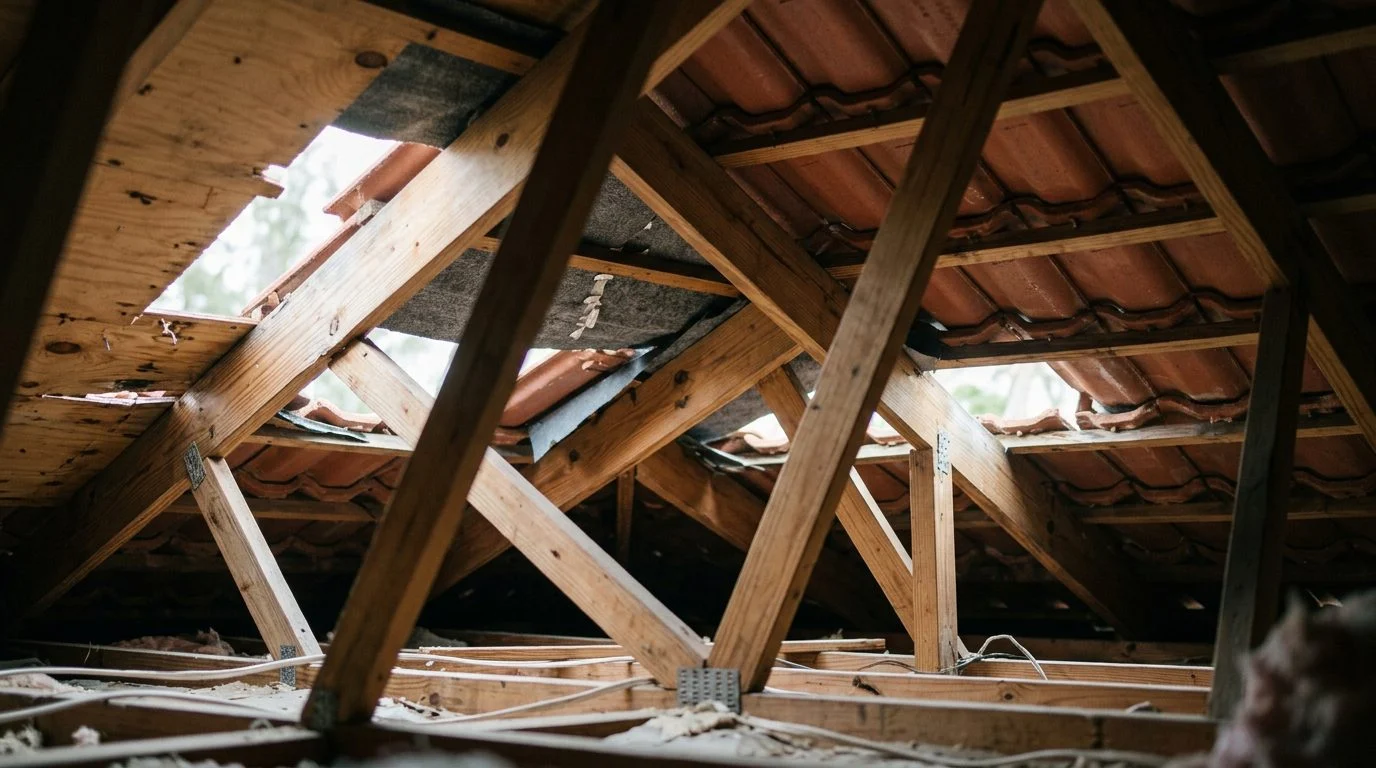
Tile sheds most rain, but it isn’t the waterproof layer. Wind can push rain under the tiles. Water also finds its way through cracks and gaps around vents, chimneys, and other openings. Underlayment catches that water and keeps it off the deck.
According to the Insurance Institute for Business & Home Safety, residential tile roofing is a common steep-slope roof application. For an overview of tile roofing in this region, read our South Florida tile roofing guide. The sections below compare the main underlayment types, the Florida rules that apply, and what a complete scope should list.
If a tile roof repair or replacement quote has you searching for answers, we're glad to talk through your deck, slope, and exposure with you. Talk it through with our team — the first consultation is free, confidential, and carries no obligation.

Synthetic Underlayment: The Most Common Choice for Tile
Synthetic underlayment is a polymer sheet that is light, tear-resistant, and water-resistant. It comes in rolls that cover large areas quickly. Installers often choose it because it holds up while the roof is open to weather and foot traffic.
Synthetic gives a continuous barrier over the deck. It resists moisture and tearing during the job, so the crew can work without tearing the layer apart. That matters on a tile roof, where the tile can’t go on until the layer beneath is sound.
Synthetic products are not all the same. They differ in UV exposure limits, slip resistance, and approval listings. Check that the product matches the roof system and the manufacturer’s installation instructions. Synthetic is also often paired with a fastening system made for the specific tile profile, so the two should be chosen together.
Self-Adhered Underlayment at Critical Areas
Self-adhered underlayment, often called peel-and-stick, is a rubberized asphalt sheet with an adhesive backing. It bonds directly to the deck. Installers usually use it where water is most likely to enter: eaves, rakes, valleys, hips, ridges, and around vents, chimneys, and skylights.
Self-adhered sheet is usually one layer in a larger system, not the only layer across the whole roof. Adhesion depends on a clean, dry deck and on the temperature at installation. Ask how the product will bond before the work starts.
If your roof already has a self-adhered layer, the rules for what can go over it matter. The 2026 Florida Building Code changes for the Existing Building code added a section on the underlayment types allowed over an existing self-adhering underlayment during clay and concrete tile replacement.
Asphalt-Saturated Felt: The Traditional Option and Its Limits
Asphalt-saturated felt, often called tar paper, is the older underlayment material. It comes in standard weights. It is heavier than synthetic, and it tears more easily during installation.
Felt is also more prone to moisture damage before the tile goes on. It doesn’t hold its shape as well as synthetic, so it can be harder to lay flat and straight. Those are the tradeoffs to weigh.
Felt still appears in some roof assemblies. Whether it fits a particular tile system has to be confirmed for that project. Ask the installer which product is listed for your tile and your roof, and get the answer in writing.
Hybrid Systems: Combining Synthetic Field With Self-Adhered Protection
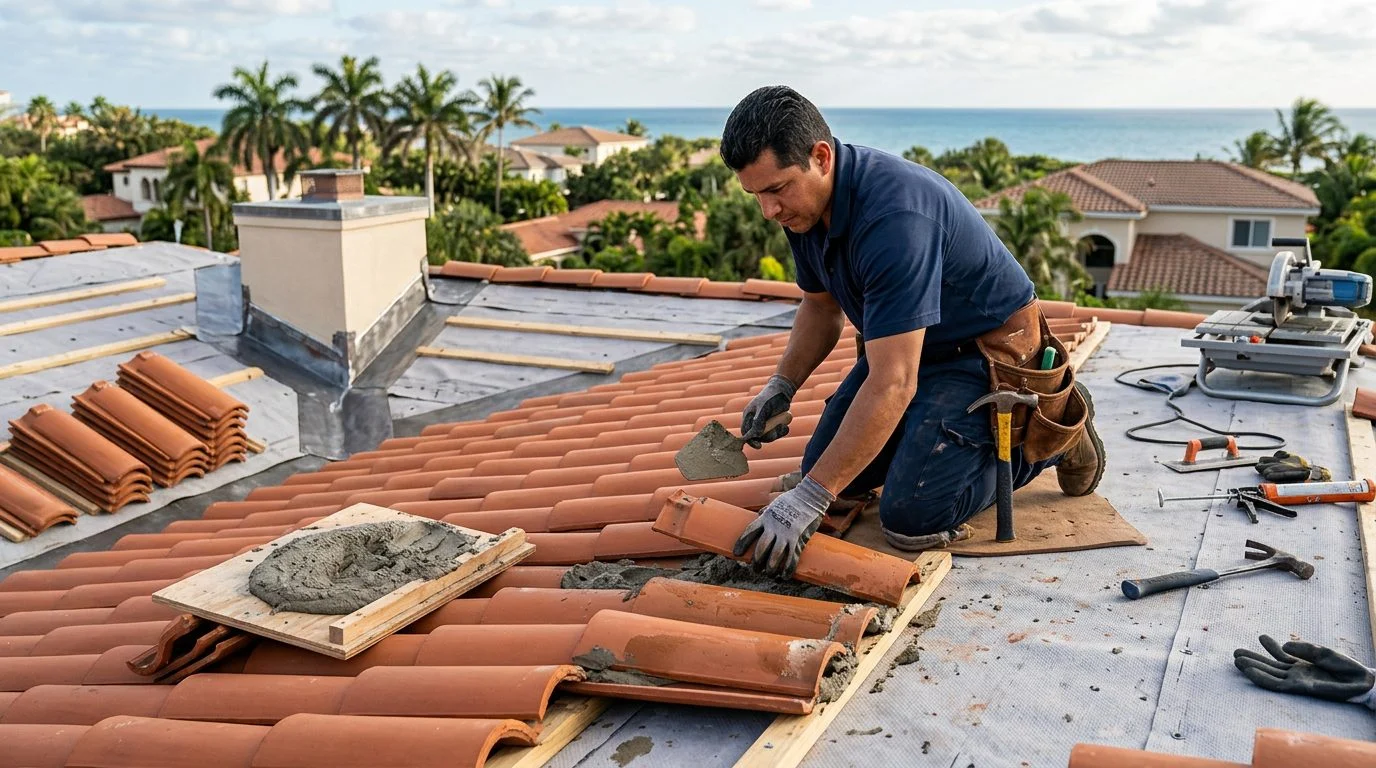
A hybrid system lays synthetic underlayment across the field of the roof. It adds self-adhered membrane at the eaves, valleys, rakes, and penetrations. This pairs broad coverage with extra protection where wind and water pressure concentrate.
A hybrid is only as strong as its details. Lap widths, overlaps, and how the membrane ties into the flashing decide whether it works. Small gaps at these transition points cause more trouble than most of the open field.
Lap rules matter too.
Florida Building Code and Product Approval for Tile Roof Underlayment
The Florida Building Code sets the rules for tile roof underlayment and secondary water barriers. Under Fla. Stat. § 553.844, the code must include a means to incorporate recognized mitigation techniques, including criteria for secondary water barriers for roofs, for site-built, single-family residential structures constructed before the implementation of the Florida Building Code. Those criteria may not be limited to one method or material.
Product approval is the other piece. Under Fla. Stat. § 553.842, roofing is one of the product categories that must be approved by a statewide method. A product may not be advertised, sold, or marketed as hurricane, windstorm, or impact protection from wind-borne debris unless it is approved under this section or s. 553.8425, and anyone who does so without that approval is subject to the Florida Deceptive and Unfair Trade Practices Act.
Under Fla. Stat. § 553.8425, a product with a certification mark, label, or listing from an approved agency needs no further documentation to show code compliance. For a South Florida example, a Miami-Dade County concrete tile approval shows how a specific tile system is tested and approved for listed uses.
Not sure what your next step is?
Talk it through with our team — the first consultation is free, confidential, and carries no obligation.
What a Complete Tile Underlayment Scope Should Include
A complete scope names the underlayment type and product for the field and for the critical areas. It should cover deck preparation and inspection, the tile fastening method, flashing at penetrations, and ridge and hip details. Structural capacity matters too. The National Roofing Contractors Association states that the structural load capacity must be verified when replacing another roof covering with tile.
The scope should also address drip edge. The Tile Roofing Industry Alliance notes that tile roofs must follow proper installation practices and code requirements for high-wind applications in Florida.
Underlayment is hidden once the tile is installed. Put the product names and installation details in writing before work begins, while the questions are still easy to answer.
Talk Through Your Roof’s Underlayment With Our Team
If you’re reading this after a storm, a leak, an inspection note, or a replacement quote you didn’t expect, you may be reading on behalf of a parent, a tenant, or a property you manage. That’s a hard spot to be in, and you don’t need to have every roofing term figured out yet.
The right underlayment depends on the deck, slope, age, and exposure of your roof. A site visit confirms those details for one specific home.
Is synthetic underlayment better than felt for tile roofs?
Synthetic is lighter and tears less during installation than felt. Whether it fits your roof depends on the product’s approval and the installation plan.
Do tile roofs need a secondary water barrier in Florida?
Is drip edge required on tile roofs?
If you want to review your tile roof’s underlayment, you can contact ASP Superhome to set up a visit. Barrel tile work in Miami, concrete tile replacement in Fort Lauderdale, and ridge and hip repair in Naples each raise these same questions, and we can walk through them with you. Our free first consultation is confidential and comes with no obligation to continue.
What to look at when planning tile roof underlayment
Match the underlayment to the tile
Barrel and flat tile profiles sit differently on the roof deck, so the underlayment and its installation plan should fit the tile system.
Plan for water that gets past the tile
Wind-driven rain can push water under tile edges. A continuous underlayment layer helps keep that water away from the deck.
Confirm product details before work begins
Ask for the manufacturer's product information and how it is meant to be installed on your specific roof.
Include drip edge and flashing in the plan
Edges, valleys, penetrations and transitions are where roofs most often leak, so they should be planned alongside the underlayment.
Don't choose by price alone
A lower-cost underlayment can look like a savings on paper, but the right choice depends on the product's approval, the tile type and how the roof will be installed. Review those details before you commit.
Common underlayment options for tile roofs
Felt underlayment
A traditional, paper-based layer. It has long been used under tile, but it can tear more easily during installation.
Synthetic underlayment
A lighter, polymer-based sheet that tends to tear less during installation. Whether it suits your roof depends on the product and how it is installed.
Self-adhered membranes
Sticky-backed sheets used in key areas such as valleys, eaves and penetrations, often paired with another underlayment across the field of the roof.
Metal edges and flashing
Drip edge and flashing direct water away from the roof edges and transitions, working with the underlayment to protect the structure.


