


Tile Roofing | South Florida
Are Your Roof Tiles Nailed Down? Here's How to Tell
A practical guide for South Florida homeowners on how roof tiles are fastened, what warning signs to watch for, and when a closer look is worth it.
By Jonathan Rodriguez · Published October 25, 2026
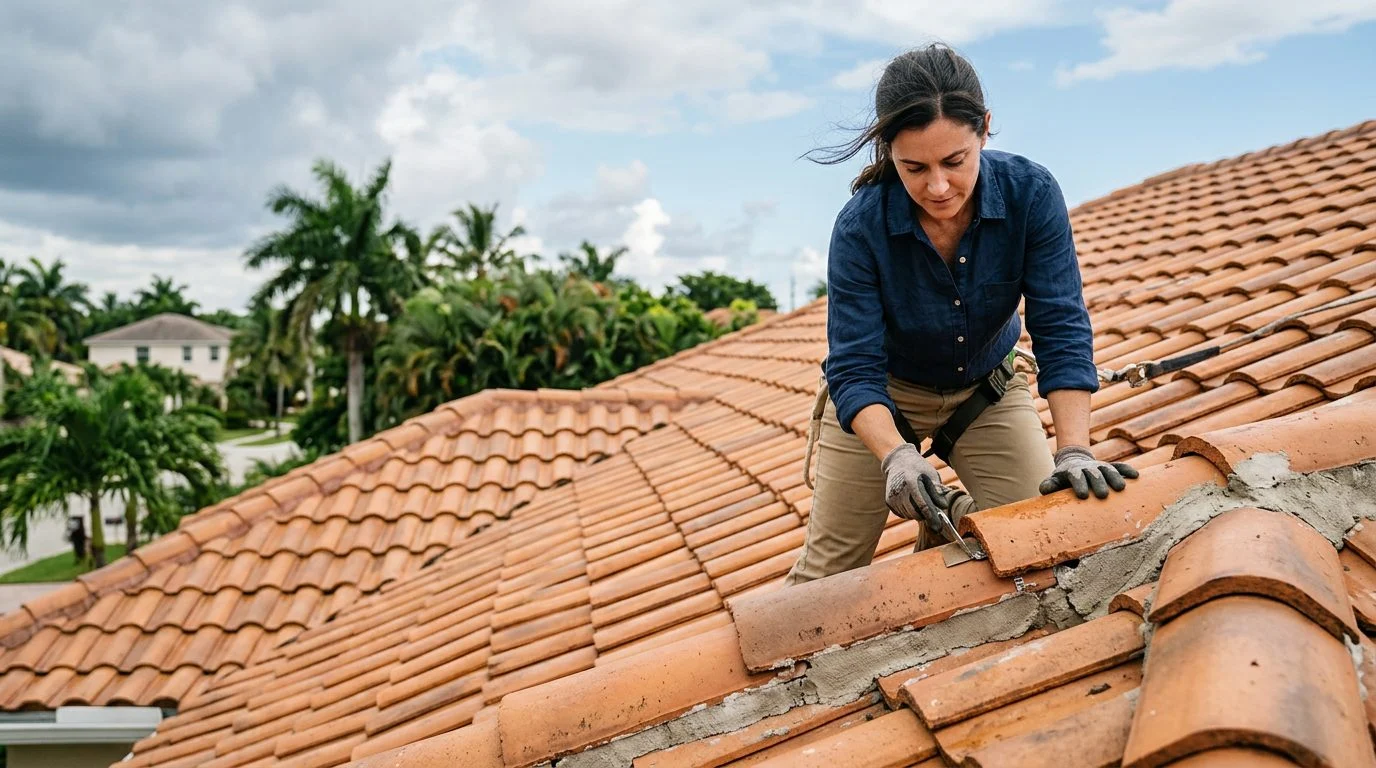
Are roof tiles nailed down? Most concrete and clay roof tiles are fastened to the roof, not just set in place. The exact method depends on the tile shape and how the roof is built. This guide explains the common ways tiles are attached and why that matters in South Florida wind.
The short answer: most roof tiles are fastened, not just resting on the roof
Most concrete and clay roof tiles are mechanically fastened to the roof deck or to battens. They are not simply sitting in place. The method is not the same for every roof, though. The tile profile and the roof’s construction decide how each tile is secured.
Some tiles are held with nails. Others use screws, clips, or wire ties. Your roofer picks the fastener that fits the tile shape and the layout beneath it. That is why a simple yes or no leaves out part of the picture.
Each fastening point helps hold a tile against wind. When a fastener is missing or has failed, the tile has less to hold it in place.
If the tiles on the roof you're checking look loose, you don't have to sort out the fastening alone. Our team can talk it through with you. Talk it through with our team — the first consultation is free, confidential, and carries no obligation.
How concrete and clay roof tiles are attached
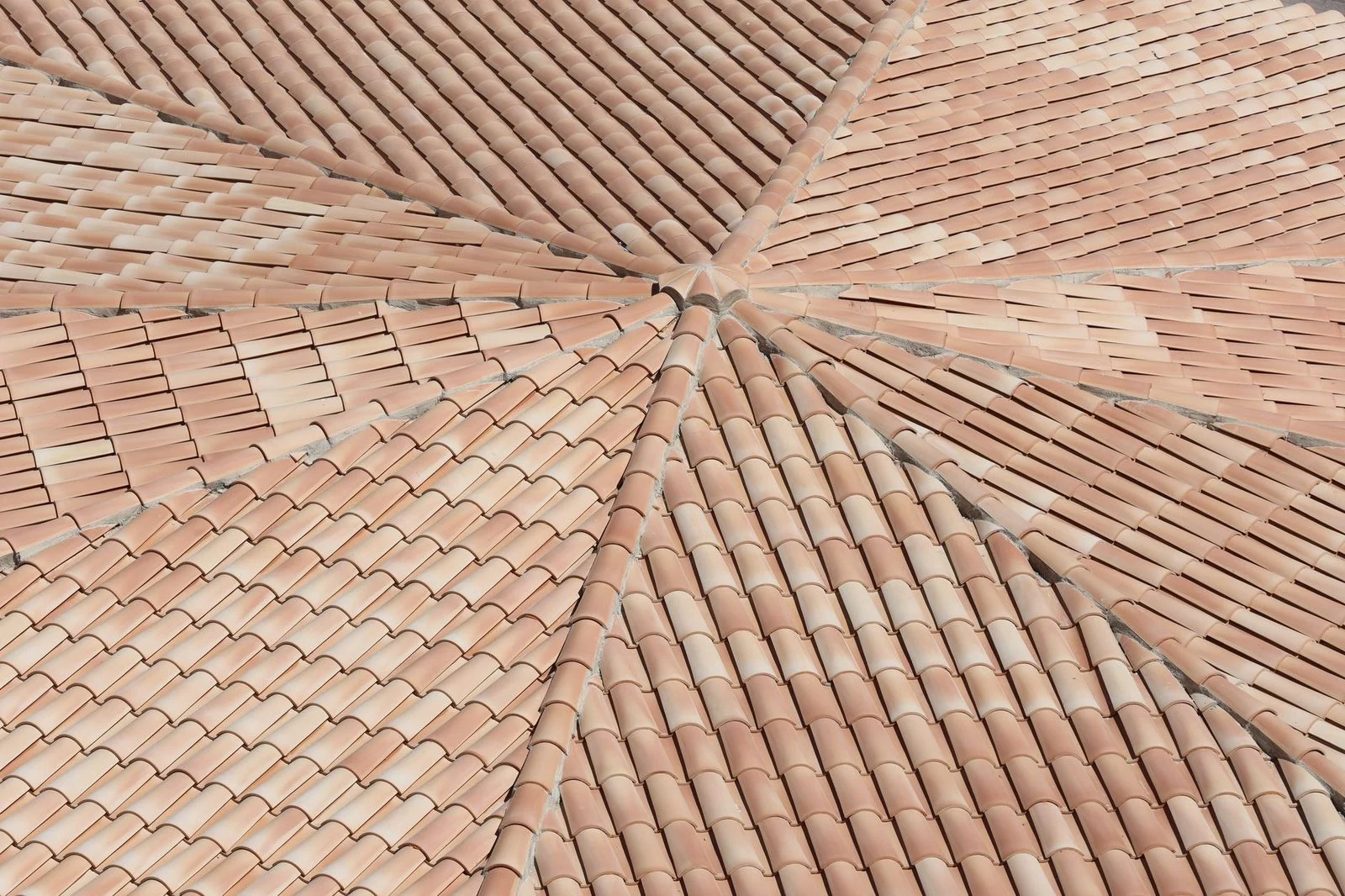
Tiles are usually attached with nails, screws, clips, or wire ties. These connect each tile to a batten or the roof deck. Battens are thin strips that run parallel to the eaves, and tiles hang from them. The batten layout sets the fastening pattern across the roof.
Nails go through the tile’s nail holes or nail lugs into the batten or deck. Where a nail is not the chosen method, installers may use corrosion-resistant screws or clips. Some concrete tiles are instead nailed directly to felt-covered plywood or OSB sheathing.
Beneath the battens sits the roof deck and its underlayment. A tile is only as firm as what it is fastened into. Soft or rotted decking gives a nail nothing solid to grip. The condition of the deck matters as much as the nail itself.
Where extra fastening goes: eaves, rakes, and ridges
Tiles at the edges of a roof often get extra fastening. The eave is the lower edge, the rake runs along the sloped side, and the ridge is the peak. These edges have more exposure to wind than the middle of the roof.
Eave and edge tiles often get direct nailing or added fasteners. Rake and ridge pieces are usually secured differently from the field tiles in the middle. They need their own attention during the work.
An inspection checks these edges closely. Loose or missing edge tiles are often the first visible sign of a fastening problem.
Flat concrete tiles and S-tiles are attached differently
S-tiles and flat tiles are attached differently because their shapes differ. S-tiles have a curved profile that interlocks with the tiles beside and below them. Their fastening and layout follow that shape.
Flat concrete tiles have a flatter face and often lock together at the sides. The approval covers specific applications, so the product and its use both matter. You can read the Miami-Dade County roof tile approval for details.
For more on flat tiles, see our flat concrete roof tile guide.
Why proper tile fastening matters for wind in Florida
Proper fastening matters because wind can lift tiles that are not secured well. A lifted tile exposes the underlayment beneath it. Once that layer is open, water can reach parts of the roof meant to stay dry.
Florida law sets the rules. The Fla. Stat. § 553.73 Florida Building Code must contain the laws and rules that govern the repair, alteration, and construction of buildings. This includes roofs.
When a roof is replaced on a site-built, single-family home, Fla. Stat. § 553.844 requires certain techniques. For a building in the wind-borne debris region with an insured value of $300,000 or more (or, if it is uninsured or no documentation of insured value is presented, a just valuation for the structure for ad valorem tax purposes of $300,000 or more), Fla. Stat. § 553.844 requires a roof replacement to incorporate its prescriptive techniques for improving roof-to-wall connections. Even then, those connections are not required unless evaluation and installation at gable ends or all corners can be completed for 15 percent of the cost of roof replacement.
Quick answers
Do all roof tiles need to be nailed down?
Most concrete and clay tiles are fastened, but the method varies by tile and roof.
Tile roof repair in Miami: what to know
Every project is different. Contact our team for a free initial consultation, which is confidential and carries no obligation to continue.
Can I spot loose tiles from the ground?
You can see warning signs from the ground, such as shifted tiles or gaps in a row. Only a closer inspection shows how each tile is secured.
If you’re checking a tile roof for someone else
If you’re checking a tile roof for a parent, a tenant, or a neighbor, a loose tile deserves a prompt look. From the ground, watch for tiles that look shifted, gaps in a row, or pieces on the ground. Don’t climb the roof yourself to check.
You didn’t choose this situation, and it can feel stressful to sort out alone. Our team at ASP Superhome can look at the roof with you and explain what the fastening findings mean. Our free first consultation is confidential, with no obligation to continue (consulta inicial gratuita, confidencial y sin compromiso). Contact ASP Superhome to ask about the roof you’re checking.
You can also read our South Florida tile roofing guide for the bigger picture.
Why Homeowners Start with ASP Superhome
Tile roofing and roof repair
We handle tile roofing, roof repair, and full roof replacement for South Florida homes.
Built for South Florida weather
Our work considers the wind, rain, and heat that roofs face across Miami, Fort Lauderdale, West Palm Beach, and beyond.
Whole-home options
Need more than a roof? We also work on impact windows, impact doors, solar panels, solar battery backup, and kitchen remodeling.
A confidential first step
Our free first consultation is confidential and comes with no obligation to continue.
Don't Rely on a Ground-Level Look Alone
Shifted tiles or uneven rows are worth reporting, but a view from the yard rarely shows how each tile is secured. Ask for a closer inspection before assuming a small problem is minor.
Warning Signs Your Tiles May Need Attention
Shifted or slipping tiles
Tiles that sit out of line with the rest of the roof, or that look like they have moved, can signal a fastening issue.
Gaps in a row
Missing spacing or visible gaps between tiles in the same row can point to tiles that are no longer held firmly in place.
Cracked or broken tiles
Damaged tiles expose the layers beneath them and can allow water to reach the roof deck.
Stains or leaks indoors
Water stains on ceilings or walls after storms are a reason to schedule an inspection rather than wait.
Not Sure How Your Tiles Are Secured? Let Us Take a Look.
Related practice areas
- Can You Walk on a Spanish Tile Roof? South Florida Guide


