


Kitchen Remodeling
Kitchen Remodeling in South Florida: Plan, Budget & Execute
Navigate costs, design trends, and timelines for a kitchen that thrives in Florida's climate. From material selection to permitting, get the insights you need to move forward.
By Jonathan Rodriguez · Published September 14, 2026
Kitchen Remodeling in South Florida: Costs, Designs & Timelines
A kitchen remodel in South Florida is more than a cosmetic upgrade—it’s a strategic investment shaped by the region’s heat, humidity, and coastal climate. Whether you’re refreshing cabinets and countertops or removing walls to create an open-concept space, the choices you make now will determine how well your kitchen performs and holds up over time.
This guide walks you through the real costs, popular design directions, materials that actually resist Florida’s moisture and salt air, permitting requirements, and realistic timelines so you can make a confident decision about your kitchen remodeling project.
Not sure what your next step is?
Talk it through with our team — the first consultation is free, confidential, and carries no obligation.
What Kitchen Remodeling Looks Like in South Florida
Kitchen remodeling in South Florida is fundamentally different from projects in drier climates because humidity and salt air directly affect how materials age and perform.
South Florida’s subtropical climate—with temperatures regularly exceeding 85°F and humidity levels that stay high year-round—accelerates moisture damage to standard wood cabinets, certain countertops, and flooring. Salt air near coastal areas (Miami, Fort Lauderdale, Boca Raton, Naples) corrodes metal fixtures and finishes faster than elsewhere. These aren’t minor concerns; they’re the primary reasons why material selection and construction quality matter so much here.
Kitchen remodels across the region also reflect the local lifestyle. Open-concept layouts dominate because they maximize natural light, improve airflow in a humid climate, and create flexible entertaining spaces—a priority in South Florida homes. Many homeowners also want kitchens that integrate seamlessly with impact windows and doors, creating a cohesive, climate-resilient home.
ASP Superhome approaches kitchen remodeling as part of a whole-home solution. When you upgrade your kitchen, you’re often considering impact windows to reduce heat gain, energy-efficient appliances to lower cooling costs, or even solar panels to offset the energy demands of a larger, more modern space. This guide covers the full scope of kitchen remodeling decisions: costs, design styles, climate-smart materials, Florida permitting, and timelines. For deeper dives into specific topics, we’ve included links to supporting pages throughout.
How Much Does a Kitchen Remodel Cost in South Florida?
Kitchen remodel costs vary widely depending on scope, materials, and whether you’re moving walls or systems.
Cost drivers include:
- Cabinets – typically the largest expense, ranging from refaced or stock units to custom builds
- Countertops – quartz, granite, or other surfaces with varying durability and maintenance needs
- Appliances – standard, mid-range, or high-end models with energy efficiency ratings
- Flooring – tile, luxury vinyl, or other moisture-resistant options
- Layout changes – moving walls, relocating plumbing, or upgrading electrical systems
- Labor and permits – structural work and inspections add time and cost
A minor refresh (new paint, hardware, updated lighting) costs far less than a mid-range remodel (new cabinets, countertops, appliances, flooring in the existing layout). A high-end custom kitchen with wall removal, relocated plumbing, and premium finishes represents the highest investment tier.
Moving walls or plumbing significantly increases cost because structural and system changes trigger permitting, inspections, and specialized labor. Open-concept conversions fall into this category.
For detailed cost breakdowns and comparisons between cabinet refacing and full replacement, see our dedicated cost page. If you’re curious about return on investment—how much of your remodel cost you’ll recover if you sell—our ROI guide covers that too.
Popular Kitchen Designs and Styles for Florida Homes
South Florida homeowners gravitate toward a few signature design directions, each suited to the region’s light, climate, and entertaining culture.
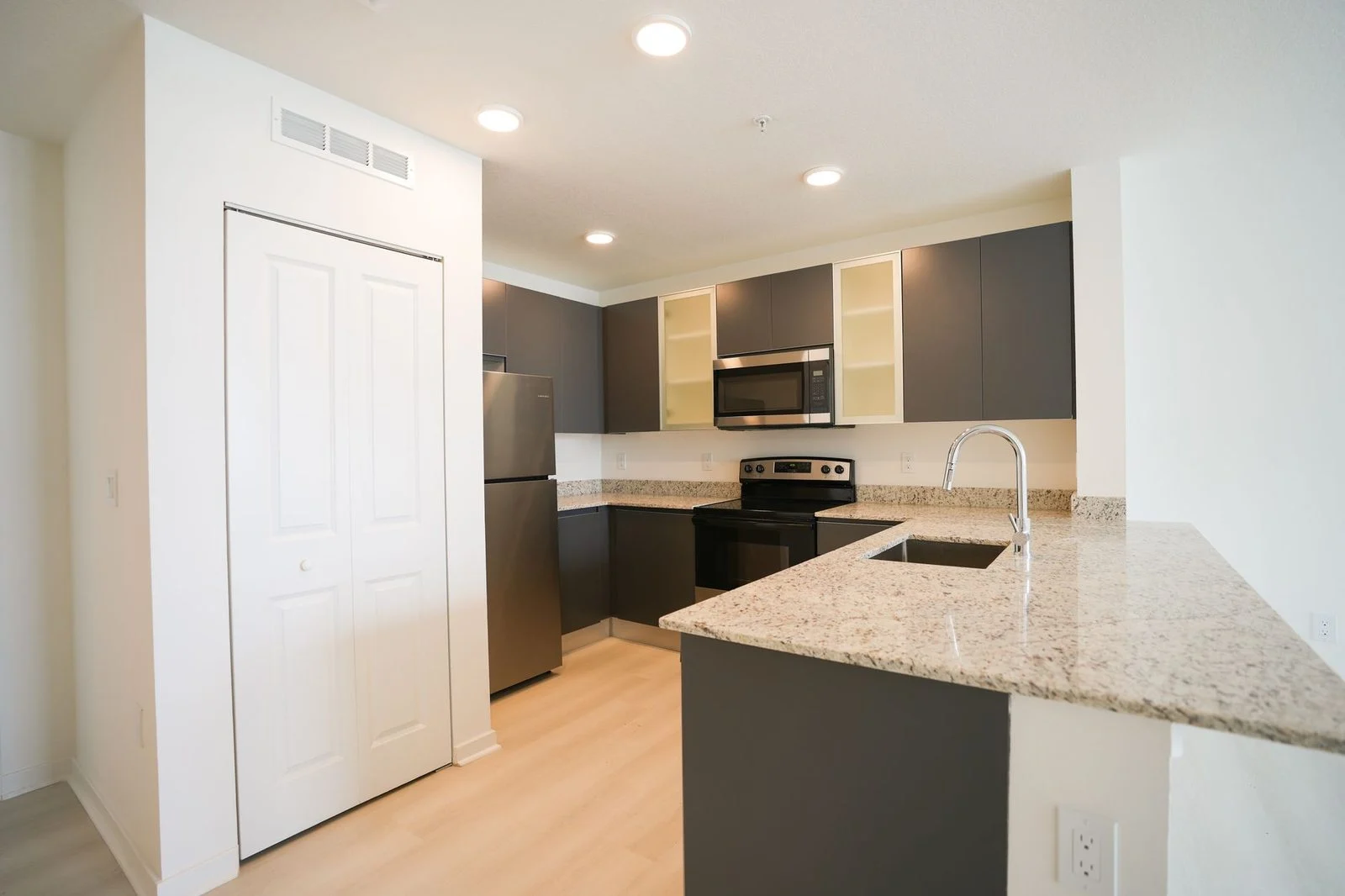
Modern kitchens emphasize clean lines, minimalist cabinetry, and integrated appliances. They work well in contemporary homes and condos and feel light and uncluttered—a priority in humid climates where visual simplicity aids airflow and reduces dust accumulation.
Transitional design blends traditional warmth with modern efficiency. Shaker-style cabinets, neutral tones, and mixed materials (wood and metal, matte and glossy finishes) appeal to homeowners who want timeless appeal without feeling dated. This style dominates in mid-range South Florida remodels.
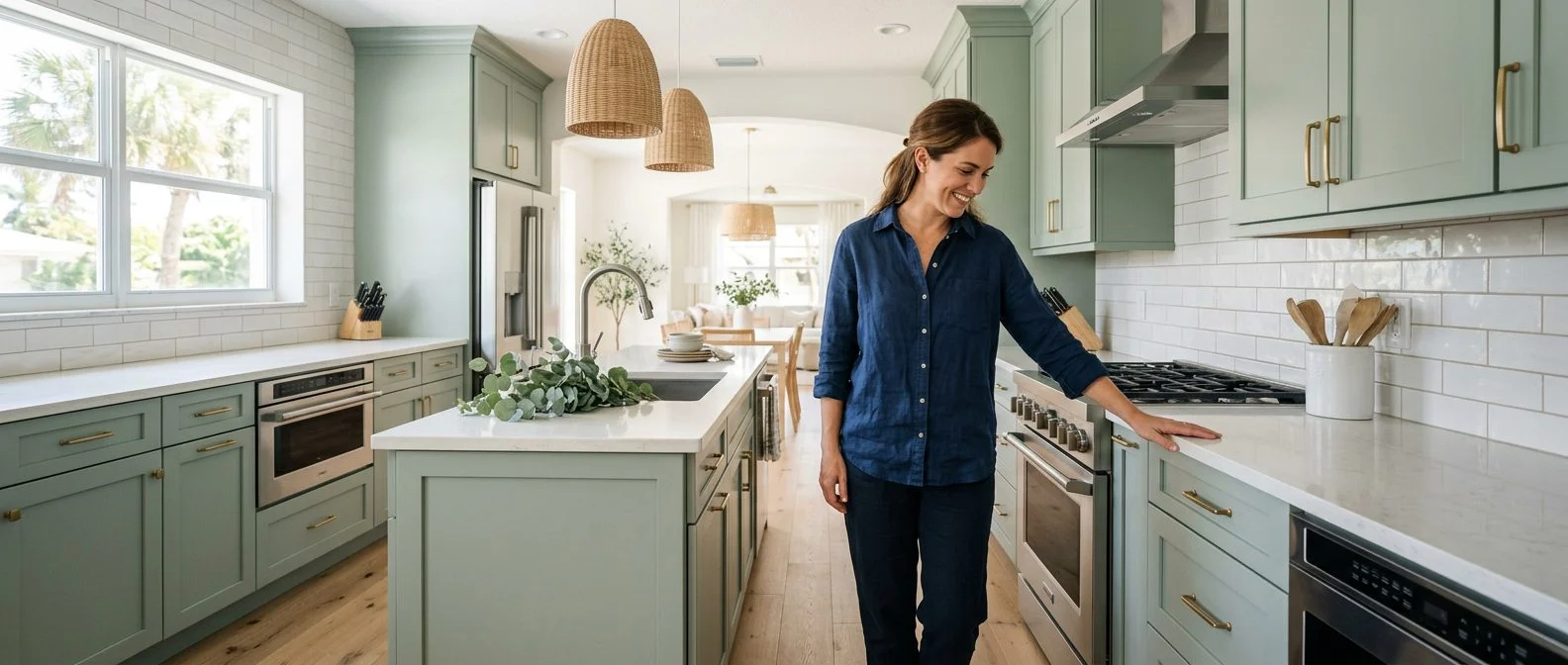
Coastal-inspired aesthetics draw on the region’s waterfront culture: soft blues, whites, natural wood, and nautical accents. These kitchens feel relaxed and connected to the outdoors—ideal for homes near the water or those with ocean views.
Open-concept layouts remain the dominant trend because they suit South Florida’s entertaining lifestyle and maximize natural light. An island becomes the centerpiece, providing storage, seating, and a natural gathering spot. Removing walls between the kitchen and living area requires structural and permitting considerations, but the payoff in flow and light is substantial.
For deeper exploration of design styles, island layouts, and lighting strategies suited to Florida homes, visit our supporting pages on modern versus transitional styles, kitchen island design, and lighting ideas.
Have questions about what happened?
Ask our team directly. The first conversation is free, confidential, and there is no obligation to continue.
Choosing Materials That Stand Up to Florida’s Climate
Material selection is where climate reality meets design choice. In South Florida, humidity and salt air are non-negotiable factors.
Countertops: Quartz offers superior moisture resistance compared to granite in high-humidity environments. Quartz is non-porous, so it doesn’t require sealing and resists bacterial growth better than natural stone. Granite, while beautiful, is porous and requires regular sealing—a maintenance burden in coastal areas where salt air can compromise the sealant. Both are durable, but quartz is the climate-smart choice for South Florida kitchens.
Cabinets: Standard wood cabinets warp and swell in humid conditions. Custom cabinetry built with moisture-resistant construction—solid wood frames, quality plywood interiors, and humidity-resistant finishes—holds up far better. Ensure your cabinet builder uses proper acclimation (allowing materials to adjust to local humidity before installation) and applies finishes that resist moisture penetration.
Flooring: Tile and luxury vinyl are far more practical than hardwood in South Florida kitchens. Porcelain tile resists moisture, salt air, and heavy traffic. Luxury vinyl plank (LVP) offers warmth underfoot and water resistance. Both are easier to clean and maintain in a humid climate than traditional hardwood.
Ventilation: High-quality range hoods and proper ductwork remove heat and moisture from cooking. In South Florida’s climate, ventilation isn’t optional—it’s essential for preventing mold and maintaining indoor air quality.
For detailed material comparisons, humidity-resistant options, and flooring guidance, see our pages on quartz versus granite countertops, humidity-resistant materials, and kitchen flooring options.
How Long Does a Kitchen Remodel Take?
Kitchen remodel timelines in South Florida typically span 6 to 12 weeks, depending on scope, material availability, and permitting.
Timeline phases:
- Design and planning (1–2 weeks) – finalizing layout, materials, and specifications
- Permitting (2–4 weeks) – structural, electrical, or plumbing changes require review and approval
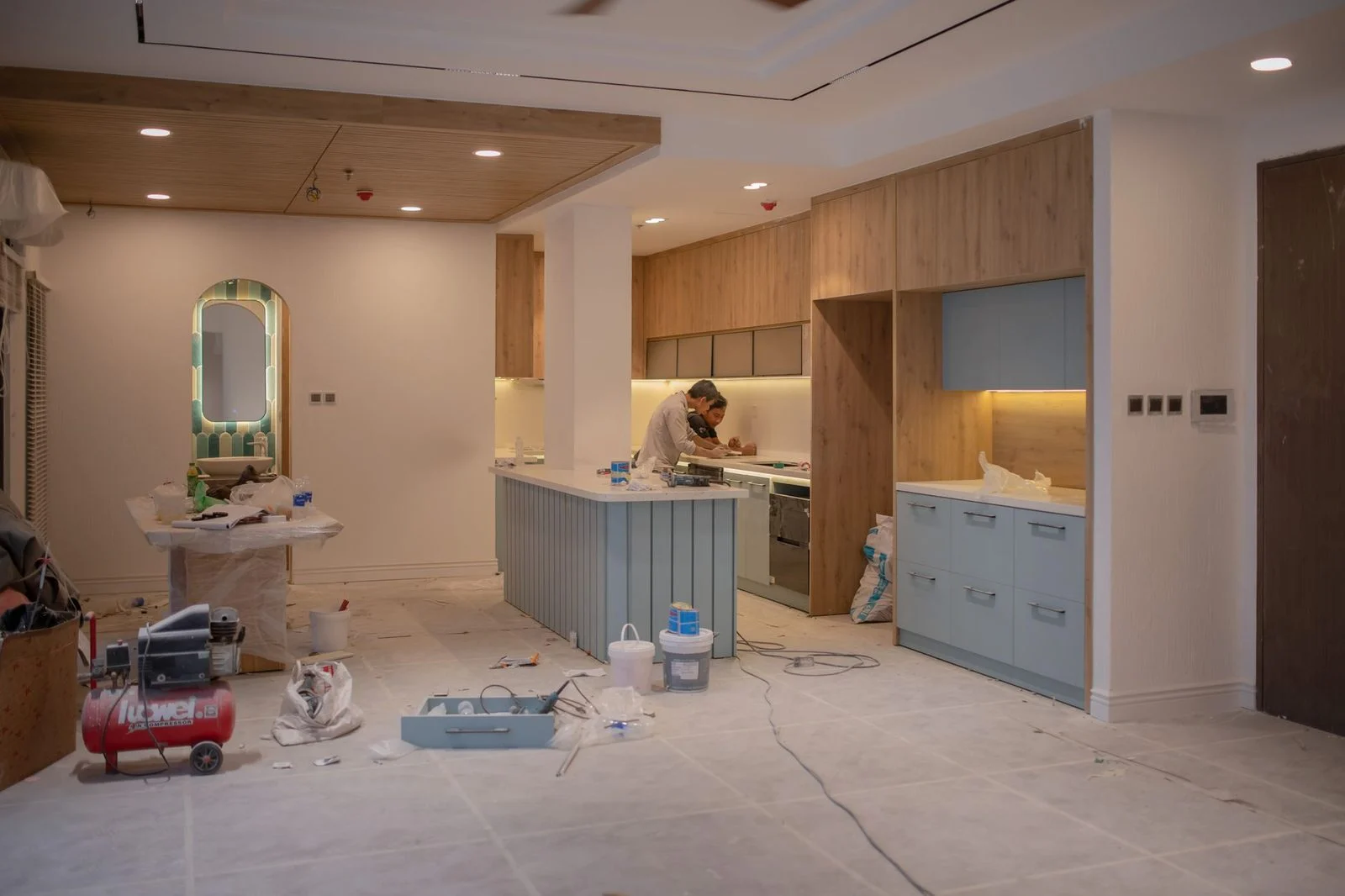
- Demolition (1 week) – removing old cabinets, countertops, and flooring
- Rough-in work (1–2 weeks) – electrical, plumbing, and HVAC updates if needed
- Installation (2–3 weeks) – cabinets, countertops, appliances, flooring
- Finishing (1 week) – trim, hardware, final details, and inspections
Why timelines vary:
- Material lead times can extend projects by 2–4 weeks if cabinets or appliances are custom or backordered
- Inspection scheduling depends on local permitting office availability
- Humidity-driven material acclimation (allowing wood and other materials to adjust to local conditions) adds time but prevents warping and failure
- Unexpected issues discovered during demolition (hidden damage, outdated wiring) can delay progress
Prepare your household for disruption: kitchens are typically out of service during the remodel, so plan meals and cleanup accordingly. Our guide on preparing your home for a kitchen remodel offers practical strategies.
For a detailed timeline breakdown and preparation checklist, visit our kitchen renovation timeline page.
Permits and Code Compliance in Florida
Most kitchen remodels involving structural, electrical, or plumbing changes require permits and inspections in South Florida jurisdictions.
The Florida Building Code governs these requirements. If your project includes wall removal, plumbing relocation, electrical upgrades, or new appliance connections, your local building department will require permits before work begins. Inspections occur at key phases (rough-in, final) to verify compliance.
Permitting adds 2–4 weeks to your timeline and requires documentation (plans, specifications, contractor licenses). It’s not optional—it protects your home’s safety and resale value and ensures the work meets current code standards.
ASP Superhome handles permitting as part of the project, managing applications, scheduling inspections, and ensuring compliance so you don’t have to navigate the process alone.
For detailed information on permit requirements, timelines, and what to expect, see our kitchen remodel permit page.
Small Kitchens and Space-Smart Remodeling
Many South Florida homes—especially condos in Miami, Fort Lauderdale, and Boca Raton—have compact kitchens. Remodeling a small space requires strategy to maximize storage, light, and workflow.
Smart strategies include:
- Vertical storage – tall cabinets and open shelving draw the eye upward and create the illusion of space
- Light colors and reflective surfaces – white or light gray cabinets and glossy finishes bounce light and feel airier
- Compact appliances – drawer-style dishwashers, slimline refrigerators, and combination microwave-convection ovens save space
- Islands with storage – a narrow island provides prep space and hidden storage without consuming floor area
- Lighting layers – under-cabinet and overhead lighting make small kitchens feel larger and more functional
For detailed strategies on small kitchen remodeling, visit our small kitchen remodeling page.
Want to know where you stand?
Tell us what happened and our team will walk you through the options available to you, at no cost.
Kitchen Remodeling Across South Florida
ASP Superhome serves kitchen remodeling projects throughout South Florida, including Miami, Fort Lauderdale, West Palm Beach, Kendall, Naples, Fort Myers, and Boca Raton.
Each community has unique considerations. Coastal homes (Miami, Fort Lauderdale, Boca Raton, Naples) face accelerated salt-air corrosion, making material durability even more critical. Inland communities (Kendall, West Palm Beach, Fort Myers) experience intense heat and humidity but less salt exposure. Condo buildings often have architectural guidelines or HOA restrictions on exterior changes, which can affect window and door upgrades that complement a kitchen remodel.
Visit our city-specific pages to learn how kitchen remodeling fits into the broader home solutions available in your area.
Planning Your Next Step
If you’re standing at the crossroads—comparing whether to do a full kitchen remodel, a partial update, or wait—you’re weighing real decisions: budget, layout, materials, and timing.
A kitchen remodel is a significant commitment, and it’s natural to want clarity on scope, cost, and timeline before moving forward. When you reach out to ASP Superhome, you’ll get a free estimate and a straightforward walkthrough of what your project involves, what it will cost, and how long it will take. We’ll discuss your priorities, the climate considerations unique to your home, and how your kitchen upgrade might integrate with other home improvements like impact windows or solar panels.
Homeowners at this exact stage—researching, comparing, and ready to talk specifics—can reach out to us. If you’re ready to move from research to planning, contact us to book your free estimate and get answers tailored to your home and goals.
Why Your Kitchen Remodel Matters in South Florida
Climate-Smart Materials
South Florida's heat, humidity, and salt air demand finishes and fixtures built to last. The right choices protect your investment and reduce maintenance headaches.
Design for Your Lifestyle
Whether you're drawn to open-concept layouts, modern minimalism, or coastal aesthetics, your kitchen design should reflect how you actually live and entertain.
Realistic Timelines
Understanding the permitting process, material lead times, and construction phases helps you plan without surprises.
Permitting & Compliance
South Florida has specific building codes and permit requirements. Proper planning ensures your remodel meets all local standards.
Key Phases of Your Kitchen Remodel
Design & Planning
Define your vision, select materials suited to Florida's climate, and establish your budget. This phase sets the foundation for everything that follows.
Permitting & Approvals
South Florida municipalities require permits for structural changes, electrical work, and plumbing. Allow time for review and inspections.
Construction & Installation
Demolition, framing, electrical, plumbing, and finish work proceed in sequence. Expect 4–12 weeks depending on scope and complexity.
Final Inspection & Handoff
Local inspectors verify code compliance. Once approved, your new kitchen is ready to use.
Plan for Florida's Climate
Humidity and salt air accelerate wear on standard materials. Invest in moisture-resistant cabinetry, stainless steel or coated hardware, and finishes rated for coastal environments. This upfront choice saves repair costs and extends the life of your kitchen.
Popular Kitchen Remodeling Styles in South Florida
Open-Concept Living
Remove walls to merge kitchen, dining, and living spaces. Ideal for entertaining and maximizing natural light in Florida homes.
Coastal & Transitional
Light palettes, natural textures, and indoor-outdoor flow reflect South Florida's waterfront lifestyle.
Modern Minimalist
Clean lines, handleless cabinetry, and integrated appliances create a sleek, low-maintenance aesthetic.
Mediterranean & Spanish Colonial
Warm tones, decorative tile, and arched openings honor South Florida's architectural heritage.


