


Tile Roofing | South Florida
Can You Install a Tile Roof Over Existing Tile?
Sometimes. Whether it works depends on your home's structure, the roof deck, the condition of the current tile, and the permit and HOA rules that apply to your property. Here is what to weigh before you decide.
By Jonathan Rodriguez · Published October 26, 2026
Short Answer: Can a New Tile Roof Go Over an Old One in Florida?
In some cases, yes. A new tile roof can sometimes go over an existing tile roof in Florida, but only if that specific roof allows it. The answer depends on code compliance, the roof’s structure, the condition of the old tile and underlayment, and local rules like HOA and permit requirements.
There is no single yes-or-no answer that fits every home. Two homes with the same age and tile type can get different answers. The facts of each roof decide the outcome.
Removing the old tile first is the more common path. This is called a tear-off. It lets the crew check the roof deck and underlayment and repair what is damaged before new tile goes on. For the basics of tile roofing in South Florida, read our complete tile roofing guide for South Florida.
Not sure what your next step is?
Talk it through with our team — the first consultation is free, confidential, and carries no obligation.

Why Homeowners Ask About Skipping the Tear-Off
Homeowners usually ask because they want to avoid a big, messy project. Skipping the tear-off can mean less debris, less labor, and a shorter timeline. Those goals are reasonable to consider.
Old tile is heavy and breaks easily. Removing it means carrying loads of broken pieces off the roof. An overlay can look like a way to skip that work entirely.
Still, the old tile does not disappear. It stays in place and becomes part of the new roof system. If it is hiding damage, that damage stays under the new tile.
Each reason has to be weighed against code, structure, and long-term performance. The overlay question is a technical one. Cost and convenience alone should not decide it. The sections below cover the factors that decide it for a specific home.
What the Florida Building Code Says About Reroofing
The Florida Building Code governs roof repair and replacement across the state. Under Fla. Stat. § 553.73, the code governs the design, alteration, modification, and repair of buildings. Under Fla. Stat. § 553.73, the version of the Florida Building Code that is current on the day an application for a permit is submitted controls the work covered by that permit through its full term and any extension granted to it.
Roofing work also needs a permit. Your local building department reviews the job before work begins.
Some rules depend on how much of the roof changes. For an existing roof built, repaired, or replaced in compliance with the 2007 Florida Building Code or a later edition, Florida Statutes section 553.844 provides that when 25 percent or more of that roofing system or roof section is repaired, replaced, or recovered, only the repaired, replaced, or recovered portion must be built to the Florida Building Code in effect at that time.
Code requirements like these affect whether a tile-over-tile approach fits a particular home. Ask how the current code applies to your roof’s age and the amount of work planned.
Structure, Layers, and the Roof Deck
Tile is heavy, so structure matters most. The roof framing, rafters, and trusses must carry the weight of the old tile and the new tile together. That load has to be checked, not guessed.
The roof deck sits under the tile. It is usually plywood or OSB. The deck must be sound. Rot, water staining, or soft spots can rule out adding new roofing on top. A weak deck cannot hold tile fasteners well in a storm.
Existing layers also change the picture. The underlayment type and the number of layers already on the roof both matter. Each layer adds weight and can hide problems below. One tile layer over a sound deck is a very different case from several layers over a soft spot.
A structural review of the roof is the step that shows whether the framing can take the added load. It also shows the condition of the deck beneath the old tile. Do not skip this step, even if the surface looks fine from the ground.
Condition of the Existing Tile and Underlayment
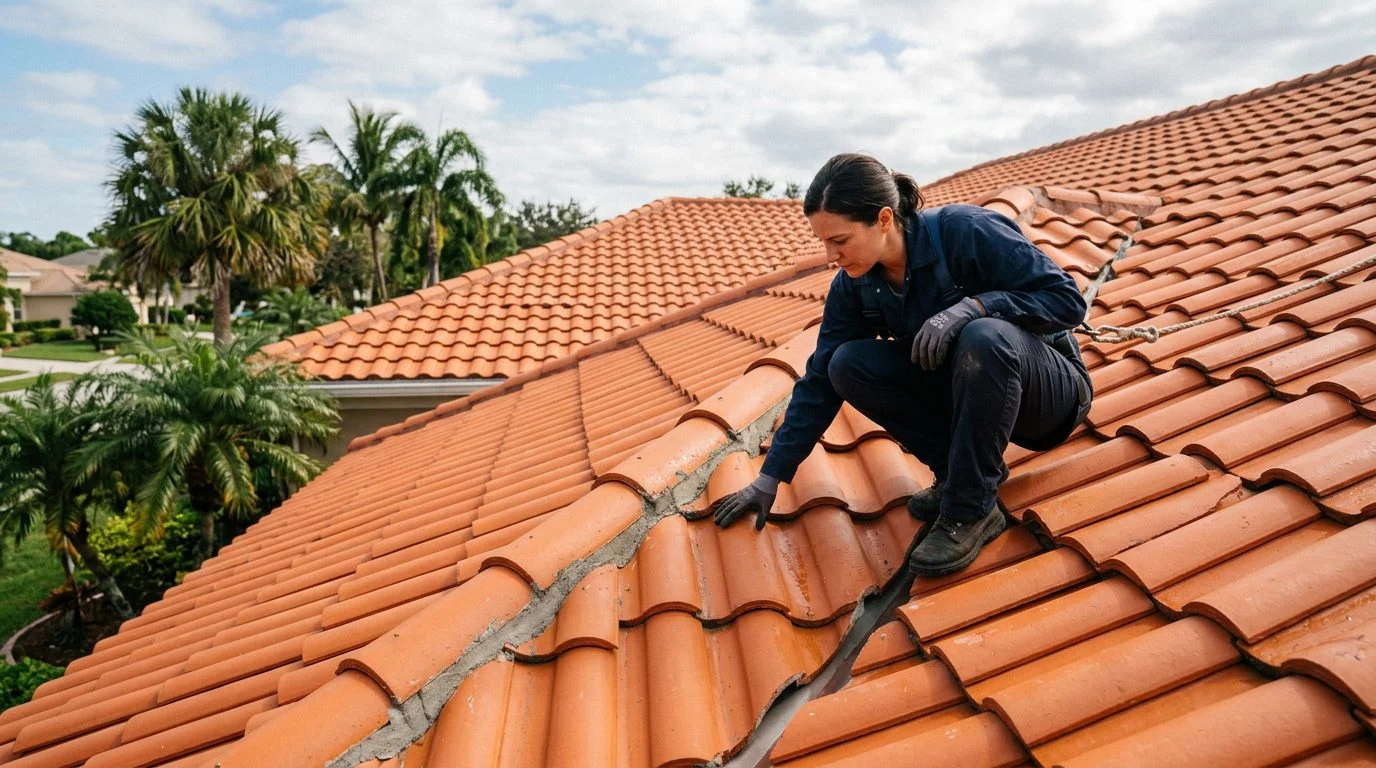
Look for cracked or broken tiles, tiles that have slipped or shifted, faded or brittle surfaces, and worn underlayment. These signs point to an aging roof. They also suggest water may have found a way in.
Water can get under tile that looks intact. The underlayment and deck matter as much as the tile on top. A roof can look fine from the street and still leak at the underlayment.
Slipping tiles deserve attention. They can point to fastening or underlayment problems, not only to broken pieces. Do not assume a slipping tile is a cosmetic issue.
In general, a roof in poor condition calls for a different approach than one that is sound and watertight. A tear-off lets the crew see the full roof. An overlay asks the old roof to keep doing its job under the new one.
HOA Rules, Permits, and Required Paperwork
Many South Florida communities have homeowners associations (HOAs). Florida Statutes section 720.3035 requires the board to adopt hurricane protection specifications for each structure or other improvement on a parcel governed by the association, and those specifications must comply with the applicable building code. Those specifications must comply with the applicable building code.
Under § 720.3035, the board may not deny an application to install, enhance, or replace hurricane protection that conforms to those specifications, though it may require the owner to adhere to an existing unified building scheme regarding external appearance. The statute also says hurricane protection includes roof systems recognized by the Florida Building Code that meet ASCE 7-22 standards.
HOA rules may also cover tile profile, color, or appearance, but only to the extent the declaration or other published guidelines and standards authorized by the declaration specifically state or reasonably infer that authority; the statute does not list installation method. Check the governing documents before you plan the job. A roof that meets the building code can still face association review.
Permit paperwork supports the review. Expect to provide a scope of work, product approval information, and installation details. Under Fla. Stat. § 553.842, roofing is one of the product categories that must be approved statewide. These paperwork requirements can shape the overlay decision as much as the structure does.
Not sure what your next step is?
Talk it through with our team — the first consultation is free, confidential, and carries no obligation.
Overlay Versus Tear-Off: Durability, Heat, and Hurricane Performance
A tear-off lets the crew inspect and replace the deck and underlayment where needed. That check is a major factor in how the roof performs over time. An overlay skips that look at the parts under the tile.
Heat is a real concern in Florida. How the roof assembly and attic ventilation work together affects how hot the attic runs. Adding a layer changes how heat moves through the roof. Ventilation and insulation should be part of the planning, not an afterthought.
Tile itself is a durable covering. Industry guidance from the NRCA on roofing materials covers how clay and concrete tile are used as roof coverings. Durability still depends on the system underneath.
Hurricane performance depends on the whole roof system. Attachment, roof-to-wall connections, and the deck all matter, not only the tile. The Tile Roofing Industry Alliance installation guides cover tile installation practices, including high-wind applications. Neither path is automatically the better choice for every home.

Next Step: Talking Through Your Own Tile Roof
Common questions
Can you install a tile roof over existing tile in Florida?
Sometimes. It depends on the structure, the deck, the tile condition, and the permit and HOA rules for the property.
Do you need a permit to do it?
Yes. Florida law makes it unlawful, unless otherwise provided by law, to repair or alter a building without first getting a permit.
Does the 25 percent rule apply to every roof?
No. It applies to roofs built, repaired, or replaced under the 2007 Florida Building Code or a later edition, when 25 percent or more is repaired, replaced, or recovered.
If your tile roof is cracked, slipping, or nearing the end of its life, you may be weighing whether to add a layer or remove the old tile first. The right answer turns on your roof’s age, its tile, its deck, and the rules that apply to your property. The first consultation with ASP Superhome is free, confidential, and comes with no obligation to continue. To talk through your own roof, reach out through our contact page.
How ASP Superhome Can Help
Honest Evaluation
We look at your existing roof, decking, and structure to tell you whether a tile-over-tile installation is a sound option for your home.
Permit Guidance
We help you understand the permit steps and paperwork involved so your project starts on solid ground.
Complete Roofing Options
Tile roofing, metal roofing, roof repair, and full roof replacement are all handled under one roof, so you get advice that fits your home.
Free First Consultation
Your first consultation is free, confidential, and comes with no obligation to continue.
Check Before You Commit
Adding new tile over old tile can add significant weight and hide problems underneath. Have the roof, the deck, and the property's permit and HOA requirements reviewed before you choose this approach.
Key Factors to Consider
Structure and Roof Deck
The framing and decking must be able to carry the added weight and hold fasteners securely. Hidden rot or damage can rule out an overlay.
Condition of the Existing Tile
Cracked, loose, or missing tiles and worn underlayment often call for repair or replacement rather than a new layer on top.
Permits and Property Rules
Roof work in Florida generally requires a permit, and HOA or community rules may limit materials, colors, or methods.
Long-Term Performance
Choosing the right approach now helps protect your home from wind, rain, and heat for years to come.
Not Sure Whether Your Roof Can Take a New Layer? Let's Take a Look.
Related practice areas
- Do Tile Roofs Keep a Florida House Cooler?
- Roof Tiles Slipping or Sliding Out of Place: What to Do
- Hurricane Code Requirements for Windows in Florida


