


Tile Roofing · South Florida
Is Your Tile Roof Underlayment Still Protecting Your Home?
Underlayment is the water barrier beneath your tiles. Learn what to check in South Florida's climate, and when it's time to re-lay or replace it. Start with a free, confidential first consultation with no obligation.
Start with a clear, no-pressure look at your roof
Free
First consultation
Confidential
Your information stays private
No obligation
Decide with no pressure to continue
By Jonathan Rodriguez · Published October 25, 2026
Do I need new underlayment when I replace a tile roof? Often, the answer is decided once the tiles are off. Underlayment is the water barrier under your tiles. Its condition, not the tile’s, tells you whether it can be re-laid or must be replaced. This page offers general information about roofing, window, door, solar, and kitchen remodeling projects in South Florida. If you’re reading this for a family member, or after a leak or storm, that’s a hard place to stand.
What Is Tile Roof Underlayment and Why It Matters
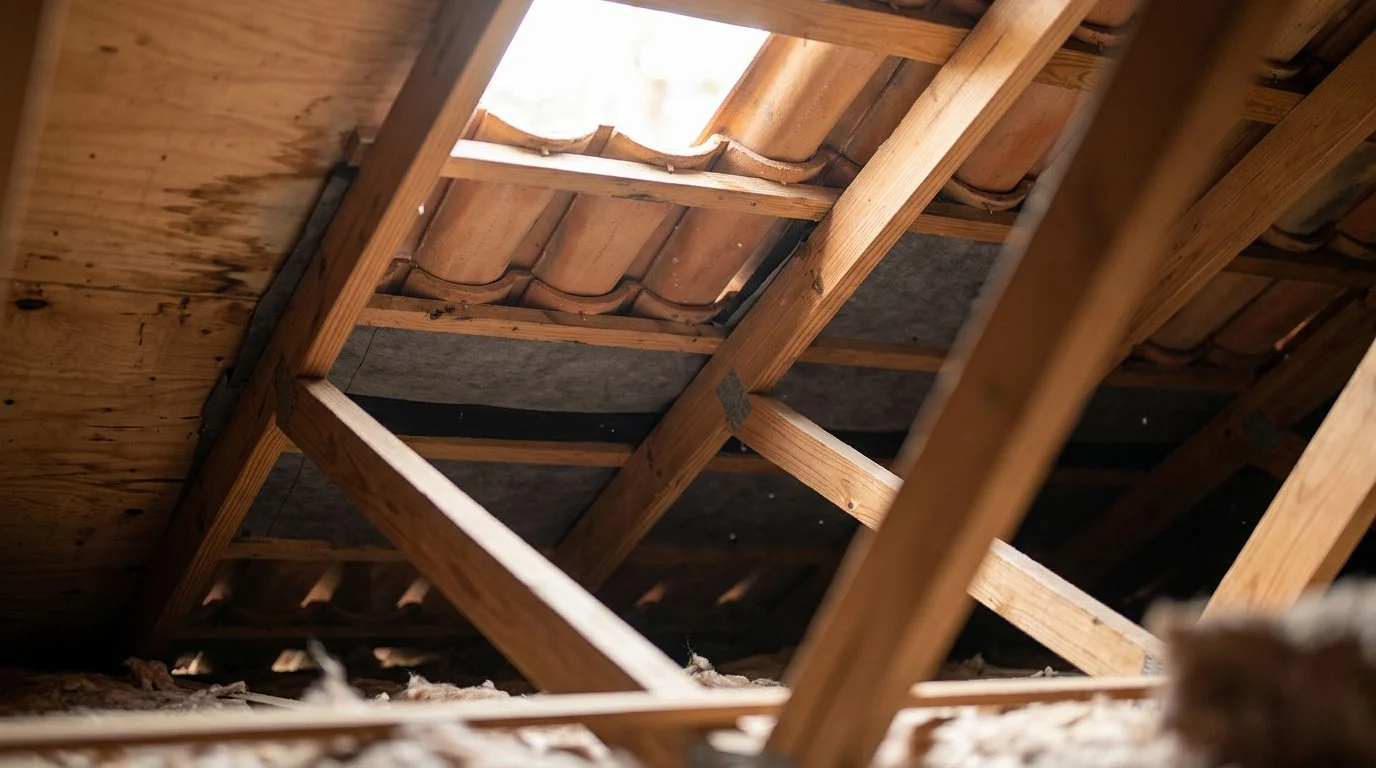
Tile roof underlayment is the water-resistant layer installed under the tiles, directly on the roof deck. The tiles shed most of the rain. The underlayment is the backup. When wind drives rain up and under the tiles, this layer keeps water off the deck and out of the attic.
Tile and underlayment don’t age at the same rate. A tile roof can look sound from the ground while the layer beneath it has worn down. That gap is why the underlayment question comes up during tile work.
Water can travel a long way under a tile before it shows up on a ceiling. By the time you see a stain, the layer may have been failing for a while. For a broader look at tile roofing in South Florida, read our tile roofing guide.
If a leak, an inspection, or a storm has you asking whether your tile roof's underlayment needs replacing, our team can talk it through with you. Talk it through with our team — the first consultation is free, confidential, and carries no obligation.
Signs Your Tile Roof Underlayment May Be Failing
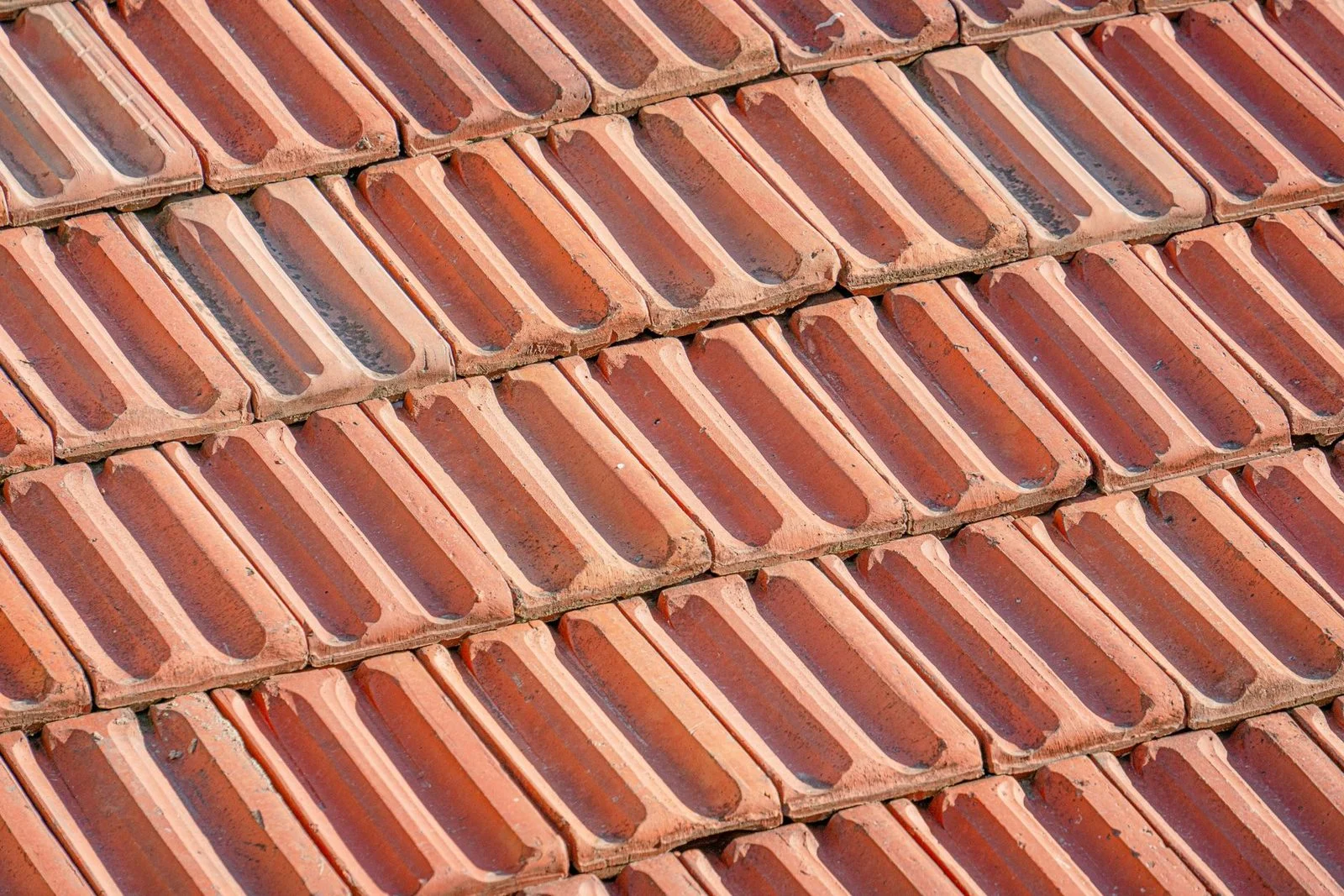
The most common signs are ceiling stains after rain and leaks that return after tile repairs. Watch for these signs after heavy rain, not only in dry weather.
- Ceiling stains or damp spots after rain, especially near valleys, vent pipes, and along the eaves.
- Tiles that have shifted, cracked, or come loose, which can expose the layer below to sun and water.
- Brittle, cracked, or crumbling felt at roof edges, or where tiles were lifted during a past repair.
- Soft or stained decking, found when tiles come off. This means water has moved past the underlayment.
- Leaks that come back after the same tiles were fixed. The problem may sit under the tile, not in it.
A stain shows where water appeared, not always where it got in. A close inspection, with the tiles lifted, gives the clearest answer.
Does Replacing the Tiles Mean Replacing the Underlayment?
Not always. Full tile replacement usually exposes the underlayment, so its condition can be checked directly. Once the tiles are off, the crew can see the felt or membrane and the deck beneath it. The decision follows what they find.
Re-laying means lifting the tiles, inspecting and replacing the underlayment, and setting the tiles back in place. Full replacement means the old layer comes off and a new one goes down. A tile repair is different. A repair may fix one area and leave the rest alone, so the underlayment question can stay open.
This question comes up often because the answer isn’t visible from the ground. The tile can look whole while the felt beneath it has cracked. The inspection, not the tile, drives the choice.
Underlayment Materials: Felt, Synthetic, and Self-Adhered
The three common types are asphalt-saturated felt, synthetic underlayment, and self-adhered membrane. Many tile roofs use more than one.
Asphalt-saturated felt is the traditional option. It’s a mat soaked in asphalt. Over years of sun and heat, felt can dry out, crack, and lose its water resistance.
Synthetic underlayment is made from polymers. It resists tearing and moisture, and it is commonly used with tile.
Self-adhered underlayment, sometimes called peel-and-stick, bonds directly to the deck. Installers often use it in valleys and around penetrations, where water tends to collect.
The right mix depends on the roof’s design, slope, deck, and code requirements. The Tile Roofing Industry Alliance publishes tile roof installation guides that cover code requirements and approved products for high-wind applications in Florida. Florida’s strong sun and hot attics are why material choice matters here.
Florida Building Code and Wind-Zone Requirements
The Florida Building Code is deemed adopted for use statewide without adoptions by local government, per Fla. Stat. § 553.73. The code contains or incorporates the laws and rules that govern the repair and alteration of buildings, under Fla. Stat. § 553.73.
Unless otherwise provided by law, it’s unlawful to repair or alter a building without first getting a permit, under § 553.79. Permits are how local officials check the work against code.
Local rules add detail.
State law also addresses secondary water barriers. Under § 553.844, the windstorm mitigation criteria for site-built, single-family residential structures constructed before the implementation of the Florida Building Code may not be limited to one method or material for a secondary water barrier.
On the “new law” question, under Florida Statutes § 553.8425(7), a product’s approval remains valid only until the product changes in a way that decreases its performance, a code change requires increased performance, or the approval is suspended or revoked, and that provision applies to products approved for structural windload compliance. Under § 553.8425, for products approved for structural windload compliance, changes to the code do not void the approval of products previously installed in existing buildings if they met building code requirements at the time of installation.
How Long Does Tile Roof Underlayment Last in Florida?
No single number fits every roof. Underlayment life depends on the material, how it was installed, sun exposure, attic ventilation, and the heat cycles common in South Florida.
Felt tends to break down faster under sun than synthetic products do. Self-adhered membranes behave differently, and they are often used in valleys where water gathers.
Roof age alone doesn’t settle the question. Tile can outlast the layer under it. An older roof may have a sound underlayment, and a newer one may not.
Poor attic ventilation can add heat that stresses the layers above the deck. A closer look at the deck and felt during tile work gives a clearer picture of what’s left than age does. The answer depends on the facts of each roof.
Not sure what your next step is?
Talk it through with our team — the first consultation is free, confidential, and carries no obligation.
Re-Laying Versus Full Underlayment Replacement, Section by Section
Re-laying one section can make sense when the underlayment is sound elsewhere. Full replacement fits better when wear is widespread.
Roofs don’t wear evenly. Valleys, where water concentrates, often show trouble first. Chimneys and vent pipes are common leak points too. Crews can address these areas in sections. Our guide on tile roof leaks around a chimney covers that problem in more detail.
Florida law adds a rule for partial work. Section § 553.844 provides that if an existing roofing system or roof section was built, repaired, or replaced in compliance with the 2007 Florida Building Code or any subsequent edition, and 25 percent or more of such roofing system or roof section is being repaired, replaced, or recovered, only the repaired, replaced, or recovered portion is required to be constructed in accordance with the Florida Building Code in effect, as applicable.
The inspection results drive the decision. Under § 553.844, if an existing roofing system or roof section was built, repaired, or replaced in compliance with the 2007 Florida Building Code or any subsequent edition, and 25 percent or more of it is being repaired, replaced, or recovered, only the repaired, replaced, or recovered portion must be built to the Florida Building Code in effect.
Hurricane Readiness Starts Before a Storm Is Named
Underlayment is part of the roof’s backup defense against wind-driven rain during hurricane season. When wind lifts or displaces tiles, the layer below is what keeps water off the deck.
A worn underlayment can let water reach the deck in a storm, even when every tile stays in place. That water can soak insulation and ceilings before anyone sees a stain. That’s why roof condition matters before a storm, not only after one.
Florida law treats roof fasteners as part of windstorm mitigation. § 553.844 lists strengthening or correcting roof-decking attachments and fasteners during reroofing. It also lists secondary water barriers for roofs.
For how storm damage affects the decision to replace a tile roof, see our hurricane damage guide. For how roof choices affect attic heat, see our tile roof cooling guide.
Talking Through Your Roof’s Underlayment With Our Team
Once you have the facts, a conversation with ASP Superhome can help you sort out your next step. Many people asking this question are doing so for a parent or family member. Others face a leak, an inspection report, or storm damage they didn’t plan for. That position is stressful, and questions pile up fast.
How often should I replace underlayment on a tile roof?
There is no set schedule that fits every roof. Once the tiles are off, the layer’s condition decides whether it’s re-laid or replaced.
Is there a new Florida law about roofs?
Florida roof work follows the Florida Building Code and the statutes cited above.
Does a tile roof replacement need a permit in Florida?
Under Florida law, repairing or altering a building generally requires a permit first, unless otherwise provided by law. That permit is how local officials check the work against code.
If you’re weighing whether your tile roof’s underlayment needs replacing, contact ASP Superhome to talk it through. The initial consultation is free, confidential, and comes with no obligation to continue (consulta inicial gratuita, confidencial y sin compromiso).
What we look at when we inspect underlayment
Age and material
We review the type of underlayment installed and how it has aged in South Florida's heat, humidity and sun.
Signs of water intrusion
We check for staining, soft decking, mold odor and leaks that may have traveled along the underlayment before showing inside.
Condition once tiles are off
Removing tiles is the moment to judge the layer itself. Brittle, torn or failing underlayment is easiest to address during that work.
Clear options explained
Our team walks you through whether the existing layer can be re-laid or should be replaced, so you can decide with the facts in front of you.
Don't assume a tile roof is sound because it looks intact
Tiles can hide a failing underlayment. Water often gets past the tiles before any stain shows on your ceiling. If you notice leaks, damp insulation or loose or cracked tiles, have the roof looked at promptly.
Common questions homeowners ask
How often should underlayment be replaced?
There is no set schedule that fits every roof. Its condition, once the tiles are off, usually decides whether it is re-laid or replaced.
Does tile roof repair always mean new underlayment?
Not always. A small tile repair may not touch the underlayment, but widespread leaks or deterioration often call for more extensive work.
Can underlayment be upgraded with the roof?
Yes. When a roof is replaced, the underlayment can be upgraded at the same time, which often makes the job more efficient.
Is this work covered by Florida building rules?
Roof work in Florida follows the Florida Building Code. We can explain how it applies to your project during your consultation.


