


Tile Roofing · West Palm Beach
Tile Roof Underlayment Repair in West Palm Beach
Underlayment sits beneath your tile and does much of the work of keeping water out. ASP Superhome inspects the underlayment and deck, then repairs what needs attention.
Your first consultation
Free
First consultation
Confidential
Your information stays private
No obligation
No commitment to continue
By Jonathan Rodriguez · Published October 24, 2026
Tile roof underlayment repair West Palm Beach homeowners need fixes the water barrier and roof deck under the tile. The tile sheds rain, but the layers below do the waterproofing. When those layers fail, water can reach your ceiling far from where it got in.
This page explains the warning signs, what a repair includes, how the work runs, and how to decide between repair and replacement.
What tile roof underlayment and deck repair covers
Underlayment and deck repair restores the hidden layers that keep water out of your home. The underlayment is the water-resistant sheet between the roof deck and the tile. The deck is the plywood or OSB sheathing that holds the tile and carries the roof’s load.
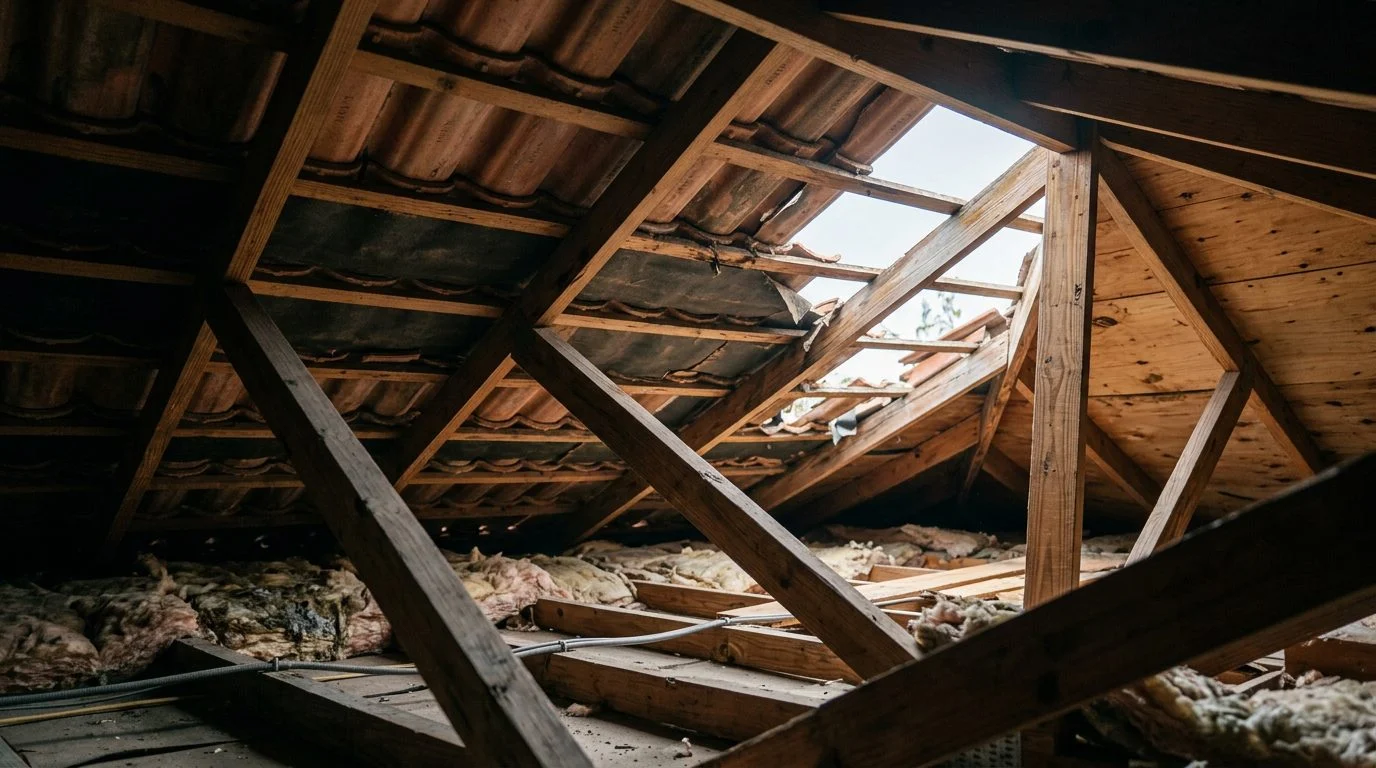
Tile is a shedding layer, not a waterproof one. Water that gets past a cracked tile or a worn flashing joint usually runs across the underlayment. If that layer is torn or aged, water soaks into the deck. Wet sheathing can soften and rot, and the stain often shows up on a ceiling well away from the entry point.
This repair suits owners of concrete or clay tile roofs who see leaks, ceiling stains, sagging, or storm damage. In West Palm Beach, the work starts with finding exactly where water is getting in, not just patching what you can see.
Not sure what your next step is?
Talk it through with our team — the first consultation is free, confidential, and carries no obligation.

Warning signs your underlayment or deck needs attention
Most owners notice trouble inside the home before they see it outside. Check for these signs after rain or a strong storm.
- Inside: ceiling or wall stains, peeling paint, a musty smell, or drips during rain.
- Outside: cracked, slipped, or missing tile, loose ridge or hip caps, and granules or debris from under the tile in gutters.
- On the roof: soft or spongy spots underfoot, or dips and uneven lines along the roof plane.
You can check the attic safely from inside. Look for daylight through the boards, wet or matted insulation, dark stains on the underside of the sheathing, and rusted nail heads.
Storm damage can loosen tile and tear underlayment without an obvious leak right away. Have the roof checked after a strong storm, even when the ceiling looks dry.
What a tile roof underlayment and deck repair includes
A full repair covers inspection, tile removal and reset, new underlayment, deck repair, flashing, and cleanup. Each part should appear as its own line in your estimate.
- Inspection and photos. The crew documents the tile, underlayment, flashing, and attic sheathing, with a written list of findings.
- Controlled tile removal and reset. Sound tiles are lifted, set back, and secured. Damaged tiles are replaced.
- Underlayment replacement. The damaged area gets new underlayment. The material is matched to the roof’s pitch and condition. Common options include self-adhered membranes and synthetic underlayments.
- Deck repair. Rotted or delaminated sheathing is cut out and replaced. Framing is reinforced where needed, and the new boards match code thickness and fastening.
- Flashing and penetrations. Valleys, wall joints, vents, and pipe boots get new flashing and seals, since many leaks start at these points.
- Fasteners and clips. Corroded nails and worn tile clips or straps are replaced where the roof needs them.
- Cleanup. Debris and loose nails are removed from the work area, including a magnetic sweep.
How the repair process works and what to expect
The repair runs in stages, and each stage should be clear in your estimate. Florida law sets rules for permits and contracts along the way.
- Free first consultation. An on-site inspection finds the leak paths, the damaged deck areas, and the roof sections affected.
- Written estimate. Tile reset, underlayment, deck repair, and flashing appear as separate line items.
- Permit and scheduling. Unless otherwise provided by law, Florida law requires a permit from the enforcing agency before a building is repaired Fla. Stat. § 553.79. Our team handles the paperwork and coordinates with the local building department.
- Staged work. Tile comes off the affected zone, the deck is inspected and repaired, underlayment goes down, then tile is reset and flashing is finished.
- Final walkthrough. You review the completed areas, and photos document the finished work.
The schedule turns on the size of the damaged area, the deck condition found after tile removal, and permit timing. Your estimate should state the expected schedule for your roof.
Photos and written findings from the inspection can support your own talks with your insurer. The insurer and your policy decide what gets paid.
Repair or replacement: how to decide
A repair fits when the damage is localized, the deck is mostly sound, and the remaining tile can be reset and secured. Replacement becomes the stronger option when deck damage is widespread, the tile is brittle, or leaks return after earlier repairs.
The Florida Building Commission’s staff analysis addresses the 25% rule for roof repairs, along with the use of existing concrete roof tiles Florida Building Commission staff analysis. How that rule applies to your roof depends on its condition and local permit requirements. The inspection sets the answer for your home.
Roof age matters for insurance, too. Keep past permits and inspection reports with your insurance papers.
ASP Superhome in West Palm Beach
ASP Superhome gives West Palm Beach homeowners a written, itemized scope for tile roof underlayment and deck work. The company offers complete home solutions across South Florida, including tile roofing, metal roofing, roof replacement, roof repair, impact windows and doors, solar panels, solar battery backup, and kitchen remodeling.
- Documented inspections: photos and written findings tied to what the crew finds in the attic and on the roof.
- Itemized estimates: tile, underlayment, deck, and flashing costs appear separately, so you can see what each covers.
- Coordinated scheduling: our team handles scheduling, permit paperwork, and updates throughout the job.
- Related services: metal roofing, impact windows and doors, and solar work are available for the same home.
The free first consultation is confidential and carries no obligation to continue.
Not sure what your next step is?
Talk it through with our team — the first consultation is free, confidential, and carries no obligation.

Frequently asked questions about tile roof underlayment repair
Which underlayment works for a tile roof?
ASP Superhome selects the underlayment during the inspection, based on your roof’s slope, deck condition, and code requirements. The choice is listed in the estimate.
Can a tile roof last 50 years?
Concrete and clay tile can last for decades. The underlayment and deck beneath often set how long the roof performs, so timely repairs to those layers matter.
Your contractor should confirm permit needs for your address.
How long do I have to report a roof claim in Florida?
Under Florida law, notice of a property insurance claim generally must reach your insurer within 1 year after the date of loss Fla. Stat. § 627.70132. A supplemental claim has 18 months.
What is the 25 rule in roofing?
It is a damage-share guideline that the Florida Building Commission addresses in its staff analysis, linked above. Its application to your roof turns on the inspection and local permit rules.
Will a repair stop all future leaks?
A repair fixes the leak paths found during inspection. Periodic checks help catch new wear early.
If a stain has appeared on your ceiling after a storm, or the roof feels soft when you walk it, the underlayment and deck need a look before the damage spreads. Book your free first consultation with ASP Superhome and get a written scope for your West Palm Beach tile roof.
What we check during a repair visit
Underlayment condition
We look at the underlayment for brittleness, tears, and areas where it has deteriorated under the tile.
Deck condition
We check the roof deck beneath the underlayment for soft spots, moisture, and wear that could affect the repair.
Code-compliant selection
The underlayment is chosen based on your roof's slope, deck condition, and code requirements, and the choice is listed in your estimate.
Clear next steps
You receive a written estimate that explains the scope of work before you decide anything.
Don't wait on visible leaks
Water can reach the deck through damaged underlayment before you see a stain or drip inside. If you notice cracked or slipping tiles, or water stains on ceilings, schedule an inspection.
How the process works
1. Contact us
Tell us about your tile roof and the problem you have noticed. Your first consultation is free, confidential, and carries no obligation to continue.
2. Inspection
Our team inspects the tile, underlayment, and deck to identify the source of the problem.
3. Written estimate
We explain the repair, the underlayment we recommend, and the cost in an estimate you can review.
4. Repair
Once you approve the estimate, our team completes the underlayment repair and resets the tile.
Protect your tile roof with a free consultation
Related practice areas
- Tile Roofing in South Florida: Costs, Styles & Installation Guide
- Tile Roof Ridge Cap Repair Naples | ASP Superhome


