


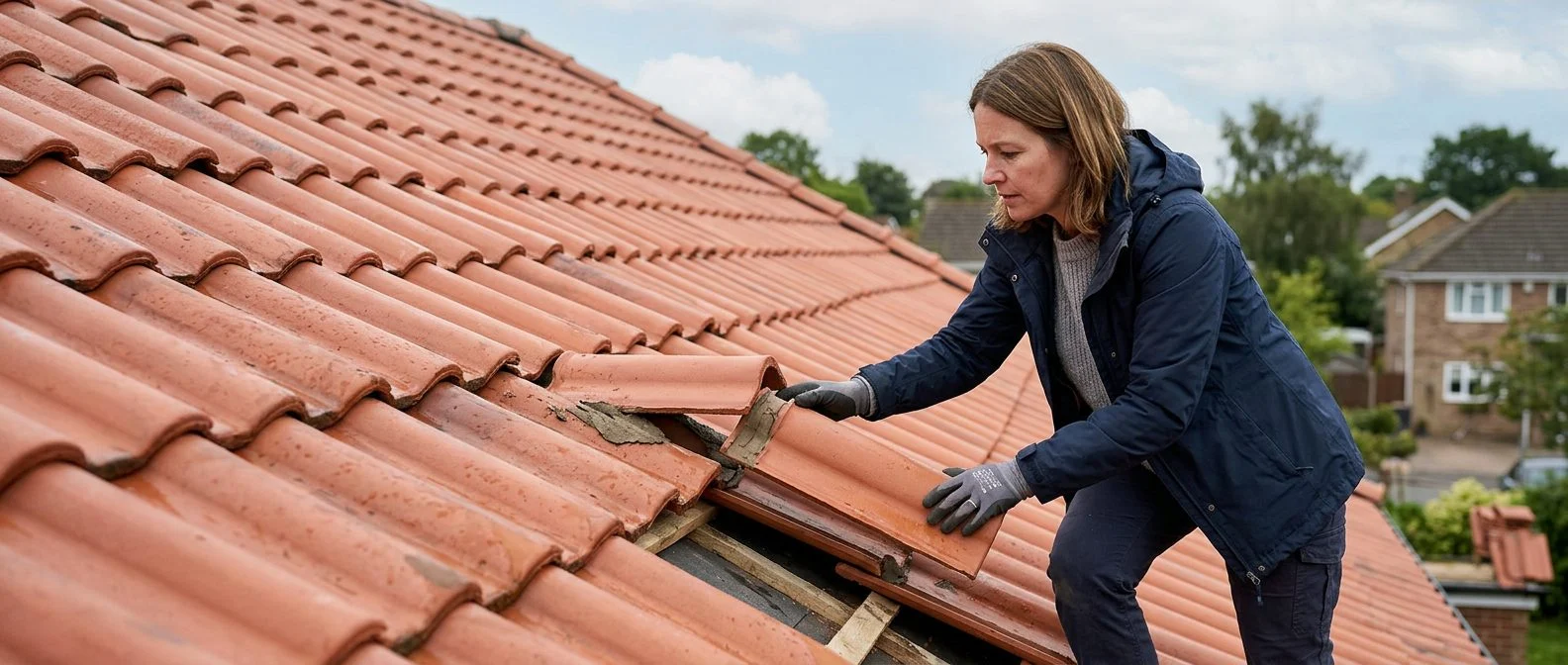
Tile Roof Repair · South Florida
Ceiling Wet After Rain? Find the Source Before the Next Storm
A water stain on the ceiling usually means water is getting in through the roof. Learn the common causes, what to do right now, and when to bring in a professional.
By Jonathan Rodriguez · Published October 24, 2026
Short Answer: The Wet Spot Is Rarely Where the Water Got In
A stain on your ceiling after rain usually means water is getting into the roof. The stain often sits far from the place where the water entered.
On a tile roof, water slips under a tile edge. From there, it can travel along the underlayment, the wood decking, or the rafters before it reaches the drywall. The stain can appear several feet from the real opening, sometimes on the far side of a room.
That’s why cutting into the ceiling right under the stain rarely finds the crack. A better method is to trace the water path. Start at the stain. Check the attic directly above it for wet insulation, dark wood, or drip trails along the framing. Then follow that trail uphill toward the roof.
The most likely entry points are the tile surface, the flashings, and roof penetrations such as vents and chimneys. Once you find the entry point, the repair becomes clear. Before that, rule out non-roof sources, which we cover below.
If a stain showed up after your last storm and you can't tell whether tiles or flashing let the water in, our team can help you trace it. Talk it through with our team — the first consultation is free, confidential, and carries no obligation.
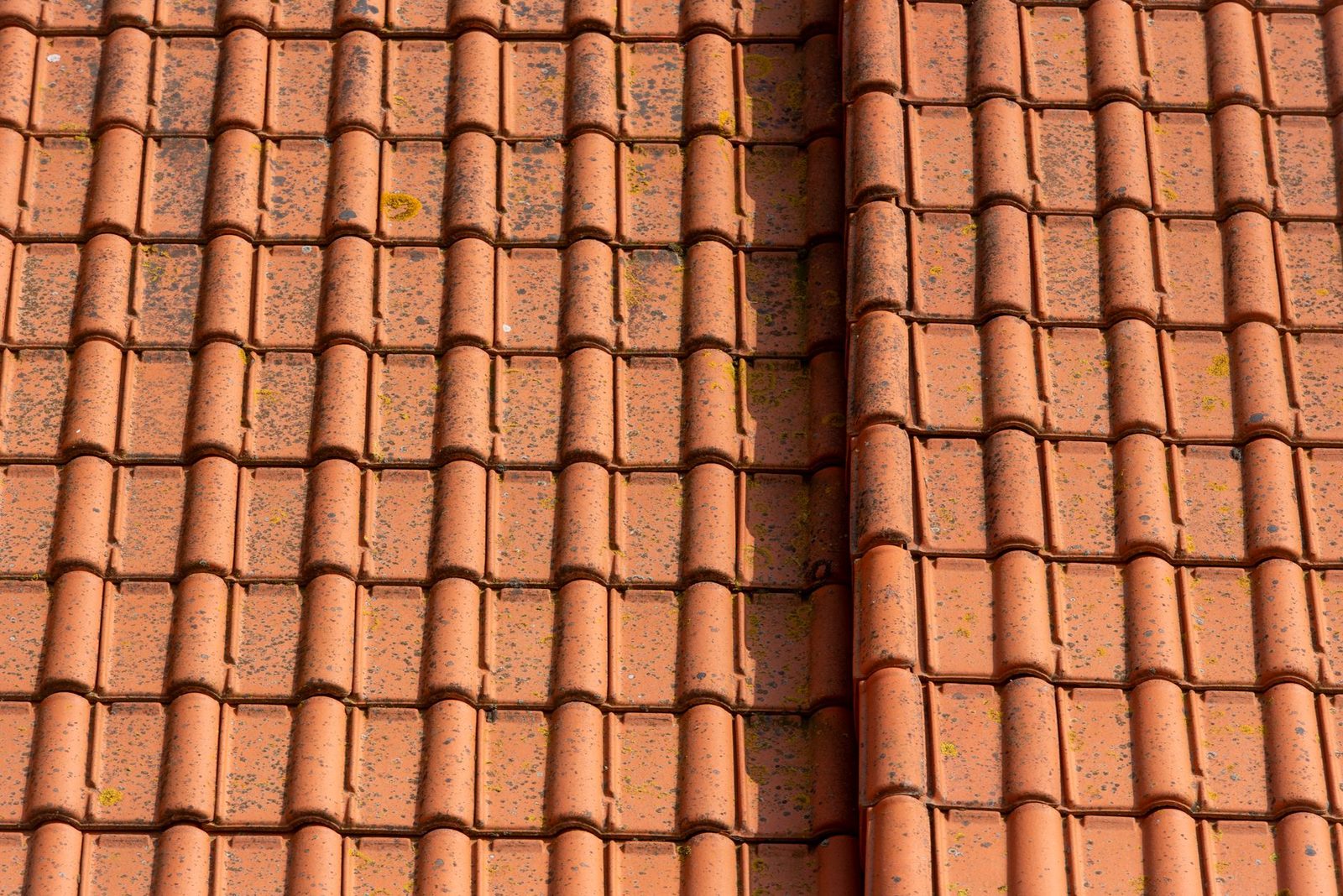
Why the Stain Shows Up During Rain and Sometimes Days Later
A leak often shows during heavy rain. It can keep dripping for hours or even days after the rain stops.
Water soaks into insulation and drywall. These materials hold the water and release it slowly. So the ceiling can keep dripping after the sky clears. The stain may also grow for a while as moisture moves outward through the material.
Wind changes the pattern, too. Wind-driven rain pushes water sideways. It can slide under tile edges and past flashings that stay dry in a calm storm. A leak may only appear when storms blow from one direction. If the drip shows up only in rain from the east, check the east-facing slopes first.
Write down the timing of each drip. Note whether it starts during the rain, after the rain, or when the air conditioner runs. Timing narrows the source. It also gives you a clear record if you later file an insurance claim.
Common Tile Roof Causes Behind a Wet Ceiling
The most common tile roof leak sources are cracked or slipped tiles, aged underlayment, and failed flashings. Each one lets water reach the inside of the home.
According to the NRCA roofing materials guidance, clay and concrete tile is durable and used in Florida. Tile roofs are built to last, but they still need sound parts underneath.
Here are the causes to check:
- Cracked, slipped, or displaced tiles. These let rain reach the layer below.
- Worn underlayment. The underlayment is the secondary water barrier under the tiles. When it ages, tears, or loses its seal, water passes through.
- Pipe boot flashings. The rubber collars around plumbing vents often fail on tile roofs.
- Chimney, valley, and skylight flashings. Water collects where roof planes meet these features.
- Worn mortar or ridge and hip sealing. Wind-driven rain can enter through gaps here.
- Gutter backup. When gutters overflow, water can climb under the drip edge into the fascia and eave.
Each cause calls for a different repair. Replacing one cracked tile costs far less than replacing an underlayment section. So confirm the source before you pick a fix. See Fla. Stat. § 553.844.
When It’s Probably Not the Roof
A stain that appears only when the air conditioner runs often comes from the AC system, not the rain. Check the condensate line and drain pan first.
Other non-roof sources can look like a roof leak:
- Plumbing supply or drain lines above the ceiling, including bathroom and kitchen fixtures.
- Bathroom exhaust ducts that end in the attic. Moist air can condense on the duct and stain the ceiling below.
- Window or wall leaks in two-story homes. Water can run down inside the wall and show up on a lower ceiling.
Use three questions to narrow it down:
- Does the stain appear only during rain?
- Is it directly under a roof penetration or a valley?
- Does it follow one wind direction?
If the answers are mostly no, check the plumbing, the AC, and the windows first. If the answers point to the roof, move on to a roof inspection.
Will a Wet Ceiling Dry on Its Own?
A ceiling can look dry on the surface while the drywall, insulation, and framing stay wet inside. A dry-looking stain doesn’t prove the leak has stopped.
The next rain can wake the leak up again. Wet materials can also support mold growth. So drying the area matters, even when the stain fades.
Take these short-term steps:
- Move belongings and cover furniture under the spot.
- Place a container under the drip and empty it often.
- Keep the area ventilated so air can move across the wet material.
- Turn off power to any light fixture in the wet area.
Don’t poke or press on a bulging ceiling. Trapped water can release suddenly and bring down the material.
Does Homeowners Insurance Cover Roof Leaks From Rain?
Coverage turns on your policy wording and how the damage happened. Storm damage that happens suddenly is often treated differently from long-term wear, depending on the policy.
Florida law sets time limits for claims. Under Fla. Stat. § 627.70132, a property claim generally must be reported within 1 year after the date of loss. Fla. Stat. § 627.70132 reads: “A supplemental claim is barred unless notice of the supplemental claim was given to the insurer in accordance with the terms of the policy within 18 months after the date of loss.” Fla. Stat. § 627.70132 reads: “(2) A claim or reopened claim, but not a supplemental claim, under an insurance policy that provides property insurance, as defined in s. 624.604, including a property insurance policy issued by an eligible surplus lines insurer, for loss or damage caused by any peril is barred unless notice of the claim was given to the insurer in accordance with the terms of the policy within 1 year after the date of loss.” These time limits are paused during any deployment to a combat zone or combat support posting that materially affects a named insured servicemember’s ability to file a claim, supplemental claim, or reopened claim. For claims from hurricanes, tornadoes, windstorms, severe rain, or other weather-related events, the date of loss is the date the hurricane made landfall or the date the tornado, windstorm, severe rain, or other weather-related event is verified by the National Oceanic and Atmospheric Administration.
Before you make any repairs, take dated photos or video of the stain, the drip, and the storm conditions. Keep records of past roof repairs and inspections, too.
Not sure what your next step is?
Talk it through with our team — the first consultation is free, confidential, and carries no obligation.
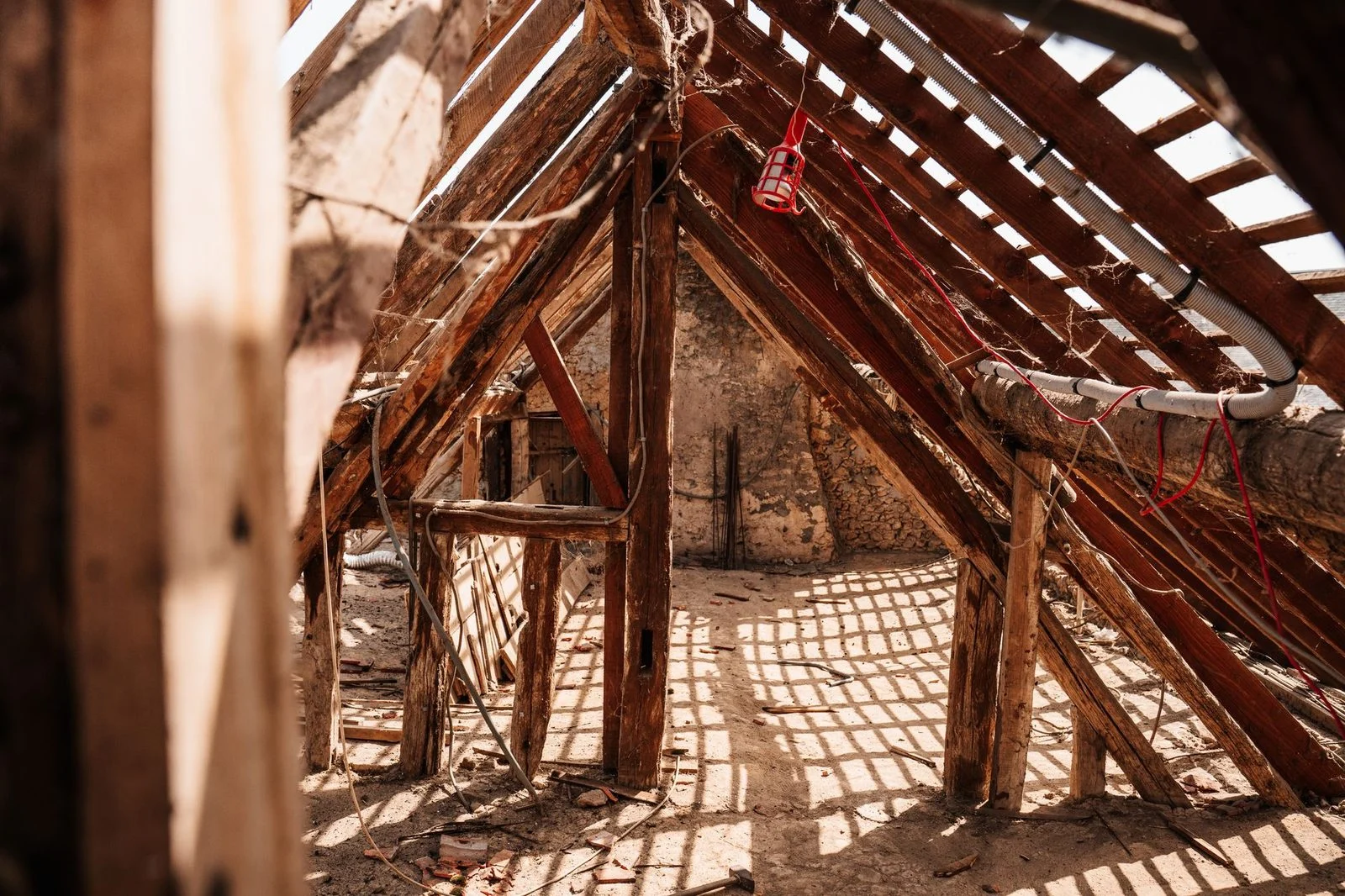
Next Steps to Find and Fix the Leak
First, contain the water. Then document the damage. Last, have the roof inspected to trace the entry point.
A roof inspection checks the tiles, underlayment, flashings, penetrations, valleys, and drip edge. The inspector then matches the findings to the stain’s location. The Tile Roofing Industry Alliance installation guides cover proper tile-roof installation practices, and the Insurance Institute for Business & Home Safety roof guidance covers residential tile roofing.
The repair scope depends on what is found. It can range from resealing or replacing a few tiles to replacing flashings or underlayment in one section.
If the stain appeared after your last storm and you can’t tell whether tiles, flashing, or underlayment failed, reach out to our team. Homeowners across South Florida, from Miami to Naples, can contact our team to schedule a roof inspection. Our first consultation is free, confidential, and comes with no obligation to continue.
Frequently Asked Questions
Why is my ceiling wet after rain on a tile roof?
Water usually enters through a cracked tile, worn underlayment, or a failed flashing. It then travels along the roof structure before it shows on the ceiling.
Will a wet ceiling dry on its own?
The surface may dry, but the drywall and insulation can stay wet. The next rain can reactivate the leak.
Does homeowners insurance cover roof leaks from rain?
Coverage turns on your policy and how the damage happened. Florida law sets a general one-year notice window for most property claims.
How do I stop a ceiling leak after rain?
Contain the water, move belongings, and document the damage. Then have the roof inspected to find the entry point.
How ASP Superhome Approaches a Leak
Start with a clear diagnosis
We look at the roof, the attic, and the ceiling together to trace the water back to where it enters.
Written options
You receive a clear explanation of what needs repair and what the choices are, whether that's tile roof repair or a larger roof replacement.
One company for the whole home
Roofing, roof repair, impact windows, impact doors, and other home solutions are handled by one team, so you have a single point of contact.
Plain-language answers
Our team will explain what we found, what it means for your home, and what we recommend, without pressure.
Act Now, Even Before the Repair
If water is dripping, place a bucket and move furniture, rugs, and electronics away from the spot. If a ceiling light fixture is wet or the drip is near wiring, turn off the power at the breaker before touching it. Do not climb onto a wet tile roof or pull tiles to look for the leak yourself.
Common Causes of a Wet Ceiling on a Tile Roof
Cracked or slipped tiles
A broken or displaced tile lets rain run beneath the tile layer and onto the roof deck.
Worn underlayment
The underlayment is the water barrier under the tiles. When it ages or tears, it stops blocking water, even if the tiles look intact.
Failed flashing
Flashing sealing the areas around vents, chimneys, skylights, and valleys is a frequent entry point, especially after years of sun and heavy rain.
Clogged gutters and drainage
Blocked drainage can back water up under the roof edge, where it can work its way into the structure.
Your Next Steps
1. Contain the water
Catch drips, protect belongings, and check that the area is safe before going near it.
2. Document the damage
Take dated photos of the stain, the ceiling, and any wet insulation or drywall. This helps you keep a record of what happened.
3. Schedule an inspection
Ask for a roof inspection soon, since a wet ceiling can keep getting worse even after the rain stops.
4. Choose the right repair
Depending on what we find, the fix may be a few tiles and flashing, or a larger roof repair or replacement plan.
Stop the Leak Before It Spreads. Start with a Free First Consultation.
Related practice areas
- Tile Roofing in South Florida: Costs, Styles & Installation Guide


