


Roof Replacement | South Florida
Can You Reroof Your Own House in Florida?
Permits, building codes, and inspections decide what you can do yourself. Here is what South Florida homeowners need to know before the first shingle comes off.
By Jonathan Rodriguez · Published November 2, 2026
The Short Answer: What Florida Generally Allows Homeowners to Do
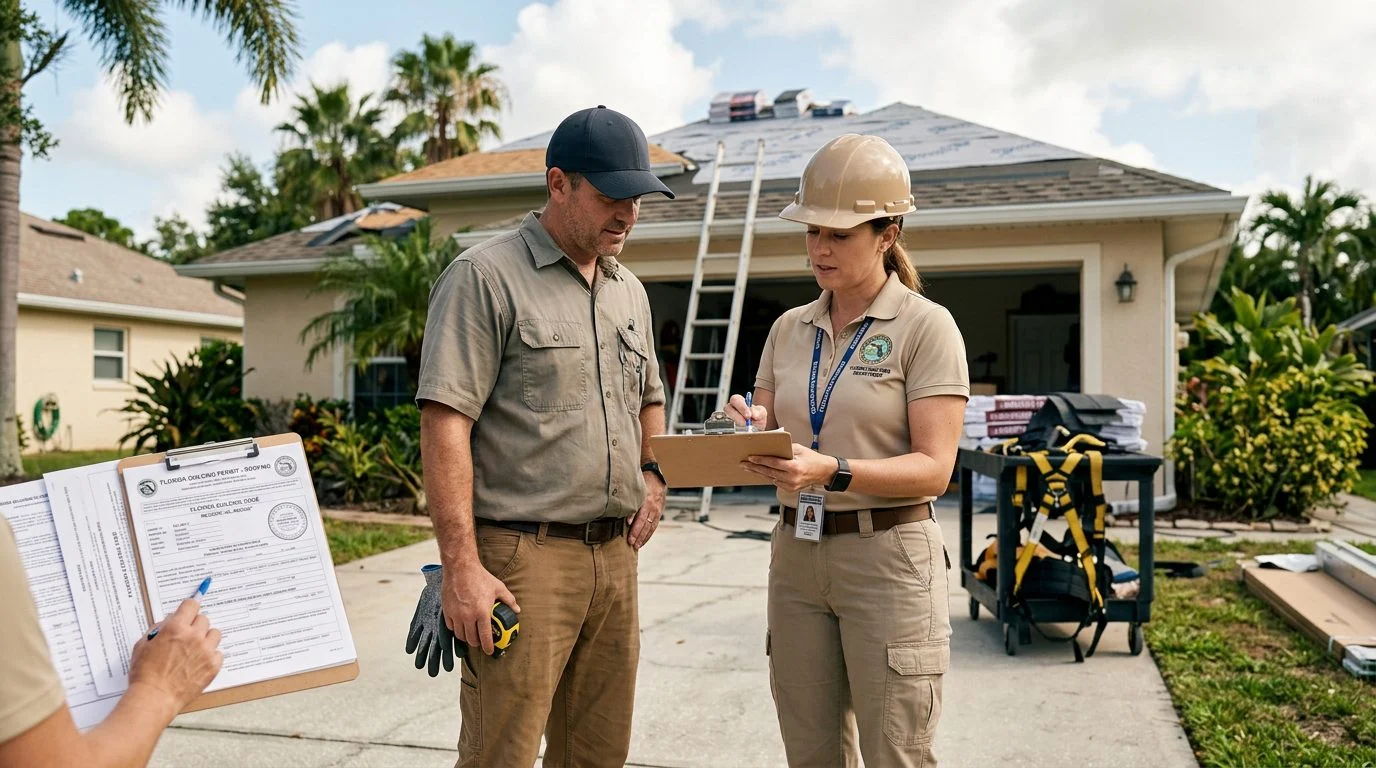
Can I reroof my own house in Florida? In many cases, yes, but only under owner-builder conditions and with a permit. Florida law lets an owner act as their own contractor on a one-family or two-family home they use themselves, if the owner provides direct, onsite supervision themselves of all work not performed by licensed contractors. That right does not remove the permit, inspection, or code obligations.
Unless otherwise provided by law, Florida makes it unlawful to repair a building without first getting a permit from the enforcing agency. Fla. Stat. § 553.79 sets that rule. The same statute lets the agency revoke a permit when the work does not follow the Florida Building Code.
So the question has two parts. Are you allowed to do the work yourself? And can the work be permitted and approved? If you are looking into this for a parent, a rental, or after a storm, the answer changes. Under Fla. Stat. § 489.103, the owner-builder exemption depends on the owner’s own occupancy or use of the home, so a home built for sale or lease may fall outside it. For a broader view, read our tile roofing guide.
If storm damage or an aging roof has you weighing whether to take this on, our team is ready to talk through your options with you. Talk it through with our team — the first consultation is free, confidential, and carries no obligation.
Permits and Inspections for a Roof Replacement
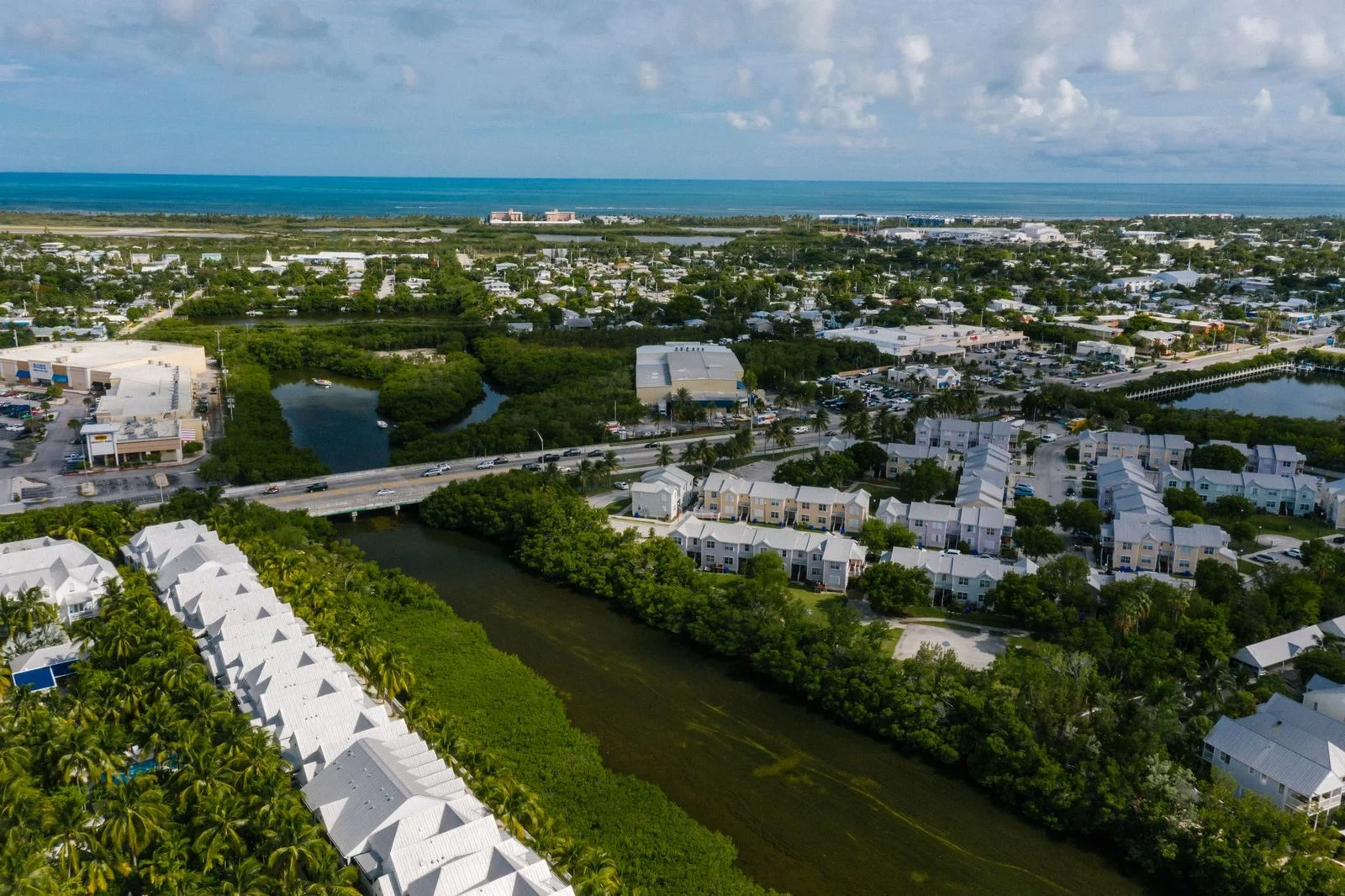
Roof replacement is permitted work, and your local building department issues the permit. Every project has its own specifics, which we review during our free, confidential first consultation, with no obligation to continue. Charlotte County’s residential roof permit page shows how one county handles these points. Miami, Fort Lauderdale, West Palm Beach, Kendall, Naples, Fort Myers, and Boca Raton each set their own steps.
The owner-builder exemption carries firm conditions. You must provide direct, onsite supervision of all work not done by licensed contractors. You cannot hand that supervision to someone else unless that person is licensed for the work. Fla. Stat. § 489.103 sets these rules. If you sell or lease the structure, or offer it for sale or lease, during the 1 year following completion, that evidence gives rise to a presumption, in an action brought under this part, that the construction was undertaken for purposes of sale or lease.
Plan the paperwork early. Write down the scope of work, the roofing material, and the underlayment and fastening plan. Keep a record of every inspection. Work that moves ahead without a required permit breaks the law, and that can turn a simple reroof into a serious problem.
The 25% Rule: What a Partial Roof Job Must Meet
For a partial job, the 25% line decides how much of the roof must meet current code. For a qualifying roof, when 25% or more of the roof system or roof section is repaired, replaced, or recovered, only that portion must meet the code in effect. Fla. Stat. § 553.844 states this rule. A roof qualifies when it was built, repaired, or replaced under the 2007 Florida Building Code or a later edition.
The rule limits the code requirement to the affected portion. It does not make the whole roof meet current code. Measure each job against the roof system or section it belongs to. A small leak repair on one slope is a different job from a planned replacement of half the roof. Keep notes on the area each job covers, with dated photos and measurements.
Under the residential code, the upper roof covering may be removed during recovering only when the existing or repaired substrate is adequate for the new covering, according to the Florida Building Commission’s residential code analysis. The deck under the old roof matters.
How Insurance Policies Interact with a Self-Performed Reroof
Insurance runs on a separate track from permits. Fla. Stat. § 627.7011 sets out coverage options an insurer must offer before issuing a homeowner’s policy.
Discounts follow their own rules. Homeowners use an official mitigation inspection form and submit it to an insurance agent to request hurricane-wind mitigation discounts, according to the Florida Office of Insurance Regulation.
Keep permit records, inspection results, and dated photos of the work. Ask your insurer which documents it requires for a roof claim. How a claim is handled depends on the policy and the facts of the loss.
Why Tile Roofs Demand Extra Caution
Tile is heavy, so the roof deck, the framing, and the fastening carry the load. Check the deck before you set new tile.
Underlayment is your second line of defense. When wind drives rain under the tiles, the underlayment keeps water out of the structure. Miami-Dade County’s hurricane mitigation page notes that wind-resistant roofing requirements address roof-sheathing attachment. It also identifies which roof systems need secondary water-barrier protection during certain reroofing projects.
The work itself is hazardous. Tile roofs are often steep, and a fall from a steep roof is a serious risk. Broken tiles can slide off and damage the roof below. Tile repair also differs from metal or shingle work. Tiles interlock and break easily, and they are often hard to match, so one cracked tile can mean lifting several others to reach it.
Repair or Replacement: How to Think Through the Decision
A repair fits small, isolated damage. Replacement usually fits widespread damage, an aging roof, or a weak deck. Ask four questions. How old is the roof? How much of it is damaged? How many tiles are cracked or lifted? What condition is the deck underneath?
Storm damage, leaks in several areas, and widespread cracked or lifted tiles usually push the decision toward replacement. Cost depends on roof size, pitch, material, and deck condition. No single price fits every home, so compare a quote against those factors.
If you hire a general contractor, state license rules apply. A local building department may not issue a permit to a contractor without a valid active state certificate or registration in the right category. A local license alone is not enough, under Fla. Stat. § 489.13.
Not sure what your next step is?
Talk it through with our team — the first consultation is free, confidential, and carries no obligation.
Frequently Asked Questions About Reroofing in Florida
Can I reroof my own house in Florida?
Often, yes, under the owner-builder rules for a home you use yourself. You still need direct onsite supervision of all work not done by licensed contractors, and you must obtain all required building code inspections.
Can a general contractor do a roof in Florida?
Yes, when the contractor holds the required state license and the permit goes to that licensed contractor. A local license alone does not qualify a contractor for work that needs state licensure.
Is $30,000 too much for a roof?
Roof prices depend on area, material, pitch, deck repair, and permit fees. The City of Pompano Beach’s CDBG Senior Roof Replacement Program offers up to $30,000 to qualifying homeowners. That figure is a program ceiling, not a typical price.
Does a partial roof job require a full roof?
For qualifying roofs, no. Under Florida law, if an existing roof that was built, or last worked on, in compliance with the 2007 Florida Building Code or a later edition has 25 percent or more of its area redone, only that redone section must follow the Florida Building Code currently in force.
Talk to ASP Superhome About Your Roof
If you are still asking whether you can reroof your own house in Florida, you do not have to sort out permits, code, and insurance alone. Maybe a tile roof took storm damage and you are weighing repair against replacement. Maybe you are helping an aging parent who needs the roof handled soon. Our team can walk through your roof, your permit questions, and your options. Our first consultation is free, confidential, and carries no obligation to continue (consulta inicial gratuita, confidencial y sin compromiso). When you are ready, contact our team.
How ASP Superhome Can Help
Permit guidance
We walk you through which permits your project requires before work begins.
Code-compliant roofing
Metal and tile roofs installed to South Florida building requirements, including impact-rated options.
Inspection planning
We help you plan the inspections your local building department requires at each stage.
Confidential first consultation
Our free first consultation is confidential and comes with no obligation to continue.
Check Before You Tear Off
Do not remove existing roofing until you have confirmed your permit and inspection requirements with your local building department. Starting work without them can create costly delays.
Questions to Settle Before You Start
Owner-builder rules
Florida allows some homeowners to act as owner-builders, but the rules carry conditions. Confirm them with your local building department before you begin.
Direct supervision
Work not done by licensed contractors generally requires direct onsite supervision by the owner. Plan for that time commitment.
Required inspections
All required building code inspections must be completed. Missing one can hold up your project or your home sale.
Licensed roofing help
A licensed roofing contractor handles permits, materials, and inspections. Our team can talk through which parts of your project to take on and which to hand off.


