


Tile Roofing | South Florida
Know the Weight Before You Choose Your Tile Roof
A clear guide to tile roof weight per square foot, and how the right figure shapes your roof plan across South Florida.
By Jonathan Rodriguez · Published November 1, 2026
If you’re asking how much does a tile roof weigh per square foot, the short answer is that it varies. Concrete and clay tile are both heavy roof coverings, and the exact figure depends on the tile product, its profile, and everything installed beneath it. Get the number from the specific product, then check it against your home’s framing.
How Much Does a Tile Roof Weigh per Square Foot?
Concrete and clay tile both weigh enough that the roof’s structure needs a closer look before any replacement. The per-square-foot figure describes the whole roofing system as installed, not the tile alone.
That system includes the underlayment, the battens or mortar that hold the tile, and any old layers you leave in place. Two quotes can use the same tile and still differ if one includes the full system and the other does not. Ask what each figure covers before you compare them.
For a wider look at tile options across South Florida, read our tile roofing overview.
If you're weighing a tile replacement and aren't sure your home's framing can carry it, reach out to ASP Superhome to talk through your roof. Talk it through with our team — the first consultation is free, confidential, and carries no obligation.
Why Roofers Quote Tile Weight Per Square
Roofers quote tile weight per square because roof area is measured in squares. One square equals 100 square feet of roof surface. Turning that into a total takes only a little math.
Multiply the weight per square foot by the roof area in square feet to get the approximate load on the structure. You can also multiply the weight per square by the number of squares. Both methods give the same total.
Roof area is measured along the roof surface, not the footprint of the house. A steep pitch, hips, valleys, and dormers all add surface area. A complex roof can carry more total weight than a simple roof over the same footprint.
Here is an illustration with made-up numbers. Suppose a roof has 25 squares of surface, and a tile system is rated at 900 pounds per square. Then 25 × 900 equals 22,500 pounds. This example is for illustration only. Use your product’s actual figure in any real calculation.
Concrete Tile vs. Clay Tile Weight
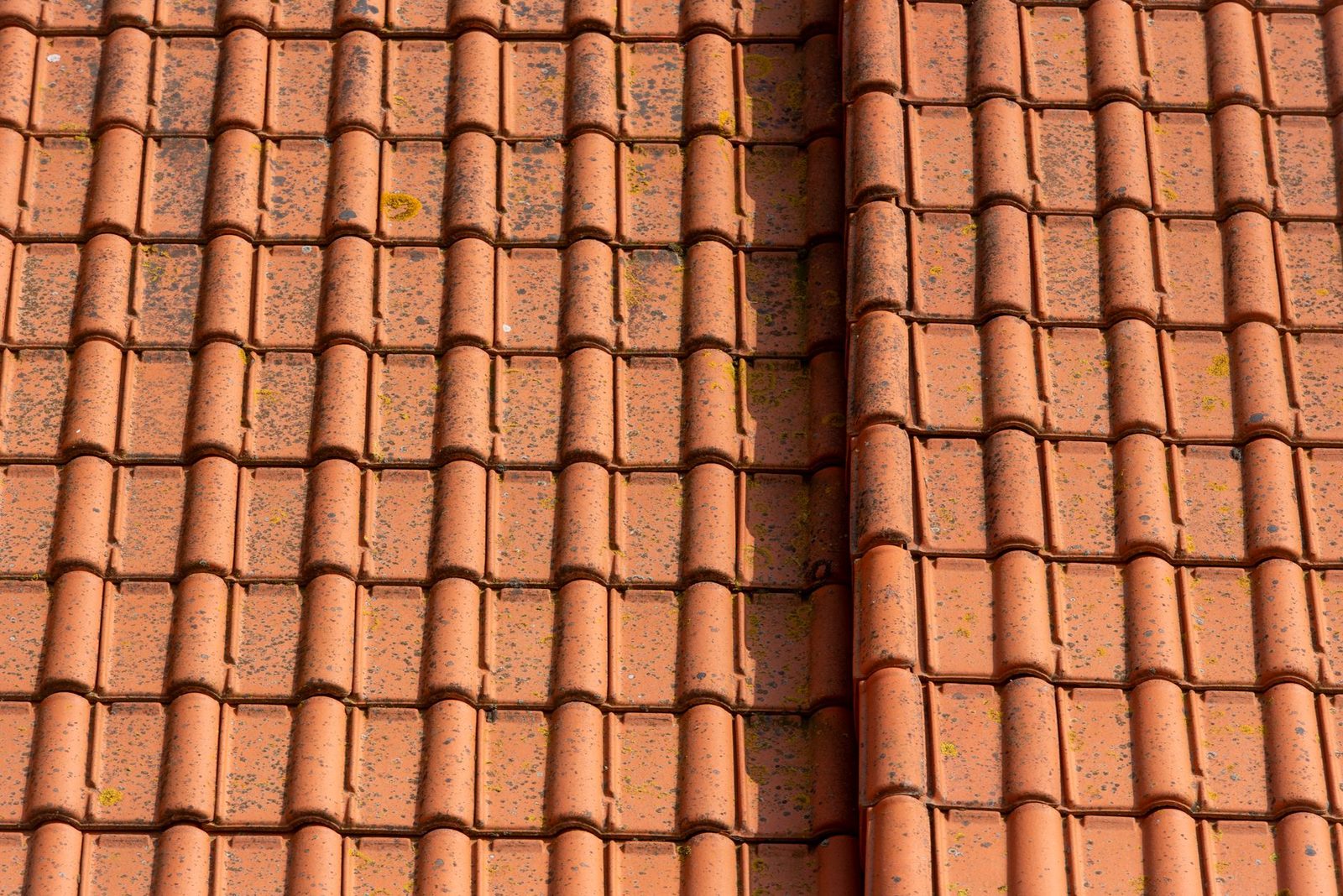
Concrete and clay tile differ mainly in density and profile thickness. One can weigh more than the other at the same roof size. Color and look do not decide the weight. Thickness and material do.
Barrel profiles and flat profiles also differ, because each uses a different amount of material. Manufacturers publish figures for each profile, and those published numbers are the ones to use.
Manufacturers update their products. A figure from an older catalog may not match a current tile. Confirm the number against the current specification before you plan the structure.
If your existing tile is no longer sold, matching a discontinued barrel tile is a separate question. Plan for it early. A replacement tile may not weigh the same as the original, and that difference can change the structural check.
How Tile Compares With Other Roofing Materials
Tile is one of the heavier roof coverings, so it usually asks more of the structure than lighter options. Slate is also heavy. Asphalt shingles, metal panels, and stone-coated steel are generally lighter than tile.
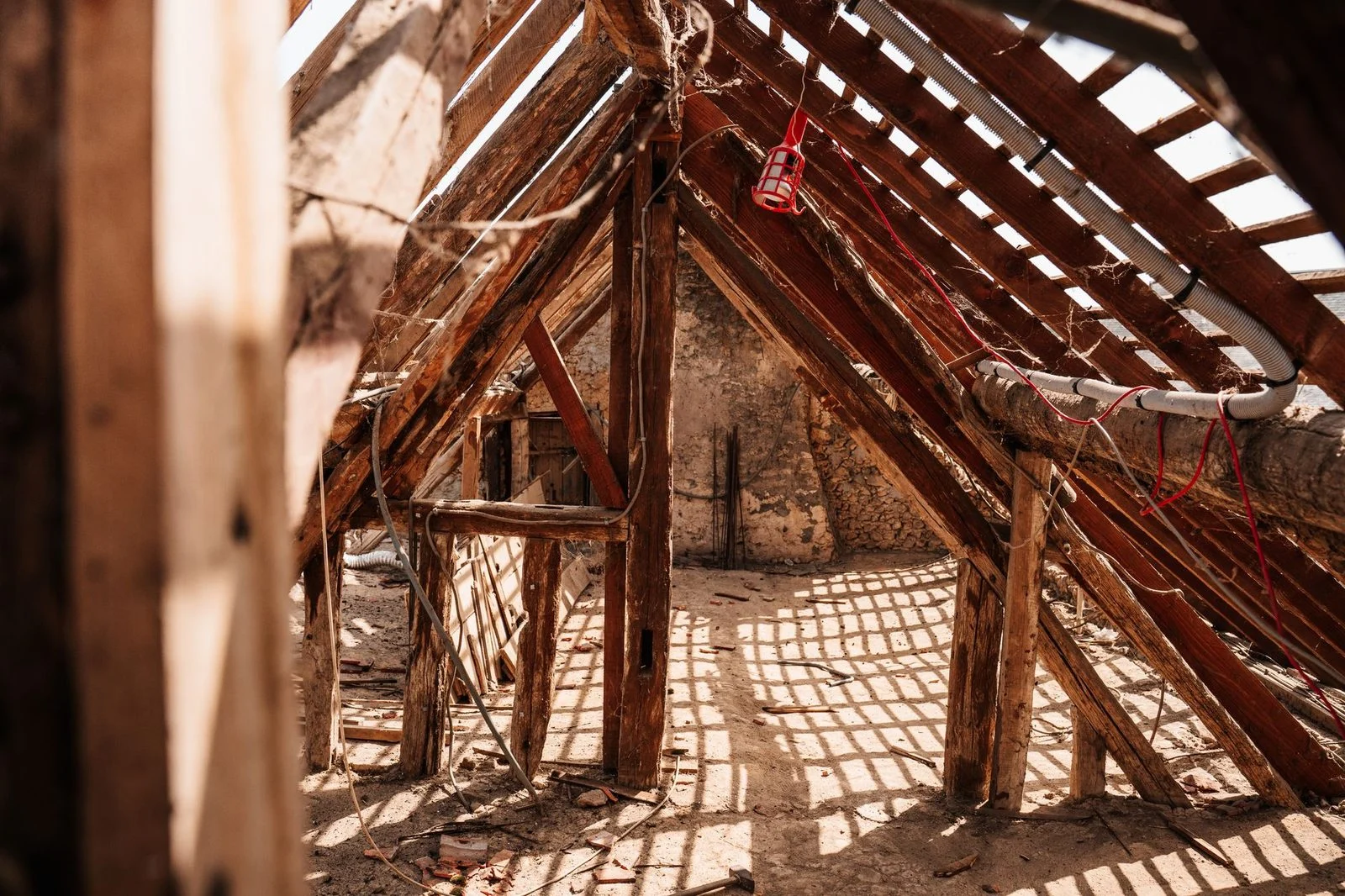
A lighter covering can ease structural concerns on an older home. A heavier covering means a closer look at rafters, trusses, and the connections between roof and walls.
Weight is only one input. Wind rating, appearance, maintenance needs, and cost all matter too. Our metal roofing and tile roofing services can walk you through each option against your goals.
What the Weight Means for Your Home’s Structure
Florida’s building code requires every building to be designed to resist dead loads. The roof’s own weight is a dead load. The Florida Building Commission analysis of Section 1606.1 states this requirement.
Dead load means weight that stays on the structure all the time. That includes the tile, the underlayment, the battens, and any layers left in place. Live loads, such as people or equipment, are a separate category.
Florida’s wind rules also apply. Every tile roofing project is different, so the details are best discussed during a free initial consultation, which is confidential and carries no obligation to continue.
For many single-family homes, the Fla. Stat. § 553.844 statute sets specific rules. A roof replacement must include certain mitigation techniques listed in the statute. Under Fla. Stat. § 553.844, roof-to-wall connection improvements apply to a roof replacement on an existing site-built, single-family home only if the building is located in the wind-borne debris region as defined in s. 1609.2 of the International Building Code (2006) and has an insured value of $300,000 or more (or, if the building is uninsured or no documentation of insured value is presented, a just valuation for the structure of $300,000 or more). For homes not otherwise required to comply with the Florida Building Code for new construction, the statute provides for alternate, lower-cost retrofit methods, and such connections are not required unless evaluation and installation at gable ends or all corners can be completed for 15 percent of the cost of roof replacement.
Partial work follows different rules. If 25 percent or more of an existing roof section is repaired, replaced, or recovered, only that portion must meet the current code. This applies when the existing roof was built, repaired, or replaced in compliance with the 2007 code or any later edition.
A framing question like this is answered by looking at the framing and the existing roof on site.
Can You Walk on a Tile Roof?
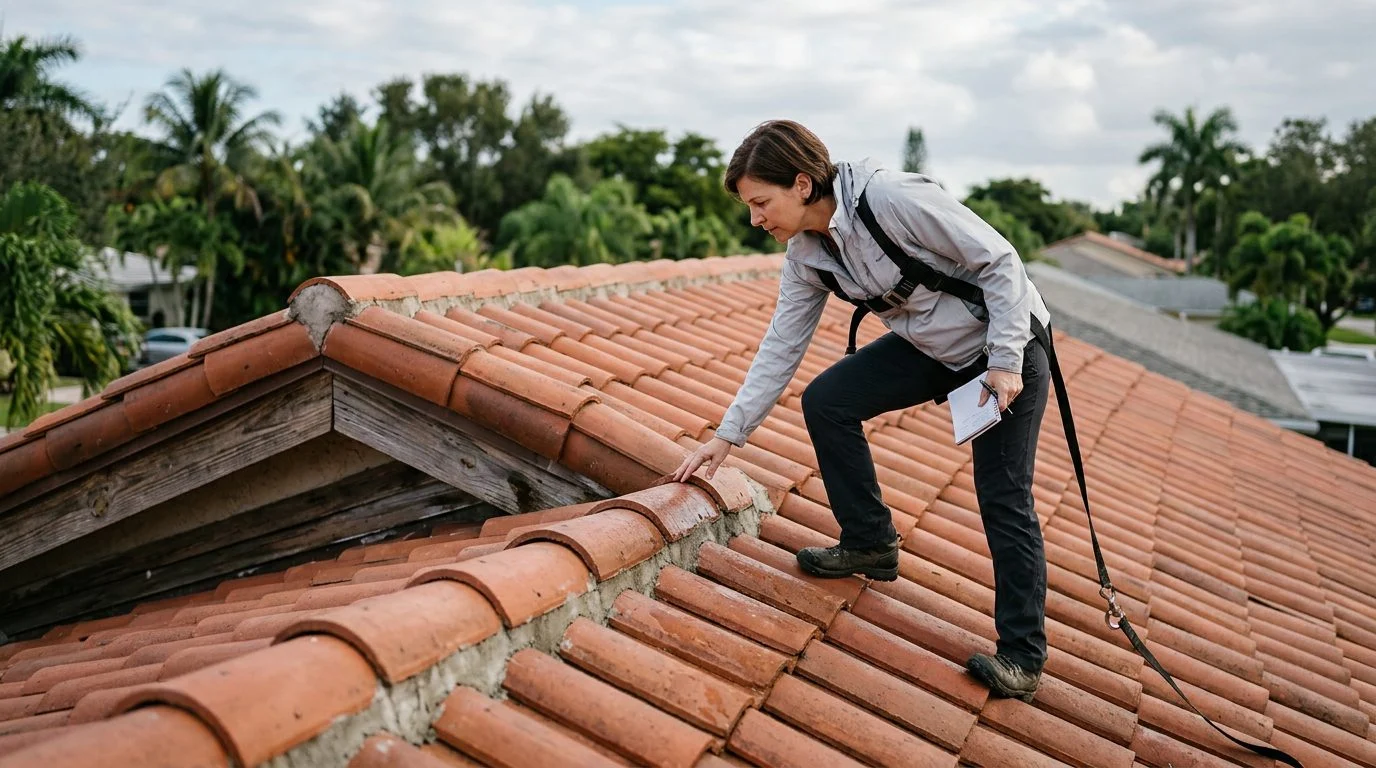
Walking on tile can crack or shift the pieces. Tile is brittle under foot traffic, so the practical risk is damage to the tiles themselves.
Plan inspections and repairs so crews don’t step on the same tiles again and again. Walkway boards can spread a person’s weight across several tiles instead of one.
If a storm has already cracked or moved tiles, have the roof assessed before anyone walks on it. Loose tile can slip, and a damaged roof can be a safety hazard.
Not sure what your next step is?
Talk it through with our team — the first consultation is free, confidential, and carries no obligation.
Next Steps Before Pricing a Tile Roof Replacement
Before you price a tile replacement, check three things. Confirm the tile’s weight per square foot, the roof’s area in squares, and whether the framing can carry the total with any layers that stay.
Picture an aging roof with cracked or slipping tiles. Or picture a plan to switch from shingles to tile. In both cases, the price should come after the structure is checked, not before.
Quick answers
How much does a tile roof weigh per square foot?
It depends on the tile type, profile, and installed system, so use the specific product’s figure.
What is a roofing square?
One square is 100 square feet of roof surface.
Is a tile roof heavier than a metal roof?
Generally yes, because tile is among the heavier roof coverings.
Can a roof take my weight?
Tile is brittle under foot traffic, so avoid walking on it unless it’s necessary and done carefully.
ASP Superhome offers a free first consultation, which is confidential and carries no obligation to continue. If you’re weighing a tile replacement and aren’t sure your home’s framing can carry it, contact ASP Superhome to talk through your roof.
What Changes a Tile Roof's Weight
Tile Material
Concrete and clay tiles differ widely in weight, so the same roof area can carry very different loads.
Tile Profile
Flat, barrel, and shake-style profiles use different amounts of material to cover each square of roof.
Underlayment and Battens
Underlayment, battens, and fasteners add weight that is easy to overlook when comparing roofing options.
Existing Roof Structure
The condition and framing of your roof deck determine whether the installed weight is appropriate for your home.
Don't Rely on a Generic Number
Published weight-per-square-foot ranges are only starting points. Always use the figure for your specific tile product and installed system, and confirm it before you commit to a roof replacement or reinforcement plan.
How We Help You Plan
Product-Specific Figures
We help you compare the actual weight of the tile and system you are considering, not just a general estimate.
Clear, Written Quotes
Your quote shows the materials and scope of work so you can review the details at your own pace.
Free First Consultation
Our initial consultation is free, confidential, and comes with no obligation to continue.
Support From Our Team
Our team guides you from the first question through planning, so you always know what comes next.


