


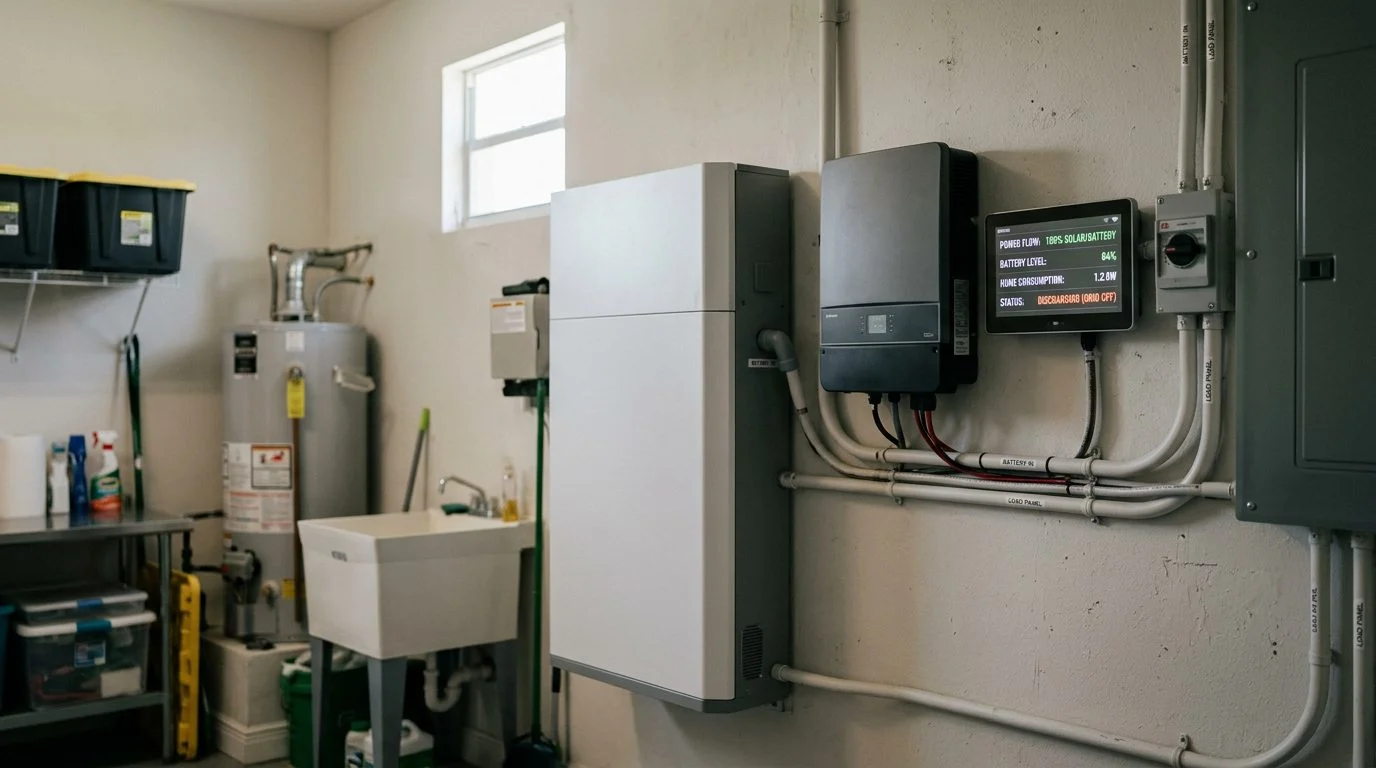
Solar Battery Backup | South Florida
How Long Will a 10 kWh Battery Keep Your Home Running?
A plain-language guide to battery runtime during outages across Miami, Fort Lauderdale, West Palm Beach, Boca Raton, Naples, Fort Myers and Kendall.
By Jonathan Rodriguez · Published October 31, 2026
How long will a 10kW battery power my house? In short, a 10 kWh battery usually keeps a South Florida home running for a few hours to about a day. The exact time depends on how much your home draws at once.
If you’re looking into this for a parent, a rental, or a home you want ready before storm season, you’re asking the right question. This guide shows the math in plain terms, so you can estimate your own number.
The short answer: a 10 kWh battery typically covers hours of backup, not days
A 10 kWh battery usually powers a home for several hours. With light use, it can stretch close to a full day. Heavy use shortens it fast.
Central air conditioning is the biggest swing factor. Run an AC system and an electric range at the same time, and the battery drains quickly. Run only the refrigerator, lights, internet, and a few outlets, and it lasts far longer.
That’s why no single number fits every house. Two homes with identical batteries can get very different backup times. The rest of this page shows how to narrow your estimate, starting with the difference between kW and kWh.
If you're planning backup for a household you care for, we can help you work out realistic runtimes from your own numbers, with no obligation to continue. Talk it through with our team — the first consultation is free, confidential, and carries no obligation.
Why “10kW” and “10kWh” mean different things
kWh measures energy, and it decides how long a battery can run. Think of it like the fuel in a gas tank. A 10 kWh battery holds 10 kilowatt-hours of energy when it’s full.
kW measures power, which is how fast energy is used at any moment. Think of it like how hard the engine works. A home running a 3 kW load draws power at that rate while the load stays on.
The two get mixed up all the time. People say “10kW battery” when they mean 10 kWh. A 10 kW rating usually describes how much power the inverter can deliver at once. That decides how many large appliances can run together. The kWh figure decides how many hours you get.
When you read a spec sheet, look for kWh next to capacity and kW next to power output. Read both before you compare two systems.
How to estimate runtime with a simple formula
Divide usable battery energy in kWh by your average household load in kW. The result is your estimated hours of backup.
Your average load comes from your power bill. The bill shows kWh used each month. Divide that by the number of days in the month to get kWh per day. Then divide by 24 hours to get your average kW.
Here’s a worked example with round numbers. Suppose your home uses 900 kWh in a 30-day month. That’s 30 kWh per day. Divide 30 by 24, and you get an average of 1.25 kW.
Now suppose the battery has 9 kWh of usable energy. This is a made-up figure for the example, not a rating for any product. Divide 9 by 1.25, and you get about 7.2 hours.
Keep in mind that the average is a planning tool. Your load rises and falls through the day. A hot afternoon with the AC on can draw far more than the average. A quiet night draws less. Treat the result as an estimate, not a guarantee.
Example runtimes at different household loads
A full 10 kWh battery lasts about 10 hours at 1 kW, 5 hours at 2 kW, and 20 hours at 0.5 kW. These are simple division results. They assume the battery gives all 10 kWh to the home, which real systems don’t do.
Here’s what each load level often looks like:
- About 0.5 kW: A few critical circuits only, such as a refrigerator, some lights, a router, and phone charging.
- About 1 kW: Essentials plus a few more outlets and fans, with no central AC.
- About 2 kW: A mix of refrigerator, lighting, internet, and some cooling. Heavier cooling pushes the load higher and cuts the hours.
Find the row that sounds closest to your home. Then adjust the result with the formula above.
Frequently asked questions
Is a 10kW battery the same as a 10kWh battery?
No. kWh measures stored energy and decides how long a battery runs. kW measures how much power can run at once.
Can a 10 kWh battery run central air conditioning during an outage?
It can, but for a shorter time. Central AC is often the largest load, so it drains the battery faster than lights or a refrigerator.
Is the full 10 kWh available to my home?
Often not. Usable capacity can be lower than the nameplate number, so ask for both figures.
Why usable capacity is lower than the nameplate number
Usable capacity is the part of a battery’s energy the system lets your home draw. It is often lower than the nameplate 10 kWh printed on the label.
Several factors can shrink the amount that reaches your home:
- Depth-of-discharge limits. Many systems don’t let the battery drop to empty. The system keeps a reserve, so only part of the stored energy is usable. Depth of discharge means how far a battery is drained.
- Inverter losses. The inverter converts battery power into the household power your appliances use. Some energy is lost in that conversion.
- Battery age. Batteries lose capacity over years of use. A newer unit usually gives more energy than an older one.
When you compare products, ask for usable capacity next to nameplate capacity. Then plug the usable figure into the formula, not the label number. Don’t rely on one efficiency percentage from a sales page. Conditions vary by system.
South Florida loads that change the math: air conditioning and the rest of the house
Central air conditioning is often the largest load in a South Florida home. It can shorten backup time faster than any other single appliance. Long hot stretches make this worse, because the AC runs for many hours at a time.
Other steady loads add up too. A refrigerator runs close to continuously, so count it as essential. Well or pool pumps, electric water heating, electric cooking, and lighting each add to your average load.
The practical fix is to split your circuits. Separate essential circuits, the ones you must keep on, from whole-home circuits, which is everything else. A smaller protected load often stretches the same battery much further.
Roof color and material also affect cooling needs. The U.S. EPA cool roofs guidance explains that reflective, light- or cool-colored metal roofing can reduce air-conditioning energy use, including in warm climates. A cooler roof can mean less AC running. Less AC running can mean more backup hours.
Not sure what your next step is?
Talk it through with our team — the first consultation is free, confidential, and carries no obligation.
Recharging from solar and the question of more panels or a bigger battery
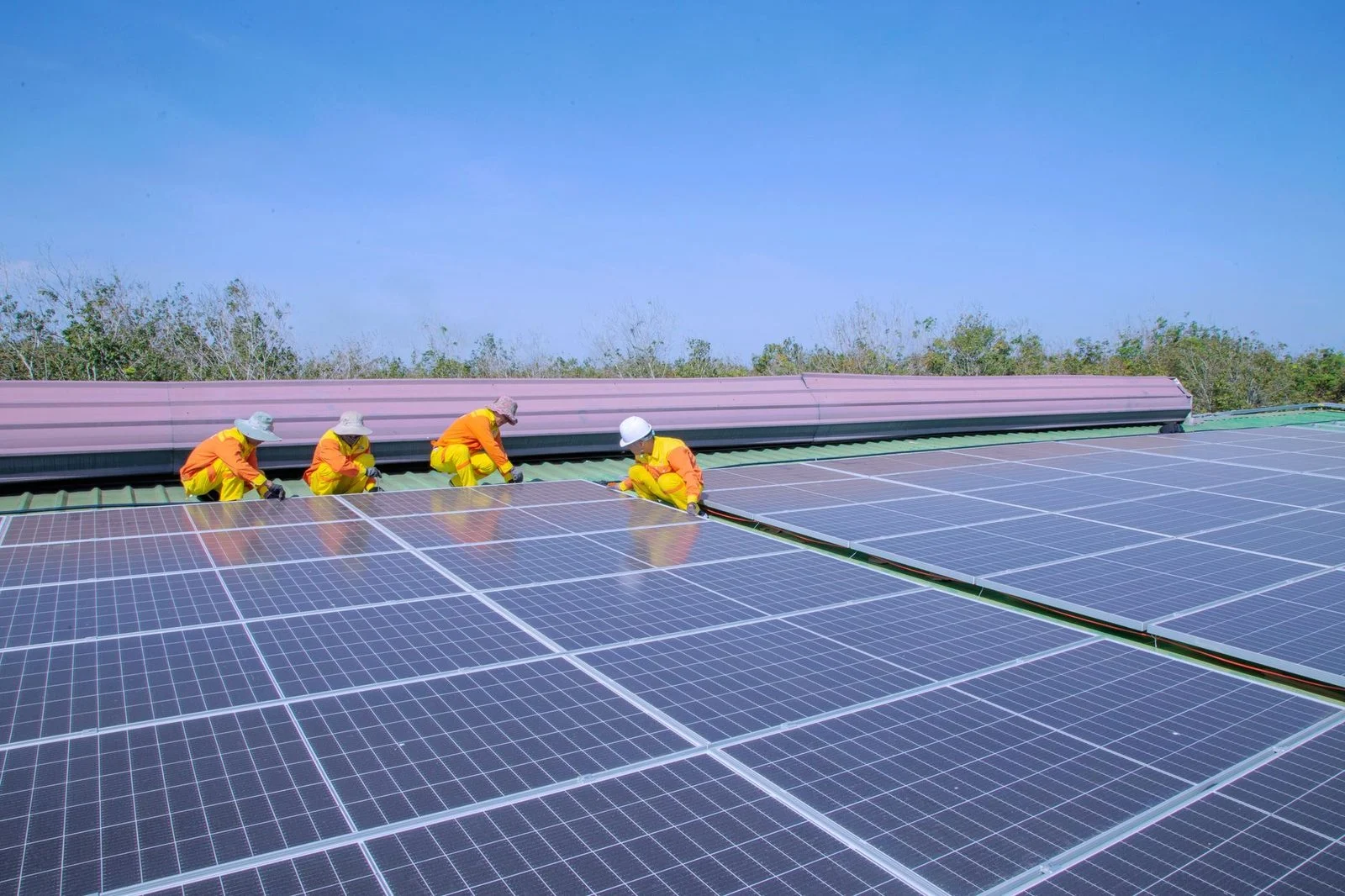
A battery refills from your solar panels while the sun is up. (U.S. Department of Energy) Recharge pace matters as much as battery size. A battery that refills fully each day gives the most steady backup.
Cloudy days and heavy evening use can leave less stored energy. If the battery starts the night low, the backup window shrinks.
The trade-off is simple. More solar panels add daily energy to refill the battery. A larger battery holds more stored energy for longer outages. Which one helps more depends on your home’s use and how much sun your roof gets.
Talk through your home’s numbers with a free first consultation
A recent outage, an older parent living with you, or the start of storm season can make this question urgent. Those are real pressures. It’s fair to want a clear answer before you decide anything.
To narrow your estimate, gather your household’s average monthly kWh, the circuits you want kept running, and whether central air conditioning is part of the load. Share those numbers with the team at ASP Superhome, and we’ll help you work through a realistic runtime from them. Our free first consultation is confidential and comes with no obligation to continue (“consulta inicial gratuita, confidencial y sin compromiso”). You can reach out through our contact page.
What Changes How Long a 10 kWh Battery Lasts
The Loads You Run
Every appliance draws power at its own rate. Lights and a refrigerator use far less than central air conditioning, so the mix of what runs at the same time matters most.
How Long the Outage Lasts
A battery that starts an outage fully charged has more to give than one that was low before the power went out. Charge level at the start of an outage shapes the result.
Backup Priorities
Deciding which circuits the battery supports, and which stay off during an outage, can stretch stored energy to cover what matters most to your household.
Battery Health and Setup
Battery age, temperature and how the system is configured all affect how much usable energy is available, so runtime estimates are approximate.
Watch the Difference Between kW and kWh
A 10 kW rating describes how much power the battery can deliver at once. A 10 kWh rating describes how much energy it stores. Runtime depends on kWh, while the kW rating determines whether the battery can start and run high-draw appliances together.
Rough Runtime Examples for a 10 kWh Battery
Lights and Essentials
A modest load of lights, internet and phone charging can run for many hours on a 10 kWh battery, depending on how much is drawn.
Refrigerator and Fans
Refrigerators and ceiling fans use relatively little power, so they typically stretch a battery's runtime well into a long outage.
Central Air Conditioning
Central AC is often the largest load in a home. Running it can shorten runtime to a few hours, so many households plan AC use around the battery.
Mixed Household Use
Running several large appliances together drains a battery faster than any single item. A simple load plan helps set realistic expectations before an outage.


