


Solar Battery Backup in South Florida
Does It Work? What a Battery Can and Can't Do for Your Home
Understand how solar battery backup behaves during an outage, what affects its performance, and how to plan for South Florida's storm season.
By Jonathan Rodriguez · Published October 30, 2026
Does a Solar Battery Work When the Power Goes Out?
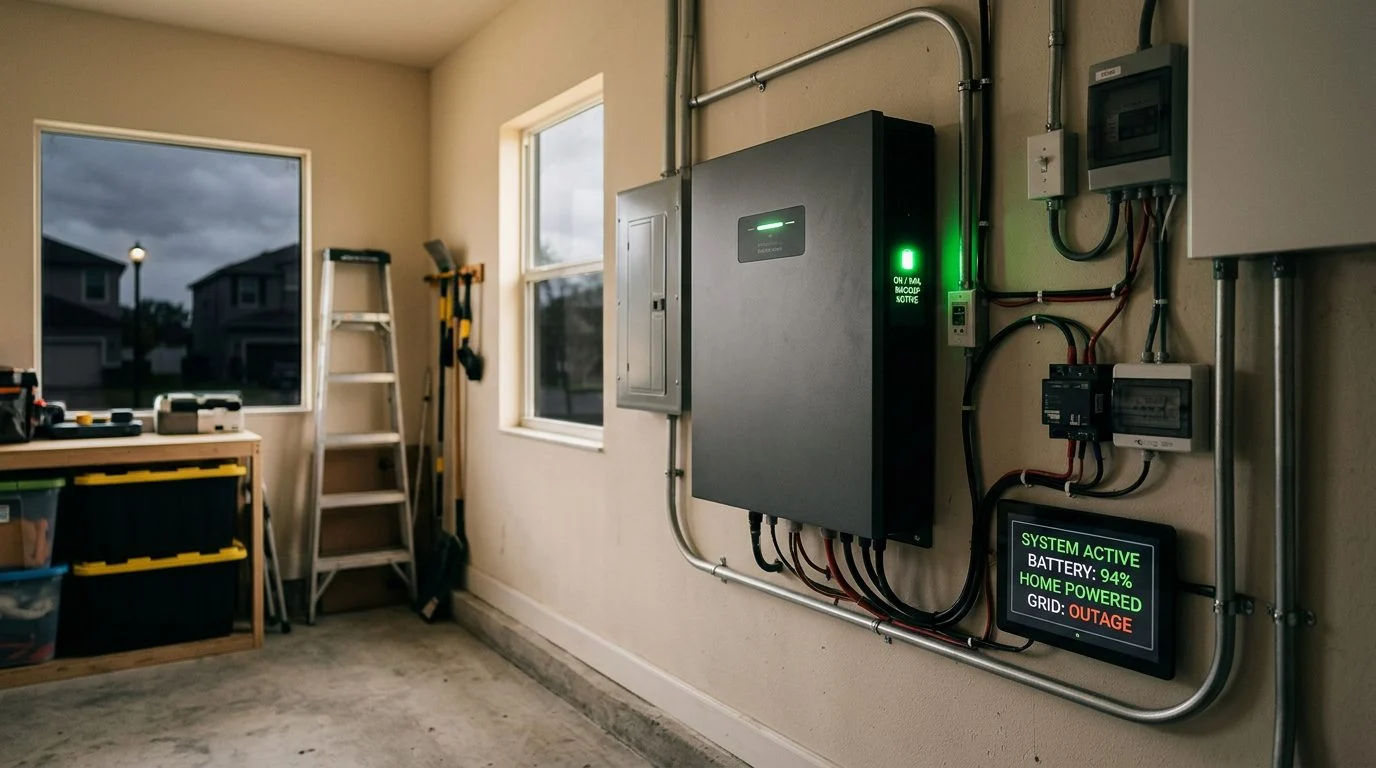
A solar battery can keep some of your home’s power on during a grid outage, but only when the system is built to separate from the grid. Panels alone usually shut down when the grid fails. Whether a battery works for your home depends on how the system is built, which circuits it serves, and how large the battery is. This page explains why panels go dark, how a battery steps in, what it can power, why a panel can’t be plugged into an outlet, and how to plan for South Florida storm season.
If a recent outage has you wondering what a battery could keep running at your home, our team is glad to talk it through with you. Talk it through with our team — the first consultation is free, confidential, and carries no obligation.
Why Solar Panels Alone Usually Go Dark in an Outage
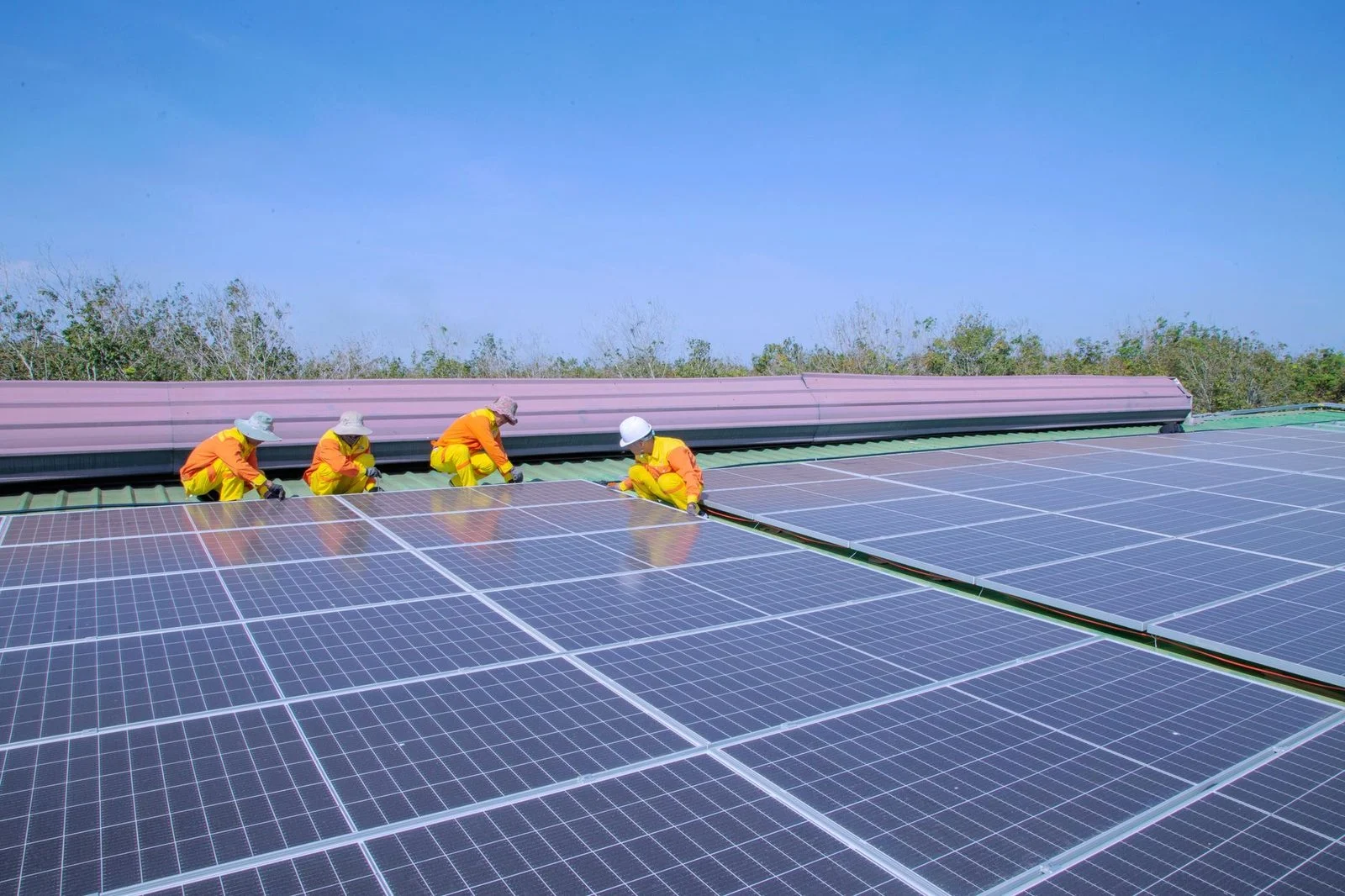
Most grid-tied solar systems shut down when the utility loses power. Sunshine on the roof doesn’t mean you have usable electricity in the house during a blackout. Without extra equipment, the panels have no safe path to your outlets.
The reason is safety. Utility crews may be working on lines that look dead. A system that kept sending power onto those lines could injure them, so the inverter disconnects.
Florida rules also give the utility control here. Under Fla. Admin. Code R. 25-6.065, a utility may open a manual disconnect switch to isolate customer-owned generation, pursuant to the conditions set forth in paragraph (6)(c). The rule lists emergencies or maintenance on the utility’s system as a condition for doing so. The utility must reconnect the generation once that condition is fixed.
That’s why a battery matters. It gives the home a power source it can use while the grid is down.
How a Battery Keeps Circuits Running When the Grid Is Down
A battery keeps chosen circuits on by separating your home from the grid and feeding those circuits stored energy. The sequence runs in four steps:
- The grid fails, and the system detects the loss.
- The home disconnects from the grid so it can run on its own.
- The panels and battery supply the circuits you selected.
- During daylight, panels power the home and charge the battery. After dark, the battery carries the load.
Backup equipment, such as a gateway or transfer device, makes this separation possible. The exact equipment depends on the manufacturer and the installation, so the design should be reviewed for your home.
Battery safety matters too. UL Solutions reports on lithium-ion battery and energy storage incidents. Product listing and proper installation both deserve close attention.
What a Battery Can and Cannot Power During an Outage
A battery usually powers selected circuits, not every appliance in the house. Common choices include lights, a refrigerator, internet equipment, ceiling fans, and a few outlets.
High-draw appliances drain a battery fast. Central air conditioning, electric water heaters, electric dryers, and large cooking appliances can empty a battery quickly. Planning your load list often matters more than the battery’s brand.
Runtime comes from three things together: battery capacity, the loads connected, and how much sun the panels collect that day. No single number fits every home. Ask for runtime estimates based on your own load list.
A battery extends power during an outage. In many homes, it is not a full replacement for a whole-home generator.
Why You Cannot Just Plug a Solar Panel Into an Outlet
A solar panel plugged into a standard outlet is not a safe or working backup source. Panels make direct current (DC), while your home runs on alternating current (AC). An inverter converts DC to AC, so a plug-in skips the step that makes the power usable.
A plug-in connection can also push power back into the home wiring and toward the grid. That creates shock and fire risks for you and for utility workers.
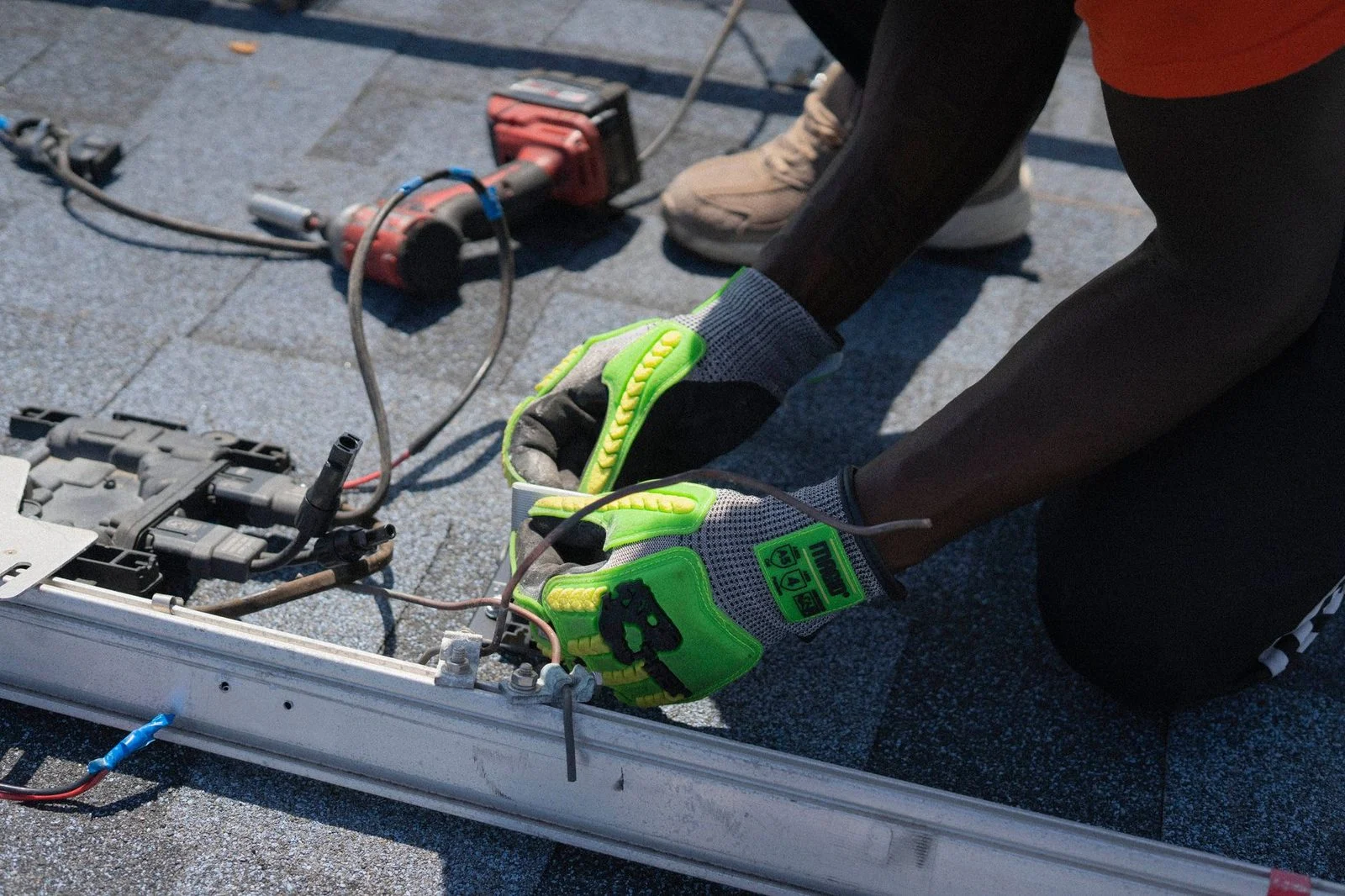
Safe backup needs permitted, professionally installed equipment. Before a permit can be issued for work such as repair or alteration of a building, the applicant must satisfy the plan review requirements of the Florida Building Code.
Battery placement is a planning detail worth reviewing with your installer before any work begins. The Florida Building Commission analysis covers proposed changes in the 2026 Florida Building Code for residential construction.
Planning for Multi-Day Outages in South Florida Storm Season
Hurricane season can leave homes in Miami, Fort Lauderdale, West Palm Beach, Kendall, Naples, Fort Myers, and Boca Raton without power for days. A battery fits best inside a wider plan that also covers water, food, medications, and a way to get updates.
Insurance is part of the picture. Under Fla. Stat. § 627.711, an insurer must use a form prescribed by the Office of Insurance Regulation to notify the applicant or policyholder of a personal lines residential property insurance policy, when the policy is issued and at each renewal, of the availability and range of each premium discount, credit, other rate differential, or reduction in deductibles for properties on which fixtures or construction techniques demonstrated to reduce windstorm loss can be or have been installed or implemented. Ask your insurer how any storm upgrade could affect your premium.
Tax rules matter as well. The IRS Residential Clean Energy Credit page covers potential eligibility for home battery storage. Tax rules change, so the cost picture can shift over time.
Not sure what your next step is?
Talk it through with our team — the first consultation is free, confidential, and carries no obligation.
Questions to Ask About Your Home’s Setup
Before any design begins, answer four questions. Which circuits matter most? How many hours of essential power would your household want? Does the roof already have solar panels? Can your electrical panel accommodate a battery?
The answers shape the design. The design, more than the brand name, decides what a battery can power.
For systems that go through the state’s photovoltaic certification program, the Fla. Admin. Code R. 6C7-8.010 System Approval Certificate identifies the major components and includes a system diagram. Ask for that paperwork during your review.
For a broader overview of options, read our guide to solar battery backup in South Florida.
Frequently Asked Questions
Can you use solar panels during a power outage?
Usually not, unless the system has a battery or added equipment. Most grid-tied panels shut off when the grid goes down.
Can I just plug a solar panel into an outlet?
No. A plug-in connection is unsafe and does not give your home usable power.
Does a solar battery work during a hurricane outage?
A battery can keep selected circuits running. Runtime depends on battery size, the connected loads, and sun exposure.
Talk Through Your Outage Plan With the ASP Superhome Team
Many people reading this are dealing with a recent outage or storm damage. Others are gathering facts for a parent, a relative, or a household member facing a decision they didn’t plan for.
If that’s your situation, you don’t have to work through it alone. Our team can talk through which circuits a battery could back up at your home and what the setup would involve. Your first consultation is free, confidential, and comes with no obligation to continue. Contact ASP Superhome to start that conversation.
How ASP Superhome Approaches Solar Battery Backup
Start with your household
We look at which circuits matter most to you, how you use power day to day, and what you want to keep running during an outage.
Plan for South Florida conditions
Heat, humidity, and hurricane season all shape how a battery system should be installed and protected.
Clear, written recommendations
You receive an explanation of the system options in plain language so you can compare them with confidence.
Coordinated home improvement
Solar panels, batteries, roofing, and windows and doors can be planned together so the work fits your home.
Important safety note
Never plug a solar panel or battery into a regular wall outlet to try to power your home. This is unsafe and does not provide usable power. Backup power should be designed and installed as a complete system.
Key Questions Before You Choose a Battery
Your power needs
Knowing which appliances and circuits you want to keep running shapes the size and type of battery that makes sense.
Your existing solar setup
Whether your panels are already installed or planned as a new project affects how a battery is added and connected.
Storm season readiness
Hurricane season is a major reason many South Florida homeowners look at battery backup. Planning ahead helps you prepare before storms arrive.
Roof and home condition
A solid roof and well-sealed openings support a solar and battery investment. We can review these together during your visit.
Start with a free first consultation. It is confidential, with no obligation to continue.
Related practice areas
- What Is a Realistic Budget for a Kitchen Remodel?


