


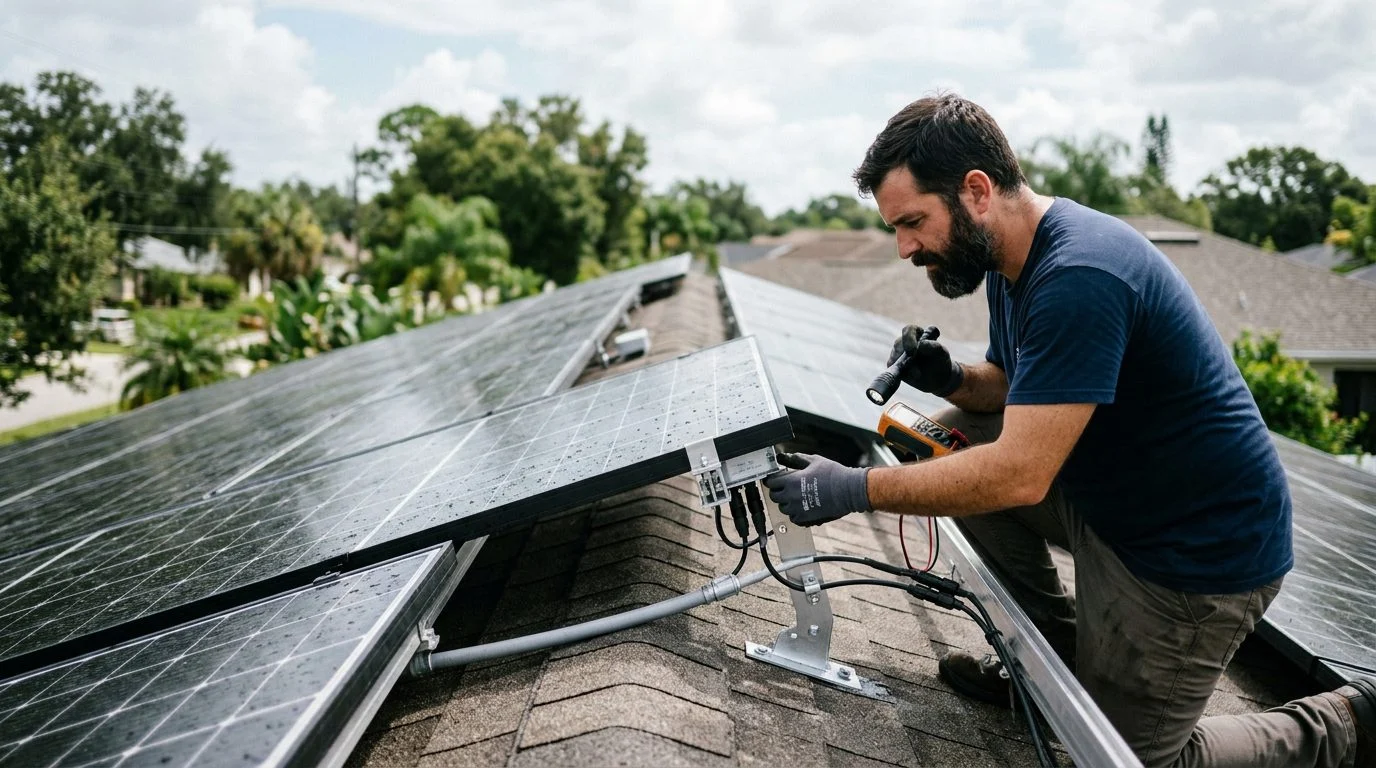
Solar Battery Backup · South Florida
Net Metering and Solar Batteries in Florida: Does Yours Qualify?
A battery changes how your solar system exports power to the grid. Learn what to check before you buy, and talk with the ASP Superhome team about your home.
By Jonathan Rodriguez · Published October 30, 2026
A solar battery does not qualify for net metering by itself. Your solar system and your utility’s interconnection agreement decide how net metering applies, and a battery changes how much power your system exports. This guide explains what changes when you add storage to a home in Miami, Fort Lauderdale, West Palm Beach, or elsewhere in South Florida.
Short answer: does a battery qualify for net metering in Florida?
In general terms, a battery does not earn or lose net metering status on its own. The solar system does, and your utility sets the terms. Under Fla. Stat. § 366.91(2)(d), net metering is a metering and billing method that lets customer-owned renewable generation offset your electricity use on site. A battery stores power. It doesn’t generate it.
So the useful question is different. How does the battery change what your solar system sends to the grid, and how does the utility credit that power?
Two questions often get mixed up. The first is whether a battery ends net metering. The second is how stored energy changes the kilowatt-hours you export. The second question usually has the bigger effect on your bill.
Each utility applies its own interconnection agreement and tariff. The same battery can be handled differently from one utility to another. Contact ASP Superhome to ask how the system will be wired, and request those answers in writing.
If you're deciding whether a battery fits a home that already has panels or is planning them, our team can review your roof, usage, and utility details in a free first consultation that's confidential and carries no obligation. Talk it through with our team — the first consultation is free, confidential, and carries no obligation.

How net metering works in Florida
Net metering lets a grid-tied solar system send surplus power to the utility and receive credit against future bills. Fla. Stat. § 366.91(2)(c) describes customer-owned renewable generation as an electric generating system on your premises, primarily intended to offset part or all of your electricity needs with renewable energy. Fla. Admin. Code R. 25-6.065 sets out how the program works for investor-owned utilities.
State law describes net metering as a billing method. Under Fla. Stat. § 366.91, customer-owned renewable generation can offset your electricity use on site. Each public utility was required to develop a standardized interconnection agreement and net metering program on or before January 1, 2009.
The utility’s program holds the details. Municipal utilities run their own versions. Paperwork requirements for solar projects can vary by location, and our team can help you understand what your project may involve.
Net metering works on net flow. Power you export offsets power you pull from the grid. The net amount on your bill is what matters most.
What a battery changes about exported power
A battery changes how much solar power leaves your home. It stores extra daytime energy that would otherwise flow to the grid. Your home then uses that stored power later, often in the evening.
Less export means fewer kilowatt-hours to credit. Net metering pays you in credits for what you send out. A battery keeps some of that power in the house. The credit on your bill can shrink, even as the battery covers part of your use.
Whether that trade helps depends on your rates and how you use power.
Grid charging is the other piece. Some systems can charge the battery from solar and from the grid. How grid charging is counted depends on your utility’s metering setup. Confirm that before installation.
Backup power is a separate benefit. A battery can supply power during an outage. That value does not depend on bill credits, so weigh it on its own.
Common downsides of net metering to weigh
Net metering has real limits.
Under Fla. Admin. Code R. 25-6.065, you keep paying the applicable customer charge and demand charge for the maximum measured demand in the billing period. You pay these even when you send power to the grid. Many homeowners don’t expect this.
Credits don’t last forever. Under the same rule, excess generation is credited to your next month’s billing cycle.
Usage above your solar output is billed at the utility’s regular rate schedule. You may choose standby or supplemental service rates if they’re available.
Rules and credit values come from state regulators and can change over time. A battery also adds upfront cost. Weigh that cost against the bill impact and the backup value. A credit is not a savings guarantee, because savings depend on your usage, system size, and rate structure.
Sizing: how many panels a 10 kWh battery needs
There’s no fixed panel count for a 10 kWh battery. The right number depends on how much power your home uses each day and how much sun your roof gets. A good design starts with your usage profile, not a rule of thumb.
Three inputs drive the math. First is your daily household use, which you can read from your utility bills. Second is the wattage and number of panels your roof can hold. Third is how much of the battery’s capacity you expect to use each day.
Roof direction and shade also change how much each panel produces. A design should aim to recharge the battery on a typical sunny day. The exact match comes from a site-specific design, not a generic chart.
A common mistake is sizing to an online rule of thumb. Two homes with the same battery can need different panel counts. The best fit comes from matching both pieces to your home’s real use.
Is solar worth it in Florida in 2026?
Solar can make sense for some Florida homes. The answer turns on your rates, your usage, your roof, and how your utility credits exports. No single number fits every home.
Storage changes the math. A battery shifts when you use solar power, not only how much you send out. For some homes, that timing matters more than export credits, especially when backup power has real value to the household.
Federal tax incentives may also matter. Federal tax rates and eligibility for home battery storage depend on current law and the date of the expenditure, as the Internal Revenue Service explains, so our team can confirm how any credit applies to your project. The credit also has a covered installation period and rules about qualifying residences.
Use your own numbers when you compare options. Your bills, roof details, and electrical setup should drive any estimate, not a generic example.
Not sure what your next step is?
Talk it through with our team — the first consultation is free, confidential, and carries no obligation.
Roof condition and interconnection timing
Roof condition can change the order of your solar work. Roof-mounted panels need penetrations. When the roof is repaired or replaced later, the panels generally must come off and be reinstalled.
Warranties matter here too. In Miami Gardens, the city’s solar roof warranty owner notice says roof penetrations for a permitted solar installation may void a roof-covering warranty. The exception is when the warranty holder consents or coordinates the work.
Plan the sequence before you sign. If your roof is near the end of its useful life, the roof work may come first. That can prevent pulling panels off a few years later.
Your utility’s agreement may also require a manual disconnect switch at your expense. Under Fla. Admin. Code R. 25-6.065, inverter-based Tier 1 systems are exempt unless the utility pays for the switch. Storm damage can change the scope and timing of the project, so raise it early.
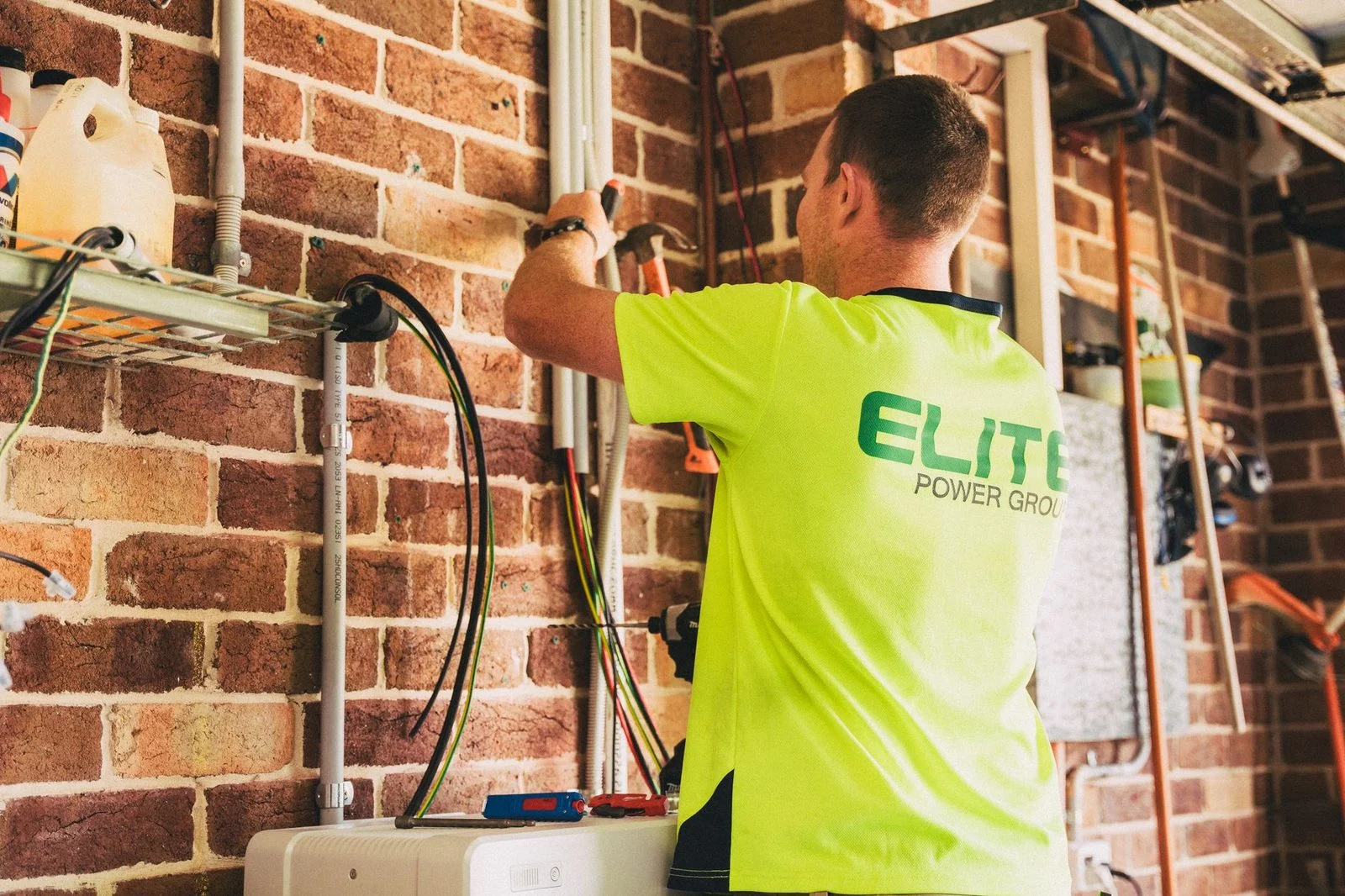
Next steps for a South Florida homeowner
Start with three items: recent utility bills, the roof’s age and condition, and your electrical panel details. These inputs shape the panel design and the net metering questions.
Bring these items to a design review:
- Recent utility bills, ideally covering several months of use
- Roof age, past repairs, and any warranty paperwork
- Electrical panel details and any existing solar equipment
- Your questions about how your utility credits exports and bills grid power
Then ask three direct questions. How does the battery connect to the solar system? How is grid charging metered? Does the utility require a manual disconnect switch? The answers shape the net metering picture.
Frequently asked questions
Does a solar battery qualify for net metering in Florida?
A battery does not qualify on its own. Your solar system and your utility’s interconnection agreement decide how net metering applies.
Does a battery reduce net metering credits?
It can. A battery stores power that would otherwise flow to the grid, so fewer kilowatt-hours may be credited.
What to ask about net metering credits
How many panels does a 10 kWh battery need?
There’s no fixed number. The panel count depends on your daily use, panel wattage, and roof conditions.
If you’re deciding whether a battery fits a home that already has panels or is planning them, request a free estimate. Our team can review your roof, usage, and utility details in a free first consultation that’s confidential and carries no obligation.
What to Review Before You Add a Battery
Your utility agreement
Your utility's interconnection and net metering terms shape how exported power is credited.
Your current solar setup
The size and design of your existing panels and inverter affect how a battery fits in.
How the battery is used
Storing power instead of exporting it can change the credits you receive, so plan the battery around your goals.
Your South Florida home
Your address, roof, and electrical service all matter when we review options for Miami, Fort Lauderdale, West Palm Beach, Boca Raton, Naples, Fort Myers, and Kendall.
Check before you buy
Battery rules and utility policies can change. Confirm how a battery would work with your current or planned solar system before you commit to a purchase.
How We Can Help
Free first consultation
Our initial consultation is free, confidential, and comes with no obligation to continue.
Review of your solar plan
We look at your roof, panels, and electrical setup to explain how a battery could fit your home.
Clear next steps
We explain your options in plain language so you can decide what makes sense for you.


