


Solar Battery Backup | South Florida
Transfer Switches for Solar Battery Backup in South Florida
Understand how a transfer switch connects your solar battery to your home's power, and what to check before you add one.
Start with a free first consultation
Free
First consultation
Confidential
Your information stays private
No obligation
No commitment to continue
By Jonathan Rodriguez · Published October 30, 2026
A transfer switch for solar battery systems is the equipment that decides which power source feeds your home’s circuits. It keeps backup power separated from the utility grid when the grid goes down. Whether your setup needs one comes down to how the system is wired. This guide walks through the key points for South Florida homes.
What a Transfer Switch Does in a Solar Battery System
A transfer switch controls which power source runs your home’s circuits. Think of it as the traffic controller between the grid, your solar panels, and your battery. Its job is control and separation, not adding power.
On a normal day, your home draws power from the grid. Your solar panels charge the battery. When the power goes out, the system must switch to battery backup, and the transfer equipment makes that change.
Installers often call this piece a transfer device. It is one part of the backup setup, not the whole system. The inverter, battery, panels, and wiring each play their own role. For the full picture, read our solar battery backup guide for South Florida.
If you're weighing a battery before hurricane season, a site review can show whether your home needs a transfer switch. Reach out and we'll walk through your circuits and roof with you. Talk it through with our team — the first consultation is free, confidential, and carries no obligation.
Why a Battery Must Not Back-Feed the Grid During an Outage
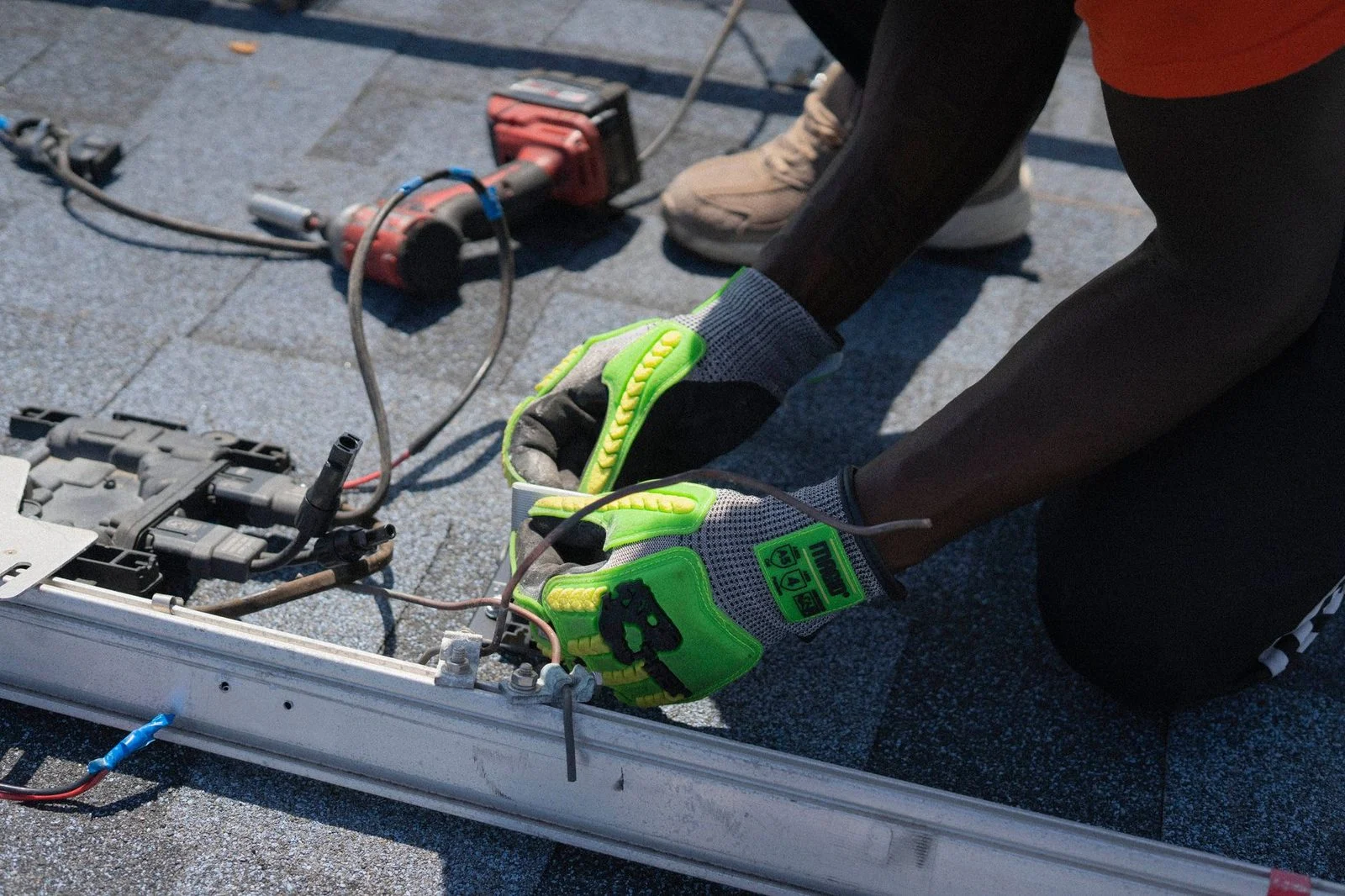
A battery must not push power back onto the grid while the grid is down. This problem is called back-feeding. It means power flows from your home onto utility lines that crews may believe are dead.
That is a serious safety hazard for utility line workers and for neighbors. Florida’s interconnection rule addresses it directly. Under Florida’s interconnection rule, which applies to investor-owned utilities, systems that qualify for expedited interconnection must include a utility-interactive inverter, or another certified device, that automatically disconnects the system from the electric grid if the grid loses power (Florida interconnection rule R. 25-6.065).
Isolation is the core job. Your inverter may handle part of that job, and separate equipment may handle the rest, depending on the design.
Codes set the safety baseline for this work. The International Code Council notes that electrical and model building codes set safety standards for solar and battery-storage installations. Those standards cover safe design, installation, inspection, and deployment.
When Your System Needs a Transfer Switch
Whether a transfer switch for solar battery backup is needed depends on the facts of your installation. The main factors are the inverter type, whether the battery is AC-coupled or DC-coupled, the panel layout, and which circuits you want running during an outage.
An AC-coupled battery connects on the home’s AC side. A DC-coupled battery connects through the solar system’s DC side. Each design leads to a different switching point, so the installer reviews both before recommending equipment.
Many homeowners choose a critical-loads backup panel or a whole-home design. A critical-loads panel feeds selected circuits, such as refrigeration, lights, fans, and medical equipment. A whole-home design covers more circuits, so it needs more battery capacity to run them. A portable setup uses a different connection point and has less to switch.
Some systems build isolation into the inverter or backup gateway. In that case, a separate switch may not be a separate purchase. Ask about this during the site assessment, and ask what the quote includes. The right answer comes from your home’s wiring, not a rule of thumb.
Automatic vs. Manual Transfer Switches
An automatic transfer switch moves your home to battery backup on its own when grid power drops. A manual transfer switch needs a person to move the load by hand.
The difference shows up at inconvenient times. Picture a storm that knocks out power at 2 a.m. while you’re asleep. An automatic switch makes the change without anyone at the panel. A manual switch waits for someone to act, and that may not happen until you’re awake or back home.
Manual options still have a place. Some setups use a manual switch for a portable generator connection or a simpler arrangement. Automatic switches are commonly paired with battery systems for seamless backup. The right choice follows your system design, so one type does not fit every home.
Florida’s rule also covers a manual disconnect switch, which is a separate item. Under the rule, a utility’s interconnection agreement may require customers to install one, at the customer’s expense. It must be a visible load-break type, mounted separate from but adjacent to the meter socket, and lockable open with a single utility padlock. Inverter-based Tier 1 systems are exempt unless the utility installs the switch at its own expense. The rule applies to investor-owned utilities (Florida interconnection rule R. 25-6.065).
Backup Transfer Options and Interlock Equipment
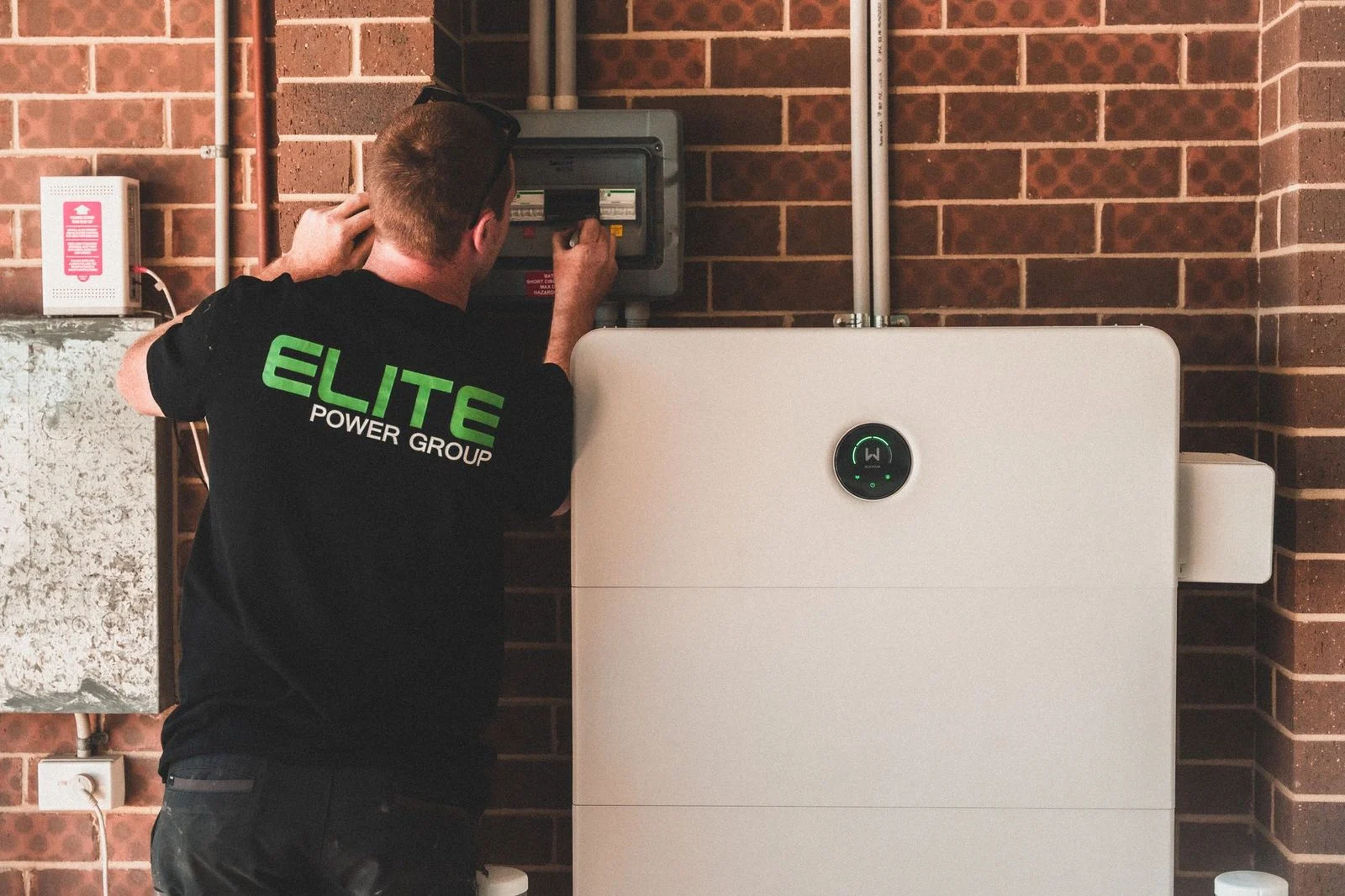
The main backup options are a dedicated transfer switch, a backup panel with transfer built in, or an interlock on an existing panel. Each one separates backup power from the grid in its own way.
A dedicated transfer switch is a separate device that moves selected circuits between sources. A backup panel with transfer built in combines the circuits and the switching in one assembly.
An interlock keeps the main breaker and the backup feed from being on at the same time. That matters because if both sources connect at once, power can flow where it should not. The interlock is a key part of safe operation.
Codes and permits shape which arrangements are allowed. Florida’s residential code now uses the title Energy Storage Systems for its battery section, replacing the older title Stationary Storage Battery Systems (Florida Building Commission analysis). During a site visit, the installation team reviews your panel, the proposed switching point, and the permit path.
What South Florida Homes Should Weigh Before Choosing a Setup
Start by listing the circuits you need during an outage. That list shows whether a whole-home or partial backup design fits your home.
South Florida’s hurricane season brings a real chance of extended outages. Heat makes cooling a major load. Refrigeration and any medical equipment in the home need power first. Homes across the region face these same questions.
Make three lists: circuits that must run, circuits that would be nice to run, and circuits that can wait. Bring them to the site visit. The installer can then match them to the battery capacity and switching design.
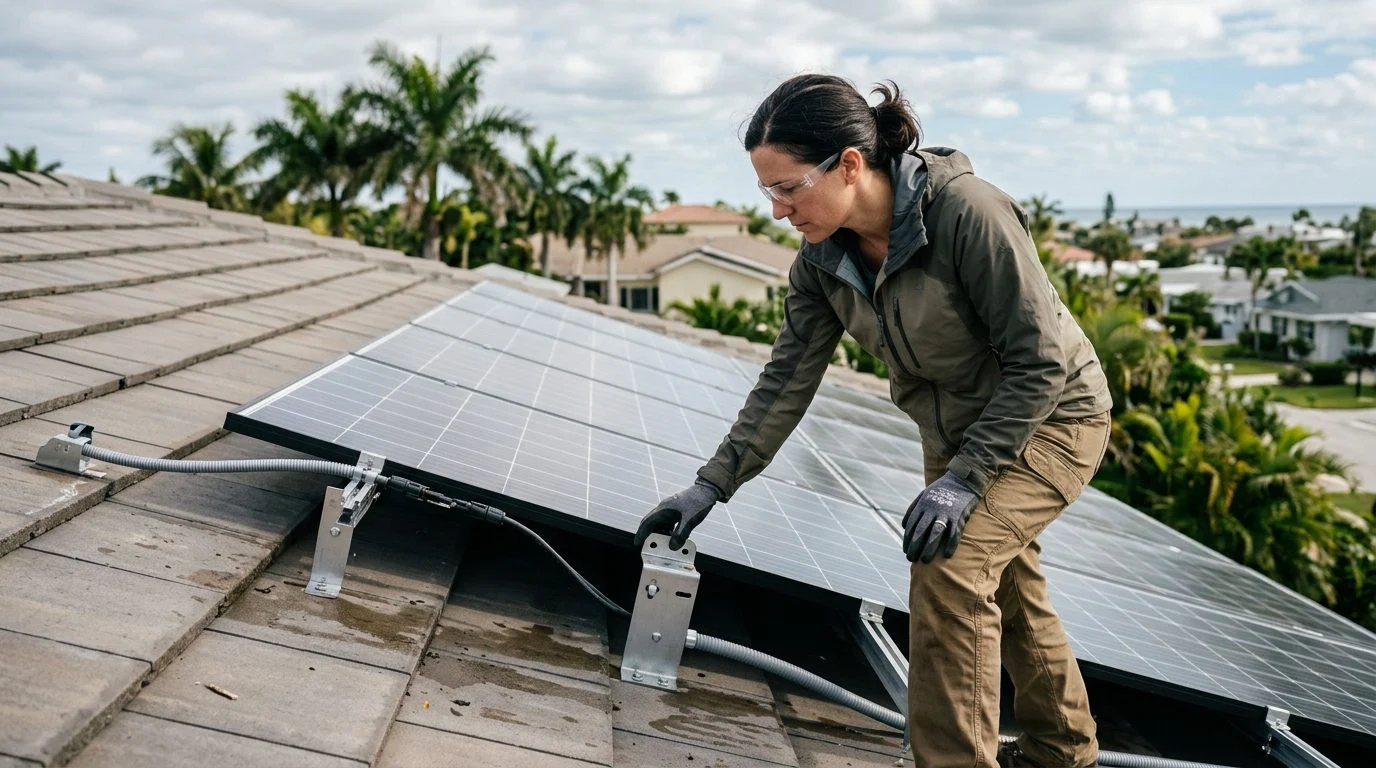
The roof and solar array need to be sound before you add a battery. A battery adds equipment and wiring to a roof-mounted system, so weak points should be fixed first. For the roof-age question, read our guide on roof age before a solar battery.
Not sure what your next step is?
Talk it through with our team — the first consultation is free, confidential, and carries no obligation.
How Storm Damage Changes the Transfer Switch Decision
After a storm, inspect the roof, panels, and electrical equipment before you reconnect or add battery and transfer equipment. Damage can change the plan, and the order of work matters.
Electrical repairs have their own rule. Under the Florida Building Code’s existing-building section on electrical work, repairs to existing wiring and equipment must comply with NFPA 70 (Florida Building Commission analysis). The older wording that allowed repairs with like materials has been deleted.
Structural damage follows its own requirement. The same analysis states that structural damage must be repaired under that section of the code (Florida Building Commission analysis).
A post-storm review generally checks the roof surface, the mounting points, the panel wiring, and the connections a battery would use. For the repair sequence and battery planning, see our guide on battery planning after storm roof damage.
Frequently Asked Questions
Can a transfer switch for solar battery be added to an installed system?
That turns on how the existing system is wired and what the inverter supports. A site review shows which options fit.
Is a transfer switch the same as an inverter?
No. The inverter converts DC power from solar panels and batteries into AC power for your home. The transfer equipment controls which source feeds the circuits.
Does a battery backup turn on by itself during an outage?
Only when the system includes an automatic transfer or isolation arrangement. Manual setups need a person to move the load.
Can a generator connect through the same transfer equipment?
Some setups accept a generator connection through a transfer point. Compatibility varies by system, so ask your installer.
Does a transfer switch change solar output?
Not by itself. It controls the circuits and the source selection. It does not change how much your panels produce.
Plan Your Solar Battery Backup Setup With Our Team
The right transfer setup starts with a review of your circuits, inverter, and roof. Those three pieces decide what equipment fits your home.
If you’re deciding whether a battery needs a transfer switch before hurricane season, or whether a battery fits after storm-related roof repairs, a conversation can help you map the next step. We help homeowners in Miami, Fort Lauderdale, West Palm Beach, Kendall, Naples, Fort Myers, and Boca Raton.
Our first consultation is free, confidential, and carries no obligation to continue.
Contact ASP Superhome to talk through your circuits, inverter setup, and roof condition.
How we approach your project
Review your existing system
We look at how your solar panels, inverter, and battery are currently wired before recommending any equipment.
Compare clear options
We explain which transfer equipment fits your setup and what each option means for your home's backup power.
Plain-language answers
Our team walks you through the terms, the trade-offs, and the questions to ask, without jargon.
Support from start to finish
Our assistants and office staff help coordinate scheduling, paperwork, and follow-up on your project.
Check your wiring before you buy equipment
A transfer switch has to match how your solar system and battery are wired. Schedule a site review first so the equipment you choose fits your home.
Common questions about transfer switches
Is a transfer switch the same as an inverter?
No. The inverter converts DC power from your panels and battery into AC power for your home. A transfer switch controls how your home connects to power sources.
Can one be added to an installed system?
That depends on how your existing system is wired and what your inverter supports. A site review shows which options fit.
How does it help during an outage?
A transfer switch helps direct backup power to the circuits you choose, so your battery can keep essential loads running.
What should I prepare?
Gather details about your current solar panels, inverter, battery, and the circuits you want to back up. This makes your consultation more productive.


